



Badminton rackets
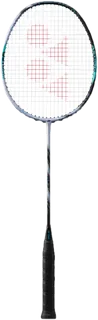
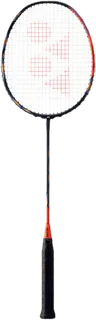
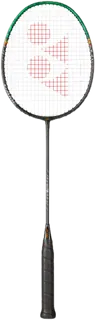
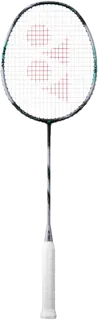
Badminton rackets from Yonex, Victor and Li-Ning compared for US buyers, from pre-strung entry rackets around $100 to flagship frames over $300. See weight class, grip, balance, shaft flex, maximum string tension, materials, play style and skill level side by side, with regular prices at US badminton specialists.
Last updated
How to choose
The right racket depends more on how you play than on price. A flagship frame in the wrong balance or stiffness will feel worse than a mid-range racket that suits you.
1. Start with balance
- Head heavy (Astrox, Thruster, Axforce, Aeronaut): more power on smashes and clears; slower to bring back in defence. Suits singles and back-court doubles players.
- Head light (Nanoflare, Auraspeed): quick at the net and in drives and defence; less free power. Suits front-court doubles players and fast exchanges.
- Even (ArcSaber, Jetspeed, Halbertec): a compromise for all-round and control players, and a safe first upgrade.
2. Match shaft flex to your swing
Stiff and extra-stiff shafts reward a fast, well-timed swing with precision. If you are a beginner or have a slower swing, a medium or flexible shaft gives more help and is kinder to your arm. The maker’s skill level is a good guide.
3. Pick the weight class and grip
- 3U (85 to 89.9 g) feels stable and powerful; 4U (80 to 84.9 g) is the most common; 5U and 6U swing faster and suit lighter players and doubles.
- Grip sizes run the other way: G6 is thinner than G5 or G4. A thin grip can be built up with overgrips; a thick one can’t be slimmed.
4. Budget for stringing
Most mid and top rackets are sold unstrung, so add the cost of string and labour, usually about $20 to $40. Stay within the maker’s maximum tension; beginners usually play better around 20 to 24 lb. Entry rackets often come pre-strung and are ready to play.
5. Check before you buy
- Buy from an authorised dealer; fake Yonex and Victor rackets are common on marketplaces.
- Specialists often sell below the regular price, so compare a couple of shops.
- Japan-made Yonex Pro frames have consistent quality, but a Taiwan- or China-made mid-range racket plays very well at club level.
Answer
Browse the table. Filter to what matters.
Use the filters below, then sign in if you want to shortlist and decide with friends.
Sign in to vote, hide products and features, and reorder.
Verified: hover a cell and click its green dot for the source Estimate: no cited source Not stated: the maker doesn't publish it
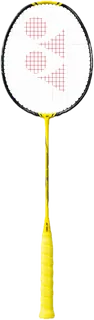
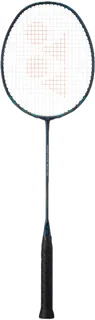
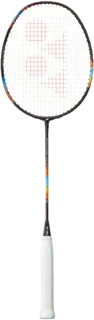
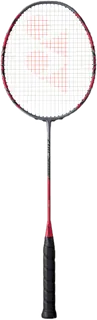
| Feature | ⠿ | ⠿ | ⠿ | ⠿ | ⠿ | ⠿ | ⠿ | ⠿ | ⠿ | ⠿ | ⠿ | ⠿ | ⠿ | ⠿ | ⠿ | ⠿ | ⠿ | ⠿ | ⠿ | ⠿ | ⠿ | ⠿ | ⠿ | ⠿ |
|---|---|---|---|---|---|---|---|---|---|---|---|---|---|---|---|---|---|---|---|---|---|---|---|---|
|
⠿
Price
|
||||||||||||||||||||||||
|
⠿
Weight class
|
||||||||||||||||||||||||
|
⠿
Grip sizes
|
||||||||||||||||||||||||
|
⠿
Balance
|
||||||||||||||||||||||||
|
⠿
Shaft flex
|
||||||||||||||||||||||||
|
⠿
Max string tension
|
||||||||||||||||||||||||
|
⠿
Frame material
|
||||||||||||||||||||||||
|
⠿
Shaft material
|
||||||||||||||||||||||||
|
⠿
Length
|
standard (675 mm)
|
standard (675 mm)
|
standard (675 mm)
|
standard (675 mm)
|
standard (675 mm)
|
standard (675 mm)
|
standard (675 mm)
|
standard (675 mm)
|
||||||||||||||||
|
⠿
Play style
|
||||||||||||||||||||||||
|
⠿
Skill level
|
intermediate, advanced
|
intermediate
|
intermediate, advanced
|
intermediate, advanced
|
intermediate, advanced
|
intermediate
|
||||||||||||||||||
|
⠿
Comes strung
|
|
|
|
|
|
|
|
|
|
|
|
|
|
|
|
|
|
|||||||
|
⠿
Made in
|
Japan
|
Taiwan
|
Taiwan
|
Taiwan
|
China
|
China
|
China
|
China
|
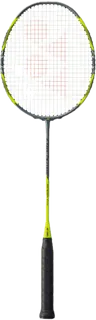
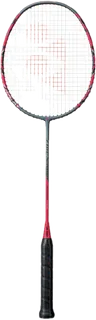
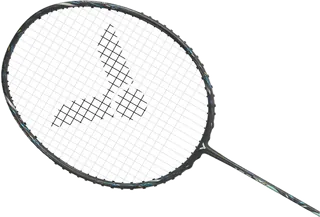
Why these features matter
-
Price ($)
Flagship frames cost three times an entry racket; most club players gain more from the right balance and flex than from the top model.
-
Weight class
Heavier frames (3U) hit harder and feel stable; lighter frames (4U, 5U) swing faster for defence and doubles and are easier on the arm.
-
Grip sizes
Grip thickness affects control and comfort; thin grips suit finger play, and you can build a thin grip up with overgrips but not slim a thick one.
-
Balance
Head-heavy frames add power to smashes and clears; head-light frames are quicker in defence and at the net; even balance is a compromise.
-
Shaft flex
Stiff shafts reward fast, technical swings with precision; flexible shafts help slower swings generate power and are kinder to beginners.
-
Max string tension (lb)
Higher tension gives more control for strong players; beginners usually play better at lower tension, and exceeding the maximum can void the warranty.
-
Frame material
Most rackets are graphite; premium materials add stiffness and stability, but the difference matters most to advanced players.
-
Shaft material
Shaft materials and thickness change how much the racket flexes and how fast it recovers.
-
Length
A slightly longer racket adds reach and leverage for power, at a small cost in handling speed.
-
Play style
Matching the frame to how you play matters more than the price tier.
-
Skill level
Advanced frames are stiff and demanding; beginners progress faster with a forgiving, flexible racket.
-
Comes strung
An unstrung frame needs stringing (often USD 20-40 more) but lets you choose string and tension; pre-strung rackets are ready to play.
-
Made in
Some players prefer Japan-made Yonex Pro frames for consistency; it is not a guarantee of better play.
About the products
-
Astrox 100ZZ · Yonex
Yonex’s most demanding power frame: extra-stiff, head heavy and Japan-made, for advanced singles players with a fast, strong swing. Too unforgiving for most club players.
-
Astrox 99 Pro (3rd gen) · Yonex
A head-heavy, stiff smashing racket for advanced singles and rear-court players. Slightly easier to swing than the 100ZZ, but still built for strong technique.
-
Astrox 88D Pro (3rd gen) · Yonex
A head-heavy, stiff doubles racket for the back-court partner who attacks from the rear. Pairs with the 88S Pro, its front-court sibling.
-
Astrox 88S Pro (3rd gen) · Yonex
The front-court half of the Astrox 88 pair: stiff and 5 mm shorter than most Yonex frames, built for quick placement and interceptions in doubles.
-
Astrox 77 Pro · Yonex
A head-heavy racket with a medium shaft, so it delivers power without needing an elite swing. A popular step up for intermediate to advanced singles and doubles players.
-
Astrox 99 Game (3rd gen) · Yonex
A cheaper, Taiwan-made version of the Astrox 99 with a medium shaft and factory stringing. Suits intermediate attacking players who want the 99’s head-heavy feel for less.
-
Astrox 88 Play · Yonex
A pre-strung, graphite entry racket with head-heavy balance and a medium shaft. A good first racket for beginners who like to attack; not built for high string tension.
-
Nanoflare 1000Z · Yonex
Yonex’s flagship speed racket: head light with an extra-stiff shaft for fast drives, counters and quick attacking play. Suits advanced players with fast hands.
-
Nanoflare 800 Pro · Yonex
A head-light, stiff speed racket for doubles players who play fast drives and counterattacks. Less demanding than the 1000Z but still for intermediate to advanced players.
-
Nanoflare 700 Pro · Yonex
A head-light racket with a medium shaft, so it is fast and forgiving. Suits intermediate players and fast doubles; 5U option for lighter players.
-
ArcSaber 11 Pro · Yonex
An even-balance, stiff control racket made in Japan. Suits advanced all-court players who rely on placement rather than raw power.
-
ArcSaber 7 Pro · Yonex
An even-balance control racket with a medium shaft, easier to use than the ArcSaber 11 Pro. Suits intermediate players who want control with some help on power.
-
ArcSaber 11 Play · Yonex
A pre-strung, even-balance graphite version of the ArcSaber 11 for beginners and casual players who want a forgiving, controllable racket.
-
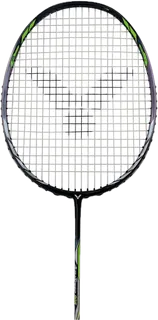
Thruster F Ultra · Victor
Victor’s premium head-heavy power racket with a stiff, thin shaft, for advanced attacking players.
-
Auraspeed 100X Ultra · Victor
A stiff, slightly head-light speed racket for advanced doubles players who play fast at the net and in drives.
-
Auraspeed 90S · Victor
A stiff, head-light 3U speed frame made in Taiwan. The heavier weight adds stability to fast play; suits strong intermediate and advanced players.
-
Jetspeed S12 II · Victor
An even-balance, stiff all-round racket for advanced players who switch between attack and defence.
-
Thruster TK HMR Pro · Victor
A very light 5U, head-heavy racket with a flexible shaft, sold factory strung. Gives easy power for lighter or developing players.
-
Thruster K 280 EX · Victor
A low-cost, pre-strung head-heavy racket with a medium shaft. A sensible first racket for intermediate attacking players on a budget.
-
Brave Sword 12 Pro · Victor
An even to slightly head-light frame with a medium shaft, aimed at competitive players who want quick handling and precise placement in fast doubles and mid-court play. Sold unstrung, so budget for stringing.
-
Halbertec 8000 · Li-Ning
Li-Ning’s even-balance control racket with a fairly flexible shaft, for all-round players who mix attack and defence.
-
Axforce 80 · Li-Ning
A head-heavy power racket with a slim, flexible shaft from Li-Ning’s attacking line, for intermediate to advanced players who like to smash.
-
Aeronaut 9000 I · Li-Ning
A very light 5U racket with a strongly head-heavy balance and medium shaft, for aggressive players who want easy smash power with fast handling. Allows up to 32 lb.
-
Windstorm 72 S · Li-Ning
An ultra-light 6U racket with a flexible shaft at a lower price. Swings very easily, suiting lighter players and those who want a fast, forgiving racket.
Suggest a change
Related comparisons
-
 Tennis rackets
Choosing a tennis racket is a trade-off between power, control, spin and comfort. This grid compares popular adult rackets side by side on the specs that decide how a frame plays: head size, weight and balance, swingweight, stiffness, string pattern and grip sizes, plus price, skill level and each maker's own power and swing-speed ratings. Use it to narrow a short list, then demo before you buy.
-
 Pickleball paddles
Compare pickleball paddles for US recreational and competitive players, from entry level options to premium designs. Match the exact paddle shape, handle fit and construction to your game, then weigh price, warranty and event eligibility. Manufacturer positioning is identified separately from measured specifications.
-
 Ping pong tables
Choosing a ping pong table depends on where you will play, how often it will be used, and who needs to move or store it. Indoor tables usually prioritize bounce quality and a smooth playing surface, while outdoor models trade some play feel for weather resistance. Foldable designs, wheel quality, frame strength, and setup effort matter if space is shared. Families may value safety and easy storage, while frequent players should look closely at stability, surface thickness, and long-term durability.
-
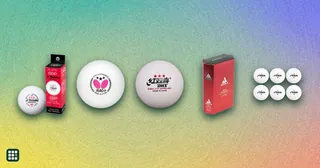 Ping pong balls
Choosing ping pong balls depends on where and how you play. Casual players may value durability and quantity, while competitive players usually care more about consistent bounce, roundness, and approved sizing. Material, star rating, color, and pack size all affect the decision, as do whether the balls are for training, matches, clubs, schools, or home tables. The best choice balances feel and reliability against how quickly balls get lost, dented, or worn out during regular play.
-
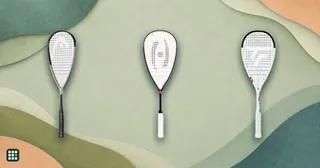 Squash rackets
Compare squash racquets by frame weight, balance, shape, string layout, intended level and current US price. Published weight may be a bare frame or a strung racquet, so check the stated basis.
-
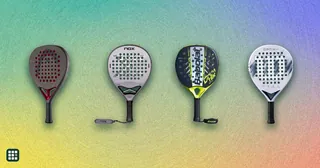 Padel rackets
 differ mainly in shape, balance, weight and how hard the face and core are. Round, light, soft rackets are forgiving and easy on the arm; heavy, head-heavy diamonds with stiff carbon faces hit harder but need good technique. This grid compares 26 rackets sold in the US, from $100 beginner models to $450 pro signature rackets, from Bullpadel, Nox, adidas, HEAD, Babolat, Wilson and Tecnifibre.