



Body lotions
Body lotions compared on ingredients, fragrance, eczema-seal status, size and price per ounce, so you can match a formula to your skin and budget.
Last updated
How to choose
Start with your skin. Sensitive or eczema-prone skin does best with fragrance-free formulas and short ingredient lists; look for the National Eczema Association seal.
Check the ingredient list
- Ceramides, glycerin and petrolatum rebuild and seal the skin barrier.
- Urea or lactic acid smooths rough, bumpy skin, but can sting on cracked skin; lactic acid also needs daily sunscreen.
- Fragrance and parabens are what many sensitive-skin shoppers avoid.
Compare cost per ounce
Big pump bottles cost far less per ounce. Judge claims such as 48 or 72 hours with care: they come from each maker's own studies.
Answer
Browse the table. Filter to what matters.
Use the filters below, then sign in if you want to shortlist and decide with friends.
Sign in to vote, hide products and features, and reorder.
Verified: hover a cell and click its green dot for the source Estimate: no cited source Not stated: the maker doesn't publish it
| Feature | ⠿ | ⠿ | ⠿ | ⠿ | ⠿ | ⠿ | ⠿ | ⠿ | ⠿ | ⠿ | ⠿ |
|---|---|---|---|---|---|---|---|---|---|---|---|
|
⠿
Price
|
$16.99
|
$15.99
|
$16.99
|
$12.99
|
$15.99
|
$12.49
|
$12.99
|
$17.99
|
$8.99
|
$6.79
|
|
|
⠿
Size
|
16 oz
|
8 oz
|
|||||||||
|
⠿
Price per ounce
|
$1.06/oz
|
$2/oz
|
$1.06/oz
|
$0.72/oz
|
$1/oz
|
$0.78/oz
|
$0.62/oz
|
$1.28/oz
|
$0.44/oz
|
$0.40/oz
|
$3.42/oz
|
|
⠿
Moisture claim hours
|
|||||||||||
|
⠿
Fragrance free
|
|
||||||||||
|
⠿
NEA Seal of Acceptance
|
|
|
|
|
|
|
|
||||
|
⠿
Noncomedogenic claim
|
|
|
|
|
|
||||||
|
⠿
Stated skin type
|
Sensitive, dry skin
|
All skin types
|
|||||||||
|
⠿
Key actives
|
|||||||||||
|
⠿
Urea or AHA
|
None
|
None
|
|||||||||
|
⠿
Ceramides
|
|
|
|||||||||
|
⠿
Hyaluronic acid
|
|
||||||||||
|
⠿
Niacinamide
|
|
|
|||||||||
|
⠿
Glycerin
|
|||||||||||
|
⠿
Petrolatum
|
|||||||||||
|
⠿
Mineral oil
|
|
||||||||||
|
⠿
Shea butter
|
|
|
|||||||||
|
⠿
Dimethicone
|
|
||||||||||
|
⠿
Oat ingredient
|
|
|
|||||||||
|
⠿
Panthenol
|
|
||||||||||
|
⠿
Parabens
|
|
Why these features matter
-
Price ($)
Sticker price matters, but compare it with price per ounce: large bottles cost more up front and much less per use.
-
Size (oz)
Bigger bottles cost less per ounce, but a pump bottle you will finish before it spoils is the better buy.
-
Price per ounce ($/oz)
The fairest way to compare lotions that come in different bottle sizes.
-
Moisture claim hours (hr)
Longer claims mean fewer reapplications, but these are maker studies and not comparable across brands.
-
Fragrance free
Fragrance is the most common trigger of allergic reactions to lotions; choose fragrance-free if you have eczema or reactive skin.
-
NEA Seal of Acceptance
The seal means the National Eczema Association reviewed the product as suitable for eczema-prone skin.
-
Noncomedogenic claim
Matters if you apply the lotion to the chest, back or face where breakouts happen.
-
Stated skin type
Normal-to-dry and very-dry formulas differ in richness; match to how dry your skin gets.
-
Key actives
Shows what the lotion is built around, such as ceramides, urea or niacinamide.
- Ceramides
- : Lipids that rebuild the skin barrier; popular for dry, eczema-prone skin.
-
Urea or AHA
Urea and lactic acid smooth rough, bumpy skin but can sting on cracked skin, and lactic acid raises sun sensitivity.
- Urea
- : Urea draws in water and softens rough, flaky skin. Good for very dry or bumpy skin; can sting on cracked skin.
- Lactic acid
- : A gentle exfoliating acid that smooths rough, bumpy skin. Raises sun sensitivity, so use sunscreen.
-
Ceramides
Ceramides are skin-barrier lipids; popular for eczema-prone and dry skin.
-
Hyaluronic acid
A humectant that holds water; nice, though glycerin does much the same.
-
Niacinamide
Vitamin B3 that supports the skin barrier and calms redness.
-
Glycerin
The workhorse humectant in nearly every lotion.
-
Petrolatum
Petrolatum seals in moisture best; it makes a lotion richer and can feel greasier.
-
Mineral oil
A common, inexpensive occlusive; some buyers avoid it by preference.
-
Shea butter
A plant emollient that adds richness.
-
Dimethicone
A silicone that gives a smooth feel; skip it if you avoid silicones.
-
Oat ingredient
Oat is a classic soothing ingredient for dry, itchy skin.
-
Panthenol
Soothing, moisture-binding vitamin B5.
-
Parabens
A preservative class many shoppers avoid; none is proven harmful at cosmetic levels, but it is a common filter.
About the products
-
Daily Moisturizing Lotion · CeraVe
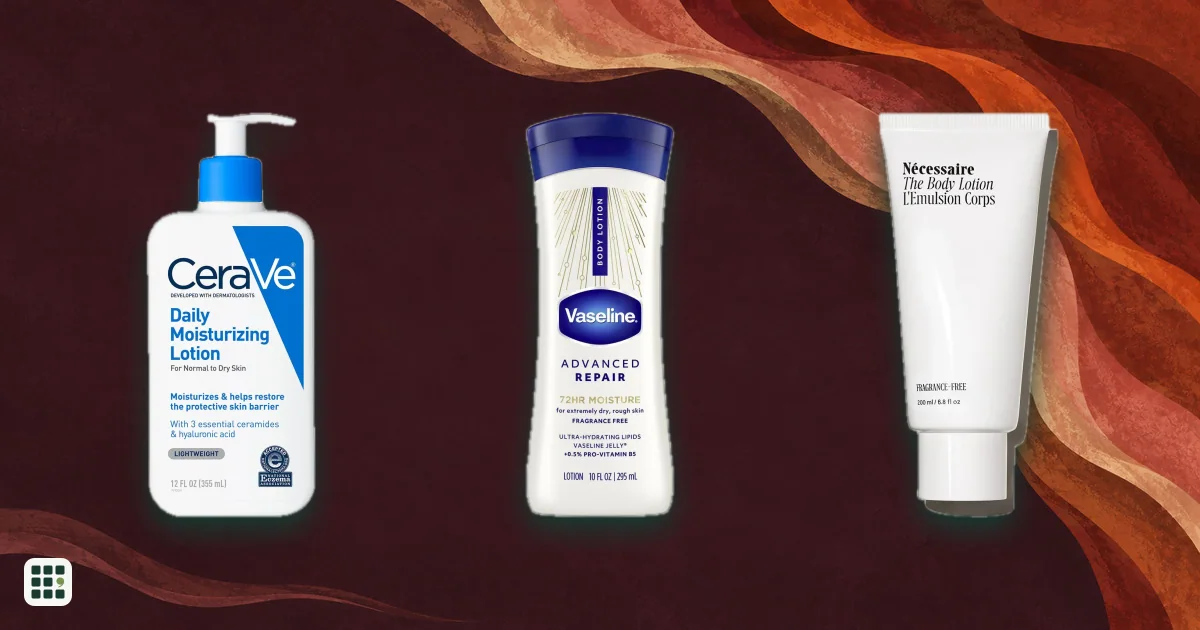
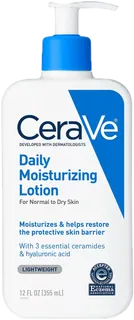
Lightweight, oil-free ceramide and hyaluronic acid lotion for normal to dry skin; the drugstore default for sensitive skin, and cheap per ounce in large pumps.
-
Intensive Moisturizing Lotion · CeraVe
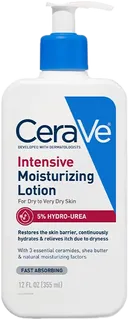
Richer CeraVe lotion with ceramides, shea butter and a hydroxyethyl urea blend for dry to very dry skin; fragrance-free.
-
Moisturizing Lotion · Cetaphil
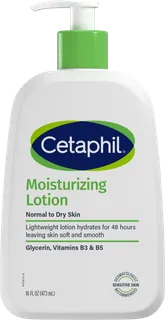
Fragrance-free niacinamide and panthenol lotion for normal to dry, sensitive skin, with the National Eczema Association seal.
-
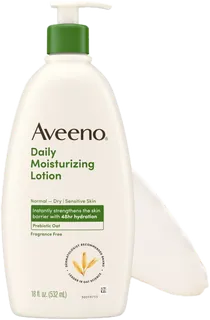
Daily Moisturizing Lotion Fragrance Free · Aveeno
Oat-based, fragrance-free everyday lotion with a short ingredient list for normal to dry, sensitive skin.
-
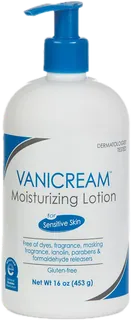
Moisturizing Lotion · Vanicream
Minimal, dye-, fragrance- and botanical-free lotion built for very sensitive skin; National Eczema Association seal.
-
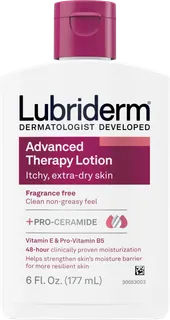
Advanced Therapy Lotion Fragrance-Free · Lubriderm
Fragrance-free drugstore lotion with vitamin E, pro-vitamin B5 and oat oil for itchy, extra-dry skin.
-
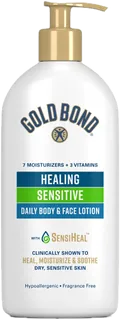
Healing Sensitive Daily Body & Face Lotion · Gold Bond
Fragrance-free lotion with hydroxyethyl urea, aloe, oat and vitamins for sensitive, dry skin.
-
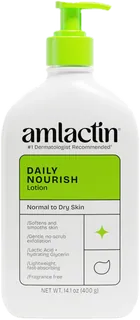
Daily Nourish Lotion with 12% Lactic Acid · AmLactin
Exfoliating lotion with 12% lactic acid (as ammonium lactate) for rough, bumpy, dry skin; needs sunscreen.
-
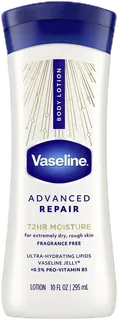
Advanced Repair Unscented Lotion · Vaseline
Inexpensive petrolatum lotion with pro-vitamin B5 for very dry skin; contains a paraben preservative.
-
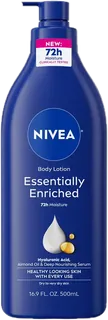
Essentially Enriched Body Lotion · Nivea
Rich mineral-oil and almond-oil lotion with hyaluronic acid for dry skin, among the cheapest per ounce.
-
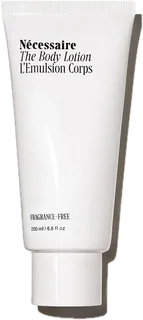
The Body Lotion Fragrance-Free · Nécessaire
Prestige multi-peptide, niacinamide and plant-oil lotion; fragrance-free, vegan and NEA-accepted.
Suggest a change
Related comparisons
-
 Stretch mark creams
, butters, lotions and oils for pregnancy and beyond, from a $9 drugstore lotion to a $35 pharmacy-brand cream. The real trade-offs are scent, ingredients you may want to avoid, how rich the product feels, and how much evidence the maker offers.
-
 Hand creams
 compared from drugstore tubes to prestige jars: ingredients from each maker's own list, size, price per ounce, fragrance, and how each feels. The real trade-off is rich barrier repair for cracked hands versus a light, fast-absorbing cream you will actually reapply.
-
 Foot peel masks
 are acid-soaked booties you wear for about an hour; days later the thick, dead skin on your soles peels off. This grid compares the acids used, how long you wear them, how soon peeling starts, how many pairs come in a box and the price per pair.
-
 Body scrubs
 buff away dead skin with sugar, salt, coffee, pumice or acids. This grid compares popular US body scrubs and polishes on price per ounce, exfoliant, fragrance, key oils and butters, and how often to use them.
-
 Clinical strength antiperspirants
Clinical-strength antiperspirants use a higher level of aluminum-based active ingredient than ordinary antiperspirants. This grid compares drugstore and prescription-strength options by active ingredient, format, and cost.
-
 Self tanners
 give you a tan without UV exposure, using DHA (and sometimes erythrulose) that reacts with the outer layer of skin. They differ in form, wait time, and how forgiving they are, so the choice is mostly about how fast you need color and where you will use it.