



Chef's knives
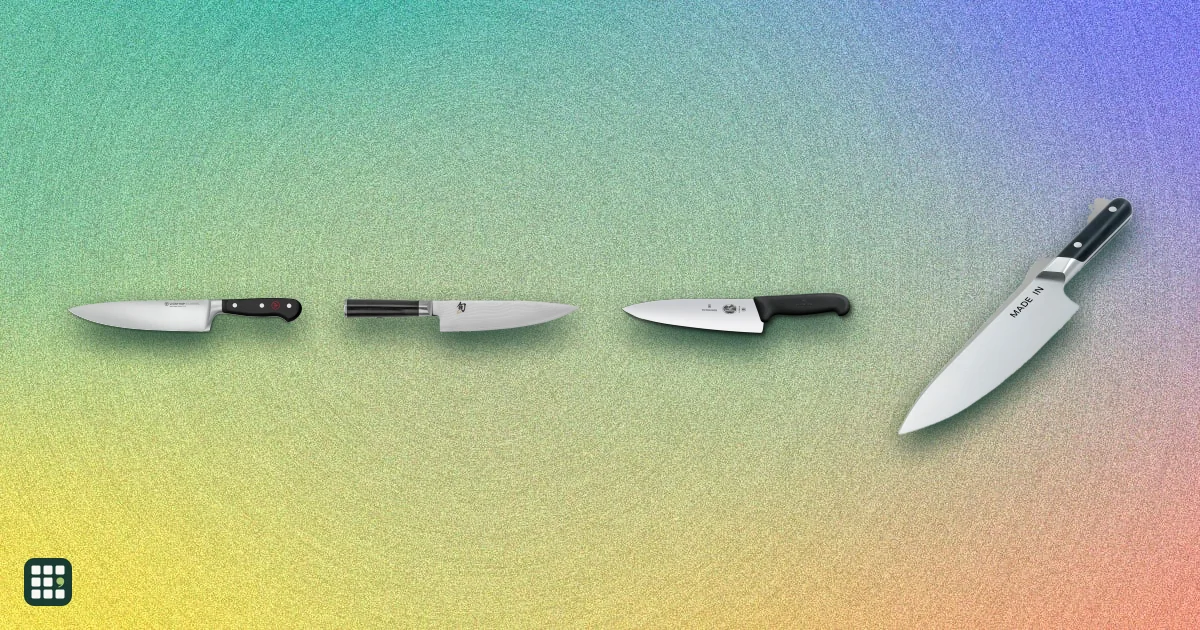
Compare chef's knives sold in the US, from budget picks like Victorinox to forged German classics (Wüsthof, Zwilling, Henckels), hybrids (Misen, Made In, MAC), and Japanese gyutos (Shun, Miyabi, Global). The real choice is German or Japanese style: weight and toughness versus thinness, hardness, and sharpness.
Last updated
How to choose
A chef's knife does most of the work in a kitchen. The best one is the one that feels right in your hand and that you will keep sharp.
1. German or Japanese
- Western (German): thicker, heavier blades in softer steel (about 56 to 58 HRC). They rock well, shrug off bones and squash, and are easy to hone. Good if you are rough on knives.
- Japanese (gyuto): thinner, lighter, and harder (60 HRC or more), so they cut more cleanly and stay sharp longer, but they can chip on bones, frozen food, or a glass board.
- Hybrids pair a thinner, harder blade with a Western handle.
2. Size and weight
Most home cooks do best with an 8 in blade. Check Weight: heavier knives do more of the work; lighter ones are quicker and less tiring.
3. Construction and bolster
Forged knives usually have a bolster where blade meets handle. A full bolster protects your fingers but gets in the way of sharpening the heel; a half or sloped bolster suits a pinch grip. Stamped knives are lighter and cheaper and can cut just as well.
4. Care
- Hand wash and dry every knife, even ones the maker calls Dishwasher safe.
- Hone often and sharpen a few times a year. Harder steels need a whetstone or a service.
- Use a wood or plastic board, never glass or stone.
5. Before you buy
Compare Price for the same length, and remember a Warranty covers defects, not chips. If you can, hold a knife before buying: handle shape matters more than specs.
Answer
Browse the table. Filter to what matters.
Use the filters below, then sign in if you want to shortlist and decide with friends.
Sign in to vote, hide products and features, and reorder.
Verified: hover a cell and click its green dot for the source Estimate: no cited source Not stated: the maker doesn't publish it
| Feature | ⠿ | ⠿ | ⠿ | ⠿ | ⠿ | ⠿ | ⠿ | ⠿ | ⠿ | ⠿ | ⠿ | ⠿ | ⠿ | ⠿ | ⠿ |
|---|---|---|---|---|---|---|---|---|---|---|---|---|---|---|---|
|
⠿
Price
|
$89
|
$129
|
|||||||||||||
|
⠿
Blade length
|
8 in
|
||||||||||||||
|
⠿
Style
|
Western (German)
|
Western (German)
|
Western (German)
|
Western with asymmetric edge
|
Western
|
Hybrid (Japanese blade, Western handle)
|
Western (German)
|
Japanese gyuto
|
Japanese gyuto
|
Japanese gyuto
|
|||||
|
⠿
Steel
|
Wüsthof X50CrMoV15 stainless
|
Wüsthof X50CrMoV15 stainless
|
Wüsthof X50CrMoV15 stainless
|
Victorinox stainless
|
CROMOVA 18 stainless
|
||||||||||
|
⠿
Hardness
|
55 HRC
|
59 HRC
|
57 HRC
|
56.5 HRC
|
56.5 HRC
|
61 HRC
|
61 HRC
|
61 HRC
|
|||||||
|
⠿
Edge angle
|
15°
|
10°
|
|||||||||||||
|
⠿
Construction
|
Forged, full tang
|
Stamped
|
One-piece stainless steel
|
Full tang
|
|||||||||||
|
⠿
Bolster
|
Full bolster
|
Half bolster
|
None
|
None
|
Sloped half bolster
|
Full bolster
|
Full bolster
|
None
|
None
|
None
|
|||||
|
⠿
Weight
|
|||||||||||||||
|
⠿
Handle material
|
Synthetic (POM)
|
Synthetic (POM)
|
Synthetic (POM)
|
Pakkawood
|
Synthetic, triple-riveted
|
||||||||||
|
⠿
Dishwasher safe
|
|
|
|
||||||||||||
|
⠿
Warranty
|
|||||||||||||||
|
⠿
Made in
|
Japan
|
||||||||||||||
|
⠿
Lengths offered
|
6, 7, 8, 9, 10 in
|
8 in, 10 in
|













Why these features matter
-
Price ($)
Good chef's knives run from about $40 to $250; more money buys harder steel, finer finishing, and nicer handles, not always better everyday cutting.
-
Blade length (in)
8 in suits most home cooks; 10 in helps with big squash and roasts but feels long on a small board.
-
Style
German blades are thicker, softer, and forgiving; Japanese blades are thinner, harder, and sharper but chip more easily.
-
Steel
Steel sets how sharp a knife gets and how long it stays that way; harder Japanese steels hold an edge longer but are more brittle.
-
Hardness (HRC)
Around 56 to 58 HRC is tough and easy to hone; 60 HRC and up holds an edge longer but can chip and is harder to sharpen at home.
-
Edge angle (°)
Lower angles cut more easily but dull faster; German knives are often 14 to 20 degrees, Japanese 10 to 16.
-
Construction
Forged knives are heavier with a bolster; stamped knives are lighter and cheaper but can cut just as well.
-
Bolster
A full bolster protects fingers but makes the heel hard to sharpen; half or no bolster lets you sharpen the whole edge.
-
Weight (oz)
Heavier knives power through hard foods; lighter ones are less tiring for long prep and fine work.
-
Handle material
Synthetic handles are low-maintenance; wood and pakkawood look nicer but need more care; metal handles can feel slippery.
-
Dishwasher safe
Dishwashers dull and damage most knives; even where allowed, hand washing keeps them sharp longer.
-
Warranty
Most good knives have lifetime coverage against defects, not against chips from misuse.
-
Made in
Origin hints at style and quality control: Solingen (Germany), Seki (Japan), Thiers (France).
-
Lengths offered
Useful if you want a smaller or larger knife in the same line.
About the products
-
Misen 8 in Chef's Knife (Acuto440) · Misen
A direct-to-consumer hybrid chef's knife in Japanese AICHI ACUTO 440 steel with a sharp 14 degree edge and a sloped bolster for a pinch grip. Made in China; lifetime warranty against defects. Hand wash.
-
Wüsthof Classic 8 in Chef's Knife · Wüsthof
The classic German chef's knife: forged in Solingen with a full bolster and a heavy, balanced feel, sharpened to about 14.5 degrees. A durable all-rounder that holds up to heavy chopping; heavier and softer steel than Japanese knives.
-
Classic Ikon 8 in Chef's Knife · Wüsthof
Wüsthof's forged Classic with a contoured handle and a half bolster, so the whole edge can be sharpened and the knife feels a little lighter. Made in Solingen, Germany.
-
Wüsthof Gourmet 8 in Chef's Knife · Wüsthof
Wüsthof's lower-priced, laser-stamped chef's knife: lighter, with no bolster and slightly softer steel (56 HRC). Made in Germany with the same limited lifetime warranty.
-
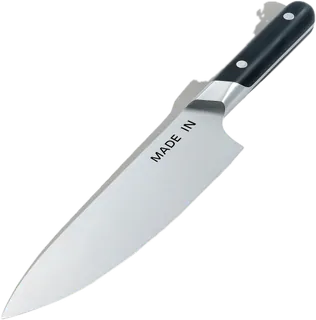
Made In 8 in Chef Knife · Made In
Fully forged in Thiers, France, from German-style X50CrMoV15 steel, with an asymmetric edge (14 degrees on one side, 4 on the other) that Made In says cuts like a thinner Japanese blade. Lighter than a German classic; lifetime warranty and 60-day trial.
-
Fibrox Pro 8 in Chef's Knife · Victorinox
The budget favorite of test kitchens: a light, stamped Swiss blade with a grippy, dishwasher-safe TPE handle. No bolster or forged heft, but sharp, easy to sharpen, and covered by a lifetime warranty. Priced here in the extra-wide version.
-
Global G-2 8 in Chef's Knife · Global
The iconic all-steel Japanese chef's knife since 1985: a thin, light blade with a dimpled stainless handle weighted with sand. Very sharp and nimble; the metal handle can feel slippery or hard to some hands. Made in Niigata, Japan.
-
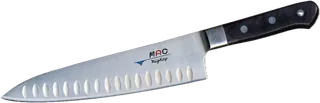
MAC Professional 8 in Chef's Knife MTH-80 · MAC Knife
A test-kitchen favorite: a thin 2.5 mm Japanese blade with a Western handle, a small bolster, and dimples that help release sticky foods. Light (6.5 oz) and very sharp; needs hand washing and care. Made in Japan.
-
Zwilling Pro 8 in Chef's Knife · Zwilling
A forged German knife with a curved sloped bolster designed for a pinch grip and a blade that both rocks and chops. Heavier than most (about 9 oz). Made in Germany; dishwasher safe per Zwilling, though hand washing is recommended.
-
Zwilling Four Star 8 in Chef's Knife · Zwilling
Zwilling's best-selling forged German line for 50 years, with a seamless molded handle and lighter weight (about 6.7 oz) than the Pro. Made in Solingen.
-
Henckels Classic 8 in Chef's Knife · Henckels
Zwilling's value brand: a fully forged German-steel chef's knife with a triple-rivet handle at a much lower price. Made in Spain.
-
Miyabi Kaizen II 8 in Chef's Knife (Gyutoh) · Zwilling
A thin Japanese gyutoh with a hard 61 HRC FC61 core under 48-layer Damascus cladding and a pakkawood handle. Very sharp and light; more prone to chipping than German steel and needs hand washing. Made in Seki, Japan.
-
Shun Classic 8 in Chef's Knife · Shun
Shun's flagship Japanese chef's knife: a hard VG-MAX core under 68 layers of Damascus, a 16 degree edge, and a D-shaped pakkawood handle. Very sharp and light; can chip if used on bones or frozen food. Made in Seki, Japan.
-
Shun Premier 8 in Chef's Knife · Shun
Shun's hammered (tsuchime) Damascus chef's knife with a VG-MAX core and a contoured walnut-finish pakkawood handle. Pricier than the Classic; the hammered finish helps food release.
-
Sora 8 in Chef's Knife · Shun
Shun's budget gyuto: VG10 steel only at the cutting edge, joined to a cheaper stainless upper, with a textured polymer handle. Gets you a Japanese 16 degree edge for about half the Classic's price.
Suggest a change
Related comparisons
-
 Food processors
Compare food processors by usable bowl capacity, attachment set, feed chute, cleanup, storage, and the jobs they can handle. Nominal bowl capacity differs from recipe limits, especially for liquids and dough; check the manual for safe working capacity.
-
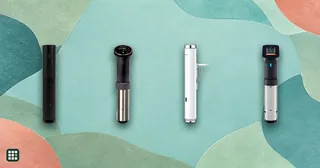 Sous vide cookers
A sous vide cooker heats a water bath to an exact temperature so food cooks evenly edge to edge. Most home cookers are immersion sticks that clip to a pot; a few are self-contained water ovens. Compare how fast they heat (power), how much water they can handle, whether they work without a phone, how they attach to a pot, and price.
-
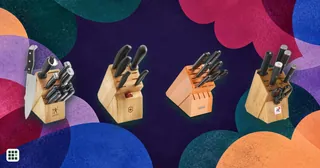 Knife sets
Compare popular kitchen knife sets side by side: what's in each box, the steel and hardness, Western or Japanese style, how the knives are stored, and whether they can go in the dishwasher. The real trade-off is between a big block of mostly unused knives and a small set of better ones, and between tough, easy-care German steel and sharper but more delicate Japanese blades.
-
 Carbonated water makers
A home carbonator trades the cost and storage of bottled sparkling water for a machine, refillable CO₂ cylinder and compatible bottles. Compare the cylinder connection first: SodaStream Quick Connect, standard threaded cylinders, and maker-specific bottle fittings are not interchangeable in every case. Some machines carbonate water only; SodaStream MIX and Drinkmate OmniFizz also support other beverages.
-
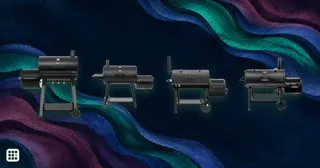 Offset smokers
 burn charcoal or wood in a side firebox and pull the smoke and heat through a separate cooking chamber, the classic Texas-style way to smoke brisket and ribs. They reward fire tending with real wood flavor, but they range from thin-walled barrel-grill combos under $400 to hand-built pits over $2,000. This grid compares size, weight, heat design and warranty.
-
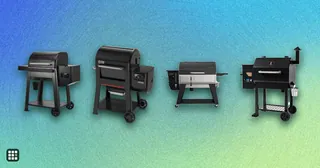 Pellet grills
 burn hardwood pellets fed by an auger and a thermostat, so you set a temperature and the grill holds it like an oven while adding real wood smoke. This grid compares 27 full-size models from Traeger, recteq, Weber, Camp Chef, Pit Boss, Z Grills, Green Mountain Grills and Yoder, from about $380 to $3,500. The big trade-offs are cooking space, how hot the grill gets (most can't sear without a direct-flame feature), hopper size for long cooks, app control, and how solidly it's built.