



DNA ancestry tests
At-home DNA tests that estimate your ethnic origins, find relatives who also tested, trace your direct paternal or maternal line, and report traits, with some adding health reports. You spit in a tube or swab your cheek, mail it back, and get results online in a few weeks. The real choice is between database size for finding family, depth for one lineage, and how much of your genome (and privacy) you hand over.
Last updated
How to choose
1. Decide what you want to find out
- Living relatives, unknown parents or birth family: database size matters most. Test where the most people have already tested, then upload your raw data to other sites that accept uploads to widen the search.
- "Where am I from?" ethnicity estimate: any autosomal test will do. Compare the number of regions, but remember detail is usually finest for European ancestry.
- One surname or direct line, thousands of years back: you need a Y-DNA test (paternal line, only for people with a Y chromosome) or an mtDNA test (maternal line). Autosomal tests only give a top-level haplogroup.
- Health insights: look for a tier with health risk and carrier reports, or whole-genome sequencing. Treat results as prompts to talk to a doctor, not a diagnosis. If health is your main reason for testing, compare DNA health tests, which covers clinical-grade options too.
- Traits: fun, but rarely worth more than a small premium.
2. Rule out deal-breakers
- Privacy: your DNA also describes your relatives. Read the law enforcement policy, whether research use is opt-in, and whether you can delete your data and have the sample destroyed. 23andMe's 2025 bankruptcy and sale showed that company ownership can change.
- Sample type: choose a cheek swab kit for young children or anyone who finds it hard to produce saliva.
- Memberships: check which features need a yearly subscription (record searches, messaging matches, new health reports).
3. Compare the full cost
List prices drop in frequent sales (especially around holidays and DNA Day in April), so the regular price here is a baseline. Add any membership you'd keep, and kits for relatives if you plan to test parents or siblings to sort matches by side of the family.
4. Judge the claims
- Ethnicity percentages are estimates that change as reference panels update. Two companies will give you different numbers.
- Database sizes are the companies' own figures.
- A clear result on a consumer health report does not mean you have no risk: chips test a small number of known variants.
5. Before you buy
Check the raw data download, so you can keep your results and upload them elsewhere. Decide your privacy settings (matching visibility, research consent) before your results arrive, and test the oldest generation you can: grandparents and parents carry DNA you didn't inherit.
Answer
Browse the table. Filter to what matters.
Use the filters below, then sign in if you want to shortlist and decide with friends.
Sign in to vote, hide services and features, and reorder.
Verified: hover a cell and click its green dot for the source Estimate: no cited source Not stated: the company doesn't publish it
| Feature | ⠿ | ⠿ | ⠿ | ⠿ | ⠿ | ⠿ | ⠿ | ⠿ | ⠿ | ⠿ | ⠿ | ⠿ | ⠿ | ⠿ | ⠿ | ⠿ | ⠿ | ⠿ | ⠿ | ⠿ | ⠿ | ⠿ | ⠿ |
|---|---|---|---|---|---|---|---|---|---|---|---|---|---|---|---|---|---|---|---|---|---|---|---|
|
⠿
Price
|
$89
|
||||||||||||||||||||||
|
⠿
Membership cost
|
$0/year, none required
|
$299/year, optional
|
$0/year, none offered
|
$0/year, none offered
|
$0/year, none offered
|
$0/year, none offered
|
$0/year, none offered
|
$0/year, none offered
|
$0/year, none offered
|
$0/year, none offered
|
|||||||||||||
|
⠿
DNA tested
|
Autosomal (genotyping chip)
|
||||||||||||||||||||||
|
⠿
Ancestry regions
|
5,000+ regions
|
Doesn't apply
|
Doesn't apply
|
Doesn't apply
|
Doesn't apply
|
||||||||||||||||||
|
⠿
Relative matching database
|
14 million people +, all customers (matching is opt-in)
|
14 million people +, all customers (matching is opt-in)
|
14 million people +, all customers (matching is opt-in)
|
14 million people +, all customers (matching is opt-in)
|
Doesn't apply
|
Doesn't apply
|
Doesn't apply
|
Doesn't apply
|
Doesn't apply
|
Doesn't apply
|
|||||||||||||
|
⠿
DNA relative matching
|
|
|
|
|
|
|
|
|
|||||||||||||||
|
⠿
Parental ancestry split
|
|
|
|
|
|
|
|
|
|
|
|
|
|
|
|
|
|
||||||
|
⠿
Genetic communities
|
|
|
|
|
|
|
|
|
|
|
|
|
|
|
|
|
|
||||||
|
⠿
Haplogroups
|
None
|
None
|
Maternal and paternal
|
Maternal and paternal
|
Maternal and paternal
|
Maternal and paternal
|
None (paternal Y-DNA needs Complete plan)
|
Maternal and paternal
|
None
|
Paternal only, Y-STR markers
|
|||||||||||||
|
⠿
Trait reports
|
30+ reports
|
30+ reports
|
0 reports, none listed
|
0 reports
|
0 reports
|
0 reports
|
0 reports
|
0 reports
|
0 reports
|
15 reports
|
0 reports
|
0 reports
|
0 reports
|
29 reports
|
29 reports
|
||||||||
|
⠿
Health risk reports
|
|
|
|
|
|
|
|
|
|
|
|
|
|
||||||||||
|
⠿
Carrier status reports
|
|
|
|
|
|
|
|
|
|
|
|
|
|
|
|
|
|||||||
|
⠿
Pharmacogenetic reports
|
|
|
|
|
|
|
|
|
|
|
|
|
|
|
|
|
|
||||||
|
⠿
Family tree builder
|
|
|
|
|
|
|
|
|
|
||||||||||||||
|
⠿
Chromosome browser
|
|
|
|
|
|
|
|
|
|
|
|
|
|
|
|
||||||||
|
⠿
Raw data download
|
|
|
|
|
|
|
|
|
|||||||||||||||
|
⠿
Accepts DNA uploads
|
|
|
|
|
|
|
|||||||||||||||||
|
⠿
Sample type
|
Saliva tube
|
||||||||||||||||||||||
|
⠿
Results time
|
6 weeks, from 4
|
6 weeks, from 4
|
6 weeks, from 4
|
12 weeks, from 8
|
12 weeks, from 8
|
||||||||||||||||||
|
⠿
Law enforcement access
|
|||||||||||||||||||||||
|
⠿
Data deletion
|
|
||||||||||||||||||||||
|
⠿
Research use
|
Not used
|
Not used
|






Why these features matter
-
Price ($)
The kit price is what most people compare, but makers run sales most of the year, so list price is a fair baseline rather than what you'll actually pay. Check whether key reports also need a membership.
-
Membership cost ($/year)
Some tests look cheap but put features you care about (full relative contact, record searches, new health reports) behind a yearly fee. If you only want an ethnicity estimate, an optional membership doesn't matter.
-
DNA tested
Autosomal chips cover both parents' lines for about 5–7 generations and drive ethnicity and cousin matching. Y-DNA and mtDNA follow one direct line back thousands of years and suit surname or deep-origin projects. Whole-genome reads nearly everything but has small matching databases.
-
Ancestry regions (regions)
More regions can mean finer detail (say, a county in Ireland rather than 'Northwestern Europe'), but accuracy depends on reference panels, and detail is strongest for European ancestry at most companies.
-
Relative matching database (million people)
For finding birth family, unknown parents or living cousins, database size matters more than anything else: the bigger it is, the more likely your relatives already tested there. Ethnicity-only buyers can ignore it.
-
DNA relative matching
Matching is what genealogists, adoptees and donor-conceived people buy these tests for. You can usually opt out of being visible if you only want your own results.
-
Parental ancestry split
Helps you tell which side of the family a surprising region came from, useful when one parent's background is unknown.
-
Genetic communities
Communities often say more about your recent family story than broad percentages, and point to where to look in records.
-
Haplogroups
Haplogroups trace your direct maternal or paternal line back thousands of years. Interesting background for most; essential for surname and deep-lineage projects, which need dedicated Y-DNA or mtDNA tests for detail.
-
Trait reports (reports)
Trait reports are fun rather than useful: they describe tendencies (bitter taste, earwax type) you can usually observe yourself. Worth a small premium at most.
-
Health risk reports
Health reports can flag real risks, but most consumer chips test only a few variants and miss most disease-causing ones, so a negative result is not a clean bill of health. Confirm anything important with a clinical test.
-
Carrier status reports
Relevant mainly if you are planning a family. Consumer carrier screens cover far fewer variants than clinical screens offered through a doctor.
-
Pharmacogenetic reports
Can be useful to share with a doctor, but don't change any medication based on a consumer report alone.
-
Family tree builder
Linking DNA to a tree lets the service suggest how matches are related and find common ancestors, which is the core of genealogy research.
-
Chromosome browser
Serious genealogists use segment data to confirm relationships and triangulate ancestors. Casual users rarely need it.
-
Raw data download
Raw data lets you upload to other sites (MyHeritage, FamilyTreeDNA, GEDmatch) to find more relatives, or keep a copy if the company changes hands or shuts down.
-
Accepts DNA uploads
If a site accepts uploads, you may not need to buy its kit: test once at the biggest database, then upload elsewhere for free or cheap matching.
-
Sample type
Cheek swabs are easier for children, older people and those who struggle to produce enough saliva. Saliva kits mean no eating or drinking for 30 minutes before.
-
Results time (weeks)
Matters if you need answers quickly, such as for a gift or an active family search. Holiday sales can lengthen queues.
-
Law enforcement access
Your DNA also reveals relatives who never agreed to test. If that worries you, pick a company that requires legal process and lets you opt out of investigative matching.
-
Data deletion
Companies get sold or go bankrupt (23andMe in 2025). Being able to delete your data and sample keeps you in control if that happens.
-
Research use
Research consent can share de-identified data with partners such as drug companies. Opt-in is the stronger privacy default.
About the services
-
AncestryDNA · Ancestry
Autosomal saliva test with the largest relative-matching network (30 million+ people) and an ethnicity estimate across 4,800+ places, linked to Ancestry's family trees and records. Best for finding living relatives and building a family tree. Many extras (DNA by Parent/SideView, Regions by Grandparent, messaging and tree details for matches, Traits) need a paid membership; no health reports, no haplogroups, no chromosome browser, and it doesn't accept uploads from other tests.
-
AncestryDNA + Traits · Ancestry
The standard AncestryDNA kit plus 100+ trait reports (appearance, senses, nutrients, personality, athletic performance) for $20 more. Same relative matching and ethnicity estimate as the base kit; traits are wellness/curiosity reports, not health risk. Traits also come free with an Ancestry membership, so membership buyers may not need this bundle.
-
Basic Ancestry · 23andMe
Entry-level 23andMe ancestry kit: ethnicity estimate across 5,000+ regions, maternal/paternal haplogroups, 30+ trait reports, a DNA-built family tree and opt-in DNA Relatives matching. No health reports, and the advanced match tools (chromosome comparison, clustering, parental split) are reserved for the Premium tiers.
-
Premium Ancestry · 23andMe
Basic Ancestry plus a first-year membership that adds up to 5,000 DNA relatives with advanced filters, match clustering, a shared-segment chromosome comparison, Parental Inheritance, Reconstructed Ancestors and Historical Matches. Renews at $69 a year after the first year; no health reports.
-
Premium Ancestry + Health · 23andMe
Everything in Premium Ancestry plus 50+ genetic health screenings, carrier status, FDA-authorized pharmacogenetics reports and new health reports added through the year. The successor to the old Health + Ancestry kit: it is now sold only with a membership that renews at $99 a year.
-
Premium Ancestry + Total Health · 23andMe
The top tier: Premium Ancestry + Health plus clinician-ordered exome sequencing of 100+ genes, twice-yearly blood tests (55+ biomarkers) and access to genetics-trained clinicians. Adults only, and not available in AL, GA, HI, LA, MS, NJ, NY, PR, RI, SC, TN or US territories; renews at $199 a year.
-
Health + Ancestry Service · 23andMe · No longer sold Nov 2026
23andMe's former one-time-purchase kit with ancestry, traits and health reports. It is no longer sold in the US; health reports now come only with the Premium Ancestry + Health and Total Health memberships. Existing kits keep their reports.
-
MyHeritage DNA · MyHeritage
Cheek-swab ancestry test, now read with low-pass (2x) whole genome sequencing, with an ethnicity estimate down to 2,114 Genetic Groups and free DNA matching in a database strong outside the US. Contacting matches, advanced match tools and Y-DNA haplogroups need a paid MyHeritage subscription; traits and health are separate add-ons, and MyHeritage no longer accepts DNA uploads from other companies.
-
MyHeritage DNA 360° · MyHeritage
MyHeritage's 30x whole genome test that bundles about 350 health, carrier-screening and wellness reports with the usual ethnicity estimate, Genetic Groups and DNA matches; US results get independent physician review. Adults 18+ in the US and UK only, and it can't be sold in NJ, NV, NY, RI or WA; results take 6 to 8 weeks.
-
Family Finder · FamilyTreeDNA
Autosomal relative-matching and ethnicity test from FamilyTreeDNA, now read with targeted next-generation sequencing (about 280 million locations) instead of a chip, plus an intermediate Y haplogroup for males. Strong on genealogy tools (chromosome browser, Matrix, matches sorted by parental side) and it accepts free uploads from other companies, but its match database is much smaller than Ancestry's or 23andMe's, and it has no health or trait reports.
-
FamilyTreeDNA Y-37 · FamilyTreeDNA
Entry-level Y-DNA test (37 STR markers) for people with a Y chromosome, for surname studies and finding distant direct-paternal-line relatives. It gives only a broad, predicted haplogroup and no ethnicity estimate; it can be upgraded later without a new swab.
-
FamilyTreeDNA Y-111 · FamilyTreeDNA
Mid-level Y-DNA test (111 STR markers) that refines paternal-line matches to more recent generations than Y-37; useful for confirming whether two men share a surname line. Haplogroup is still broad and there is no ethnicity estimate.
-
Big Y-700 · FamilyTreeDNA
FamilyTreeDNA's top Y-chromosome sequencing test (700+ STRs plus SNPs) for people with a Y chromosome, giving the most refined paternal haplogroup and placement on the company's Y haplotree, with SNP and STR matching. Expensive and slow (6 to 10 weeks or longer), and it covers only the direct father's-father line with no ethnicity estimate.
-
mtFull Sequence · FamilyTreeDNA
Full mitochondrial DNA sequence test for anyone, tracing the direct mother's-mother line with a detailed mtDNA haplogroup and full-sequence maternal-line matching. Maternal-line matches are often very distant in time, and it gives no ethnicity breakdown.
-
Full Ancestry kit · Living DNA
UK company's cheek-swab test known for fine sub-regional detail in the British Isles and Africa (150+ regions), with maternal and paternal haplogroups included and no subscription. Its opt-in relative matching database is small and only shows closer than about 4th-cousin matches, and results take 6 to 8 weeks (up to 12 in busy periods).
-
Advanced DNA Test · tellmeGen
Spanish genotyping test with 420+ reports, including health risk, carrier status, pharmacogenetics, traits, ancestry across 93 populations and both haplogroups, plus free raw data and report updates. Its DNA Connect relative database is small compared with US-focused services. Sold from Spain and priced in euros (€159.99 list), so the US price depends on the exchange rate.
-
Ancestry + Traits DNA Test · CRI Genetics
Entry kit with recent and ancient ancestry estimates, an ancestry timeline and 15 trait reports from a cheek swab. Relative Finder and the 80+ health and wellness reports cost extra in higher tiers. It lists at $189 but is nearly always on 'sale' for about $89, and raw data can't be downloaded.
-
HomeDNA GPS Origins Ancestry Test · DNA Diagnostics Center
DDC's autosomal test maps your ancestry against 41 gene pools and 1,000+ reference populations, with pinpoint migration maps that sometimes reach the town or village level. It offers no relative matching, family tree or health reports, and HomeDNA's site looks little updated in recent years.
-
MatriClan Test Kit · African Ancestry
Reads your maternal line (mtDNA) and matches it to a present-day African country and ethnic group from a reference database of 400+ African ethnic groups. Suits people of African descent who want a specific lineage origin, but it covers one line only, gives no full ethnicity breakdown and has no relative matching.
-
PatriClan Test Kit · African Ancestry
Reads the Y chromosome to match your father's direct paternal line to a present-day African country and ethnic group. Only people with a Y chromosome can take it; women need a brother, father or paternal uncle to test. One line only, with no ethnicity breakdown or relative matching.
-
Essential (1x whole genome) · DNA Complete
Entry tier of DNA Complete: low-pass (1x) whole-genome sequencing with basic ancestry and 175+ reports. 1x depth misses many rare variants that 30x catches. Membership is required ($95 a year after the included first year); no relative matching. Charged $245 (the store shows a permanent $395 'was' price).
-
Pro (30x whole genome) · DNA Complete
30x whole-genome sequencing from the former Nebula Genomics, now sold as DNA Complete by ProPhase Labs, with 250+ health reports plus ancestry and full maternal/paternal lines. A yearly membership is required ($195 a year after the first year, which is included), and there is no relative matching. The parent company is in financial distress, which matters for a service that keeps your genome on its servers. The store shows a permanent $895 'was' price; $595 is what it charges.
-
Whole Genome Sequencing (Core) · Dante Labs
30x whole genome from a finger-prick blood spot, with trait reports, ancestry across 26 reference populations, Y and mt haplogroups, and FASTQ/BAM/VCF downloads. Carrier, drug-response and the full 760+ condition reports need the optional $99-a-year Premium plan. No relative matching.
Suggest a change
Related comparisons
-
 DNA health tests
At-home genetic tests and DNA report services that look for inherited health risks, carrier status, medication response and wellness tendencies. They range from cheap reports on DNA data you already have, through consumer kits with a few FDA-authorized reports, to physician-ordered gene panels and whole-genome sequencing. The real trade-off is depth and clinical rigor against price, ongoing fees and privacy.
-
 Parental control software
Parental control apps compared with the free tools built into iPhones, Android and Windows: screen time limits, web and app filtering, activity reports, social media and text monitoring, and location. The real differences are which devices each one covers, how much it can see on iPhones versus Android, how easily kids can get around it, and how much monitoring feels right for your family.
-
 Family location-sharing apps
Compare family location-sharing apps on price, live maps, arrival and departure alerts, history, emergency and driving tools, platforms, and privacy controls. Life360 and GeoZilla add driving safety; Apple and Google cover the basics free; Glympse is best for temporary links; Bark and Qustodio combine location with parental controls.
-
 Endpoint security software
 protects the laptops, desktops, servers, and phones a business runs, stopping malware and ransomware and, on higher tiers, adding detection and response (EDR) and 24/7 managed monitoring (MDR). This grid compares seven widely used business options: CrowdStrike Falcon, Microsoft Defender for Business, Bitdefender GravityZone, Sophos Endpoint, ThreatDown, ESET Protect, and Huntress Managed EDR. The real trade-offs are how pricing works (per device or per user, or by quote), how much detection and response you get, and whether you want a managed service.
-
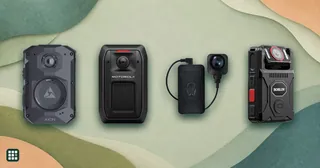 Body cameras
 are wearable video recorders used by security guards, retail and healthcare staff, and police. The real decision is between a cheap camera you buy outright and an agency system that adds cloud storage, evidence software and a contract. This grid compares video quality, battery, storage, GPS, live streaming, durability and cost.
-
 Identity and access management (SSO) software
Identity and access management (IAM) software lets employees sign in once to every work app (single sign-on, SSO) and protects those logins with multi-factor authentication. Vendors differ in how much they bundle: some stop at SSO and MFA, others add automated user provisioning, device management, privileged access and access reviews. The decision is how much of that you need now, what you pay per user, and whether you are locked into annual billing.