



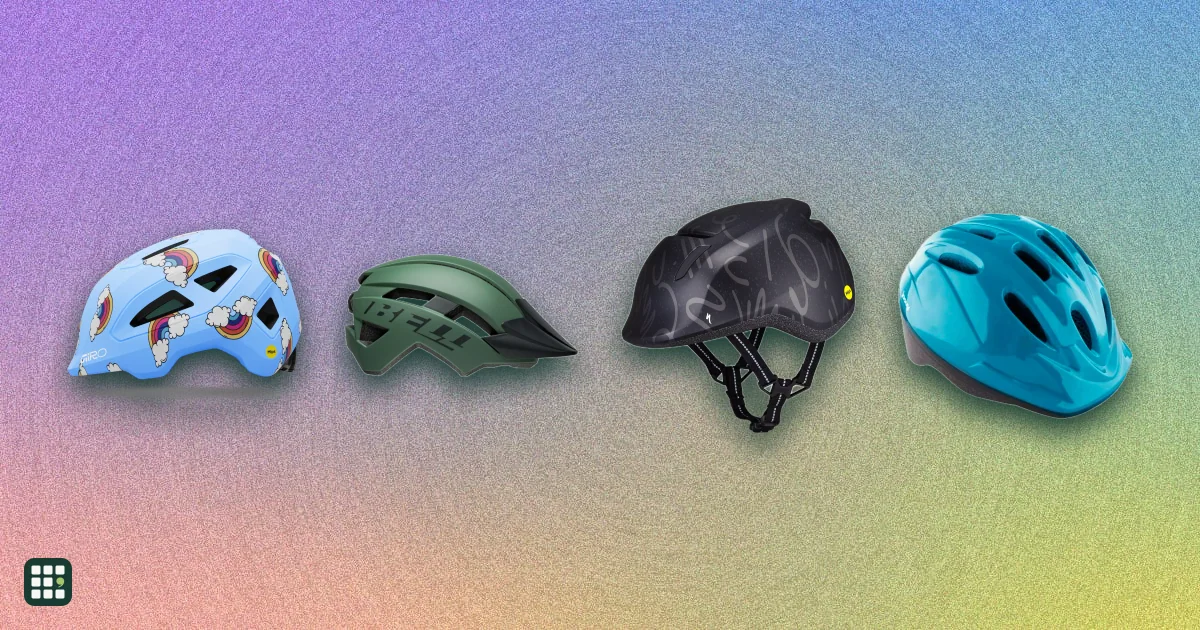
Kids bike helmets
Compare 14 bike helmets for toddlers and kids, from $34.99 to $84.95, on age range, head size, weight, rotational impact protection (MIPS or KinetiCore), buckle type and extra certifications. Every helmet sold in the US must meet the CPSC bicycle standard, so the choice comes down to a snug fit for a small, fast-growing head, extra protection for angled impacts, and comfort your child will accept.
Last updated
How to choose
1. Fit comes first
Measure around your child's head, level, just above the eyebrows and ears, in centimeters. Choose a helmet whose range includes that number, ideally near the middle so it still fits as they grow. Check the smallest and largest head size rows: toddler helmets start around 45 cm, while some child helmets do not fit below 50 cm. The helmet should sit level, low on the forehead (about two fingers above the eyebrows), with the straps forming a V under each ear and room for no more than one finger under the chin.
2. Match the helmet to the age
CPSC rules cover children from age 1, but some helmets are sized only for older kids. A toddler on a bike seat, trailer or balance bike needs a small, light model. Weight matters more at this age than for adults: a helmet over about 350 g can strain a young neck.
3. Consider rotational protection
MIPS and KinetiCore add a layer that is designed to reduce twisting forces in an angled impact. The CPSC test does not measure this, and there are no independent lab ratings for kids' helmets, so treat it as a sensible extra rather than a proven winner. A well-fitted helmet without it is better than a loose one with it.
4. Pick a buckle your child will tolerate
A pinched chin is the most common reason a child refuses to wear a helmet. Look for a pinch-free or magnetic buckle, and check how the straps adjust at the ears.
5. Other things to check
- Skate certification: an ASTM F1492 certification means the same helmet also works for skateboards and scooters.
- Visibility: reflective details and a clip-on rear light help at dusk.
- Replacement: replace a helmet after any real impact, even if it looks fine, and when your child outgrows its range. Some makers offer a discounted or free crash replacement.
Answer
Browse the table. Filter to what matters.
Use the filters below, then sign in if you want to shortlist and decide with friends.
Sign in to vote, hide products and features, and reorder.
Verified: hover a cell and click its green dot for the source Estimate: no cited source Not stated: the maker doesn't publish it
| Feature | ⠿ | ⠿ | ⠿ | ⠿ | ⠿ | ⠿ | ⠿ | ⠿ | ⠿ | ⠿ | ⠿ | ⠿ | ⠿ | ⠿ |
|---|---|---|---|---|---|---|---|---|---|---|---|---|---|---|
|
⠿
Price
|
||||||||||||||
|
⠿
Age range
|
||||||||||||||
|
⠿
Smallest head size
|
||||||||||||||
|
⠿
Largest head size
|
||||||||||||||
|
⠿
Weight
|
||||||||||||||
|
⠿
Rotational impact protection
|
|
|
|
|
|
|
||||||||
|
⠿
Rotational system
|
None
|
None
|
None
|
None
|
None
|
None
|
||||||||
|
⠿
Pinch free buckle
|
||||||||||||||
|
⠿
Also certified for skating
|
|
|
|
|
|
|
|
|
||||||
|
⠿
Safety certifications
|
||||||||||||||
|
⠿
Fit system
|
||||||||||||||
|
⠿
Vents
|
||||||||||||||
|
⠿
Visor
|
Why these features matter
-
Price ($)
Kids outgrow helmets in a few years, so price matters; spending more mostly buys rotational protection, a nicer buckle or style, not a different safety standard.
-
Age range
A helmet sized for older kids is too big and unsafe on a toddler, and a toddler helmet is outgrown quickly. Match it to your child's age and head size.
-
Smallest head size (cm)
If your child's head is below this number, the helmet will be loose and less protective. Toddlers often need 46 cm or less.
-
Largest head size (cm)
A higher maximum means the helmet lasts longer as your child grows.
-
Weight (g)
A lighter helmet is easier on a small neck and is more likely to be worn without complaint.
-
Rotational impact protection
Rotational systems are designed for angled impacts, which the CPSC test does not measure. No independent test has compared them in kids' helmets.
-
Rotational system
MIPS is a slip layer inside the helmet; KinetiCore uses crumpling foam blocks built into it. Both aim at angled impacts.
-
Pinch free buckle
A buckle that pinches the chin is a common reason kids refuse to wear a helmet.
-
Also certified for skating
A single helmet that also covers scooters and skates saves buying a second one.
-
Safety certifications
CPSC is the legal US bicycle standard; CE EN 1078 is the European one, and ASTM F1492 covers skate use. A US buyer should see CPSC or a maker claim of US compliance.
-
Fit system
A rear dial lets a parent tighten the helmet one-handed and keeps it snug as a child grows; a poorly adjusted helmet protects less.
-
Vents (vents)
More vents usually mean a cooler head on warm days, which helps a child keep the helmet on; fit and weight matter more.
-
Visor
A visor shades the eyes from sun and helps keep rain off the face; it can also catch on a bike seat or trailer.
About the products
-
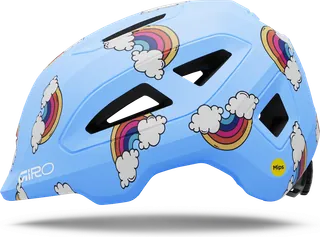
Scamp MIPS II · Giro
Giro's smallest helmet, made for toddlers up to about age 5 or older kids in the larger size, with MIPS Evolve Core and a dial fit shaped for a child's head. Often sold out on Giro's own site.
-
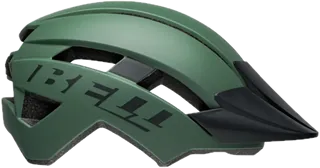
Sidetrack II MIPS · Bell
A mountain-style kids helmet with MIPS Evolve, a removable visor and two universal sizes (child and youth) that cover roughly 47 to 57 cm. Suits older kids on pedal bikes more than toddlers.
-
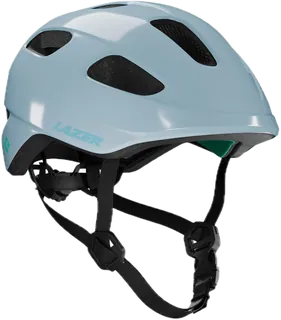
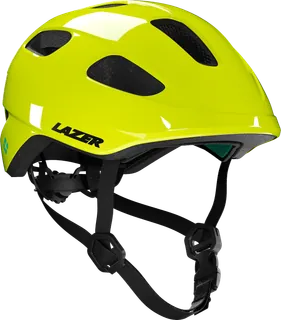
Pnut 2.0 KinetiCore · Lazer
Lazer's helmet for the youngest riders in bike seats, trailers and cargo bikes: flat back, cheek-side buckle, insect net and built-in KinetiCore protection. Lazer's global site shows no US price.
-
Nutz 2.0 KinetiCore · Lazer
Lazer's helmet for first pedal and balance bikes: KinetiCore protection, extra temple coverage, a cheek-side buckle, insect net and an adjustable head basket that grows with the child.
-
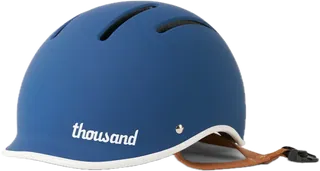
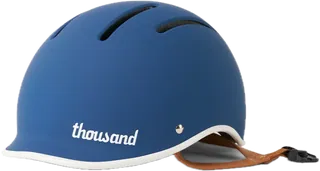
Jr. Kids Helmet · Thousand
A stylish multi-sport helmet for kids with a magnetic no-pinch buckle, a dial fit and free accident replacement. Also certified for skateboarding and skating. Heavier than most here at 390 g.
-
Jr. Toddler Helmet · Thousand
Thousand's helmet for ages 1 and up, at 220 g with two sets of pads and a dial fit for heads 45 to 49 cm. Also certified for skating and skateboarding.
-
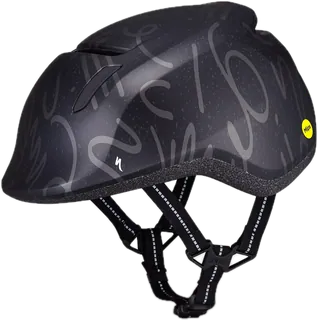
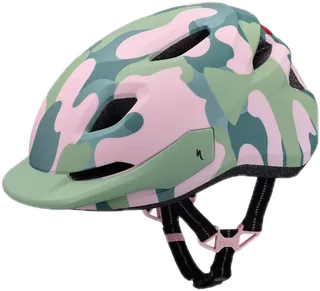
Mio 2 · Specialized
A MIPS-equipped toddler helmet for heads 46 to 51 cm (about up to age 3), designed with extra low-density foam for young children. Has a standard buckle that some parents find pinches.
-
Shuffle 2 · Specialized
A MIPS Essential Core helmet for heads 49 to 55 cm (about up to age 7), with a clip-on visor, rear reflector and a standard buckle. An LED version costs $10 more.
-
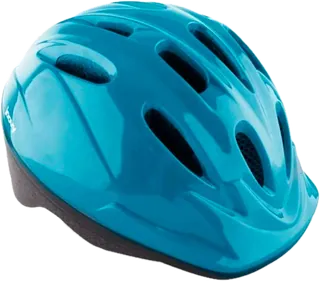
Noodle · Joovy
The lowest-priced and lightest helmet here, in two sizes covering ages 1 to 9, with a dial fit, no-pinch buckle, bug mesh and visor. No rotational impact system.
-
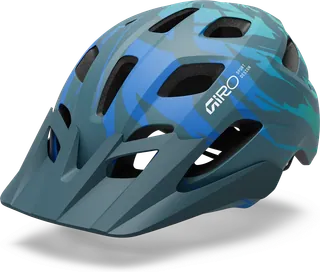
Tremor MIPS Child · Giro
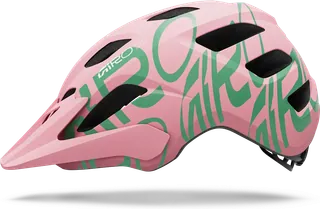
A sporty, well-ventilated (18 vents) child helmet with MIPS and a one-handed dial fit, in one universal child size for heads 47 to 54 cm. Often sold out on Giro's own site.
-
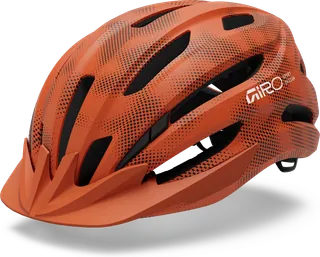
Register MIPS II Youth · Giro
A recreational helmet with MIPS Evolve Core, 19 vents and a removable visor, in one universal youth size for heads 50 to 57 cm. Suits older kids; too big for toddlers. Often sold out on Giro's own site.
-
Lil Ripper · Bell
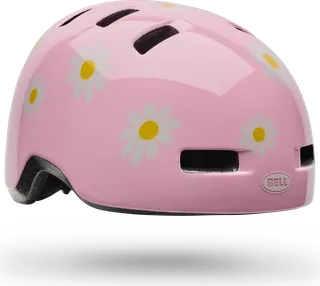
Bell's toddler helmet for bike trailers and balance bikes, in two sizes with a dial fit and a no-pinch side buckle. Light at 221 g, with no rotational impact system.
-
Tremor Child · Giro
The non-MIPS version of Giro's well-ventilated (18 vents) Tremor, in one universal child size for heads 47 to 54 cm with a one-handed dial fit. A $15 cheaper alternative to the MIPS model. Often sold out on Giro's own site.
-
Scamp II · Giro
Giro's smallest helmet without MIPS: 13 vents and a simple dial fit in two sizes (XS from age 1, S from age 5). $20 less than the MIPS version. Often sold out on Giro's own site.
Suggest a change
Related comparisons
-
 Bike rentals in Amsterdam, Netherlands
Amsterdam is built for cycling, and renting a bike is the easiest way to see it like a local. This grid compares ten ways to get one inside the city: seven rental shops, from MacBike and Black Bikes' citywide networks to small independents in the Jordaan and De Pijp, plus the railways' OV-fiets, Donkey Republic's app bikes and the Swapfiets monthly subscription. It covers day, 3-hour and e-bike prices (including any compulsory cover), hand brakes, plain or branded bikes, locks, insurance, deposits, opening hours, booking and cancellation.
-
 Bike rentals in Austin, US
Austin's Lady Bird Lake Hike and Bike Trail makes a bike one of the easiest ways to see Downtown, Zilker Park and Barton Springs. Compare CapMetro Bikeshare's docked e-assist bikes with rental shops near Zilker and Downtown: 2-hour and full-day prices where published, e-bikes, helmets and locks, hours, booking, rider requirements and delivery.
-
 Bike rentals in Barcelona, Spain
Barcelona is a good city for cycling, with a long seafront promenade and a growing network of bike lanes. This grid compares rental shops in the Gothic Quarter, around Plaça de Catalunya and in the Eixample with the city's app-based bike shares on price for 2 hours and a full day on a classic bike and an e-bike, bike types, kids' options, what's included, hours, booking, deposits and insurance.
-
 Folding bikes
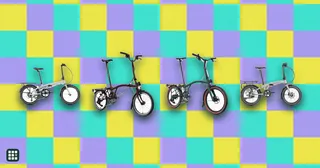
 compared for commuting, trains, small apartments and travel: Brompton and other compact 16-inch folders, 20-inch Tern and Dahon bikes, budget models, and full-size folders. The choice comes down to how small and fast it folds, how heavy it is to carry, the gearing for your hills, whether it fits your height, and how much you want built in for daily riding.
-
 Road bikes
Compare 22 current road bikes from 11 makers, plus a few recently retired builds: race, aero and endurance bikes from about $2,000 aluminum models to $10,000+ carbon superbikes. The real trade-offs are position (race vs upright), tire clearance, gearing, wheels and how you buy and service the bike.
-
 Bike helmets
Compare 22 adult bike helmets for road, mountain (trail) and commuting, from $65 to $400, sold in the US. Every helmet sold here passes the same CPSC test, but independent Virginia Tech lab tests show big differences in how well they reduce concussion risk, and price is a poor guide: several $65 to $120 helmets earn the top 5 stars while some $400 ones do not. Beyond safety, the trade-offs are weight, airflow, visors, lights and fit.