



Luggage
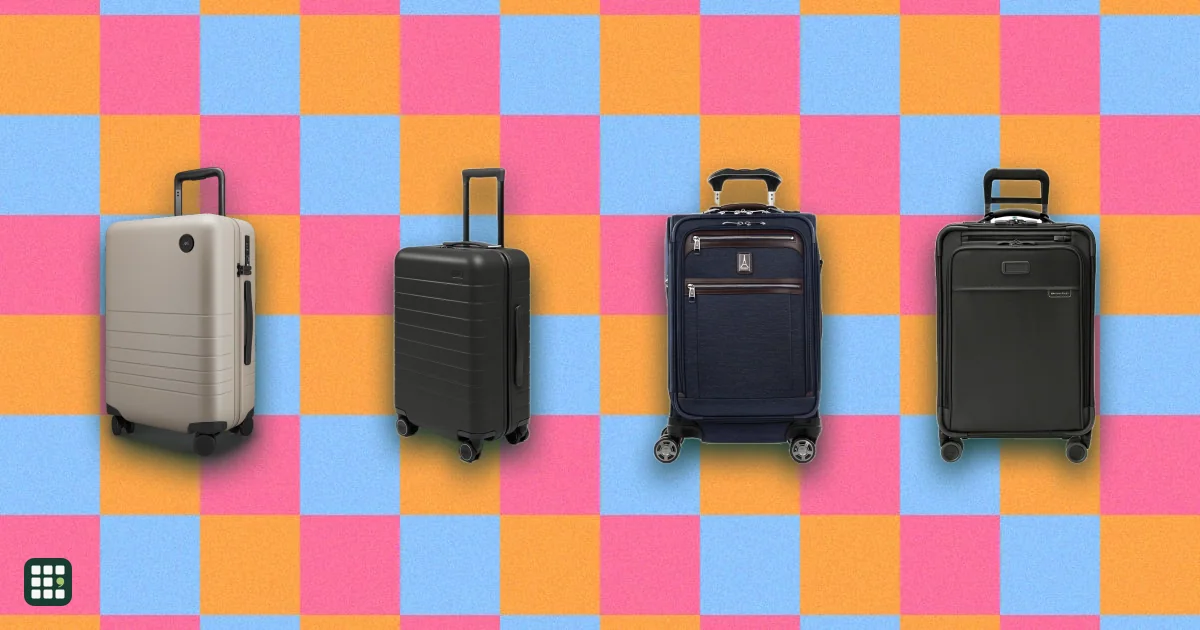
Wheeled suitcases from the brands US travelers shop most, from direct-to-consumer hardside carry-ons to lifetime-guaranteed softside workhorses and aluminum-era icons. The real trade-offs are size versus airline limits, weight versus toughness, and how much a warranty actually covers when an airline breaks a wheel.
Last updated
How to choose
Start with the trips you take
Decide whether you need a carry-on (no bag fee, no waiting at the carousel, but tight space and strict size limits) or a checked case (a week or more of clothes, but a bag fee on most fares). Many people buy a carry-on first and add a medium checked case from the same line later; several of these nest inside each other for storage.
Check the size against your airline, including wheels
- The common US domestic limit is 22 x 14 x 9 in including wheels and handles. Compare the Height, Width and Depth rows to it: several popular "carry-ons" here are deeper or wider than that and rely on agents not measuring.
- International and budget airlines are often smaller (around 55 x 40 x 20 cm) and many cap carry-on weight at 7 to 10 kg, which makes the case's own weight matter.
- Expanding a carry-on almost always takes it past the limit; treat expansion as room for the trip home in a checked bag, or for compressing back down.
Hardside or softside
- Hardside (polycarbonate, polypropylene, aluminum) protects fragile things and sheds rain. Polycarbonate flexes and pops back; polypropylene is lighter and cheaper; shells scuff and can crack.
- Softside (ballistic or ripstop nylon) squeezes into tight bins, usually has outside pockets, and abrasion shows less. Ballistic nylon is the toughest; ultralight ripstop saves weight.
Wheels and handle
Four- or eight-wheel spinners glide upright through terminals and down aircraft aisles. Two inline wheels roll better over curbs and cobblestones, are harder to break, and leave more packing room inside.
Read the warranty, not the word "lifetime"
Most "lifetime" warranties cover manufacturing defects only. A few also cover airline or accidental damage, which is how most suitcases actually die. Check whether repairs are free, whether you pay shipping, and whether you need proof of purchase.
Use the trial
Several direct-to-consumer brands let you return a case within 100 days, but most require it to be unused. Pack it at home, measure it against your airline's limits, and roll it around before the first trip.
Before you buy
- Prices here are regular list prices; luggage is on sale often, so it pays to wait for a promotion.
- Compare capacity in liters rather than inches, and check whether the maker quotes interior or exterior volume.
- Extras like ejectable batteries and front laptop pockets add weight; pick them only if you will use them.
Answer
Browse the table. Filter to what matters.
Use the filters below, then sign in if you want to shortlist and decide with friends.
Sign in to vote, hide products and features, and reorder.
Verified: hover a cell and click its green dot for the source Estimate: no cited source Not stated: the maker doesn't publish it
| Feature | ⠿ | ⠿ | ⠿ | ⠿ | ⠿ | ⠿ | ⠿ | ⠿ | ⠿ | ⠿ | ⠿ | ⠿ | ⠿ | ⠿ |
|---|---|---|---|---|---|---|---|---|---|---|---|---|---|---|
|
⠿
Price
|
||||||||||||||
|
⠿
Size class
|
||||||||||||||
|
⠿
Shell type
|
Hardside
|
Hardside
|
||||||||||||
|
⠿
Shell material
|
Nylon with DuraGuard coating
|
Polycarbonate
|
Polycarbonate
|
|||||||||||
|
⠿
Height
|
||||||||||||||
|
⠿
Width
|
||||||||||||||
|
⠿
Depth
|
||||||||||||||
|
⠿
Weight
|
||||||||||||||
|
⠿
Capacity
|
||||||||||||||
|
⠿
Expandable
|
|
|
|
|
|
|
|
|||||||
|
⠿
Wheels
|
4 spinner
|
|||||||||||||
|
⠿
Built in TSA lock
|
|
|
|
|||||||||||
|
⠿
Front laptop pocket
|
|
|
|
|
|
|
|
|
|
|
|
|
|
|
|
⠿
Compression system
|
|
|
|
|
|
|
||||||||
|
⠿
Warranty
|
||||||||||||||
|
⠿
Trial period
|
Why these features matter
-
Price ($)
Luggage prices span 10x; a premium case buys better wheels, materials and warranty, but a mid-price case does the same job for occasional travelers.
-
Size class
Carry-ons avoid bag fees and waiting at the carousel; checked sizes hold a week or more of clothes but cost a bag fee on most fares.
-
Shell type
Hardside protects fragile items and sheds rain; softside flexes into tight bins, usually has outside pockets, and scuffs less visibly.
-
Shell material
Polycarbonate flexes and recovers from impacts; aluminum is toughest but dents and is heavy; ballistic nylon resists abrasion and is easy to repair.
-
Height (in)
US airlines' common carry-on limit is 22 in tall including wheels; a case over that can be gate-checked.
-
Width (in)
Most US carry-on limits allow 14 in wide; wider cases may not fit sideways in bins.
-
Depth (in)
Most US carry-on limits allow 9 in deep; expanding a carry-on usually pushes it past that.
-
Weight (lb)
Every pound of case is a pound less packing under airline weight limits (often 50 lb checked, and strict carry-on limits on many non-US airlines).
-
Capacity (L)
Liters compare packing space across brands better than inches; a carry-on is typically 35 to 45 L.
-
Expandable
Expansion gives room for souvenirs on the way home, but an expanded carry-on may exceed size limits.
-
Wheels
Spinners glide upright through airports and aisles; 2 inline wheels roll better over curbs and cobblestones and waste less interior space.
-
Built in TSA lock
A built-in TSA lock secures the zips without a padlock that security can still open; matters most for checked bags.
-
Front laptop pocket
A front pocket lets you pull out a laptop at security without opening the case; useful for business travel.
-
Compression system
Compression lets you pack more and keeps clothes from shifting; tie-down straps alone do much less.
-
Warranty
A warranty that covers airline damage saves the cost of a new case after one bad baggage handler; many cover only manufacturing defects.
-
Trial period (days)
A long trial lets you test the case on a real trip before committing.
About the products
-
Monos Carry-On · Monos
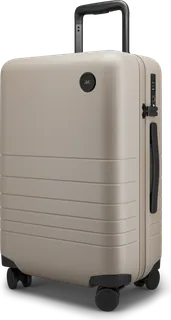
A light (6.6 lb) polycarbonate carry-on that fits the 22 x 14 x 9 in US limit exactly, with a removable compression pad. Not expandable and no outside pockets; often discounted from its list price.
-
Freeform Carry-On Spinner · Samsonite
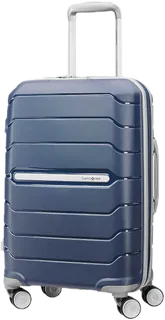
An affordable, light polypropylene hardside carry-on that expands and has double spinner wheels. Its 10 in depth is over the common US 9 in limit, and Samsonite's own store blocked research, so details come from retailers.
-
Freeform Large Spinner · Samsonite
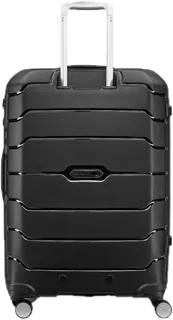
A large, inexpensive polypropylene checked case for long trips or families, expandable with double spinner wheels and a 10-year limited warranty. Large cases like this can easily exceed 50 lb when full.
-
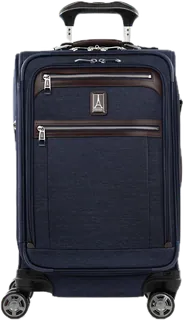
Platinum Elite Carry-On Expandable Spinner · Travelpro
A softside nylon carry-on built for frequent flyers, with a fold-out suiter, USB port and 2 in expansion. Travelpro lists it at 23.5 in tall including handles, over the 22 in US limit; the warranty covers defects only.
-
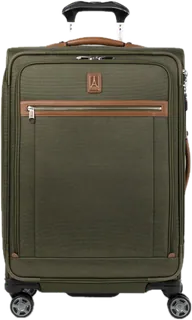
Platinum Elite Medium Check-In Expandable Spinner · Travelpro
Travelpro's medium softside checked case with a built-in suiter, TSA lock and 2 in expansion, sized to the 62 linear inch checked limit. Defects-only lifetime warranty plus a 100-day trial.
-
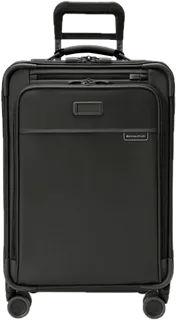
Baseline Essential 22" Carry-On Expandable Spinner · Briggs & Riley
A premium ballistic-nylon carry-on whose CX system expands for packing, then compresses back to 22 x 14 x 9 in. Heavy at 10 lb, but Briggs & Riley repairs it for life even after airline damage, with no proof of purchase.
-
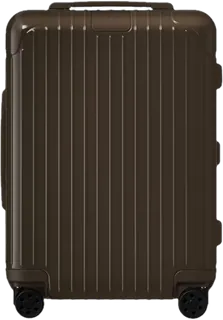
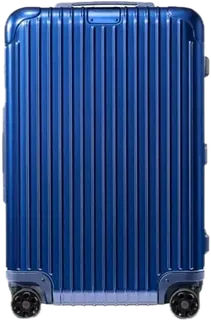
Rimowa Essential Cabin · Rimowa
Rimowa's polycarbonate cabin case with Multiwheel double wheels, a Flex Divider compression system and a lifetime guarantee. Expensive, and at 15.8 in wide it is better suited to international cabin limits than tight US bins.
-
Rimowa Essential Check-In M · Rimowa
Rimowa's medium polycarbonate checked case (60 L) with Multiwheel wheels, TSA locks and the Flex Divider. A luxury price for a case that is light for its size; returns must be unused within 30 days.
-
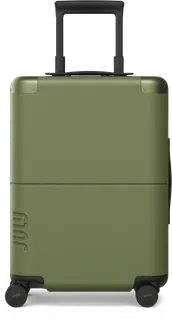
July Carry On · July
A polycarbonate carry-on with an ejectable USB-C battery, Y-strap compression and an integrated TSA lock, sized slightly under US limits at 21.5 x 15 x 8.5 in. Lifetime warranty covers manufacturing faults.
-
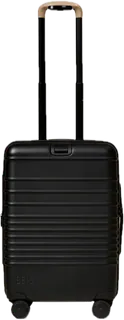
BÉIS The Carry-On Roller · BÉIS
A big-capacity polycarbonate carry-on (49 L, 61 L expanded) with a built-in weight indicator and compression. At 22.83 x 15.7 x 10 in it is larger than most US carry-on limits, so it suits overpackers who accept gate-check risk.
-
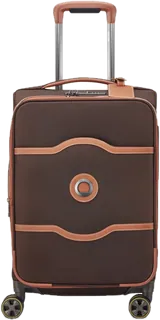
Chatelet Air 2.0 23-Inch Expandable Carry-On · Delsey
A vintage-styled softside carry-on in recycled polyester with leather-look trim, double wheels, a SECURITECH double zipper and expansion. Larger than US carry-on limits at 22.75 x 15 x 10 in; often on sale well below list.
-
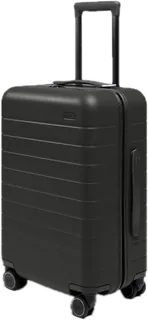
Away The Carry-On 3 · Away
Away's current polycarbonate carry-on with a compression pad, wheel brakes and an embedded TSA lock. Not expandable (that is the Flex version), and at 22.1 x 14.4 in it is a touch over the 22 x 14 in US limit.
-
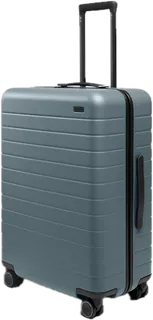
Away The Medium 3 · Away
Away's mid-size checked case for one- to two-week trips, with the same compression pad, brakes and lock as the carry-on. Repairs are free for five years; after that Away still repairs but may charge.
-
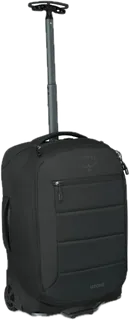
Ozone 2-Wheel 40L Carry-On · Osprey
An ultralight (4.6 lb) softside carry-on on two large inline wheels, made from recycled ripstop on an aluminum frame. Osprey repairs or replaces it for any damage; no expansion, lock or compression panel.
Suggest a change
Related comparisons
-
 Serviced apartments in Lisbon, Portugal
Serviced apartments and aparthotels inside the City of Lisbon: furnished units with their own kitchen or kitchenette plus hotel-style services such as a front desk and housekeeping. They range from a huge convent-turned-aparthotel near Avenida da Liberdade to family-focused apartments in Chiado and Parque das Nações. The trade-offs are location against space and price, how much cooking you can really do, and whether you need hotel services or just a well-run flat for a few weeks.
-
 Coliving spaces in Lisbon, Portugal
Coliving spaces inside the City of Lisbon: furnished private rooms with shared kitchens, lounges and often a coworking room, rented by the month with bills included. They range from small nomad houses in Baixa, Cais do Sodré and Intendente to a whole refurbished building in Benfica and studio residences for students and young professionals: two Nido buildings, by Santa Apolónia station and in Ajuda, and two Livensa buildings, at Cidade Universitária and Marquês de Pombal. The trade-offs are price against privacy (shared or ensuite bathroom, kitchenette), how short a stay you can book, and how much community you actually want.
-
 Coliving spaces in Barcelona, Spain
Coliving in Barcelona means a furnished private room in a shared flat or building, with utilities, wifi and cleaning folded into one monthly rent and a community of other residents. This grid compares operators inside the city by price from, location, minimum stay, bills, deposits, fees and who each one welcomes. The main trade-offs are cheap shared-flat rooms in the 550 to 900 EUR range against studios, pools and coworking at well over 1,500 EUR.
-
 Countries to live in
Thirty-four popular countries compared for Americans who want to live abroad: how long you can stay without a visa, the easiest route to a long stay, the path to permanent residence and citizenship, what rent and daily life cost, and how safe, healthy and easy to live in each place is. Rules and thresholds change, so confirm the details with the country's government before you commit.
-
 Digital nomad destinations
A comparison of selected temporary-stay routes that allow remote work for foreign employers or clients. This is a starting point for checking eligibility, not immigration or tax advice; confirm the current rules with the destination’s immigration authority and the consulate handling your application.
-
 Cities to live in
Compare 12 large cities on total living costs, rent, groceries, eating out, local purchasing power, perceived safety, health care, home prices, commuting, pollution and climate. The indices show how destinations differ; they cannot tell you whether you can get a visa, find work, or afford the neighborhood you actually want, so treat them as the start of the research, not the answer.