



Satellite messengers
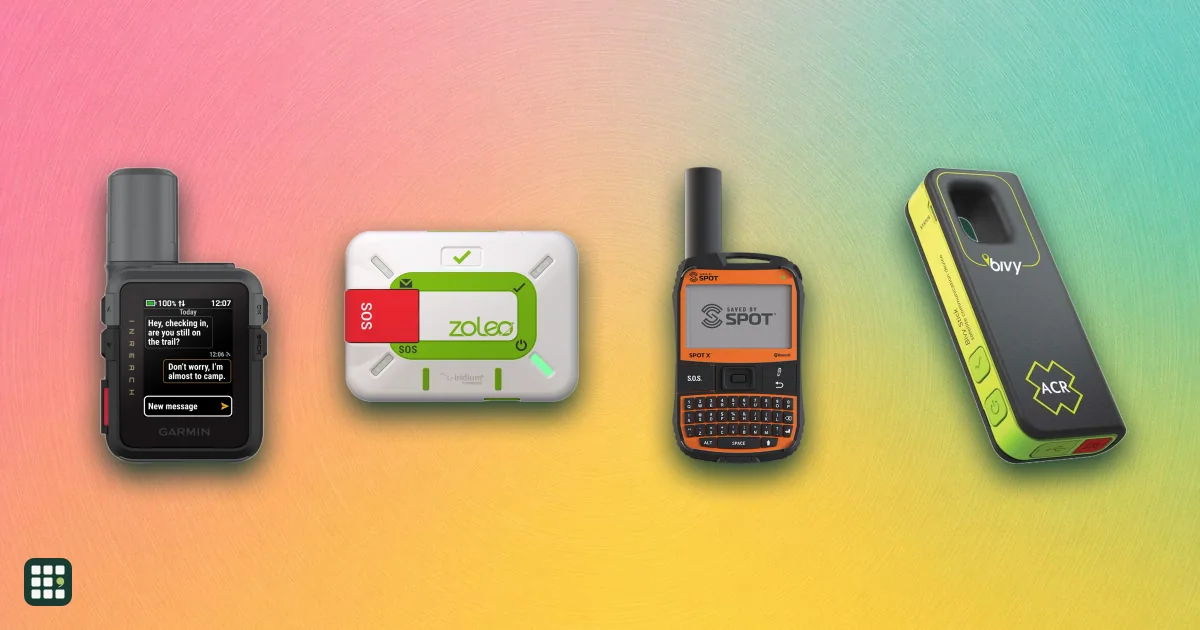
Satellite messengers let you send an SOS, check in, and text family from places with no cell signal. They differ in the satellite network they use, whether you can type without your phone, whether anyone can reply, and above all in the monthly plan you keep paying after you buy the device.
Last updated
How to choose
Start with where you go
Devices on the Iridium network (Garmin inReach, ZOLEO, Bivy Stick) work anywhere on Earth, including oceans and the poles. Globalstar devices (SPOT) cost less to run but cover mainly North America, Europe, Australia and parts of other continents, and two-way messaging works in fewer places than SOS. If you sail offshore or travel far, check the maker's coverage map first.
Decide how much you need to say
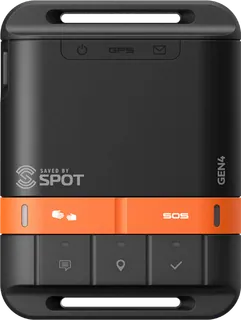
- One-way devices like the SPOT Gen4 send SOS, check-ins and preset messages, but nobody can reply.
- Two-way devices let rescuers ask questions and family answer. Most work best with a phone app.
- If your phone dies, a device with its own keyboard (Garmin inReach, SPOT X) can still text. Screenless pucks (ZOLEO, Bivy Stick) can only send SOS and check-ins on their own.
Count the plan, not just the device
Plans run from about $8 to $20 a month for the cheapest tier, and cheap tiers often charge per message. Check for an activation fee, a minimum term (often 3 months) or annual contract, and whether you can pause the plan in the off season. Over three years the plan usually costs more than the device.
Check who answers an SOS
Each maker routes SOS to a 24/7 coordination center (Garmin Response, Global Rescue, or FocusPoint International), which contacts local rescue services. SOS messages are included on every plan; rescue costs are not, so consider rescue insurance for remote or international trips.
Battery, weight and toughness
Claimed battery life assumes a clear sky; trees and canyons cut it sharply. Rechargeable devices need a power bank on long trips, while replaceable AAA batteries can be swapped. Paddlers should look for IPX7 or better.
Phones with satellite texting
Some recent phones can text and call for help by satellite. They are handy as a backup but have limited coverage and battery, and no tracking for family, so serious backcountry users still carry a dedicated messenger.
Answer
Browse the table. Filter to what matters.
Use the filters below, then sign in if you want to shortlist and decide with friends.
Sign in to vote, hide products and features, and reorder.
Verified: hover a cell and click its green dot for the source Estimate: no cited source
| Feature | ⠿ | ⠿ | ⠿ | ⠿ | ⠿ | ⠿ | ⠿ | ⠿ | ⠿ |
|---|---|---|---|---|---|---|---|---|---|
|
⠿
Price
|
|||||||||
|
⠿
Cheapest plan
|
|||||||||
|
⠿
Two way messaging
|
|
||||||||
|
⠿
SOS
|
|||||||||
|
⠿
SOS response center
|
Global Rescue
|
FocusPoint International
|
|||||||
|
⠿
Satellite network
|
|||||||||
|
⠿
Coverage
|
|||||||||
|
⠿
Messaging without phone
|
|||||||||
|
⠿
Screen
|
None (status lights only)
|
Monochrome screen
|
None (status lights only)
|
None (status lights only)
|
|||||
|
⠿
Photo and voice messages
|
|
|
|
|
|
|
|
||
|
⠿
Tracking interval
|
|||||||||
|
⠿
Battery life
|
|||||||||
|
⠿
Battery type
|
Rechargeable internal lithium-ion
|
||||||||
|
⠿
Weight
|
|||||||||
|
⠿
Water rating
|
|||||||||
|
⠿
Weather forecasts
|
|
|
|||||||
|
⠿
Navigation
|
TracBack only (maps in phone app)
|
None (app only)
|
None
|
None (app only)
|
|||||
|
⠿
Month to month plan
|
|||||||||
|
⠿
Activation fee
|
$39.99
|
$39.99
|
$39.99
|
$39.99
|
$39.99
|
||||
|
⠿
Cell and WiFi fallback
|
|
|
|
Why these features matter
-
Price ($)
The device is only the first cost; the plan you keep paying usually costs more over a few years.
-
Cheapest plan ($/month)
What it costs to keep the device live. Cheap base plans often charge per message, so check what's included if you'll text a lot.
-
Two way messaging
Two-way lets rescuers ask questions and lets family reply; one-way devices only tell people you're OK or where you are.
-
SOS
The main reason most people carry one. Without SOS it's only a messenger.
-
SOS response center
A staffed center coordinates with local rescue services; experience and two-way contact with you matter in a real emergency.
-
Satellite network
Iridium covers the whole planet, poles included; Globalstar has gaps over oceans and some regions and can be slower behind ridges.
-
Coverage
If you travel abroad, sail offshore, or go to remote regions, a regional network may not work where you're going.
-
Messaging without phone
Phones die, break or get wet. A device that can text on its own keeps you in touch when your phone can't.
-
Screen
A screen lets you read replies and navigate without a phone; no screen means the phone does all the work.
-
Photo and voice messages
Useful for showing an injury or a trail condition, but uses more data and battery; most people only need text.
-
Tracking interval (min)
Shorter intervals give family and rescuers a more accurate trail, at the cost of battery and sometimes plan level.
-
Battery life (hr)
Matters most on long trips without a way to charge; claims assume clear sky, and trees or canyons cut them.
-
Battery type
Replaceable batteries can be swapped in the field; internal batteries need a power bank on long trips.
-
Weight (oz)
Every ounce counts for ultralight hikers; a few ounces rarely matter for car campers or boaters.
-
Water rating
IPX7 survives a dunking; IP67 adds dust sealing; IP68 is rated for longer or deeper submersion, which matters for paddlers.
-
Weather forecasts
Forecasts off-grid help decide whether to push on, turn back, or stay put.
-
Navigation
On-device navigation can be a backup to your phone; most messengers leave mapping to a phone app.
-
Month to month plan
Month-to-month plans let you pay only in the seasons you go out; annual contracts cost less per month but lock you in.
-
Activation fee ($)
Adds to your first-year cost and sometimes applies again when you reactivate a cancelled plan.
-
Cell and WiFi fallback
Saves satellite messages and money, and contacts see one conversation whether you're in or out of coverage.
About the products
-
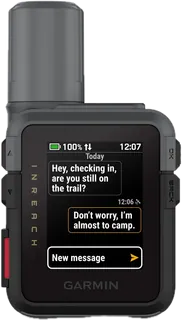
inReach Mini 3 · Garmin
A palm-sized Iridium messenger with a color touchscreen and on-screen keyboard, so you can text, navigate back and get weather without your phone. Text only; photo and voice need the Mini 3 Plus.
-
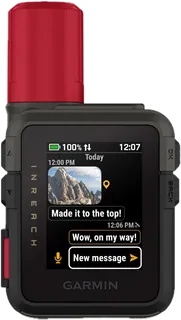
inReach Mini 3 Plus · Garmin
The Mini 3 with photo and voice messaging over satellite (photos are sent from the paired phone app), a safety siren and voice notes. The most capable small messenger here, and the priciest.
-
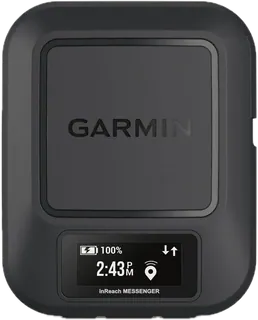
inReach Messenger · Garmin
A phone-first Iridium messenger with a small monochrome screen: pair it with the Garmin Messenger app for easy texting, or type on the device in a pinch. Very long battery life, but no on-device maps.
-
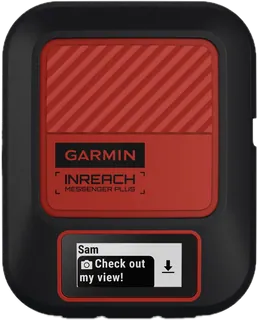
inReach Messenger Plus · Garmin
The Messenger with photo and voice messages over satellite and up to 1,600-character texts. Good for people who want rich messages through their phone with a long-lasting puck as backup.
-
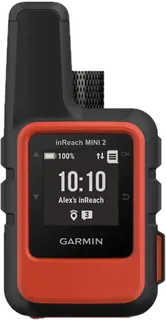
inReach Mini 2 · Garmin · Superseded Dec 2025
The previous Mini, still sold by Garmin as a previous model: monochrome screen, TracBack and point-to-point navigation, and 14 days at 10-minute tracking. Cheaper than the Mini 3 but without a touchscreen.
-
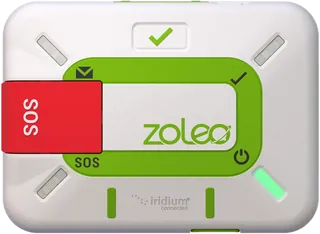
ZOLEO Satellite Communicator · ZOLEO
A screenless Iridium puck that pairs with the ZOLEO app: you get your own SMS number and email address, and messages move between cell, Wi-Fi and satellite in one thread. On its own it only sends check-ins and SOS, so it depends on your phone for texting.
-
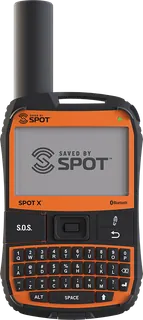
SPOT X · SPOT LLC
The only messenger here with a physical QWERTY keyboard and screen, so you can text without a phone. Uses the Globalstar network, which is cheaper but does not cover the whole planet, and two-way messaging works in fewer areas than SOS.
-
SPOT Gen4 · SPOT LLC
The cheapest device here: one-way only, with buttons for SOS, help, check-in and one preset custom message, plus tracking. Runs for a long time on AAA lithium batteries you can replace in the field, but no one can reply to you.
-
Bivy Stick · ACR Electronics
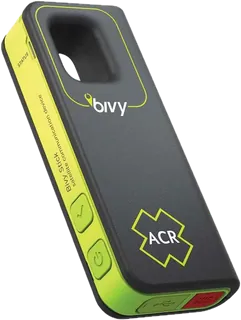
A small Iridium stick with an SOS button and status lights; everything else, including texting, maps and weather, runs in the Bivy app on your phone. SOS goes to Global Rescue. ACR's own spec sheets disagree on its water rating (IPX7 on bivystick.com, IP66 on acrartex.com).
Suggest a change
Related comparisons
-
 SMS and messaging APIs
 let software send and receive messages through a few lines of code. Compare US base SMS and picture-message rates, number costs, separate carrier fees, volume discounts, and RCS availability across eight providers.
-
 Encrypted messaging apps
Compare 41 messaging apps and plan variants across end-to-end encryption defaults, backups, account identity, metadata, recovery, devices, and team controls.
-
 Online fax services
 let you send and receive faxes from a browser, email or phone app, with no fax machine or phone line. The decision is how many pages you need each month, whether you need HIPAA compliance, and what the cheapest plan really includes.
-
 Transactional email services
 deliver the automatic messages your app sends: sign-up confirmations, password resets, receipts and alerts. This grid compares six developer-focused options on entry price, free allowance, overage cost, dedicated IPs, data retention and security basics, so you can match a service to your volume.
-
 Newsletter platforms
Platforms built for publishing a newsletter and, if you like, charging for it. The real trade-offs are whether you pay a monthly fee or a cut of your subscription revenue, how much of the website, automations, and branding you control, and how much of the product is locked behind higher plans. Substack is free until you charge; Ghost and beehiiv charge a flat fee and take nothing from your subscriptions.
-
 Contact center software
Cloud contact center software handles customer calls, chats, texts and email in one place for support and sales teams. This grid compares eleven leading platforms on price, channels, AI, compliance and reach, so you can see which fit your team size and budget. Many vendors publish no prices, and add-ons like workforce management and AI can change the real cost.