




Travel umbrellas
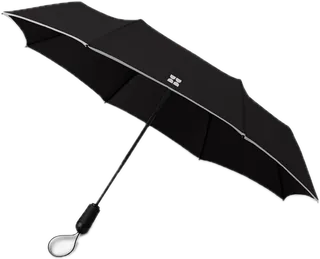
Travel umbrellas fold small enough for a bag or carry-on but still have to survive wind and keep you dry. The real trade-offs are packed size and weight against canopy coverage, frame strength and wind resistance, and a cheap umbrella you won’t mind losing against a pricier one with a lifetime warranty.
Last updated
How to choose
Start with where it will live
Measure the pocket or bag it has to fit. Pocket-size manual minis fold to about 7 to 9 inches and weigh well under 10 oz; one-button auto models are usually 11 to 12 inches and closer to a pound. If it goes in a backpack side pocket every day, small and light wins. If it lives in a car or work bag, size matters less than strength.
Match coverage to how you use it
- About 37 to 39 inches keeps one adult’s head and shoulders dry.
- 40 inches and up also covers a shoulder bag or backpack.
- Check whether the maker quotes the arc (over the curve) or the span (straight across): arc figures look a few inches bigger for the same umbrella.
Judge wind claims carefully
Wind ratings in mph come from each maker’s own tests, not an independent standard. Look for the parts that actually help: flexible fiberglass ribs that spring back, more ribs, a vented or double canopy, and an aerodynamic shape. Steel ribs are stiff but can bend for good.
Decide on auto open and close
One-button open and close is handy getting in and out of cars, taxis and doorways with a bag in your other hand. It adds weight and length, and the spring makes them harder to close.
Count the full cost
Umbrellas break and get left behind. A lifetime warranty or a discount on a lost replacement can make a $60 to $100 umbrella cheaper over a few years than repeatedly buying $20 ones. Read what the warranty covers: some exclude wind damage or require proof of purchase.
Small details that matter on the road
- A sleeve keeps a wet umbrella from soaking your bag.
- Rounded rib tips are kinder to people around you in crowded places.
- A UPF-rated canopy doubles as sun shade on hot trips.
Answer
Browse the table. Filter to what matters.
Use the filters below, then sign in if you want to shortlist and decide with friends.
Sign in to vote, hide products and features, and reorder.
Verified: hover a cell and click its green dot for the source Estimate: no cited source Not stated: the maker doesn't publish it
| Feature | ⠿ | ⠿ | ⠿ | ⠿ | ⠿ | ⠿ | ⠿ | ⠿ | ⠿ |
|---|---|---|---|---|---|---|---|---|---|
|
⠿
Price
|
|||||||||
|
⠿
Packed length
|
|||||||||
|
⠿
Weight
|
15 oz
|
||||||||
|
⠿
Canopy diameter
|
|||||||||
|
⠿
Wind rating
|
|||||||||
|
⠿
Opening
|
|||||||||
|
⠿
Vented canopy
|
|
|
|
|
|
|
|||
|
⠿
Ribs
|
9 ribs
|
||||||||
|
⠿
Rib material
|
|||||||||
|
⠿
UV protection
|
|||||||||
|
⠿
Warranty
|
|||||||||
|
⠿
Carry sleeve included
|
Why these features matter
-
Price ($)
Travel umbrellas run from about $20 to over $100. Pricier ones usually add lifetime warranties, sturdier frames or auto open; a cheap one is fine if you tend to lose umbrellas.
-
Packed length (in)
Decides whether it fits a backpack side pocket, a carry-on organizer or a jacket pocket. Under 10 in slips into most bags; 11 to 12 in is typical for auto open models.
-
Weight (oz)
Matters most if it lives in your bag every day or you count grams for carry-on or hiking. Heavier usually means a stronger frame and auto mechanism.
-
Canopy diameter (in)
Coverage. About 37 in keeps one adult's head and shoulders dry; 40 in and up also covers a bag. Arc figures run a few inches larger than straight-across span for the same umbrella.
-
Wind rating (mph)
Gusty cities and coasts flip cheap umbrellas inside out. Ratings are the makers' own tests, not an independent standard, so use them to compare within a brand more than across brands.
-
Opening
One-button open and close helps when you're juggling bags or getting in and out of cars. Manual umbrellas are lighter, shorter and have less to break.
-
Vented canopy
A vent lets gusts escape so the umbrella is less likely to pull or invert. It adds a little weight and can let some spray through in sideways rain.
-
Ribs (ribs)
More ribs (8 to 10) spread the load and keep the canopy shape in wind; fewer ribs keep weight down.
-
Rib material
Fiberglass flexes and springs back after gusts; steel is strong but can bend for good; aluminum and carbon save weight.
-
UV protection (UPF)
Useful if you also use it for sun on hot trips. A rated canopy blocks most UV; unrated dark fabrics still block a lot but there's no promise.
-
Warranty
Umbrellas break. A lifetime or multi-year warranty makes a pricier umbrella cheaper over time; check whether wind damage is covered.
-
Carry sleeve included
A sleeve keeps a wet umbrella from soaking your bag after use.
About the products
-
Repel Windproof Travel Umbrella · Repel
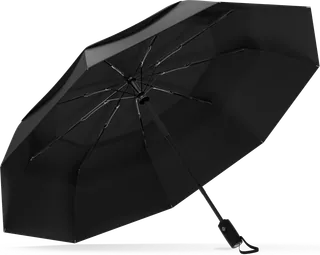
Budget best-seller with one-button open and close, a vented canopy, 9 fiberglass ribs and a lifetime replacement warranty. Its own site claims 50 mph gusts while its Amazon listing claims 100 mph; it is heavier than pocket minis.
-
Davek Solo · Davek
Davek's flagship compact: one-button open and close, a 9-rib fiberglass frame and an unconditional lifetime guarantee. Among the heaviest and priciest here, built to last rather than to save ounces.
-
Davek Mini · Davek
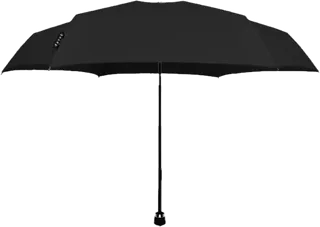
Pocket-size manual umbrella that closes to 7 inches and weighs 8 oz, with Davek's unconditional lifetime guarantee. Six ribs and a smaller canopy make it a backup for light rain, not storms.
-
Davek Commuter · Davek
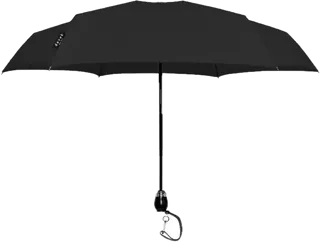
Davek's in-between model (previously sold as the Traveler): closes to 9 inches with one-button open and close and a 40 in arc canopy. Davek states only 'less than 1 lb' for weight.
-
Blunt Metro · Blunt
Blunt's compact with an auto-open button, a taut aerodynamic canopy and patented rounded tips that are safer in crowds. Long for a travel umbrella at 14.8 in closed, and the warranty is 2 years.
-
Blunt Neo · Blunt
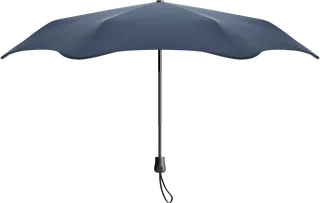
Blunt's lightest and most compact model: 10.2 in closed, 10.8 oz, manual open, UPF 50+ canopy and rounded safety tips. Pricey for a manual umbrella; 2-year warranty.
-
Titan Compact · totes
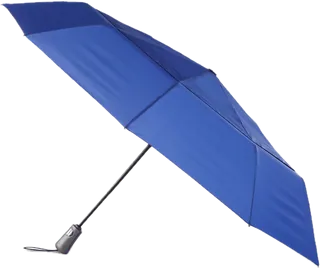
Affordable auto open and close compact with a vented canopy, a 75 mph wind claim and UPF 50+ fabric, in the 43 in one-person size. Larger 47 in and 55 in sizes cost more.
-
Vortex Vented Compact · ShedRain
Low-cost vented compact with auto open and close, a 43 in arc and a wind-tunnel claim of 75 mph. Its UPF 15 canopy is weak for sun use.
-
Weatherman Travel Umbrella · Weatherman
Auto open and close compact under a pound, with a UPF 50+ recycled canopy, reflective trim and a lifetime warranty. Its 45 mph wind rating is lower than most rivals' claims.
Suggest a change
Related comparisons
-
 Folding bikes
 compared for commuting, trains, small apartments and travel: Brompton and other compact 16-inch folders, 20-inch Tern and Dahon bikes, budget models, and full-size folders. The choice comes down to how small and fast it folds, how heavy it is to carry, the gearing for your hills, whether it fits your height, and how much you want built in for daily riding.
-
 Travel backpacks
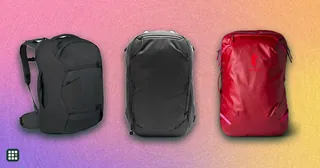
 are built to be your only bag on a trip: they open flat like a suitcase, hold 25 to 45 liters, and are sized to fit airline carry-on limits. This grid compares the best-known models on the things that decide a trip: whether they fit under or over the seat on a US carry-on, how well they protect a laptop, how easy they are to pack and find things in, and how comfortable they are to carry through an airport or a day of walking.
-
 Skateboards
Complete skateboards come assembled with deck, trucks, wheels and bearings, so you can ride out of the box. This grid compares street, cruiser, longboard and surfskate completes by size, components and price, so you can see how a beginner street board differs from a carving longboard or a premium street setup.
-
 Road bikes
Compare 22 current road bikes from 11 makers, plus a few recently retired builds: race, aero and endurance bikes from about $2,000 aluminum models to $10,000+ carbon superbikes. The real trade-offs are position (race vs upright), tire clearance, gearing, wheels and how you buy and service the bike.
-
 Bike helmets
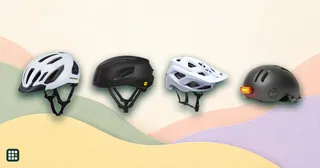
Compare 22 adult bike helmets for road, mountain (trail) and commuting, from $65 to $400, sold in the US. Every helmet sold here passes the same CPSC test, but independent Virginia Tech lab tests show big differences in how well they reduce concussion risk, and price is a poor guide: several $65 to $120 helmets earn the top 5 stars while some $400 ones do not. Beyond safety, the trade-offs are weight, airflow, visors, lights and fit.
-
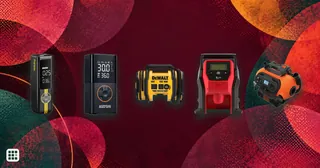 Portable tire inflators
 compared: pocket-size cordless pumps with built-in batteries, inflators that run on Ryobi, DeWalt, Milwaukee and other tool batteries, and 12V and AC/DC compressors for cars, trucks and off-road tires. The choice is about the tires you fill, how fast you need it done, where it will live in your car, and whether you want it to run off a battery or never run out of power.