



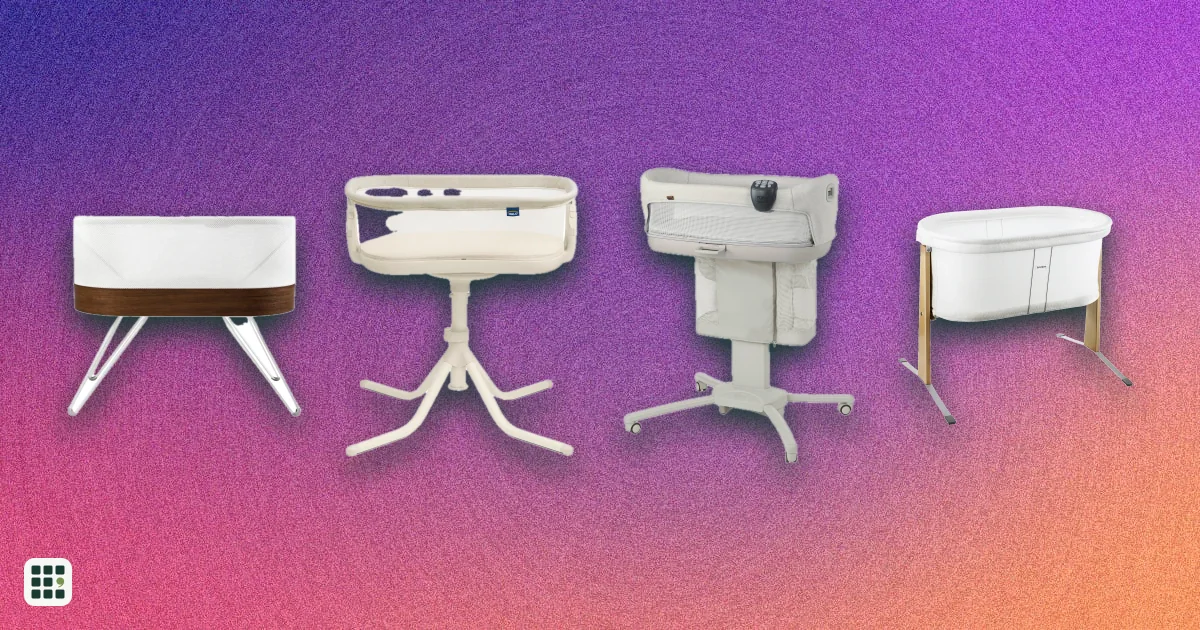
Bassinets
Compare popular bassinets side by side: standalone, bedside, and smart models, with their weight limits, what comes in the box, motion and soothing features, and how easy they are to move or travel with. The real choices are how close you want the baby at night, whether automatic soothing is worth several hundred dollars for a bed used about five months, and how much floor space and portability you need.
Last updated
How to choose
A bassinet is a short-term bed: most babies outgrow one by 4 to 6 months, when they start to roll or push up. Choose for the first few months of nights, then plan the move to a crib.
1. Start with safe sleep
- Bassinets sold in the US must meet the applicable federal CPSC standard (16 CFR 1218). Maker claims such as JPMA certification or FDA De Novo authorization describe different programs and do not replace the federal baseline. Avoid secondhand or recalled models, and check CPSC recalls before you buy.
- Use only the mattress or pad that came with it and a sheet made for it. Never add pillows, bumpers, or a thicker mattress: gaps and soft bedding are the main risks.
- Put the baby on their back, in a sleep sack rather than a loose blanket.
2. Decide where the baby will sleep
- Bedside models lower a wall or swivel over your bed so you can reach the baby without getting up; check the height range fits your mattress.
- Standalone bassinets can go anywhere in the room and often have wheels or fold for travel.
- Smart bassinets rock, sway, or play sound automatically when the baby cries. They can buy extra sleep but cost several times more, need power, and some add app subscriptions.
3. Check the limits
- Compare the max weight and the stop using when milestone. Limits vary by model. Stop when the maker’s earliest stated weight, age, or developmental milestone is reached; many bassinets require stopping when a baby can push up on hands and knees or begins rolling.
- A larger sleep surface gives a long baby more room, but takes more floor space.
4. Count the full cost
- See what's in the box: a mattress pad, at least one fitted sheet, a storage basket, a travel bag. Extra sheets for odd sizes can be hard to find.
- Smart bassinets often resell or rent well; HALO, Happiest Baby, and others offer rental or resale programs worth checking.
Before you buy
- Measure your bed height and the floor space beside it.
- Check the product weight if you'll move it between rooms or take it to grandparents'.
- Read the maker's stop-using rules: they matter more than the marketing age range.
Answer
Browse the table. Filter to what matters.
Use the filters below, then sign in if you want to shortlist and decide with friends.
Sign in to vote, hide products and features, and reorder.
Verified: hover a cell and click its green dot for the source Estimate: no cited source Not stated: the maker doesn't publish it
| Feature | ⠿ | ⠿ | ⠿ | ⠿ | ⠿ | ⠿ | ⠿ | ⠿ | ⠿ | ⠿ | ⠿ |
|---|---|---|---|---|---|---|---|---|---|---|---|
|
⠿
Price
|
$1,995
|
||||||||||
|
⠿
Type
|
Bedside (also standalone)
|
Bedside
|
Standalone
|
||||||||
|
⠿
Max weight
|
|||||||||||
|
⠿
Stop using when
|
|||||||||||
|
⠿
Motion
|
None
|
None
|
None
|
None
|
None
|
||||||
|
⠿
App connected
|
|
|
|
|
|
|
|
|
|||
|
⠿
Mattress included
|
|||||||||||
|
⠿
Fitted sheet included
|
|
|
|
||||||||
|
⠿
Mesh sides
|
|
|
|||||||||
|
⠿
Height adjustable
|
|
|
|
|
|
||||||
|
⠿
Wheels
|
|
|
|
|
|
|
|
|
|
|
|
|
⠿
Folds for travel
|
|
|
|
|
|
|
|||||
|
⠿
Storage basket
|
|
|
|
|
|
||||||
|
⠿
Product weight
|
|||||||||||
|
⠿
Sleep surface
|
|||||||||||
|
⠿
Lights and sounds
|
|
|
|
|
|
|
|||||
|
⠿
Safety standard
|
Meets CPSC bassinet standard
|
Meets CPSC bassinet standard
|
Meets CPSC bassinet standard
|
Meets CPSC bassinet standard
|
|||||||
|
⠿
Warranty
|
1 year limited
|
Why these features matter
-
Price ($)
Bassinets run from under $100 to over $1,500 for smart models. Most babies outgrow one in 4 to 6 months, so weigh the price against how long you'll use it, and whether it converts or resells.
-
Type
Bedside models put the baby within arm's reach for night feeds; standalone models move anywhere; smart models soothe automatically but cost far more.
-
Max weight (lb)
Most babies reach the limit or start rolling over before 6 months. A higher limit only helps if the baby can't yet roll or push up.
-
Stop using when
The milestone usually comes before the weight limit; plan for a crib by then.
-
Motion
Motion can soothe a fussy baby. Powered motion needs an outlet and adds cost; some parents prefer a still bassinet so the baby learns to settle without it.
-
App connected
An app lets you adjust settings from bed or see sleep data, but may add a subscription.
-
Mattress included
Only use the mattress made for the bassinet; adding a different one can leave dangerous gaps.
-
Fitted sheet included
Bassinet sheets are odd sizes; having at least two means a midnight change is easy.
-
Mesh sides
Mesh lets you see the baby from bed and lets air move; solid sides block drafts and light.
-
Height adjustable (positions)
Adjustable height helps a bedside bassinet line up with your mattress height, which matters most on tall or low beds.
-
Wheels
Wheels make it easy to move the baby room to room during the day.
-
Folds for travel
A folding bassinet doubles as a travel bed; non-folding ones are sturdier and simpler.
-
Storage basket
Handy for diapers and burp cloths at night, but adds bulk.
-
Product weight (lb)
Lighter models are easier to move and travel with; heavy smart bassinets mostly stay put.
-
Sleep surface
A larger surface gives more room before the baby outgrows it; a narrow one takes less floor space.
-
Lights and sounds
Built-in sound and light save buying separate gadgets, but use a battery or an outlet.
-
Safety standard
Every bassinet sold in the US must meet the applicable federal CPSC standard. A voluntary certification or FDA De Novo authorization is a different kind of claim and does not replace that baseline; FDA authorization is for a defined intended use, not a general safety endorsement.
-
Warranty
A longer warranty matters most for powered and smart bassinets, which have motors and electronics.
About the products
-
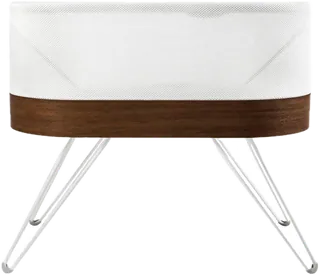
SNOO Smart Sleeper · Happiest Baby
The best-known smart bassinet: responds to crying with stepped-up rocking and white noise, and its swaddle clips in to keep the baby on their back (FDA De Novo authorized for that). Very expensive to buy; Happiest Baby also rents it monthly.
-
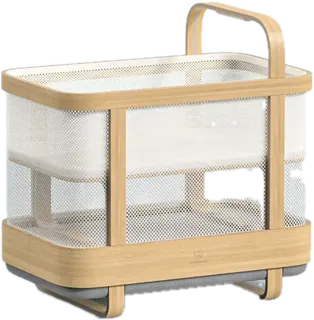
Convertible Smart Bassinet and Crib · Cradlewise
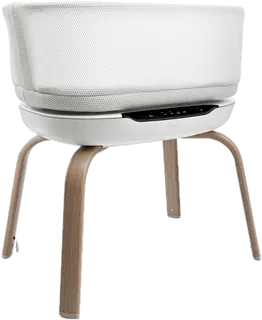
A smart bassinet that converts into a crib for up to 24 months, with a built-in camera-style sensor, app, and bouncing motion. The priciest and heaviest option here (often discounted from 1,999 USD), but it can replace a separate crib.
-
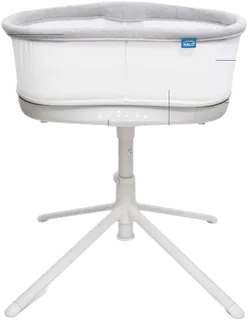
BassiNest Connected Swivel Sleeper 3.0 · HALO
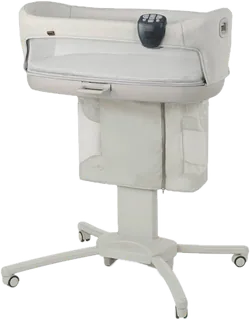
HALO's smart model: the swivel-over-the-bed design plus automatic rocking, vibration, and sound when the baby cries, controlled from an app or the bassinet. A fraction of the SNOO's price.
-
SmartSense Soothing Bassinet · Graco
Graco's smart bassinet hears crying and responds with swaying, vibration, and sound; you can stream your own sounds over Bluetooth. Heavy and doesn't fold, but one of the cheapest smart options.
-
BassiNest Swivel Sleeper 4.0 Signature · HALO
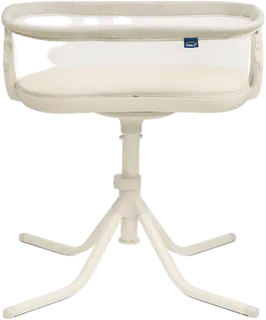
HALO's signature bedside bassinet swivels 360 degrees over your bed and has a lowering wall, so you can reach the baby without getting up. Popular after a C-section; no motion or electronics.
-
2-in-1 Bedside BassiNest Sleeper · HALO
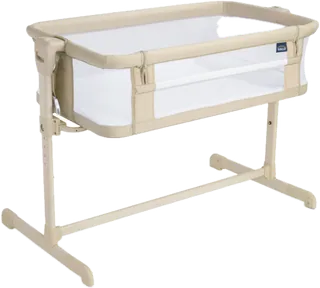
Attaches beside your bed with a zip-down wall, then works as a standalone bassinet; fits low and platform beds without needing under-bed clearance. Heavier than it looks and has no wheels.
-
Close to You 3-in-1 Bedside Bassinet · Chicco
A bedside bassinet that glides over the bed, with vibration, melodies, a nightlight, and wheels; Chicco sells it as a 3-in-1 that also works as a standalone bassinet and changing station.
-
Ideal Ezee 3-in-1 Co-Sleeper Bassinet · Arm's Reach Concepts
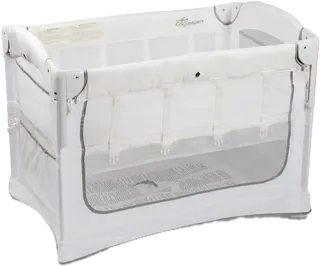
The classic co-sleeper from the brand that popularized bedside bassinets: straps to your bed, works as a standalone bassinet, and folds into its own travel bag. No motion or electronics.
-
DreamMore Bedside Bassinet · Graco
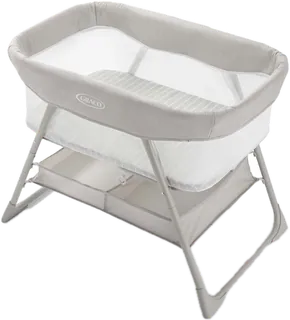
An affordable bedside bassinet that folds with one hand into an included travel bag, with a large storage organizer. Simple and light; no motion or sounds.
-
Cradle · BabyBjörn
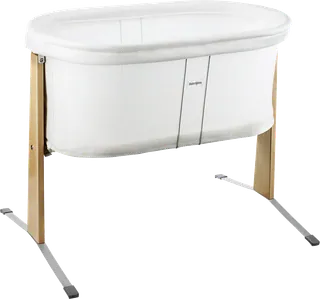
A minimalist Swedish cradle that rocks gently when touched, with soft mesh sides and a 10-year guarantee. Folds flat for storage; lower limits (18 lb) than most and no bedside or electronic features.
-
Karley Bassinet · Dream On Me
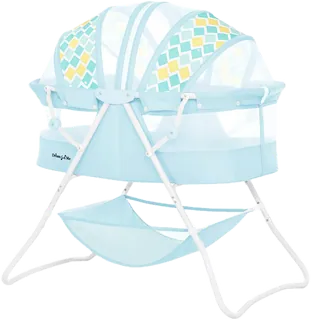
A budget standalone bassinet with a folding frame, mesh sides, a canopy, and a storage bag. Light and very cheap, but basic: no motion, height adjustment, or bedside attachment.
Suggest a change
Related comparisons
-
 Sleep sacks
 (also called wearable blankets or sleeping bags) replace loose blankets in a baby's crib. The choices that matter are warmth (TOG), fabric, whether it is weighted, sizing, and how easy it is to wash.
-
 Travel car seats
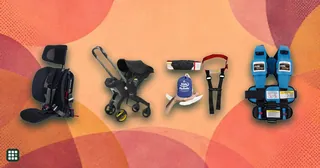
 are small, light seats and boosters that you can carry through an airport, check or gate-check, and install in a rental car or taxi. The real decision is your child's stage (infant, toddler or big kid), whether you need a seat that is approved for use on the plane itself, and how much weight and bulk you will carry.
-
 Baby carriers
Compare baby carriers by child age and weight range, position-specific minimums, newborn setup, wearer fit, seat adjustment, and washing instructions. A carrier’s overall weight limit does not mean every position is approved at that weight or age. Check the maker’s instructions before using front outward or back carry, and follow the manual for cleaning and drying.
-
 Diaper bags
 trade off carrying capacity, organization, carry style, and parent-friendly features. Compare the bag’s published size or pocket count, changing setup, bottle insulation, and stroller attachment before choosing.
-
 Baby registries
Compare seven major baby registries on welcome gifts, completion discounts, universal-item support, extended returns, stores, group gifting and gift tracking.
-
 Pregnancy apps
 range from week-by-week trackers to period apps with a pregnancy mode and community-only apps. This grid compares what each one offers, whether you pay, and whether the developer says it uses your data for tracking.