



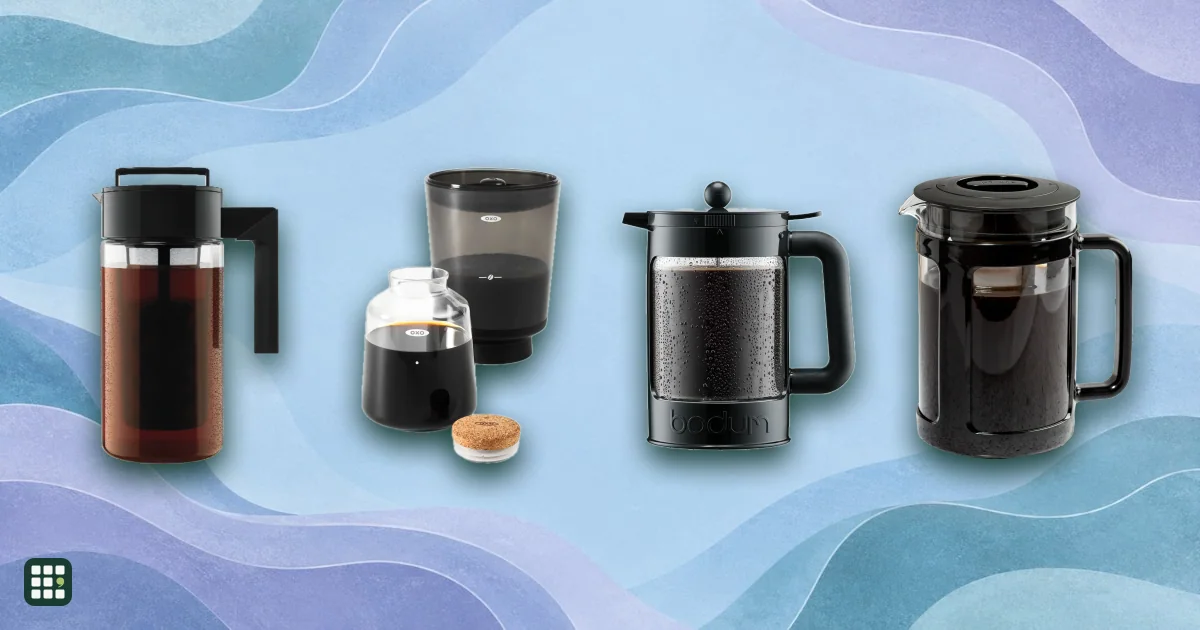
Cold brew makers
Compare currently sold home cold brew makers from Takeya, OXO, Hario, Toddy, KitchenAid, Asobu, Bodum, and Primula. Options range from compact filter pitchers and travel brewers to large drain-through concentrate systems; compare price, batch size, brew and filter methods, fridge fit, and cleanup.
Last updated
How to choose
Start with how much cold brew you drink. A pitcher-style brewer makes about a quart of ready-to-drink coffee; larger drain-through systems make up to 38 ounces of concentrate that you dilute, which stretches to several days of drinks.
Decide on these first
- Fridge space: tall or wide brewers will not fit in a door. Small-batch and travel brewers do.
- Filter: reusable mesh costs nothing to run but can let fine grit through; paper bags give a cleaner cup but are a running cost.
- Cleanup: check what is dishwasher safe; many makers do not say.
- Material: glass will not stain or hold odors but can break; plastic and steel will not.
Check before you buy
Compare price per ounce of capacity, and whether replacement filters are sold. Use a coarse grind, and expect to wait overnight.
Answer
Browse the table. Filter to what matters.
Use the filters below, then sign in if you want to shortlist and decide with friends.
Sign in to vote, hide products and features, and reorder.
Verified: hover a cell and click its green dot for the source Estimate: no cited source Not stated: the maker doesn't publish it
| Feature | ⠿ | ⠿ | ⠿ | ⠿ | ⠿ | ⠿ | ⠿ | ⠿ | ⠿ | ⠿ | ⠿ | ⠿ | ⠿ | ⠿ |
|---|---|---|---|---|---|---|---|---|---|---|---|---|---|---|
|
⠿
Price
|
||||||||||||||
|
⠿
Brew capacity
|
||||||||||||||
|
⠿
Output
|
Ready-to-drink or concentrate (you choose the ratio)
|
Ready-to-drink or concentrate (you choose the ratio)
|
Ready-to-drink (you choose the ratio)
|
Ready-to-drink
|
Ready-to-drink
|
Ready-to-drink
|
Ready-to-drink
|
|||||||
|
⠿
Brew method
|
Steeps in a filter chamber, then drains into carafe
|
|||||||||||||
|
⠿
Filter type
|
||||||||||||||
|
⠿
Main material
|
||||||||||||||
|
⠿
Dishwasher safe
|
||||||||||||||
|
⠿
Fits fridge door
|
|
|
|
|
|
|
||||||||
|
⠿
Height
|
||||||||||||||
|
⠿
Weight
|
||||||||||||||
|
⠿
Brews tea
|
||||||||||||||
|
⠿
Made in
|
Why these features matter
-
Price ($)
Sets the entry cost; paper filters and replacement parts add to it over time.
-
Brew capacity (oz)
Bigger makers mean fewer batches but need more fridge space and more coffee per batch.
-
Output
Concentrate stretches further and stores compactly; ready-to-drink is simpler.
-
Brew method
Drain-through is cleaner and faster to pour; in-jug brewers have fewer parts to wash.
-
Filter type
Reusable mesh costs nothing to run; paper gives clearer coffee but needs refills.
-
Main material
Glass and steel resist stains and odors; plastic is lighter and does not shatter.
-
Dishwasher safe
Cold brew grounds are messy, so easy cleanup matters.
-
Fits fridge door
A fridge-door fit leaves shelf space free.
-
Height (in)
Tall brewers will not fit under shelves or in many fridges.
-
Weight (lb)
Matters for travel and handling when full.
-
Brews tea
Makes one gadget serve both.
-
Made in
Some buyers prefer domestic manufacture.
About the products
-
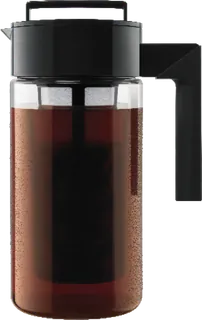
Cold Brew Coffee Maker · Takeya
A lightweight Tritan plastic pitcher with a fine-mesh filter that brews, stores, and pours from one dishwasher-safe jug. Cheapest way in; plastic scratches and stains over time.
-
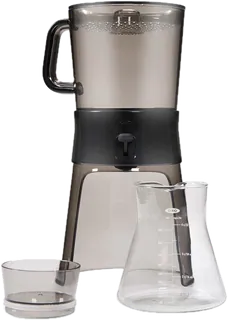
Brew Cold Brew Coffee Maker · OXO
Drain-through glass carafe system: steep, then flip a switch to filter concentrate into the carafe. Pricier and bulky, but the least mess of the group.
-
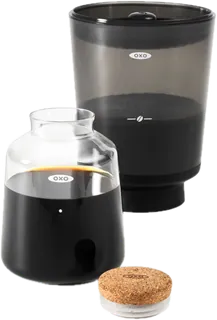
Brew Compact Cold Brew Coffee Maker · OXO
Smaller version of the OXO drain-through brewer for a week of concentrate in less counter space. Shown out of stock on the maker's site when checked.
-
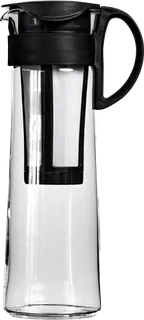
Mizudashi Cold Brew Coffee Maker · Hario
Japanese borosilicate glass pitcher with a removable polyester mesh filter. Simple and easy to clean; glass can break if dropped. Comes in 600 mL and 1000 mL.
-
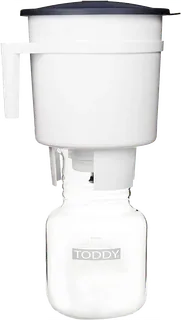
Home Cold Brew System · Toddy
The original drain-through system (since 1964): brews a concentrate in a big container, then drains into a glass decanter. Best for people who drink a lot of cold brew.
-
Essential Brewer · Toddy
A simpler Toddy with a lever to move concentrate into the pitcher. Uses paper filter bags; shares the Home System's large size at a lower price.
-
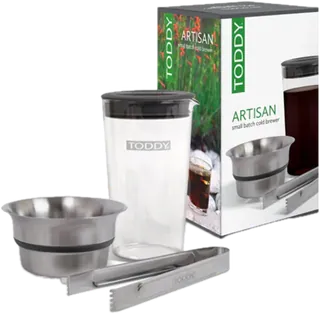
Artisan Small Batch Cold Brewer · Toddy
Small, minimalist brew-and-store container that fits in a fridge door. Good for trying coffees or single-person use.
-
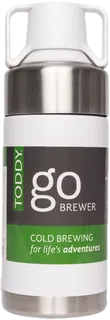
Go Brewer · Toddy
Stainless steel travel brewer for ready-to-drink cold brew on the go. Small and sturdy, the most expensive per ounce here.
-
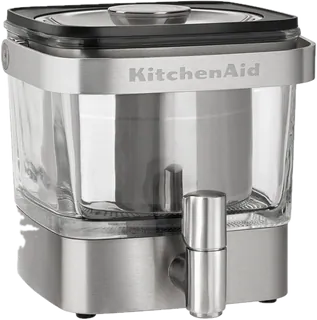
28 oz Cold Brew Coffee Maker · KitchenAid
Glass concentrate brewer with a reusable steel steeper, built-in tap, and refrigerator-friendly profile.
-
38 oz Cold Brew Coffee Maker · KitchenAid
Larger KitchenAid concentrate brewer with glass carafe, reusable steel steeper, and built-in tap.
-
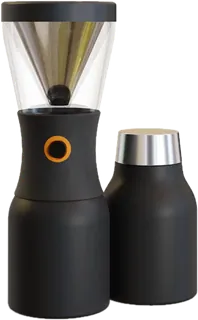
Black Cold Brew Maker · Asobu
Portable insulated brewer with microfine stainless mesh and a travel-ready carafe.
-
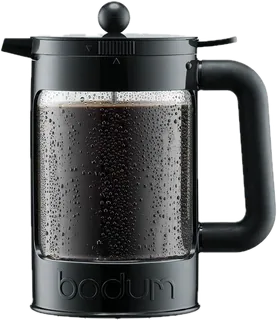
Bean Set Cold Brew Maker · Bodum
51-ounce French press-style cold brew jug with plunger separation and dishwasher-safe parts.
-
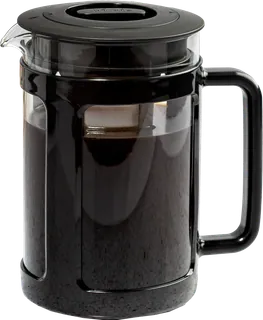
Logan Cold Brew Maker · Primula
Affordable glass pitcher with a removable fine-mesh filter; makes coffee or tea.
-
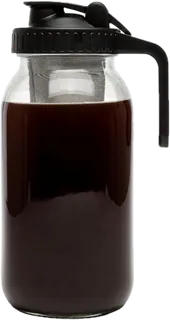
Glass Mason Jar Cold Brew Maker · Primula
Mason-style glass pitcher with steel filter, flip-top lid, and stated fit for most refrigerator doors.
Suggest a change
Related comparisons
-
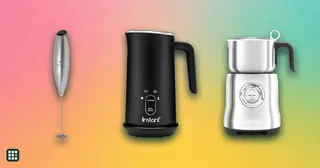 Milk frothers
 range from small handheld whisks to countertop jugs that heat milk and make hot or cold foam. Compare whether you need a separate heater, batch size, cleanup, and what the maker charges.
-
 Countertop ice makers
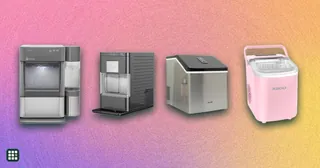
 plug into an outlet and turn tap water into ice in minutes, so you stop running out of freezer trays. Bullet machines are cheap and fast, nugget machines make the soft, chewable ice people love from restaurants, and clear-ice machines make slow-melting cubes for drinks. The real trade-offs are ice type against price, a small bin against how much you need at once, and how much counter and cleaning time you can give it.
-
 Wine fridges
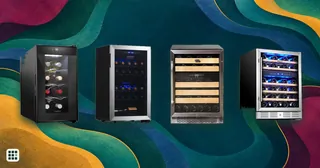
 (also called wine coolers) keep bottles at a steady cellar temperature, with the door glass and racks built for wine rather than cans. They range from quiet thermoelectric countertop units for a handful of bottles to 24 in built-in dual-zone models that sit under a counter and full-height cabinets for 150 bottles or more. The real trade-offs are capacity against space, one zone or two, freestanding against built-in, and compressor power against quiet.
-
 Espresso machines
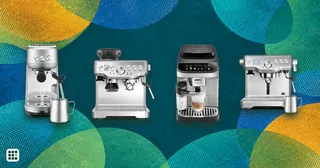
Compare home espresso machines, from compact semi-automatics and espresso machines with built-in grinders to dual-boiler machines, super-automatic bean-to-cup machines and espresso pod machines. The real trade-offs are control against convenience, how the machine heats water (which decides whether you can brew and steam at once), how it froths milk, and the full cost once you add a grinder.
-
 Coffee machines
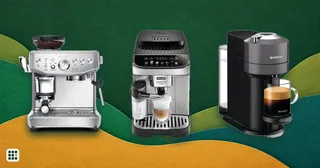
Compare the coffee-making workflow before comparing features. Espresso machines range from hands-on portafilter models to automatic bean-to-cup machines; capsule brewers are convenient but require compatible pods; drip machines brew a pot and need ground coffee. Prices exclude the recurring cost of pods, beans, filters, and maintenance.
-
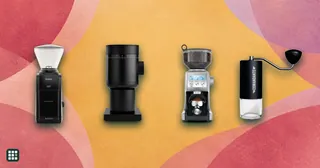 Coffee grinders
Compare burr coffee grinders sold in the US, from budget hand grinders to single-dose electric grinders: Baratza, Breville, OXO, Cuisinart, Fellow, Niche, Timemore, 1Zpresso, and Comandante. The key choices are whether you need espresso, hand or electric, and hopper or single dose.