



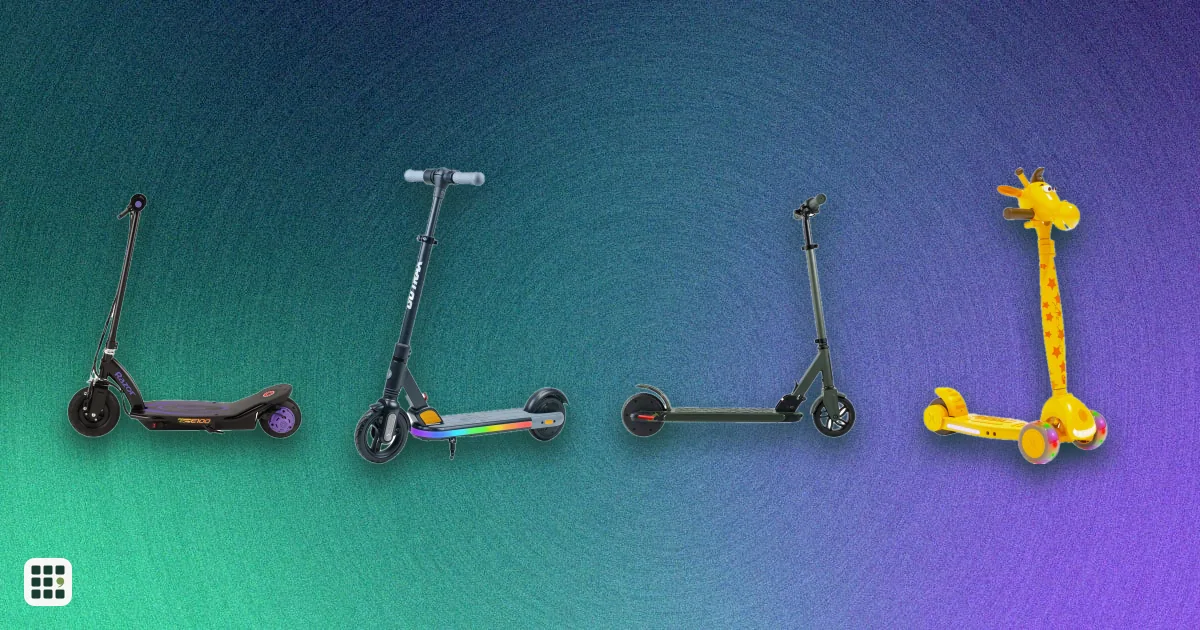
Kids electric scooters
Kids' electric scooters range from slow three-wheel first scooters for preschoolers to 15 mph models for teens. The choice comes down to the child's age and weight, a safe top speed, battery type and run time, and how much the scooter can grow with them. This grid compares popular models from Razor, Gotrax, Hover-1, and Jetson on speed, age rating, weight limit, battery, brakes, tires, and warranty.
Last updated
How to choose
Start with the child, not the scooter. Their age, weight, height, and how much they have already ridden a kick scooter or bike decide which models are safe and which they'll outgrow in a season.
Match speed and size to the rider
- Ages 3 to 6: look at three-wheel models that top out around 5 or 6 mph, weigh about 10 lb, and have small solid wheels. They're easy to balance and slow enough for a driveway or park path.
- Ages 6 to 10: two-wheel scooters around 8 to 10 mph, ideally with speed modes so you can start slow, and a kick-to-start motor so they can't shoot off from a standstill.
- Ages 10 and up: 12 to 15 mph models with bigger or air-filled tires, a hand brake, and a higher weight limit. Check that the weight limit leaves room as they grow.
Rule out the deal-breakers
- Weight limit: some first scooters stop at 80 lb; a heavier child overloads the motor and frame.
- Brakes: younger riders often find a rear foot brake natural; faster scooters need a hand brake as well.
- Battery safety: look for UL 2272 certification, especially on lithium-ion models charged indoors.
Battery, range and charging
Cheaper models often use sealed lead-acid batteries: they're heavy, take 8 to 12 hours to charge, and lose capacity if left flat over winter. Lithium-ion models are lighter and charge in a few hours. Run time and range claims assume a light child on flat ground; expect less on hills, grass, or with a heavier rider.
Comfort and convenience
Air-filled tires ride smoother on rough sidewalks but can go flat; solid tires never puncture but feel every crack. A folding stem and an adjustable handlebar make the scooter easier to store and let it grow with your child. Lights and Bluetooth speakers are fun extras, not safety equipment.
Before you buy
Check the warranty, especially on the battery, which is the part most likely to fail; many kids' models carry only 90 to 180 days. Budget for a helmet, and check local rules for where kids may ride powered scooters.
Answer
Browse the table. Filter to what matters.
Use the filters below, then sign in if you want to shortlist and decide with friends.
Sign in to vote, hide products and features, and reorder.
Verified: hover a cell and click its green dot for the source Estimate: no cited source Not stated: the maker doesn't publish it
| Feature | ⠿ | ⠿ | ⠿ | ⠿ | ⠿ | ⠿ | ⠿ | ⠿ | ⠿ | ⠿ | ⠿ |
|---|---|---|---|---|---|---|---|---|---|---|---|
|
⠿
Price
|
$149.99
|
||||||||||
|
⠿
Recommended age
|
|||||||||||
|
⠿
Max rider weight
|
|||||||||||
|
⠿
Top speed
|
|||||||||||
|
⠿
Adjustable speed modes
|
|
|
|
|
|
|
|
|
|||
|
⠿
Run time
|
|||||||||||
|
⠿
Claimed range
|
|||||||||||
|
⠿
Motor power
|
|||||||||||
|
⠿
Battery type
|
Lithium-ion, 14.4V
|
||||||||||
|
⠿
Charge time
|
|||||||||||
|
⠿
Weight
|
18.5 lb
|
||||||||||
|
⠿
Throttle
|
|||||||||||
|
⠿
Kick to start
|
|
||||||||||
|
⠿
Brakes
|
|||||||||||
|
⠿
Tires
|
Solid
|
||||||||||
|
⠿
Wheel size
|
4.5 in
|
||||||||||
|
⠿
Foldable
|
|
|
|
|
|
|
|
||||
|
⠿
Adjustable handlebar
|
|
|
|
|
|
|
|
|
|||
|
⠿
Lights
|
None
|
None
|
None
|
None
|
None
|
||||||
|
⠿
Bluetooth speaker
|
|
|
|
|
|
|
|
|
|
|
|
|
⠿
Water resistance
|
Not water-resistant (keep dry)
|
Not water-resistant (keep dry)
|
|||||||||
|
⠿
UL 2272 certified
|
|||||||||||
|
⠿
Warranty
|
Why these features matter
-
Price ($)
Kids' e-scooters run from under $100 to about $300. Cheaper models usually trade away battery range, speed, or build quality, which matters more as a child grows.
-
Recommended age (years)
Age ratings reflect speed, size and controls. Riding below the rated age is the most common way kids end up on a scooter too fast or too big for them; a younger child needs a slower, lighter model.
-
Max rider weight (lb)
A higher limit means the scooter lasts as a child grows, and a heavier rider won't overload the motor or frame. Small limits (around 100 lb) suit younger children only.
-
Top speed (mph)
Faster isn't better for kids: 6 to 10 mph suits most beginners; 12 to 15 mph is for older, confident riders. Pair the speed with the age rating and the child's experience.
-
Adjustable speed modes
Speed modes let a parent start a new rider slow and unlock more speed as skill grows, so the scooter fits a child longer.
-
Run time (min)
Run time is how long a ride lasts before the battery is flat. Under 30 minutes means short sessions; 40 to 60 minutes covers an afternoon at the park.
-
Claimed range (miles)
Claims assume a light rider on flat ground at moderate speed; expect less with heavier riders, hills, or cold weather.
-
Motor power (W)
More power helps on hills and with heavier kids. For flat sidewalks and young riders, 100 to 150 W is plenty.
-
Battery type
Lithium-ion batteries are lighter, charge faster, and last more charge cycles. Sealed lead-acid batteries are heavy and slow to charge but cheap; they lose capacity if left uncharged.
- Lithium-ion
- : Lighter, charges in about 5 hours, and lasts more charge cycles. Should be UL 2272 certified if charged indoors.
- Lead-acid
- : Cheap but heavy, takes 8 to 12 hours to charge, and loses capacity if left uncharged for weeks, so top it up over winter.
-
Charge time (hr)
Long charge times (8 to 12 hours) mean plugging in overnight; a 3 to 4 hour charge gets a child riding again the same day.
-
Weight (lb)
A light scooter is one a child can carry up steps and an adult can lift into a car. Heavy lead-acid models can be awkward for kids to handle.
-
Throttle
Thumb and push-button throttles are easier for small hands. Twist grips feel like a motorbike and suit older kids; all need practice so a child doesn't grab full throttle by accident.
- Twist grip
- : Twisting the handgrip speeds up, like a motorbike. Feels natural to older kids, but easy to over-twist while braking.
-
Kick to start
Kick-to-start stops the scooter lurching away if a child presses the throttle while standing still, a useful safety feature for first-time riders.
-
Brakes
A hand brake stops a fast scooter more reliably than a foot fender alone; electronic brakes cut the motor and slow the wheel. Younger kids often find a rear foot brake most natural.
- Foot brake
- : The rider presses a fender over the rear wheel with a foot. Natural for kids used to kick scooters, but weaker at higher speeds.
-
Tires
Air-filled tires ride smoother and grip better on rough pavement but can go flat. Solid and airless tires never puncture but feel bumpier.
- Air-filled
- : Smoother and grippier on cracked sidewalks, but they need pumping up and can go flat.
- Solid or airless
- : Never go flat and need no upkeep, but every bump comes through to the rider.
-
Wheel size (in)
Bigger wheels roll over cracks and bumps more easily; small wheels keep the scooter light and low for younger riders.
-
Foldable
A folding stem makes the scooter easier to fit in a car trunk or closet.
-
Adjustable handlebar
An adjustable handlebar lets the scooter grow with a child and lets siblings share it.
-
Lights
A headlight helps others see a child at dusk; light-up wheels and decks are mainly for fun. Neither replaces riding in daylight.
-
Bluetooth speaker
A speaker is a fun extra for kids, but it can distract from traffic and adds cost.
-
Water resistance
Most kids' scooters shouldn't be ridden through puddles or in rain. An IPX4 or IP54 rating means they survive splashes, not soaking.
-
UL 2272 certified
UL 2272 tests the battery and electrical system for fire and shock safety. It matters most for lithium-ion batteries charged indoors.
-
Warranty
Batteries and motors are the parts most likely to fail on kids' scooters. A longer warranty, especially on the battery, saves a replacement cost.
About the products
-
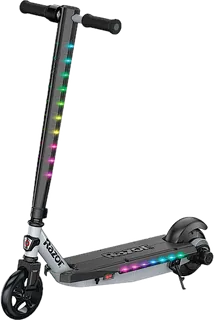
Power Core E90 Lightshow · Razor
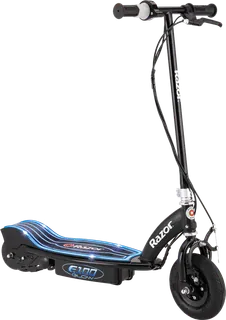
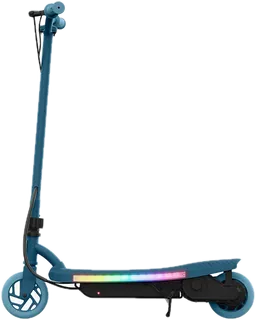
Razor's entry e-scooter for ages 8 and up, with kick-to-start, a thumb throttle, a 10 mph top speed, and multicolor LED lights on the deck and stem. Lead-acid battery (about 40 minutes of riding), foot brake only, and it doesn't fold.
-
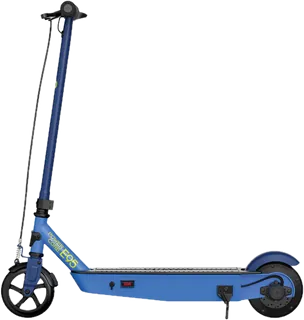
Power Core E95 · Razor
A 10 mph Razor for ages 8 and up with the longest run time here (up to 80 minutes), a push-button throttle, kick-to-start, and a hand-operated front brake. Lead-acid battery that takes up to 12 hours to charge; doesn't fold.
-
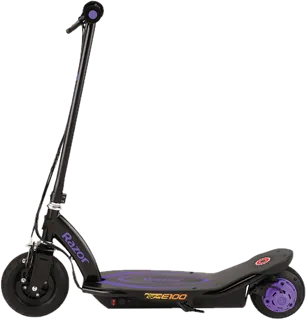
Power Core E100 · Razor
The hub-motor version of Razor's classic E100: 11 mph, up to 60 minutes of riding, an 8 inch air-filled front tire, and a front caliper hand brake. Heavy lead-acid batteries and a 12-hour charge.
-
E100 · Razor
Razor's long-running chain-drive kids' e-scooter: 10 mph, about 40 minutes per charge, twist-grip throttle, front hand brake, and an air-filled front tire. Simple and widely serviced, but heavy and slow to charge.
-
Power Core E195 · Razor
A full-size Razor for ages 13 and up: 12 mph, 150 W hub motor, 154 lb limit, front hand brake plus rear fender brake, and an air-filled front tire. Lead-acid battery with about 40 minutes of riding.
-
E200 · Razor
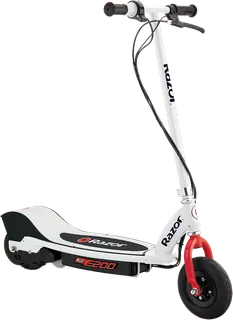
Razor's bigger chain-drive model for ages 13 and up: 12 mph, 200 W motor, 8 inch air-filled tires front and rear, and a 154 lb limit. The heaviest scooter here at 38 lb, with lead-acid batteries.
-
XR Glow · GOTRAX
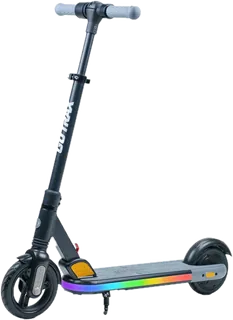
A 10 mph folding scooter for kids 6 and up with a light-up deck, Bluetooth speaker, solid tires, and UL 2272 certification. The fastest Gotrax kids' model here, with a 132 lb limit and a 1-year warranty; often on sale below its $199 list price.
-
Xoom Plus · GOTRAX
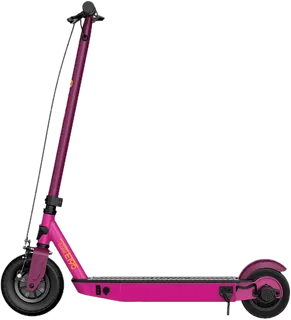
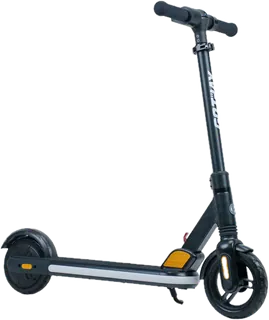
A slower (8.7 mph) Gotrax folding scooter for kids 6 and up, with an adjustable handlebar, light-up deck, flat-proof solid tires, and UL 2272 certification. About 5 miles of range per charge.
-
Geoffrey · Hover-1
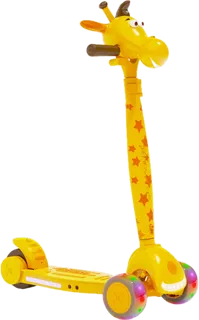
A three-wheel, lean-to-steer first e-scooter for ages 5 and up, topping out at 6 mph with an adjustable, folding handlebar and LED headlights. Only for riders up to 80 lb, about 2 miles per charge, and a 90-day warranty.
-
Relay · Jetson
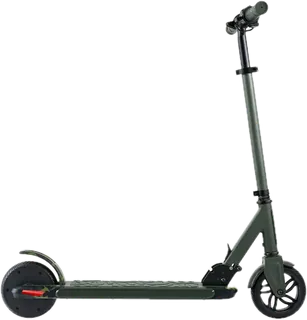
A light (15.5 lb) folding scooter for ages 8 and up with three speed modes (5, 8 and 10 mph), a lithium-ion battery, and a height-adjustable handlebar. About 5 miles of range; 180-day warranty.
-
Joust · Jetson
A starter scooter for ages 8 and up with kick-to-start, a thumb throttle, a bike-style hand brake, and multicolor LED lights; tops out at 8.2 mph. Shown sold out on Jetson's store; 180-day warranty.
Suggest a change
Related comparisons
-
 Home EV chargers
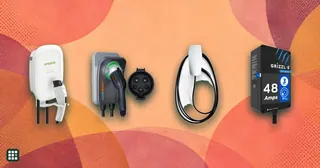
Compare Level 2 home chargers by equipment price, maximum charging current, connector, cable length, and warranty. Price is the manufacturer-listed price for the specified U.S. configuration on October 21, 2026; electrical work, permits, and taxes are extra. Installation and circuit requirements vary. Tesla currently requires a Tesla vehicle owner account to purchase its Universal Wall Connector, and its shop page showed it out of stock when checked.
-
 Electric cars
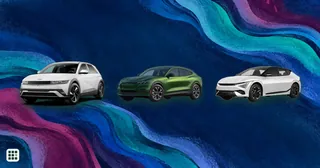
Compare eleven entry trims of 2026-2027 electric crossovers by price, EPA range, battery size, fast-charge speed and time, power, towing, charge-port type, drivetrain, cargo space, and battery warranty. Specs are manufacturer-listed and change; check a dealer for current availability and fees.
-
 Electric SUVs
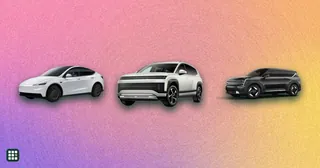
Compare 11 selected 2026 electric SUVs and crossovers across price, EPA range, seating, drivetrain, battery warranty, cargo space, charging, power, towing, heat pump and third-row availability. The selection spans compact five-seat models to luxury three-row SUVs; confirm the build and fees with a dealer or manufacturer before buying.
-
 Hybrid cars
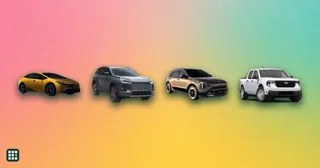
Compare new hybrid and plug-in hybrid vehicles sold in the US, from compact sedans and hatchbacks to SUVs, minivans and a pickup. The main trade-offs are up-front price against fuel savings, whether you can charge at home to make a plug-in hybrid pay off, and how much room, power, all-wheel drive and towing you need.
-
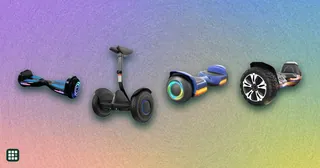 Hoverboards
 and self-balancing scooters trade off speed, ride time, rider limits, size, and safety features. This grid compares six current models, including slower youth options and larger all-terrain boards.
-
 Electric bikes
Compare electric bikes sold in the US, from folding and fat-tire bikes to commuters, comfort cruisers and cargo bikes, from online brands and bike shops. The real trade-offs are price against motor and battery quality, which e-bike class (and so which paths) you need, weight you can carry, and how much support and warranty you get.