



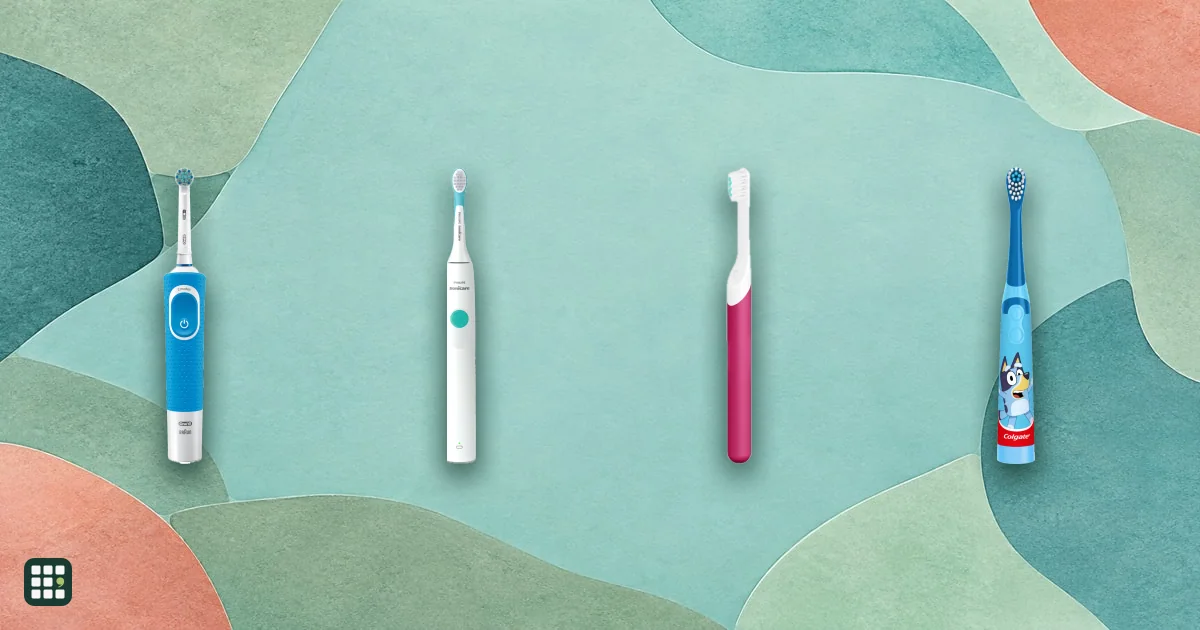
Kids' electric toothbrushes
A kids' electric toothbrush mainly helps children brush for the full two minutes and reach every tooth. This grid compares 8 popular US kids' electric and battery brushes by power source, cleaning motion, minimum age, timer, pacer, pressure sensor, battery life, warranty and price, so you can pick between a one-piece battery brush and a rechargeable with sensors.
Last updated
How to choose
Start with age and habits
- Ages 2 to 3: most makers start at 3 (BURST says 2+). Under 3, ask your dentist, use a rice-grain smear of toothpaste and brush for them.
- Ages 3 to 5: a gentle brush with a built-in two-minute timer does most of the work. Oral-B Kids, Sonicare For Kids and quip are made for this age.
- Ages 6 and up: Oral-B iO Kids adds a gum pressure sensor, three settings and an app for children who brush on their own.
Rechargeable or battery?
Battery brushes (Colgate, Spinbrush, quip) cost $5 to $30 and need new batteries; the cheapest are one-piece, so you replace the whole brush. Rechargeables cost more but have replaceable heads and usually a timer.
Check the features that matter
- Timer and pacer: a timer keeps brushing to two minutes; a 30-second pacer teaches children to cover all four quarters of the mouth.
- Pressure sensor: only iO Kids has one here.
- Head replacement: replace the head or brush about every three months.
- ADA Seal: only Spinbrush's Gabby's Dollhouse states an ADA-accepted claim in this grid; most makers do not say either way.
Use it well
Pair the brush with a fluoride toothpaste in the right amount for your child's age (a smear under 3, a pea-sized amount from 3 to 6) and supervise brushing until about age 8.
Compare cost fairly
Look at the price of replacement heads and batteries as well as the brush. A $5 battery brush replaced every three months costs about as much per year as a $30 rechargeable with $10 heads.
Answer
Browse the table. Filter to what matters.
Use the filters below, then sign in if you want to shortlist and decide with friends.
Sign in to vote, hide products and features, and reorder.
Verified: hover a cell and click its green dot for the source Estimate: no cited source Not stated: the maker doesn't publish it
| Feature | ⠿ | ⠿ | ⠿ | ⠿ | ⠿ | ⠿ | ⠿ | ⠿ |
|---|---|---|---|---|---|---|---|---|
|
⠿
Price
|
||||||||
|
⠿
Power source
|
Rechargeable (USB)
|
|||||||
|
⠿
Cleaning motion
|
Oscillating rotating
|
Oscillating
|
||||||
|
⠿
Minimum age
|
||||||||
|
⠿
Two minute timer
|
|
|
||||||
|
⠿
Quadrant pacer
|
|
|
|
|
|
|||
|
⠿
Pressure sensor
|
|
|
|
|
|
|
|
|
|
⠿
Cleaning modes
|
1
|
1
|
1
|
|||||
|
⠿
Replaceable brush head
|
|
|
|
|||||
|
⠿
Brush heads in box
|
Doesn't apply
|
Doesn't apply
|
1
|
1
|
||||
|
⠿
App connected
|
|
|
|
|
|
|
||
|
⠿
Battery life
|
up to 14 days
|
|||||||
|
⠿
Warranty
|
||||||||
|
⠿
ADA Seal
|
||||||||
|
⠿
Travel case included
|
|
|
|
|







Why these features matter
-
Price ($)
Kids' electric brushes run from about $5 to $70. The cheapest are disposable one-piece brushes; the dearest have sensors, apps and replaceable heads.
-
Power source
Rechargeables cost more up front but save on batteries. Battery brushes are cheaper and easy to run anywhere, but you replace batteries or the whole brush.
-
Cleaning motion
Round oscillating heads (Oral-B, Spinbrush) clean tooth by tooth; sonic brushes (Philips, quip, BURST) vibrate sideways. Both beat a manual brush if used for two minutes; pick the feel your child tolerates.
-
Minimum age (years)
Most kids' electric brushes start at 3. Under 3, ask your dentist; adults should supervise brushing until about age 8.
-
Two minute timer
Kids stop brushing early. A timer is the single most useful kid feature.
-
Quadrant pacer
A pacer teaches children to reach every part of the mouth, not just the front teeth.
-
Pressure sensor
Kids scrub hard. A pressure sensor protects gums, which matters most for a brush used with little supervision.
-
Cleaning modes
More modes help a child ease into the vibration or grow into stronger cleaning, but most children use only one.
-
Replaceable brush head
Replacing a head costs less and makes less waste than replacing the whole brush, but heads add a running cost.
-
Brush heads in box
Heads should be replaced about every three months; more in the box means a cheaper first year.
-
App connected
Apps with songs or characters can keep kids brushing, but they need a phone and parental setup.
-
Battery life (days)
A long battery means fewer charges, but a brush that is charged weekly becomes a chore.
-
Warranty (years)
Kids drop and soak their brushes. A longer warranty is a mild sign of build quality.
-
ADA Seal
The ADA Seal means the maker gave the ADA evidence of safety and effectiveness. Many good brushes never apply.
-
Travel case included
A case keeps the brush clean on trips and at sleepovers.
About the products
-
Kids Electric Rechargeable · Oral-B
Oral-B's entry rechargeable for ages 3 and up: a small round extra-soft head, a gentle mode and a built-in two-minute timer, with a charger. No pressure sensor or app, and no travel case. Heads are compatible with select Oral-B replacements.
-
iO Kids · Oral-B
The premium kids brush, made for ages 6 and up: gentle micro-vibrations, a music timer, an automatic gum pressure sensor, three cleaning settings, a 28-day battery, a travel case and the Disney Magic Timer app. Priced like an adult brush ($59.97 regular, currently $44.97 at Walmart). Character editions (Spider-Man shown) cost the same.
-
Sonicare For Kids Design a Pet Edition (HX3601) · Philips
A rechargeable sonic brush with two intensities (Gentle and Extra Gentle), a two-minute SmarTimer, a 30-second KidPacer, a free coaching app, reusable pet stickers and a two-year warranty. One compact head is included.
-
Kids Battery Toothbrush (Bluey Bingo) · Colgate
A one-piece, battery-powered vibrating brush for ages 3 and up with extra-soft bristles and one AA battery included. Cheapest regular price in this grid; no timer, pacer or replaceable head. Plan to replace the whole brush every few months.
-
Kid's Toothbrush (Gabby's Dollhouse) · Spinbrush
A one-piece, battery-powered oscillating brush for ages 3 and up with soft bristles and an ADA-accepted claim, one AA battery included. Sold in many character designs; Gabby's Dollhouse shown, regularly $14.00 and currently $5.00 at Walmart. No timer or replaceable head.
-
Smart Clean Kids (Shimmery Sparkle) · Spinbrush
A battery-powered oscillating brush with a built-in two-minute timer and 30-second pacer, two AA batteries and replaceable heads, for kids who have outgrown a simple character brush.
-
Kids Sonic Toothbrush · quip
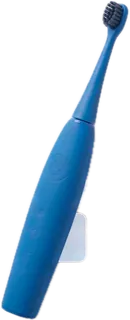
A slim sonic brush on a removable AAA battery (up to 3 months) with a two-minute timer and 30-second pulses, one gentle mode and a small soft-bristle head. Heads and batteries are replaced together; quip sells them on a refill plan. One-year warranty.
-
Kids Sonic Toothbrush · BURST Oral Care
A rechargeable sonic brush for ages 2 and up with extra-soft tapered bristles, a guided two-minute timer, two modes and about 30 days per charge. The regular price is $68.99 but BURST sells it at a steady $44.99 sale price.
Suggest a change
Related comparisons
-
 Kids' toothpastes
Children's toothpaste is one product with two jobs: cleaning small teeth and, for most pastes, delivering a small dose of fluoride to prevent cavities. This grid compares 12 popular US kids' pastes by active ingredient and strength, ADA Seal, the age on the label and on the pack, swallowing guidance, sweeteners, dyes, flavor and price per ounce, so you can match a paste to your child's age and your family's priorities.
-
 Fluoride mouthwashes
A fluoride mouthwash adds fluoride after brushing to help prevent cavities, which can matter for braces, dry mouth and people prone to decay. This grid compares 11 popular US anticavity rinses by fluoride strength, how often you rinse, ADA Seal, alcohol, minimum age, dyes, sweeteners and price per ounce, so you can match a rinse to your family.
-
 Breast pumps
Compare 34 breast pumps spanning plug-in double electric models, portable motors, wearable cups, hybrid systems and manual pumps. The grid focuses on pump setup, power, fit, cleaning, kit contents, price and warranty. Listed configurations and insurance coverage vary; confirm the exact model and flange fit before buying.
-
 Pregnancy apps
 range from week-by-week trackers to period apps with a pregnancy mode and community-only apps. This grid compares what each one offers, whether you pay, and whether the developer says it uses your data for tracking.
-
 Fertility monitors
Compare at-home fertility monitors by upfront and refill cost, urine or wearable method, signals measured, numeric versus categorical results, ovulation prediction or confirmation, phone support, and the limits the maker states. These products can help time intercourse or understand cycle patterns; they do not diagnose infertility or guarantee pregnancy.
-
 Baby carriers
Compare baby carriers by child age and weight range, position-specific minimums, newborn setup, wearer fit, seat adjustment, and washing instructions. A carrier’s overall weight limit does not mean every position is approved at that weight or age. Check the maker’s instructions before using front outward or back carry, and follow the manual for cleaning and drying.