



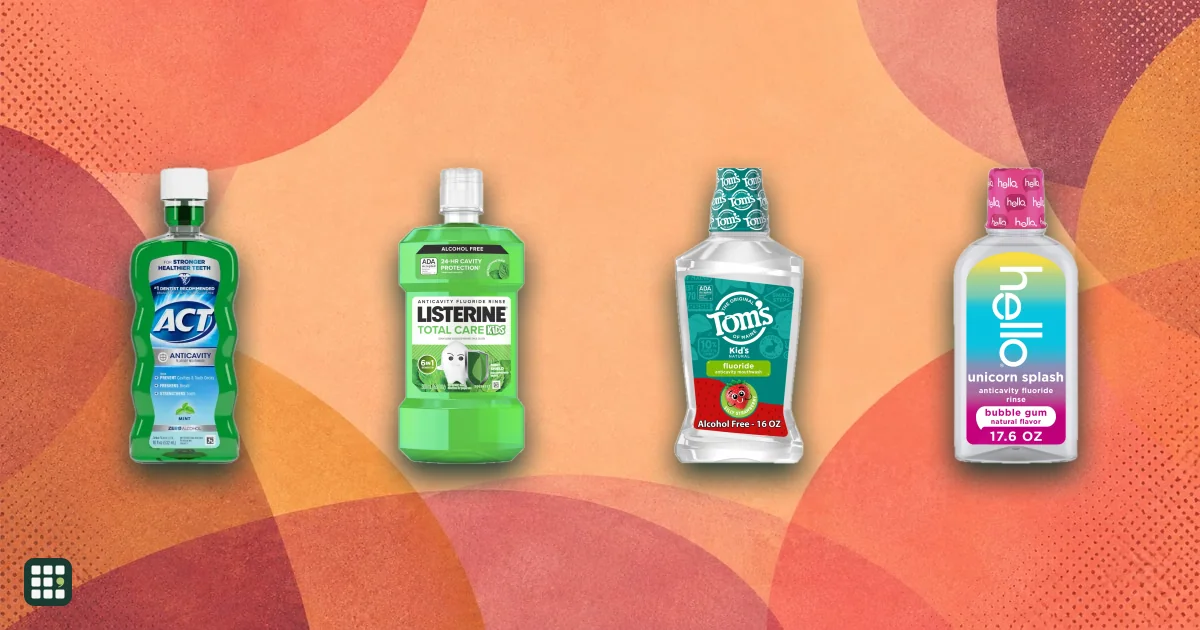
Fluoride mouthwashes
A fluoride mouthwash adds fluoride after brushing to help prevent cavities, which can matter for braces, dry mouth and people prone to decay. This grid compares 11 popular US anticavity rinses by fluoride strength, how often you rinse, ADA Seal, alcohol, minimum age, dyes, sweeteners and price per ounce, so you can match a rinse to your family.
Last updated
How to choose
Who should use a fluoride rinse?
Fluoride toothpaste does most of the work. A rinse is an extra for people with a high cavity risk (braces, dry mouth, past cavities), and your dentist can tell you if you need one. Rinse after brushing, spit it out and do not eat or drink for 30 minutes.
Pick the right strength and schedule
- 0.05% sodium fluoride (ACT Anticavity, ACT Restoring, ACT Kids, hello Kids) is used once a day.
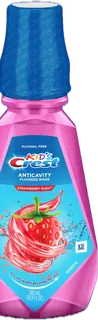
- 0.02% sodium fluoride (ACT Total Care, Listerine Total Care, Kid's Crest, Equate) is used twice a day.
The daily fluoride is similar either way. Choose the schedule you will actually follow.
Check age and swallowing
Every label says children under 6 should not use these without a dentist or doctor, and children under 12 should be taught to rinse and spit. Fluoride rinses are not for children who might swallow them. Labels tell you to get medical help or call Poison Control if more than a rinsing amount is swallowed.
Other label details
- Alcohol: Listerine Total Care Intense (21.6%) and ACT Restoring (11%) contain alcohol; the others are alcohol-free.
- ADA Seal: ACT Anticavity, Listerine Total Care and its Kids version, and Tom's of Maine carry it. Several others do not state it.
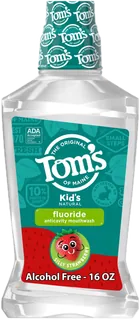
- Dyes and sweeteners: most use dyes and saccharin or sucralose; Tom's of Maine and hello are dye-free and use xylitol, which is poisonous to dogs.
Compare cost fairly
A rinse is 10 mL (about a third of an ounce), so compare the Price per ounce. Big store-brand bottles cost under 20 cents an ounce; small bottles of premium and natural rinses cost 40 cents or more.
Answer
Browse the table. Filter to what matters.
Use the filters below, then sign in if you want to shortlist and decide with friends.
Sign in to vote, hide products and features, and reorder.
Verified: hover a cell and click its green dot for the source Estimate: no cited source Not stated: the maker doesn't publish it
| Feature | ⠿ | ⠿ | ⠿ | ⠿ | ⠿ | ⠿ | ⠿ | ⠿ | ⠿ | ⠿ | ⠿ |
|---|---|---|---|---|---|---|---|---|---|---|---|
|
⠿
Price
|
|||||||||||
|
⠿
Bottle size
|
16.9 oz
|
16.9 oz
|
16.9 oz
|
16 oz
|
|||||||
|
⠿
Price per ounce
|
$0.27/oz
|
$0.44/oz
|
|||||||||
|
⠿
Active ingredient
|
|||||||||||
|
⠿
Fluoride strength
|
|||||||||||
|
⠿
Rinses per day
|
|||||||||||
|
⠿
ADA Seal
|
|||||||||||
|
⠿
Alcohol free
|
|
||||||||||
|
⠿
Minimum age
|
|||||||||||
|
⠿
Dose
|
|||||||||||
|
⠿
Rinse time
|
|||||||||||
|
⠿
Poison control warning
|
|||||||||||
|
⠿
Contains CPC
|
|||||||||||
|
⠿
Artificial dyes
|
|||||||||||
|
⠿
Sweetener
|
|||||||||||
|
⠿
Flavor
|
Why these features matter
-
Price ($)
Fluoride rinses cost $3 to $9 a bottle; the big bottle of a store brand is far cheaper per rinse than a small brand-name bottle.
-
Bottle size (oz)
Bigger bottles cost less per ounce but last long enough to expire or get left in the cabinet.
-
Price per ounce ($/oz)
The fair way to compare bottles. A rinse is 10 mL (about a third of an ounce) a time.
-
Active ingredient
All rinses here use sodium fluoride. The strength (0.02% versus 0.05%) sets how often you rinse.
-
Fluoride strength (%)
A higher strength is used once a day, a lower strength twice a day, so daily fluoride is similar. Strength is not a quality ranking.
-
Rinses per day (per day)
Once-a-day formulas are easier to remember; twice-a-day formulas have a lower strength.
-
ADA Seal
The ADA Seal means the maker gave the ADA evidence that the rinse is safe and prevents cavities. Many good rinses never apply.
-
Alcohol free
Alcohol can sting and dry the mouth, and children and some people should avoid it.
-
Minimum age (years)
Children under 6 may swallow the rinse, so labels tell you to ask a dentist. Even at 6, adults should supervise until a child can rinse and spit.
-
Dose (mL)
The dose is the same for every rinse (10 mL) so a bottle gives a known number of rinses.
-
Rinse time (sec)
A full minute is how long fluoride needs to reach the teeth.
-
Poison control warning
Swallowing a mouthful of fluoride rinse can make a child sick. This is why children under 6 are told not to use it.
-
Contains CPC
CPC helps with breath and plaque but can stain teeth or cause a tingling taste in some people.
-
Artificial dyes
Colored rinses use dyes; some families avoid them. ACT's yellow color is tartrazine (Yellow 5), which the label discloses.
-
Sweetener
Some buyers avoid artificial sweeteners; xylitol is natural but toxic to dogs.
-
Flavor
Kids stay with a rinse they like; many adults dislike strong mint.
About the products
-
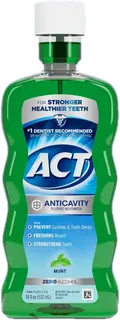
ACT Anticavity Fluoride Mouthwash · ACT
The cheapest ADA-accepted fluoride rinse, with the strongest over-the-counter fluoride (0.05% sodium fluoride) used once a day. Zero alcohol; contains a yellow color additive (tartrazine).
-
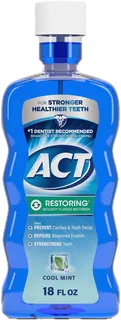
ACT Restoring Anticavity Fluoride Mouthwash · ACT
A 0.05% fluoride rinse used once a day that, unlike the other ACT rinses, contains alcohol (11%). Not suited to children who may swallow it or to people avoiding alcohol.
-
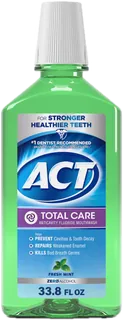
ACT Total Care Anticavity Fluoride Mouthwash · ACT
An alcohol-free 0.02% fluoride rinse used twice a day, with CPC for fresh breath. The 33.8 oz bottle is the lowest cost per ounce among the ACT rinses.
-
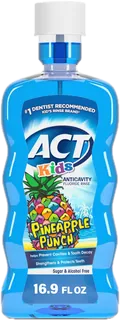
ACT Kids Anticavity Fluoride Rinse · ACT
A 0.05% fluoride rinse for children 6 and older, used once a day, with a flip-cap that pours a 10 mL dose. Pineapple Punch is priced here; other flavors share the formula.
-
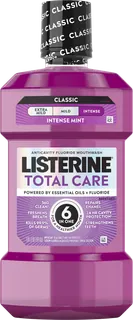
Listerine Total Care Intense Anticavity Mouthwash · Listerine
The strong-flavored Total Care rinse with 21.6% alcohol and the ADA Seal, for adults and children 12 and older. Alcohol-free versions are sold separately.
-
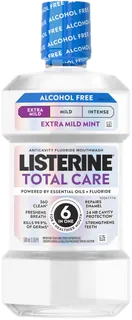
Listerine Total Care Extra Mild Mouthwash · Listerine
The alcohol-free, dye-free Total Care rinse for ages 6 and up, with 0.02% fluoride used twice a day.
-
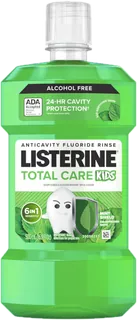
Listerine Total Care Kids Mouthwash · Listerine
A kids' version of Total Care: alcohol-free, ADA accepted, 0.02% fluoride twice a day for ages 6 and up. Mint Shield priced here; Bubble Blast and Berry Splash are the same formula.
-
Kid's Crest Anticavity Fluoride Rinse · Crest
An alcohol-free strawberry rinse for ages 6 and up, 0.02% fluoride twice a day, at the lowest price per ounce among the kids' rinses.
-
Children's Anticavity Fluoride Rinse · Tom's of Maine
A dye-free, alcohol-free rinse sweetened with xylitol and stevia (rebaudioside A) and flavored with fruit juices, with the ADA Seal, for ages 6 and up. Xylitol is poisonous to dogs.
-
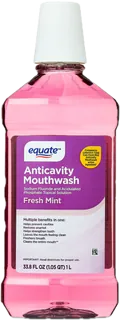
Equate Anticavity Mouthwash · Equate
Walmart's store-brand fluoride rinse in a 1 L bottle, 0.01% fluoride ion twice a day, with CPC, at the lowest price per ounce in this grid.
-
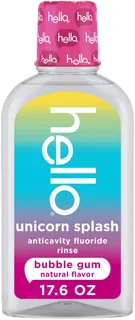
hello Kids Unicorn Splash Fluoride Rinse · hello
An alcohol-free, dye-free, xylitol-sweetened bubble gum rinse with 0.05% fluoride once a day, for ages 6 and up. Keep it away from dogs (xylitol).
Suggest a change
Related comparisons
-
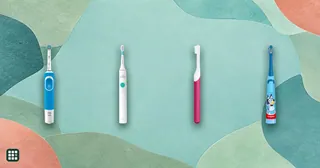 Kids' electric toothbrushes
A kids' electric toothbrush mainly helps children brush for the full two minutes and reach every tooth. This grid compares 8 popular US kids' electric and battery brushes by power source, cleaning motion, minimum age, timer, pacer, pressure sensor, battery life, warranty and price, so you can pick between a one-piece battery brush and a rechargeable with sensors.
-
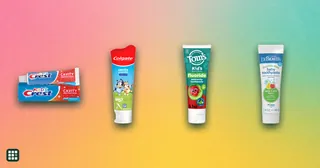 Kids' toothpastes
Children's toothpaste is one product with two jobs: cleaning small teeth and, for most pastes, delivering a small dose of fluoride to prevent cavities. This grid compares 12 popular US kids' pastes by active ingredient and strength, ADA Seal, the age on the label and on the pack, swallowing guidance, sweeteners, dyes, flavor and price per ounce, so you can match a paste to your child's age and your family's priorities.
-
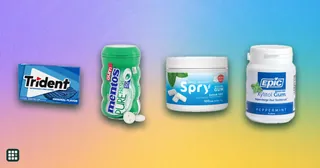 Dental chewing gum
 means sugar-free gum that is either accepted by the American Dental Association (ADA) Seal program or built around xylitol, a sweetener that cavity-causing bacteria cannot use. The two routes are different. The ADA Seal rests on chewing sugar-free gum for 20 minutes after eating, and the Seal gums here (Trident, Orbit, Mentos, Ice Breakers) are mostly sweetened with sorbitol and aspartame. The xylitol brands (Spry, PUR, Epic, Xylichew, Simply Gum) use xylitol as the only sweetener and cost more per piece, but none carries the Seal. This grid compares both, with label facts: xylitol per piece where published, sweeteners, other ingredients, price per piece, and dog warnings. Gum does not replace brushing and flossing.
-
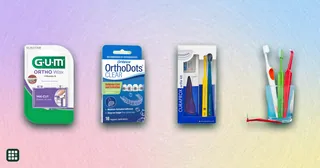 Orthodontic wax and braces care
Braces trap food, rub the inside of the cheeks and lips, and make brushing slower. This grid compares the main things people buy to cope: orthodontic wax and a silicone wax alternative for the poking wire or bracket, complete braces kits that bundle a toothbrush, interdental brushes and wax, and individual tools such as a braces toothbrush and a flosser built for brackets. It shows what is in each box, what it costs, and which problems it solves, so you can match a product to your braces and your orthodontist's advice.
-
 Toothpastes
Every toothpaste cleans, but they differ in what else they do: stannous fluoride pastes also fight gingivitis and sensitivity, peroxide and baking soda pastes chase stains, and fluoride-free hydroxyapatite pastes appeal to people avoiding fluoride. This grid compares 27 popular US toothpastes by active ingredient, labeled uses, foaming agent, sweeteners, minimum age and price per ounce, so you can match a tube to your teeth, gums and budget.
-
 Toothpaste tablets and zero-waste oral care
Toothpaste tablets swap the tube for a small dry tablet: you chew one, brush with a wet toothbrush, and it foams into paste. They suit travel, plastic-free routines and people who dislike tubes, but they differ on the things that matter for teeth: some contain fluoride, others use nano-hydroxyapatite; some ship in compostable pouches with a refillable jar; and monthly cost varies a lot. This grid compares the main tablets sold to US buyers with the ingredients, packaging and prices the makers publish.