



Microscopes
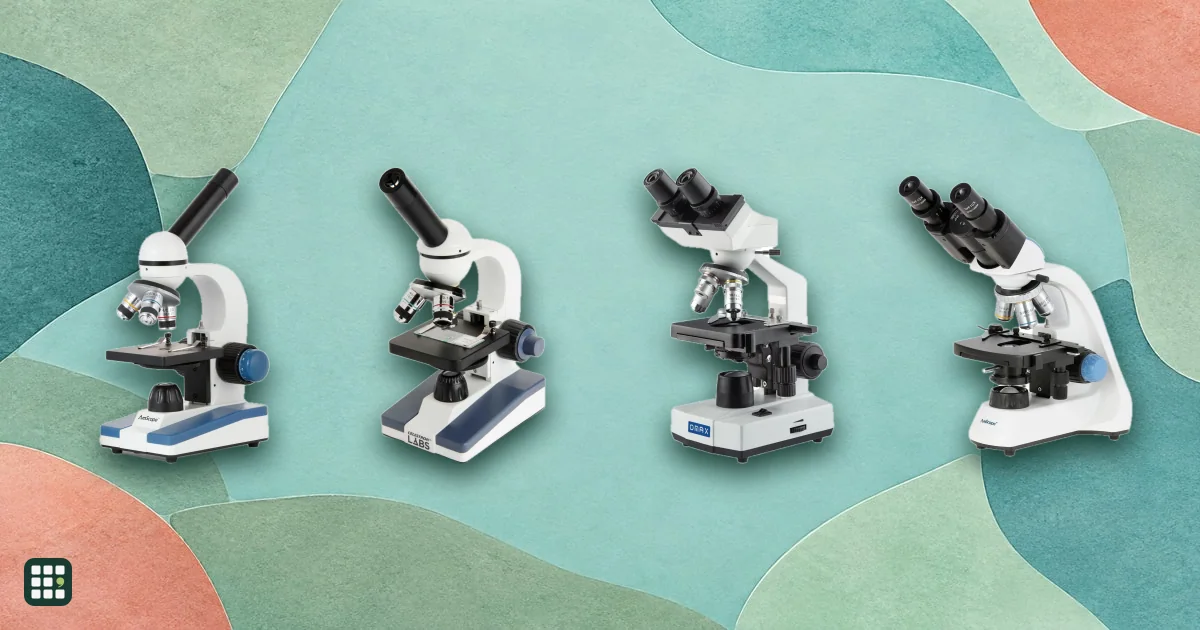
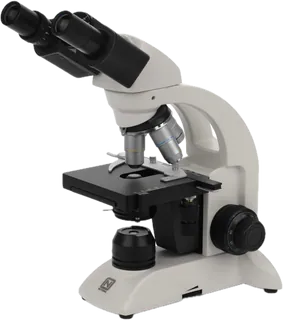
Compound microscopes show slides of cells, plant tissue and pond life at 40X to 2000X. This grid compares student and hobbyist models on head type, magnification, stage, lighting, power and what comes in the box.
Last updated
How to choose
Start with who will use it and for how long. A monocular scope with a plain stage is enough for a child looking at prepared slides. For longer sessions or older students, a binocular head is much more comfortable.
Check the deal-breakers
- Mechanical stage. Moving slides by hand gets frustrating above 400X. Knobs that move the slide are worth paying for.
- Oil objective. A 100X oil objective is needed to see bacteria. Skip it if you will look at pond water and plant slides.
- Power. Battery options let you use it away from an outlet.
Do not buy on magnification alone
Numbers like 2000X are the product of eyepiece and objective. Image quality at high power depends on the objectives and condenser. A good Abbe condenser helps more than a bigger number.
Before you buy
Check what is in the box (slides, extra eyepiece, filters) and the warranty. Add the cost of blank slides and cover slips if you want to make your own.
Answer
Browse the table. Filter to what matters.
Use the filters below, then sign in if you want to shortlist and decide with friends.
Sign in to vote, hide products and features, and reorder.
Verified: hover a cell and click its green dot for the source Estimate: no cited source Not stated: the maker doesn't publish it
| Feature | ⠿ | ⠿ | ⠿ | ⠿ | ⠿ | ⠿ | ⠿ | ⠿ | ⠿ | ⠿ | ⠿ | ⠿ |
|---|---|---|---|---|---|---|---|---|---|---|---|---|
|
⠿
Price
|
||||||||||||
|
⠿
Head type
|
||||||||||||
|
⠿
Maximum magnification
|
||||||||||||
|
⠿
Objective lenses
|
||||||||||||
|
⠿
Oil immersion objective
|
|
|||||||||||
|
⠿
Eyepieces
|
||||||||||||
|
⠿
Mechanical stage
|
||||||||||||
|
⠿
Illumination
|
||||||||||||
|
⠿
Battery powered
|
|
|
||||||||||
|
⠿
Condenser
|
||||||||||||
|
⠿
Warranty
|
||||||||||||
|
⠿
Prepared slides included
|
|
|
|
|||||||||
|
⠿
Camera port
|
|
|
|
|
|
|
|
|
|
|||
|
⠿
All metal frame
|
Why these features matter
-
Price ($)
The biggest filter for students and families. Spending more buys a second eyepiece view, a mechanical stage and oil optics rather than clearer pictures at low power.
-
Head type
Two eyes are easier on long sessions and for younger users; monocular is cheaper and fine for short looks.
- Monocular
- : One eyepiece. Cheaper and fine for short looks; tiring for long sessions.
- Binocular
- : Two eyepieces, easier on the eyes for long sessions and for older students.
- Camera adapter
- : A third tube lets you fit a camera without giving up the two-eye view.
-
Maximum magnification (x)
Above about 1000X images mostly get dimmer and blurrier; it matters only if you want to study bacteria with oil.
-
Objective lenses
Each power sets how much you see at once and how much detail; 4X, 10X and 40X cover most school slides.
- 100X oil
- : Highest power; used with a drop of immersion oil to see bacteria and fine cell detail.
-
Oil immersion objective
Needed to see bacteria and fine cell detail; skip it for pond water and plant slides.
-
Eyepieces
A second, higher eyepiece multiplies the top magnification; the first one decides everyday view quality.
-
Mechanical stage
Moving a slide by hand is fiddly above 400X; a mechanical stage makes high power practical.
-
Illumination
LED stays cool and lasts for years; the position affects contrast on clear specimens.
- Upper and lower LED
- : Lower light shines through thin slides; upper light helps with solid objects like coins or insects.
-
Battery powered
Lets you use it outdoors or in a classroom without outlets.
-
Condenser
An Abbe condenser with an iris gives much better contrast at high power than a simple disc.
- Abbe
- : A lens set under the stage that focuses light on the slide; gives clearer, higher-contrast images at high power.
- Simple disc
- : A basic disc of holes to control light; fine for low power and young students.
-
Warranty (years)
Longer cover matters on a tool kids will handle.
-
Prepared slides included
Lets you look at something right away without buying slides.
-
Camera port
Needed to capture images without an eyepiece camera adapter.
-
All metal frame
Metal frames survive classrooms and stay aligned longer than plastic.
About the products
-
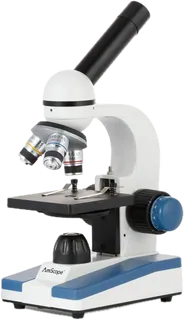
M150C · AmScope
Budget monocular for kids 10+ and home school, with five levels from 40X to 1000X, an all-metal frame and a 5-year warranty. No mechanical stage, so slides are moved by hand.
-
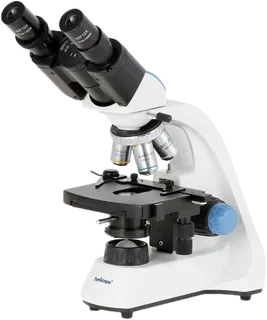
B250C · AmScope
Compact binocular with a mechanical stage, Abbe condenser and a 100X oil objective for up to 2500X. A step up for serious students and hobbyists.
-
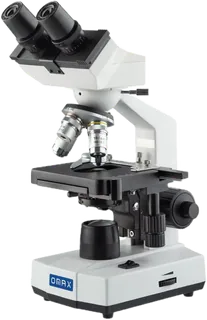
M82BE · OMAX
Binocular 40X-2000X scope that runs on AC or rechargeable batteries, with a mechanical stage and NA 1.25 Abbe condenser. Sold for schools, clinics and enthusiasts.
-
Labs CM800 · Celestron
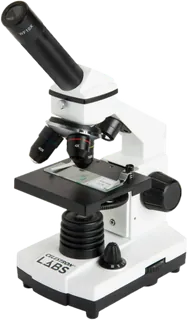
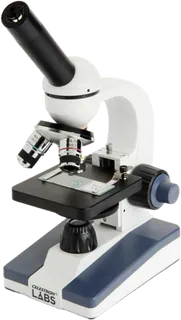
Cordless entry monocular to 800X with upper and lower LED lighting and 10 prepared slides included. Plain stage with clips.
-
Labs CM1000C · Celestron
Cordless monocular to 1000X with coaxial coarse and fine focus, AC adapter and batteries included, and 10 prepared slides.
-
Labs CM2000CF · Celestron
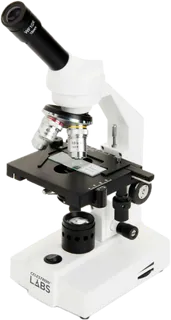
Monocular with a 100X oil objective for 2000X, a mechanical stage and three color filters. Plug-in power only.
-
Labs CB1000CF · Celestron
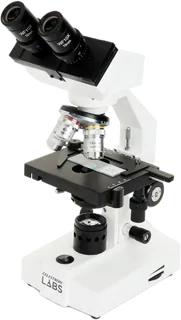
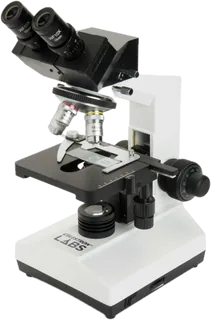
Binocular with four achromatic objectives including 100X, a mechanical stage and an Abbe condenser with iris diaphragm; 10X eyepieces give up to 1000X.
-
Labs CB2000C · Celestron
Binocular with a trinocular adapter so a camera can be fitted, 40X-2000X, a mechanical stage and three color filters. The priciest here.
-
400M · Levenhuk
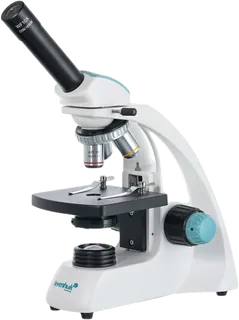
Entry-level monocular with 40X to 400X, a 1W LED and battery or mains power. Plain stage with clips and a 50-year warranty.
-
500B · Levenhuk
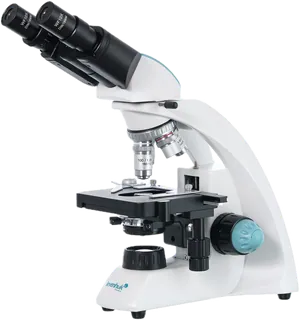
Binocular up to 1000X with a 100X oil objective, a mechanical-scale stage and a halogen lamp on mains power.
-
210 · National Optical
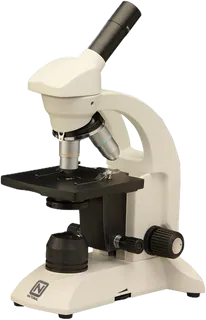
Monocular school and lab scope with 400X, a corded LED, cast-metal frame, built-in camera port and 5-year warranty.
-
215-RLED · National Optical
Cordless binocular with 1000X and an oil objective, a mechanical stage, 1.25 NA Abbe condenser and 5-year warranty. Priced for labs and serious students.
Suggest a change
Related comparisons
-
 Graphing calculators
 plot equations, solve systems and run statistics, and most US math classes and entrance exams expect one. This grid compares the current TI, Casio, HP and NumWorks models on price, screen, whether they have a computer algebra system (CAS), Python, 3D graphing, battery type, and which exams allow them. The big trade-offs are exam rules (CAS models are banned on the SAT and ACT), how much your teacher teaches TI, and whether you want color and rechargeable or the cheapest option that works.
-
 Workplace LMS platforms
Compare eleven workplace LMS platforms on published pricing, course delivery, learner reporting and integrations.
-
 Kids math apps
Compare 14 kids math apps and online programs, from free options like Khan Academy and Zearn to paid adaptive programs like IXL, DreamBox and Beast Academy, plus early-learning games such as Todo Math. Compare prices, grade range, adaptivity, parent reports, siblings, ads and privacy.
-
 Painting styles and art movements
A side-by-side guide to seventeen major Western painting movements, from the Renaissance to Photorealism. Compare when and where each began, what it reacted against, its key artists, its look and mood, and where to see it in person. Movements overlap and blur, so dates are approximate.
-
 Online proctoring and exam software
Online proctoring software watches remote test takers, verifies who they are and flags suspicious behavior so exams can be taken from home. This grid compares six widely used tools, from fully automated lockdown-and-record products to hybrid services with live human proctors. The main trade-offs are who watches (AI only or live people), how locked down the test taker's device is, how much each vendor publishes about price and security, and whether it is built for universities, employers or both.
-
 Portable luggage scales
A portable luggage scale tells you whether your bag is under the airline limit before you get to the counter, where overweight fees often run $100 or more. Most do the same basic job; the differences are capacity, how easy the reading is to see, how they attach and grip, and whether they run on a coin cell, a rechargeable battery, or nothing at all.