



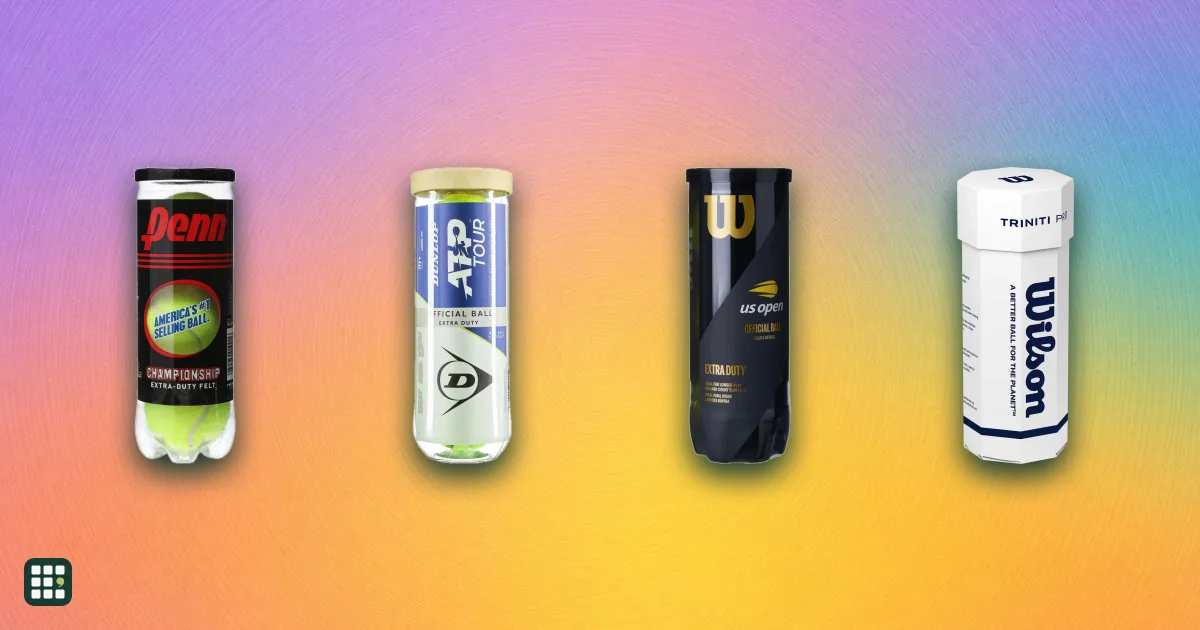
Tennis balls
Tennis balls look alike but differ in felt, core and price. Extra duty felt lasts on hard courts, regular duty suits clay and indoor courts, premium balls hold their bounce longer, and pressureless balls never go flat but feel heavier. This grid compares 20 balls sold in the US from Penn, Wilson, Dunlop, Slazenger, Tecnifibre and Prince, with case prices and price per ball.
Last updated
How to choose
Match the felt to your court
Most US public courts are hard courts: buy extra duty balls, whose thicker felt survives the abrasive surface. On clay, grass or indoor carpet, use regular duty (or a clay-court ball): extra duty felt fluffs up on soft courts and the ball gets heavy and slow.
Check the altitude
If you play above about 3,500 feet (Denver, Albuquerque, Salt Lake City), use a high-altitude ball. Standard balls fly too far and bounce too high in thin air. High-altitude balls feel dead at sea level, so don't bring them home.
Decide how long a can must last
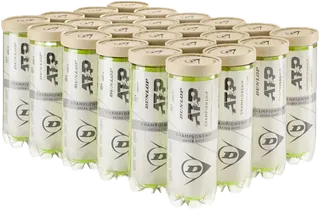
- Value balls (Penn Championship, Wilson Championship, Dunlop ATP Championship) cost the least per ball but lose bounce after a session or two.
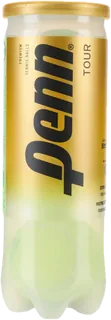
- Premium balls (Pro Penn Marathon+, Penn Tour, Wilson US Open, Dunlop ATP Tour and Australian Open, Tecnifibre Court and X-One) use better felt and cores and stay consistent longer.
- Long-life and pressureless balls (Wilson Triniti Pro, Prince Pressureless) don't go flat after opening, which suits ball machines, hoppers and occasional players, but they feel firmer.
Compare the real price
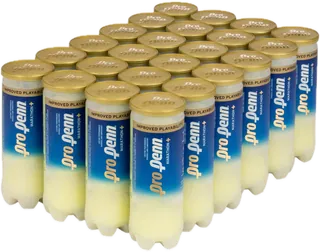
Compare price per ball, not per can: some cans hold 4 balls, and cases hold 72 balls (24 cans of 3) or 72 balls (18 cans of 4). Buying by the case is the cheapest way to buy pressurized balls. Prices here are Tennis Warehouse case prices; maker and other retailer prices differ.
For leagues and tournaments
USTA leagues and sanctioned tournaments require approved balls, and many leagues name a specific ball. Check your league's rules before buying a case.
Answer
Browse the table. Filter to what matters.
Use the filters below, then sign in if you want to shortlist and decide with friends.
Sign in to vote, hide products and features, and reorder.
Verified: hover a cell and click its green dot for the source Estimate: no cited source Not stated: the maker doesn't publish it
| Feature | ⠿ | ⠿ | ⠿ | ⠿ | ⠿ | ⠿ | ⠿ | ⠿ | ⠿ | ⠿ | ⠿ | ⠿ | ⠿ | ⠿ | ⠿ | ⠿ | ⠿ | ⠿ | ⠿ | ⠿ |
|---|---|---|---|---|---|---|---|---|---|---|---|---|---|---|---|---|---|---|---|---|
|
⠿
Price per ball
|
||||||||||||||||||||
|
⠿
Case price
|
||||||||||||||||||||
|
⠿
Pressurization
|
Pressurized
|
Pressurized
|
Pressurized
|
Pressurized
|
Pressurized
|
Pressurized
|
Pressurized
|
Pressurized
|
Pressurized
|
Pressurized
|
Pressurized
|
Pressurized
|
Pressurized
|
Pressurized
|
Pressurized
|
Pressurized
|
Pressurized
|
|||
|
⠿
Felt type
|
All court
|
All court
|
All court
|
All court
|
All court
|
|||||||||||||||
|
⠿
Best surface
|
Hard
|
All courts
|
||||||||||||||||||
|
⠿
Altitude
|
Standard
|
Standard
|
Standard
|
Standard
|
Standard
|
Standard
|
Standard
|
Standard
|
Standard
|
Standard
|
Standard
|
Standard
|
Standard
|
Standard
|
Standard
|
Standard
|
Standard
|
Standard
|
Standard
|
|
|
⠿
ITF approved
|
|
|
|
|
|
|
||||||||||||||
|
⠿
USTA approved
|
|
|
|
|
|
|
|
|||||||||||||
|
⠿
Official ball of
|
None
|
None
|
None
|
None
|
None
|
None
|
None
|
None
|
None
|
None
|
None
|
None
|
None
|
None
|
||||||
|
⠿
Balls per can
|
||||||||||||||||||||
|
⠿
Cans per case
|
Doesn't apply
|
|||||||||||||||||||
|
⠿
Felt technology
|
LongPlay felt, Optik
|
|||||||||||||||||||
|
⠿
Core technology
|
Natural rubber
|
Encore
|
Why these features matter
-
Price per ball ($)
Balls are a running cost: league and club players open a new can most matches, so a 30-cent difference per ball adds up over a season.
-
Case price ($)
Buying by the case is the cheapest way to buy pressurized balls; single cans usually cost more per ball.
-
Pressurization
Pressurized balls play livelier but go flat within weeks of opening; pressureless balls feel heavier and harder but last months, which suits ball machines and practice.
-
Felt type
Extra duty felt lasts longer on abrasive hard courts; on clay it fluffs up and gets heavy, so regular duty or clay balls play better there.
-
Best surface
Most US public courts are hard courts; pick a ball made for the surface you play on most.
-
Altitude
Standard balls fly too fast and bounce too high at altitude (Denver, Albuquerque, Salt Lake City); high-altitude balls play normally there but feel dead at sea level.
-
ITF approved
Needed for sanctioned tournament play; nearly every major-brand ball is approved, so this matters mainly for cheap practice balls.
-
USTA approved
USTA leagues and tournaments require approved balls; check before buying a case for league play.
-
Official ball of
An official ball tells you what the pros use at that event; it says less about value for everyday play.
-
Balls per can
Doubles players often prefer 4-ball cans; most US cans hold 3.
-
Cans per case
Tells you how many balls you get for the case price.
-
Felt technology
Woven, higher-wool felts tend to play more consistently and last longer than needle felt; maker names mostly mark a brand's premium tiers.
-
Core technology
Premium cores aim to hold pressure and bounce longer; it matters most for players who use a can for several sessions.
About the products
-
Penn Championship Extra Duty · Penn
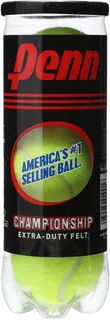
The best-selling ball in America and the cheapest pressurized ball here at about $1.18 a ball by the case. Extra duty felt for hard courts; a solid everyday and league ball that loses its bounce faster than premium balls.
-
Penn Championship Regular Duty · Penn
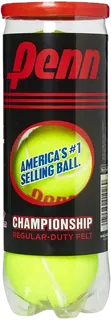
The regular duty version of Penn's best seller, for clay, grass and indoor courts. Same low price as the extra duty; on hard courts its thinner felt wears quickly.
-
Penn Championship High Altitude · Penn
Penn Championship built for courts at 3,500 feet and above, where standard balls fly and bounce too much. Don't use it at sea level: it will feel slow and dead.
-
Penn Tour Extra Duty · Penn
Penn's tournament ball (it replaced Penn ATP), used at several big North American pro events, with LongPlay felt and Smart Optik for visibility. Mid-priced at about $1.46 a ball by the case.
-
Pro Penn Marathon+ Extra Duty · Penn
Penn's longest-lasting premium ball, updated with Encore+ core and LongPlay+ woven felt. A good pick for players who use one can for several sessions.
-
Pro Penn Marathon Extra Duty · Penn · Superseded
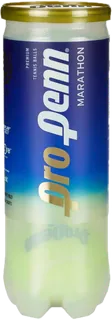
The previous Pro Penn Marathon, replaced by Marathon+ on Penn's site but still sold at the same case price. Encore core and LongPlay felt for longevity on hard courts.
-
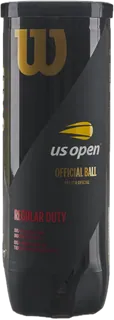
Wilson US Open Extra Duty · Wilson
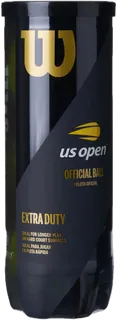
The official US Open ball, with dense high-grade wool felt for hard courts. One of the priciest standard 3-ball cans here (about $1.81 a ball by the case) but known for consistency.
-
Wilson US Open Regular Duty · Wilson
The regular duty US Open ball for clay, grass and indoor courts, at the same price as the extra duty.
-
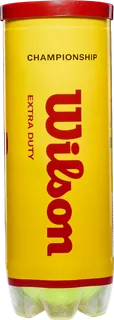
Wilson Championship Extra Duty · Wilson
Wilson's everyday club ball with Dura-Weave extra duty felt, about $1.39 a ball by the case. A step down from the US Open ball in price and feel.
-
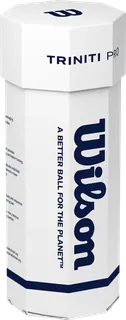
Triniti Pro · Wilson
A long-life ball with Wilson's plastomer Engage Core instead of a pressurized can, so it stays playable longer, sold in a recyclable paper sleeve. The most expensive ball here at about $2.22 each.
-
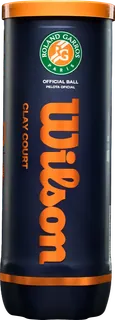
Wilson Roland Garros Clay Court · Wilson
The official French Open ball in a clay-court version with felt that resists moisture and dirt, for US green (Har-Tru) clay courts.
-
Dunlop ATP Championship Extra Duty · Dunlop
Dunlop's value club and practice ball with Max Core and Durafelt HD felt, about $1.39 a ball by the case. Plays on all surfaces; extra duty felt suits hard courts.
-
Dunlop ATP Tour Extra Duty · Dunlop
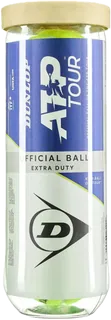
The official ball of the ATP Tour, with HD Pro Cloth and HD Pro Core. A premium hard-court ball at about $1.67 a ball by the case.
-
Dunlop Australian Open Extra Duty · Dunlop
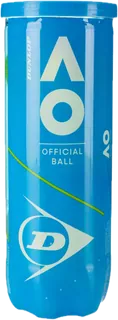
The official Australian Open ball, with HD Core and HD Pro Cloth, and the AO logo on each ball. Premium priced at about $1.81 a ball by the case.
-
Dunlop Grand Prix Extra Duty · Dunlop
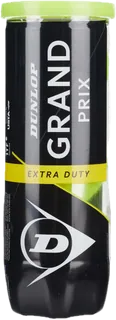
A long-running Dunlop ball popular with strong club, league and tournament players, known for durability. About $1.53 a ball by the case.
-
Slazenger Wimbledon · Slazenger
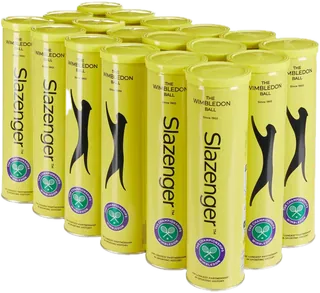
The official Wimbledon ball since 1902, with woven felt, sold in 4-ball metal tubes. About $1.81 a ball by the case; 4-ball cans suit doubles.
-
X-One · Tecnifibre
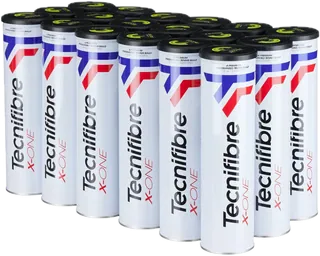
Tecnifibre's lively premium ball with X D-Core and woven felt, sold in 4-ball cans. About $1.94 a ball by the case.
-
Tecnifibre Court · Tecnifibre
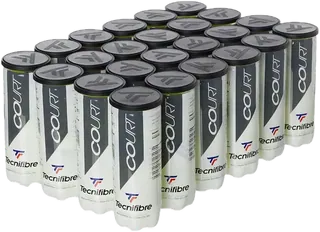
Tecnifibre's premium 3-ball can with a natural rubber core and extra duty woven felt high in wool, a Tennis Warehouse staff favorite for its predictable bounce.
-
Tecnifibre Champion · Tecnifibre
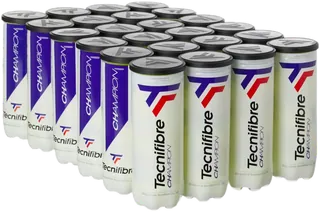
Tecnifibre's all-round training and match ball with an Enduro Core, about $1.39 a ball by the case.
-
Prince Pressureless · Prince
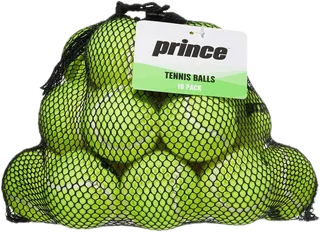
Pressureless practice balls in an 18-ball mesh bag, about $1.39 each. They don't go flat after opening, so they suit ball machines and hoppers, but they feel heavier and harder than pressurized balls.
Suggest a change
Related comparisons
-
 Tennis rackets
Choosing a tennis racket is a trade-off between power, control, spin and comfort. This grid compares popular adult rackets side by side on the specs that decide how a frame plays: head size, weight and balance, swingweight, stiffness, string pattern and grip sizes, plus price, skill level and each maker's own power and swing-speed ratings. Use it to narrow a short list, then demo before you buy.
-
 Padel rackets
 differ mainly in shape, balance, weight and how hard the face and core are. Round, light, soft rackets are forgiving and easy on the arm; heavy, head-heavy diamonds with stiff carbon faces hit harder but need good technique. This grid compares 26 rackets sold in the US, from $100 beginner models to $450 pro signature rackets, from Bullpadel, Nox, adidas, HEAD, Babolat, Wilson and Tecnifibre.
-
 Ping pong tables
Choosing a ping pong table depends on where you will play, how often it will be used, and who needs to move or store it. Indoor tables usually prioritize bounce quality and a smooth playing surface, while outdoor models trade some play feel for weather resistance. Foldable designs, wheel quality, frame strength, and setup effort matter if space is shared. Families may value safety and easy storage, while frequent players should look closely at stability, surface thickness, and long-term durability.
-
 Ping pong balls
Choosing ping pong balls depends on where and how you play. Casual players may value durability and quantity, while competitive players usually care more about consistent bounce, roundness, and approved sizing. Material, star rating, color, and pack size all affect the decision, as do whether the balls are for training, matches, clubs, schools, or home tables. The best choice balances feel and reliability against how quickly balls get lost, dented, or worn out during regular play.
-
 Squash rackets
Compare squash racquets by frame weight, balance, shape, string layout, intended level and current US price. Published weight may be a bare frame or a strung racquet, so check the stated basis.
-
 Badminton rackets
 from Yonex, Victor and Li-Ning compared for US buyers, from pre-strung entry rackets around $100 to flagship frames over $300. See weight class, grip, balance, shaft flex, maximum string tension, materials, play style and skill level side by side, with regular prices at US badminton specialists.