



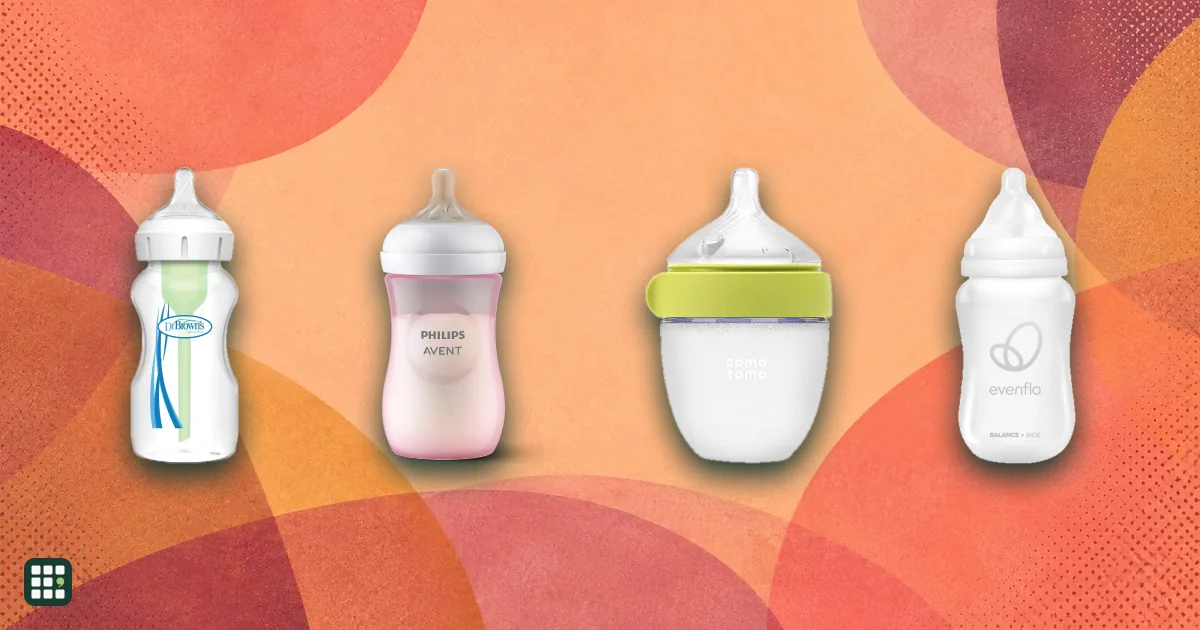
Baby bottles
Baby bottles (feeding bottles for formula or pumped breast milk) differ more than they look: in what they're made of, how they vent air, how the nipple is shaped and how fast it flows, and how many parts you wash after every feed. This grid compares popular US bottle lines in plastic, glass, and silicone, from budget multipacks to premium anti-colic systems. The real trade-offs are fewer gassy feeds against more parts to clean, glass's easy cleaning against its weight, and a breast-like nipple against price.
Last updated
How to choose
Most babies take to most bottles, and many don't settle on one until you try. So buy one or two of a line before a full set, and pick by how you'll feed and how much washing you'll put up with.
Start with how you'll feed
- Mostly breastfed, bottle now and then: a wide, breast-shaped nipple with a slow flow makes switching easier. Pace feeds so the baby does the work.
- Pumping: check which bottles screw straight onto your pump. Narrow-neck bottles fit more pumps; some brands sell adapters.
- Formula: wide necks are easier to fill with powder, and 8 to 11 oz sizes cover older babies.
Gas and colic
Venting stops the nipple collapsing and cuts the air a baby swallows. Full vent systems (a tube or insert inside the bottle) are the most thorough but add parts to wash; vents built into the nipple or base are simpler. Colic has many causes, so no bottle can promise to fix it.
Material
- Plastic (polypropylene, PPSU, Tritan): light, cheap, shatterproof. All US bottles are BPA-free. PPSU handles heat better and stains less.
- Glass: doesn't stain or hold smells and lasts for years, but is heavy and can break; silicone sleeves help.
- Silicone: soft and squeezable, with a breast-like feel some babies prefer; can hold smells and is harder to read volume marks on.
Nipples and flow
Start with the slowest flow (newborn or level 1) and move up only when feeds take much longer than 20 minutes or the baby gets frustrated. Coughing, gulping, or milk leaking from the mouth means the flow is too fast. A line with many flow levels lasts longer. Nipples wear out: replace them every 2 to 3 months, or sooner if they crack or swell.
Cleaning and full cost
Count the parts: a newborn feeds 8 to 12 times a day, so a 5-part bottle means a lot of washing. Check that the bottle is dishwasher safe and fits your sterilizer. Budget for 6 to 10 bottles, spare nipples in the next flow size, and a bottle brush. Price per bottle in this grid comes from the smallest pack; bigger packs and starter sets usually cost less per bottle.
Check before you buy
Buy from the maker or a major retailer, since counterfeit nipples are sold online. Make sure nipples from another brand fit before mixing parts, and keep receipts: some makers replace defective bottles.
Answer
Browse the table. Filter to what matters.
Use the filters below, then sign in if you want to shortlist and decide with friends.
Sign in to vote, hide products and features, and reorder.
Verified: hover a cell and click its green dot for the source Estimate: no cited source Not stated: the maker doesn't publish it
| Feature | ⠿ | ⠿ | ⠿ | ⠿ | ⠿ | ⠿ | ⠿ | ⠿ | ⠿ | ⠿ | ⠿ |
|---|---|---|---|---|---|---|---|---|---|---|---|
|
⠿
Price per bottle
|
$8, 3-pack, 9 oz
|
$25, single, 8 oz
|
|||||||||
|
⠿
Material
|
Polypropylene
|
Polypropylene
|
Polypropylene
|
Polypropylene
|
|||||||
|
⠿
Anti colic design
|
|||||||||||
|
⠿
Bottle sizes
|
2, 5, 8, 11 oz
|
||||||||||
|
⠿
Largest size
|
11 oz
|
||||||||||
|
⠿
Nipple flow levels
|
6 levels
|
6 levels
|
3 levels
|
||||||||
|
⠿
Nipple shape
|
Wide breast-like
|
||||||||||
|
⠿
Neck width
|
Wide neck
|
Wide neck
|
Wide neck
|
Wide neck
|
|||||||
|
⠿
Parts per bottle
|
6 parts
|
6 parts
|
4 parts
|
4 parts
|
4 parts
|
4 parts
|
4 parts
|
||||
|
⠿
Dishwasher safe
|
|
||||||||||
|
⠿
Microwave steam sterilizer safe
|
|
|
Why these features matter
-
Price per bottle ($)
Most families buy 6 to 10 bottles, so a few dollars per bottle adds up; glass and premium vented bottles can cost three times a basic one.
-
Material
Plastic is light and unbreakable; glass is easy to clean and does not stain but is heavy and can break; silicone is soft and squeezable for babies who want a breast-like feel.
-
Anti colic design
Vents reduce air bubbles and nipple collapse, which can help gassy or fussy babies; full vent systems add parts to wash.
-
Bottle sizes
Newborns drink 2 to 4 oz at a time; older babies need 8 to 11 oz. A line with both sizes lets you reuse nipples and parts as the baby grows.
-
Largest size (oz)
Older babies drinking 7 to 8 oz a feed need a bottle that holds that much with room to mix formula.
-
Nipple flow levels (levels)
More flow levels let you match feeding speed as the baby grows, or slow a baby who gulps; one bottle line can then last the whole first year.
-
Nipple shape
Wide, breast-shaped nipples can make switching between breast and bottle easier; some babies simply prefer one shape.
-
Neck width
Wide necks are easier to fill and clean; narrow necks fit more breast pumps and cheaper accessories.
-
Parts per bottle (parts)
Every part has to be washed and reassembled after each feed; vented systems often have 4 to 6.
-
Dishwasher safe
Saves handwashing 8 or more bottles a day; some glass or vented parts need handwashing.
-
Microwave steam sterilizer safe
Steam sterilizing is the quickest way to sterilize a whole set, which many parents do for newborns.
About the products
-
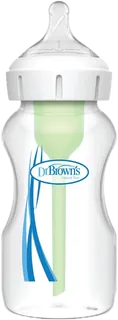
Options+ Anti-Colic Wide-Neck · Dr. Brown's
The pediatrician favorite for gassy babies: a two-piece internal vent tube keeps air out of the milk, and can be removed later for fewer parts. The trade-off is the most pieces to wash of any bottle here.
-
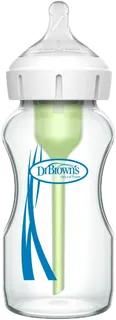
Options+ Anti-Colic Wide-Neck Glass · Dr. Brown's
The same internal vent system in a glass body that won't stain or hold smells, and takes the same nipples. Heavier and breakable; silicone sleeves are sold separately.
-
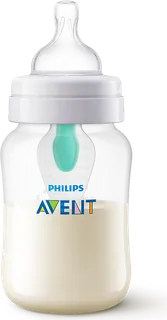
Avent Anti-colic with AirFree Vent · Philips
A wide-neck vented bottle whose AirFree insert keeps the nipple full of milk even when the bottle is held flat, for more upright feeding. The insert is one extra part to wash.
-
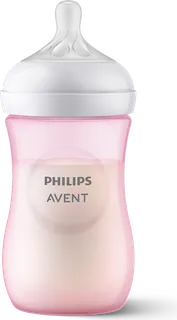
Avent Natural Response · Philips
A simple wide-neck bottle with a breast-shaped nipple that only releases milk when the baby actively sucks, aimed at breastfed babies; anti-colic valve in the nipple, few parts, and a glass version too.
-
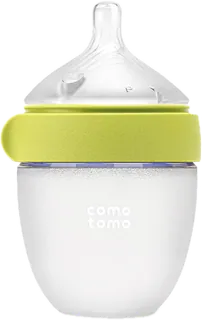
Natural Feel Baby Bottle Gen 2 · Comotomo
A soft, squeezable silicone bottle with a wide mound-shaped nipple, popular with breastfed babies who refuse other bottles. Very wide opening is easy to clean by hand; one of the dearer bottles per unit, and only up to 8 oz.
-
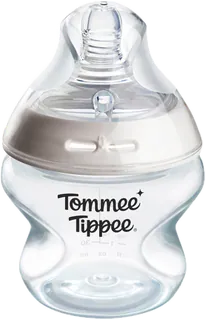
Natural Start Anti-Colic · Tommee Tippee
The successor to Closer to Nature: a budget wide-neck bottle with a breast-like nipple and a valve in the nipple to limit air. Cheap and widely stocked; sold out on the maker's US store when checked, but in stock at Target.
-
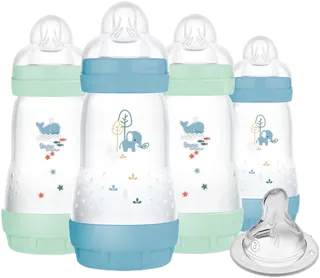
Easy Start Anti-Colic · MAM
A wide-neck bottle vented through a silicone valve in the base, with MAM's flat symmetric nipple. It can self-sterilize in the microwave with no separate sterilizer, but the base adds parts.
-
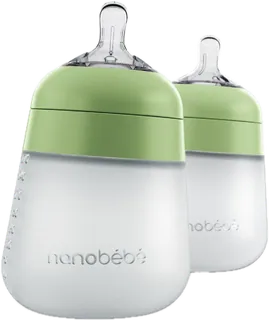
Flexy Silicone Baby Bottle · Nanobebe
A soft silicone bottle with a wide, stable base that resists tipping and a triple-vented, non-collapsing nipple. Lighter and cheaper per bottle than Comotomo, with sizes up to 9 oz.
-
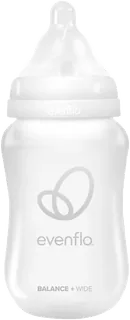
Balance+ Wide Neck · Evenflo
The cheapest bottle here, designed with pediatric feeding specialists: a sloped nipple for a wide latch and a vent built into the nipple, so there are no extra vent parts. A standard-neck version and glass also exist.
-
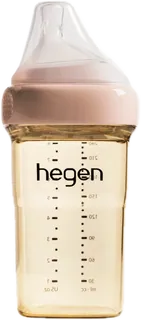
PCTO Feeding Bottle · Hegen
A premium PPSU bottle with a press-to-close, twist-to-open lid that also works as a milk storage and pumping container across Hegen's system. Built-in vent and few parts, but by far the most expensive per bottle.
-
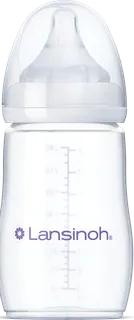
NaturalWave Bottle · Lansinoh
Made by a breastfeeding brand: a wide, gently sloped NaturalWave nipple with an air vent, only three pieces plus cap, and sizes from 2 to 11 oz. Fits Lansinoh breast pumps directly; a glass version is sold too.
Suggest a change
Related comparisons
-
 Baby carriers
Compare baby carriers by child age and weight range, position-specific minimums, newborn setup, wearer fit, seat adjustment, and washing instructions. A carrier’s overall weight limit does not mean every position is approved at that weight or age. Check the maker’s instructions before using front outward or back carry, and follow the manual for cleaning and drying.
-
 Sleep sacks
 (also called wearable blankets or sleeping bags) replace loose blankets in a baby's crib. The choices that matter are warmth (TOG), fabric, whether it is weighted, sizing, and how easy it is to wash.
-
 Kids' electric toothbrushes
A kids' electric toothbrush mainly helps children brush for the full two minutes and reach every tooth. This grid compares 8 popular US kids' electric and battery brushes by power source, cleaning motion, minimum age, timer, pacer, pressure sensor, battery life, warranty and price, so you can pick between a one-piece battery brush and a rechargeable with sensors.
-
 Kids' toothpastes
Children's toothpaste is one product with two jobs: cleaning small teeth and, for most pastes, delivering a small dose of fluoride to prevent cavities. This grid compares 12 popular US kids' pastes by active ingredient and strength, ADA Seal, the age on the label and on the pack, swallowing guidance, sweeteners, dyes, flavor and price per ounce, so you can match a paste to your child's age and your family's priorities.
-
 Breast pumps
Compare 34 breast pumps spanning plug-in double electric models, portable motors, wearable cups, hybrid systems and manual pumps. The grid focuses on pump setup, power, fit, cleaning, kit contents, price and warranty. Listed configurations and insurance coverage vary; confirm the exact model and flange fit before buying.
-
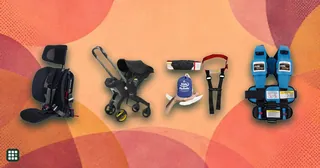 Travel car seats
 are small, light seats and boosters that you can carry through an airport, check or gate-check, and install in a rental car or taxi. The real decision is your child's stage (infant, toddler or big kid), whether you need a seat that is approved for use on the plane itself, and how much weight and bulk you will carry.