



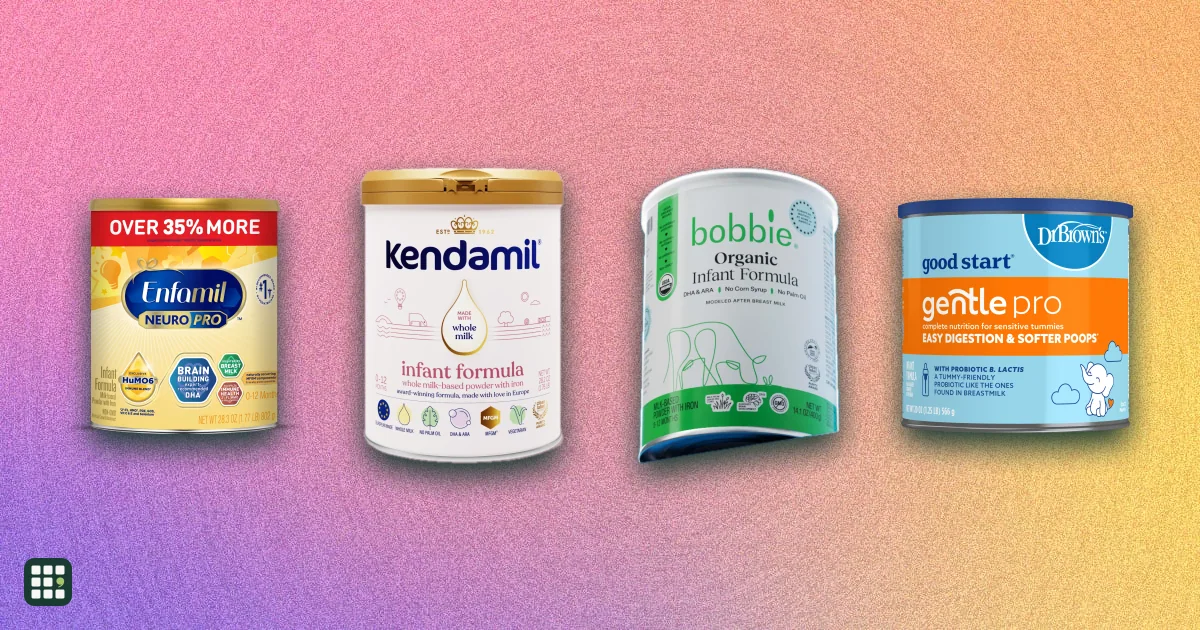
Baby formulas
Popular US infant formulas compared by label: standard, sensitive, anti-reflux, soy, goat milk and hypoallergenic formulas from the big brands, organic and European-style makers, and store brands. Every formula sold in the US must meet the same FDA nutrient requirements, so the real differences are protein type, sugars, added extras like HMOs and probiotics, organic and palm-oil-free ingredients, and price. This is a label comparison, not medical advice.
Last updated
How to choose
Start with standard formula
Every infant formula sold in the US must meet FDA requirements for nutrients and safety, so a store brand provides the same core nutrition as a name brand. Most healthy, full-term babies do well on a standard cow milk formula. Talk to your pediatrician before starting, and before switching if your baby was premature or has a medical condition.
Specialty formulas have specific jobs
- Sensitive and gentle formulas reduce lactose or partly break down proteins; parents try them for gas and fussiness.
- Anti-reflux formulas are thickened with rice starch to reduce spit-up.
- Extensively hydrolyzed and amino acid formulas are for diagnosed cow milk protein allergy. They cost much more and should be used on a pediatrician's advice.
- Soy and goat milk formulas are alternatives some families choose, but they are not suitable for most babies with cow milk protein allergy.
Compare the extras honestly
DHA is in nearly every formula. HMOs, MFGM and probiotics bring formula closer to breast milk on paper; evidence of long-term benefit is still developing. Organic, non-GMO and palm-oil-free labels reflect ingredient sourcing rather than different nutrition.
Count the real cost
Divide the price by the container size to compare per ounce. Store brands often cost 30% to 50% less than name brands. If you use WIC, your state contracts one brand, so check which formulas your benefits cover.
Switching and safety
- Babies often take a few days to adjust to a new formula; switch only for a reason and give it time.
- Measure powder exactly, use safe water, and never dilute formula to stretch it.
- Check the FDA recalls list for the formula and lot you use, and never make homemade formula.
Answer
Browse the table. Filter to what matters.
Use the filters below, then sign in if you want to shortlist and decide with friends.
Sign in to vote, hide products and features, and reorder.
Verified: hover a cell and click its green dot for the source Estimate: no cited source Not stated: the maker doesn't publish it
| Feature | ⠿ | ⠿ | ⠿ | ⠿ | ⠿ | ⠿ | ⠿ | ⠿ | ⠿ | ⠿ | ⠿ | ⠿ | ⠿ | ⠿ | ⠿ | ⠿ | ⠿ | ⠿ | ⠿ | ⠿ |
|---|---|---|---|---|---|---|---|---|---|---|---|---|---|---|---|---|---|---|---|---|
|
⠿
Price
|
$29.07
|
$26
|
$32
|
$32
|
||||||||||||||||
|
⠿
Container size
|
||||||||||||||||||||
|
⠿
Formula type
|
Standard
|
Standard
|
Standard
|
Standard
|
Standard
|
Standard
|
Standard
|
Standard
|
||||||||||||
|
⠿
Protein source
|
||||||||||||||||||||
|
⠿
Carbohydrate source
|
||||||||||||||||||||
|
⠿
Organic
|
|
|
|
|
|
|
|
|
|
|
|
|
|
|
|
|||||
|
⠿
Palm oil free
|
|
|||||||||||||||||||
|
⠿
HMOs
|
No
|
No
|
No
|
No
|
No
|
No
|
No
|
No
|
No
|
No
|
||||||||||
|
⠿
MFGM
|
|
|
|
|
|
|
|
|
|
|
|
|
|
|
|
|||||
|
⠿
Probiotics
|
|
|
|
|
|
|
|
|
|
|
|
|
|
|
|
|
||||
|
⠿
DHA
|
||||||||||||||||||||
|
⠿
Non GMO
|
|
|
||||||||||||||||||
|
⠿
Ready to feed available
|
|
|
|
|
|
|
|
|
|
|
|
|||||||||
|
⠿
Made in
|
USA
|
USA
|
USA
|
USA
|
USA
|
USA
|
USA
|
USA
|
UK
|
UK
|
UK
|
USA
|
USA
|
USA
|
||||||
|
⠿
WIC eligible
|
|
|
|
|
|
|
|
|
|
Why these features matter
-
Price ($)
Formula is a daily expense for a year; compare the price per ounce of powder, since container sizes differ.
-
Container size (oz)
Lets you compare cost per ounce; larger tubs and refills are usually cheaper per feeding.
-
Formula type
Most babies do well on standard formula; specialty types target fussiness, spit-up or allergy and should be chosen with a pediatrician.
-
Protein source
Hydrolyzed (pre-broken) proteins are easier for some babies to digest; extensively hydrolyzed and amino acid formulas are for diagnosed cow milk protein allergy.
-
Carbohydrate source
Breast milk sugar is lactose; lactose-reduced formulas swap in other sugars, which some parents prefer to avoid unless needed.
-
Organic
Organic certification limits pesticides and synthetic additives in ingredients; it does not change the required nutrient levels.
-
Palm oil free
Palm olein can slightly reduce calcium absorption and firm up stools; many parents look for palm-free formulas.
-
HMOs
HMOs are prebiotics found in breast milk; adding them aims to support gut and immune health, though the long-term benefit is still being studied.
-
MFGM
Milk fat globule membrane is a component of breast milk linked in some studies to brain development.
-
Probiotics
Probiotics may help some babies with gas or fussiness; they are not essential.
-
DHA
DHA is a fatty acid in breast milk important for brain and eye development; almost all US formulas add it.
-
Non GMO
Some parents prefer non-GMO ingredients; it does not affect the required nutrition.
-
Ready to feed available
Ready-to-feed bottles cost more but are sterile and handy for newborns, travel and nights.
-
Made in
Some parents prefer a particular origin; imported formulas sold in the US must meet the same FDA rules.
-
WIC eligible
WIC families can only use the contracted formula brand in their state, so this narrows the choice.
About the products
-
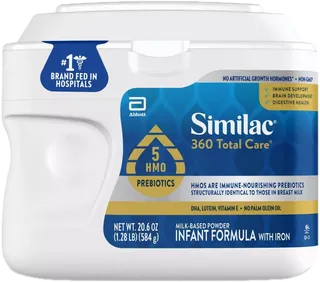
Similac 360 Total Care Infant Formula Powder, 20.6 oz Tub · Abbott
Abbott's top standard milk-based formula, with a blend of 5 HMO prebiotics and non-GMO ingredients, made without palm olein. It costs more per ounce than plain Similac Advance, and the long-term benefit of the added HMOs is still being studied.
-
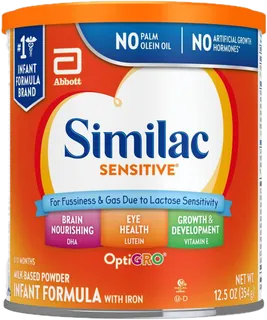
Similac Sensitive Infant Formula Powder, 12.5 oz Can · Abbott
A milk-protein formula with corn syrup and sugar instead of lactose, for babies with fussiness and gas from lactose sensitivity. It has DHA and no palm olein, but no HMOs, and it is not for galactosemia or cow's milk protein allergy.
-
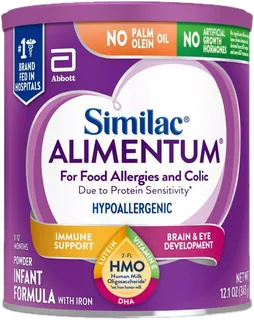
Similac Alimentum Hypoallergenic Infant Formula Powder, 12.1 oz Can · Abbott
An extensively hydrolyzed casein formula for babies with cow's milk protein allergy or colic from protein sensitivity, with 2'-FL HMO and no palm olein. It costs far more per ounce than standard formula; use it with a pediatrician's guidance.
-
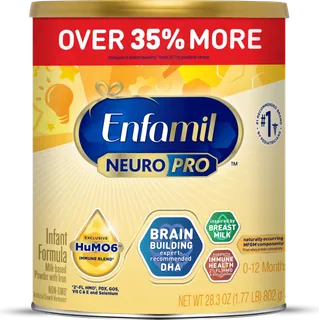
Enfamil NeuroPro Infant Formula Powder, 28.3 oz Can · Mead Johnson Nutrition
Enfamil's premium standard milk-based formula, with MFGM components, DHA, 2'-FL HMO and non-GMO ingredients. It uses palm olein oil, and it costs more than basic Enfamil Infant.
-
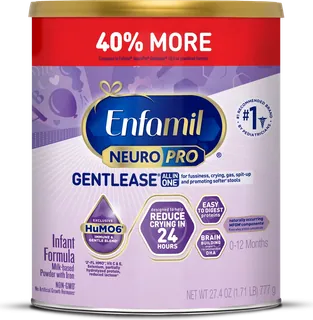
Enfamil NeuroPro Gentlease Infant Formula Powder, 27.4 oz Can · Mead Johnson Nutrition
A partially hydrolyzed, reduced-lactose formula (corn syrup solids as the carbohydrate) for gassy, fussy babies, with MFGM, DHA and 2'-FL HMO. It contains palm olein, and it is not for diagnosed milk allergy.
-
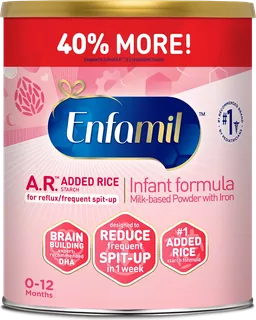
Enfamil A.R. Infant Formula with Added Rice Starch, Powder, 27.4 oz Can · Mead Johnson Nutrition
A milk-based formula thickened with rice starch for babies who spit up often or have reflux. It has DHA and prebiotics but no HMOs, and it contains palm olein.
-
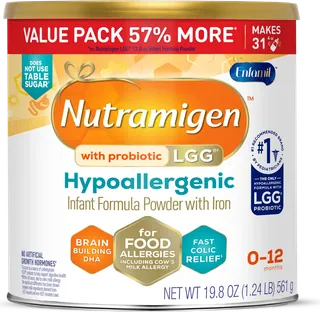
Nutramigen with Probiotic LGG Hypoallergenic Infant Formula Powder, 19.8 oz Can · Mead Johnson Nutrition
An extensively hydrolyzed casein, lactose-free formula with the LGG probiotic, for babies with cow's milk protein allergy. It is one of the priciest options per ounce and contains palm olein. Use it with a pediatrician's guidance.
-
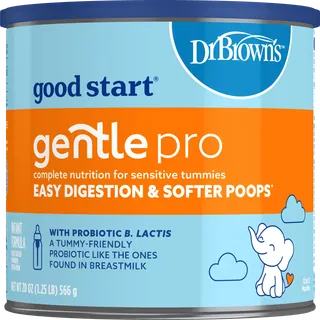
Good Start | Dr. Brown's Gentle Pro Infant Formula Powder, 32 oz · Perrigo
The former Gerber Good Start GentlePro, now sold by Perrigo under the Good Start | Dr. Brown's name with the same recipe. Partially hydrolyzed whey protein with 2'-FL HMO and the probiotic B. lactis, aimed at babies with mild fussiness; it contains palm olein and is not on WIC.
-
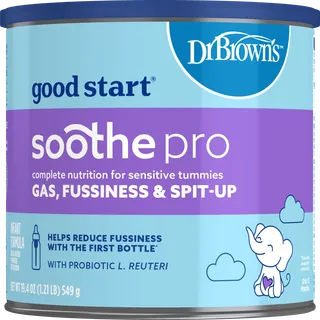
Good Start | Dr. Brown's Soothe Pro Infant Formula Powder, 30.6 oz · Perrigo
The former Gerber Good Start Soothe, same recipe under the new Good Start | Dr. Brown's label. Partially hydrolyzed whey with the probiotic L. reuteri and 2'-FL HMO for gassy, fussy babies; its carbohydrate is corn maltodextrin rather than lactose, and it contains palm olein.
-
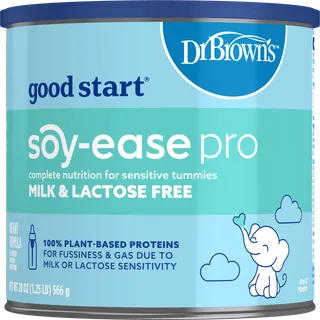
Good Start | Dr. Brown's Soy-ease Pro Infant Formula Powder, 20 oz · Perrigo
Milk- and lactose-free soy formula that replaced Gerber Good Start Soy; the maker says it is a different formulation from the old Gentle Soy. Sweetened with corn syrup, contains palm olein, and has no HMOs or probiotics. Soy formula is for families avoiding dairy; it is not a fix for diagnosed milk allergy without a doctor's advice.
-
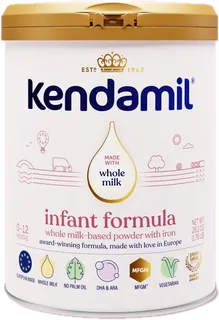
Kendamil Classic Infant Formula, 28.2 oz · Kendamil
European whole-milk formula with natural milk fat (MFGM), lactose as the only carbohydrate, GOS/FOS prebiotics and algae DHA, with no palm oil. Now permanently FDA-cleared, with a slightly updated US recipe since March 2026; not organic, and Kendamil's US online store currently sends buyers to retailers.
-
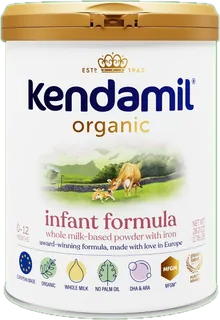
Kendamil Organic Infant Formula, 28.2 oz · Kendamil
USDA and EU organic version of Kendamil's whole-milk formula: lactose-based, palm-free, with natural MFGM, GOS prebiotic and plant-based DHA. Costs a few dollars more per can than Classic; no probiotics.
-
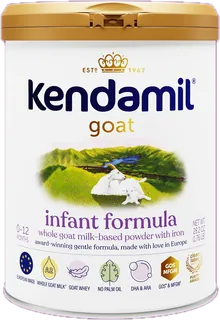
Kendamil Goat Infant Formula, 28.2 oz · Kendamil
Whole goat milk formula with goat whey, lactose, GOS and plant-based DHA, palm- and soy-free; some parents choose it for gentler digestion. It still contains cow milk-derived lactose and GOS and is not suitable for cow's milk protein allergy. The priciest Kendamil can.
-
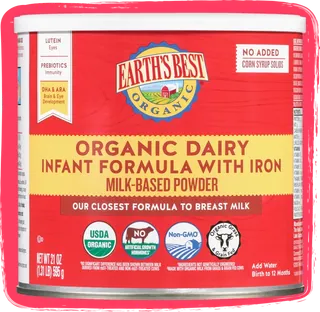
Earth's Best Organic Dairy Infant Formula with Iron, 21 oz · Earth's Best
A budget-friendly USDA organic, lactose-based standard formula with DHA, ARA, lutein and FOS prebiotic, and no added corn syrup solids. It uses organic palm oil and has no HMOs or probiotics.
-
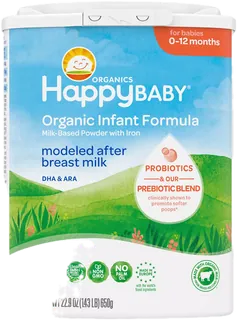
Happy Baby Organic Infant Formula Stage 1, 22.9 oz · Happy Family Organics
USDA and EU organic lactose-based formula made in Germany, with GOS/FOS prebiotics, the probiotic B. breve M-16V and fish-oil DHA. A new recipe drops palm oil, but older palm-oil cans may still turn up during the changeover; no HMOs or MFGM.
-
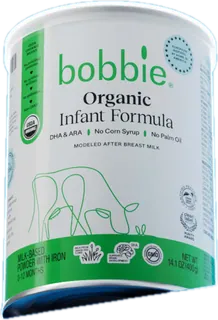
Bobbie Organic Original Infant Formula (14.1 oz can) · Bobbie
A USDA Organic, European-style standard formula made in Bobbie's Ohio plant, with lactose as the only sugar and no palm oil. It has no added HMOs, probiotics or MFGM, and Bobbie's own store sells it only in multi-can bundles.
-
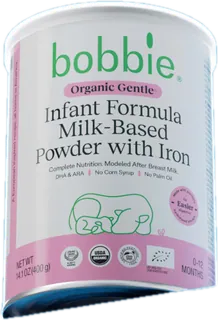
Bobbie Organic Gentle Infant Formula (14.1 oz can) · Bobbie
An organic gentle formula with 100% partially hydrolyzed whey protein, aimed at babies with fussiness and gas, that keeps lactose as the only sugar instead of corn syrup solids. It costs more per ounce than most gentle formulas and has no added HMOs or probiotics.
-
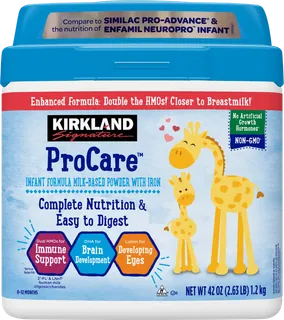
Kirkland Signature ProCare Non-GMO Infant Formula with Dual HMOs (42 oz tub) · Costco
Costco's store-brand standard formula with two HMOs (2'-FL and LNnT), DHA and lutein, sold in large 42 oz tubs at a low price per ounce. It needs a Costco membership, and Costco.com sells it online only as a 2-pack.
-
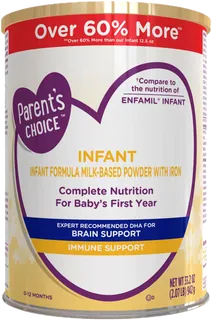
Parent's Choice Infant Formula Milk-Based Powder with Iron (33.2 oz) · Walmart
Walmart's basic store-brand formula, a budget standard milk-based formula with DHA and GOS/FOS prebiotics that Walmart compares to Enfamil Infant. It contains palm olein and no HMOs; Walmart's pricier Advantage Premium version adds HMOs and drops palm olein.
-
up&up Advantage Infant Formula Milk-Based Powder with Iron (33.2 oz) · Target
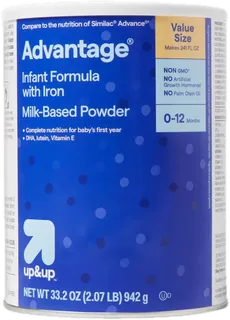
Target's store-brand standard formula, which Target compares to Similac Advance, with DHA, lutein and an FOS prebiotic and no palm olein. It has no HMOs; Target's pricier Advantage Premium version adds them.
Suggest a change
Related comparisons
-
 Baby bottles
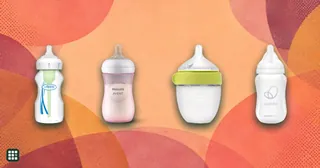
 (feeding bottles for formula or pumped breast milk) differ more than they look: in what they're made of, how they vent air, how the nipple is shaped and how fast it flows, and how many parts you wash after every feed. This grid compares popular US bottle lines in plastic, glass, and silicone, from budget multipacks to premium anti-colic systems. The real trade-offs are fewer gassy feeds against more parts to clean, glass's easy cleaning against its weight, and a breast-like nipple against price.
-
 Kids' electric toothbrushes
A kids' electric toothbrush mainly helps children brush for the full two minutes and reach every tooth. This grid compares 8 popular US kids' electric and battery brushes by power source, cleaning motion, minimum age, timer, pacer, pressure sensor, battery life, warranty and price, so you can pick between a one-piece battery brush and a rechargeable with sensors.
-
 Kids' toothpastes
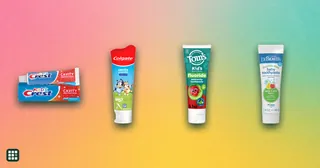
Children's toothpaste is one product with two jobs: cleaning small teeth and, for most pastes, delivering a small dose of fluoride to prevent cavities. This grid compares 12 popular US kids' pastes by active ingredient and strength, ADA Seal, the age on the label and on the pack, swallowing guidance, sweeteners, dyes, flavor and price per ounce, so you can match a paste to your child's age and your family's priorities.
-
 Breast pumps
Compare 34 breast pumps spanning plug-in double electric models, portable motors, wearable cups, hybrid systems and manual pumps. The grid focuses on pump setup, power, fit, cleaning, kit contents, price and warranty. Listed configurations and insurance coverage vary; confirm the exact model and flange fit before buying.
-
 Pregnancy apps
 range from week-by-week trackers to period apps with a pregnancy mode and community-only apps. This grid compares what each one offers, whether you pay, and whether the developer says it uses your data for tracking.
-
 Fertility monitors
Compare at-home fertility monitors by upfront and refill cost, urine or wearable method, signals measured, numeric versus categorical results, ovulation prediction or confirmation, phone support, and the limits the maker states. These products can help time intercourse or understand cycle patterns; they do not diagnose infertility or guarantee pregnancy.