



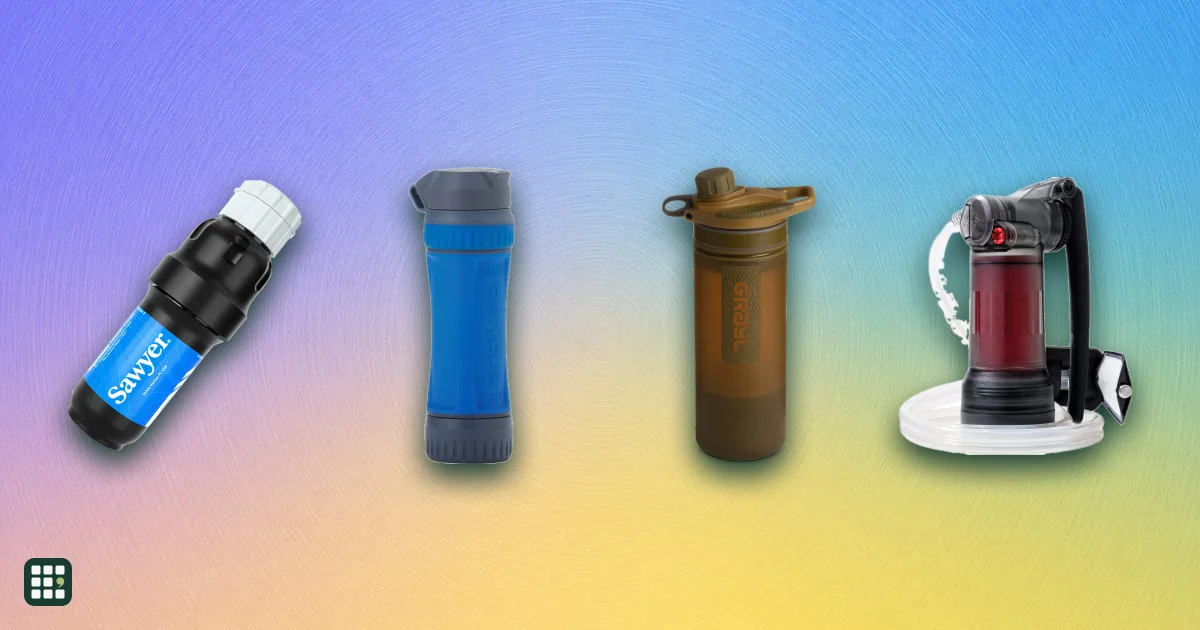
Backpacking water filters
Portable water filters and purifiers for backpacking and hiking, from 2 oz squeeze filters to pumps, gravity bags and press bottles. The main choices are whether you need virus protection, how fast and how often you filter, and how much weight and fuss you will carry.
Last updated
How to choose
Filter or purifier?
A filter removes bacteria and protozoa such as Giardia and Cryptosporidium. That is enough for most backcountry water in the US and Canada. A purifier also removes viruses; choose one for travel abroad, water near towns, farms or crowded campsites, and emergency kits. The purifiers here are the MSR Guardian and the Grayl bottles.
Pick a style that fits how you hike
- Squeeze filters (Sawyer, Platypus QuickDraw, Katadyn BeFree, LifeStraw Peak) are the lightest and cheapest. Most thread onto a pouch or bottle; ones that fit standard 28 mm bottles let you replace a burst pouch anywhere.
- Gravity systems filter several liters for a group while you set up camp.
- Pumps work from shallow puddles and seeps, but weigh more and have parts to maintain.
- Press bottles are the simplest for travel and day hikes; their cartridges wear out much sooner.
- Straws are an ultralight backup, but you can't fill bottles for cooking.
Compare flow, life and weight
Flow rates and filter life are the makers' figures in clean water. Silty water clogs every filter faster, so field cleaning (backflushing or shaking) matters on long trips. Compare the weight of the filter alone, then add the bags or bottles you will actually carry.
Watch out for freezing
Hollow-fiber filters can crack invisibly if water inside them freezes, and then let pathogens through. On cold nights keep the filter in your sleeping bag or a pocket. If one may have frozen, replace it or use the maker's integrity check.
Taste and chemicals
Most backpacking filters don't remove chemicals or improve taste. Activated carbon (Grayl, Katadyn Hiker Pro, LifeStraw's add-on) helps with bad taste and some chemicals, but no portable filter makes water near mines or heavy industry safe.
Check the details
- Look for a named test standard (NSF/ANSI P231, NSF P248, the EPA guide standard) behind removal claims.
- Count the real cost: replacement cartridges for press bottles and pumps add up.
- Practice backflushing and setup at home before your trip.
Answer
Browse the table. Filter to what matters.
Use the filters below, then sign in if you want to shortlist and decide with friends.
Sign in to vote, hide products and features, and reorder.
Verified: hover a cell and click its green dot for the source Estimate: no cited source Not stated: the maker doesn't publish it
| Feature | ⠿ | ⠿ | ⠿ | ⠿ | ⠿ | ⠿ | ⠿ | ⠿ | ⠿ | ⠿ | ⠿ | ⠿ | ⠿ | ⠿ |
|---|---|---|---|---|---|---|---|---|---|---|---|---|---|---|
|
⠿
Price
|
||||||||||||||
|
⠿
Filter type
|
Pump
|
Squeeze pump
|
Gravity
|
Squeeze, Gravity, Inline
|
Gravity
|
Squeeze, Straw
|
Straw
|
Press bottle
|
Press bottle
|
Squeeze
|
Pump
|
Squeeze, Straw, Inline
|
Squeeze, Straw, Inline
|
|
|
⠿
Removes viruses
|
|
|
|
|
|
|
||||||||
|
⠿
Weight
|
||||||||||||||
|
⠿
Flow rate
|
||||||||||||||
|
⠿
Filter life
|
up to 378,500 L
|
|||||||||||||
|
⠿
Damaged by freezing
|
|
|
|
|
|
|
|
|||||||
|
⠿
Removes chemicals and taste
|
|
|
|
|
|
|||||||||
|
⠿
Field cleaning
|
Shake
|
Backflush
|
Backflush (blow air back through)
|
None (replace cartridge)
|
None (replace cartridge)
|
|||||||||
|
⠿
Water container included
|
None
|
None
|
1 L soft flask
|
None
|
||||||||||
|
⠿
Fits standard bottles
|
|
|
|
|
|
|
|
|||||||
|
⠿
Inline hydration compatible
|
|
|
|
|
|
|
|
|
|
|
||||
|
⠿
Pore size
|
||||||||||||||
|
⠿
Removes bacteria and protozoa
|
||||||||||||||
|
⠿
Testing standard
|
Independent lab testing
|
|||||||||||||
|
⠿
Warranty
|

Why these features matter
-
Price ($)
Prices run from about $20 to several hundred dollars. Cheap squeeze filters do most backpacking jobs; you pay more for virus protection, pumps or big gravity systems.
-
Filter type
Squeeze and straw filters are lightest; pumps work from shallow puddles; gravity systems filter for a group while you do other things; press bottles are simplest for travel.
-
Removes viruses
In the US and Canada backcountry, viruses in water are rare, so a filter is usually enough. Viruses matter for international travel, water near people or livestock, and emergencies.
-
Weight (g)
Every gram counts on long trails; squeeze filters weigh 1 to 3 oz while pumps and purifiers weigh much more.
-
Flow rate (L/min)
Faster flow means less time at every water stop. Flow drops as a filter clogs, so the maker's figure is a best case.
-
Filter life (L)
Short-lived cartridges add ongoing cost and mean carrying spares on long trips.
-
Damaged by freezing
Hollow-fiber filters can crack invisibly when frozen and then let pathogens through. In cold weather sleep with them or choose a freeze-tolerant option.
-
Removes chemicals and taste
Carbon helps with bad taste, agricultural runoff and treated tap water abroad, but adds weight and wears out sooner.
-
Field cleaning
Backflushing or shaking keeps silty water from killing a filter mid-trip; without it a clogged filter is dead weight.
-
Water container included
A good dirty-water container makes filtering much faster; cheap pouches are the usual weak point.
-
Fits standard bottles
Threading onto any disposable bottle lets you replace a burst pouch anywhere.
-
Inline hydration compatible
Inline use filters as you sip, so you skip water stops entirely.
-
Pore size (microns)
Smaller pores remove smaller organisms but clog sooner and flow slower. Virus removal needs a purifier element, not just a fine filter.
-
Removes bacteria and protozoa
This is the core job of a backpacking filter; a product without it is not a water treatment.
-
Testing standard
Third-party test standards make removal claims comparable and trustworthy.
-
Warranty
A long warranty matters most for pumps and purifiers with moving parts.
About the products
-
Guardian Purifier · MSR
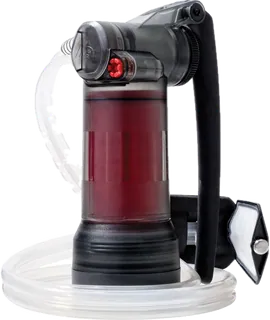
A military-grade pump purifier that removes viruses as well as bacteria and protozoa, cleans itself on every stroke and survives freezing. Heavy and expensive; for international travel, groups and emergency kits.
-
TrailShot · MSR
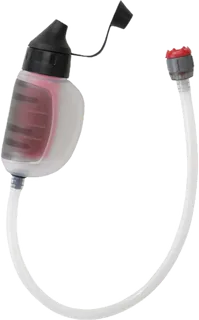
A pocket-sized hand-squeeze pump with a hose that lets you drink straight from a stream or fill a bottle in about a minute. Popular with trail runners; doesn't thread onto bottles.
-
AutoFlow XL Gravity Filter · MSR
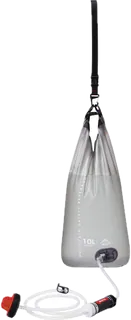
A 10-liter gravity bag with a flat base that filters for a group while you set up camp. Hang it and wait; no pumping or squeezing.
-
QuickDraw Filter · Platypus
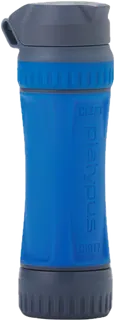
A fast 3 L/min squeeze filter that threads onto Smartwater-style bottles and has an integrity check to tell if a drop or freeze has damaged it. Sold alone or in 1 L to 3 L kits.
-
GravityWorks 4.0L · Platypus
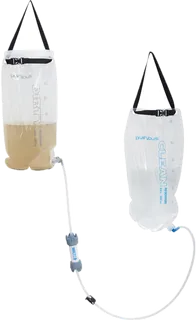
A two-bag gravity system (4 L dirty, 4 L clean) for groups and basecamps that backflushes in seconds. A 6 L version also exists.
-
Peak Series Squeeze 1L · LifeStraw
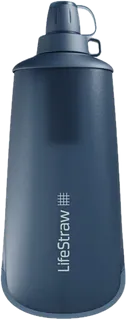
A squeeze filter that comes on a 1 L collapsible bottle, backflushes, and stops flowing when it is worn out so you can't drink unfiltered water by mistake. An optional carbon attachment improves taste.
-
LifeStraw Personal · LifeStraw
The original 46 g drinking straw filter: cheap, light and long-lasting, but you have to lie down at the water or fill a cup, and it can't fill bottles for cooking.
-
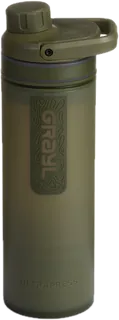
GeoPress Purifier · Grayl
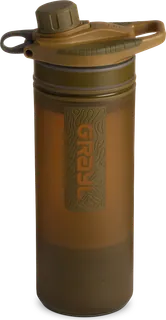
A 24 oz press bottle that purifies (viruses too) and removes many chemicals with activated carbon in about 8 seconds. The simplest choice for travel abroad, but heavy, and its cartridge lasts only about 250 L.
-
UltraPress Purifier · Grayl
A smaller 16.9 oz version of the GeoPress: the same virus and chemical protection in a bottle that fits a cup holder, with a 150 L cartridge.
-
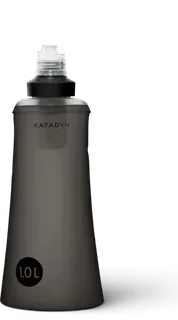
BeFree 1.0L · Katadyn
A 73 g squeeze filter on a 1 L soft flask with very fast flow, cleaned by shaking it in water. The flask is the weak point on long trips. Katadyn's own store doesn't sell to the US, so buy from US retailers.
-
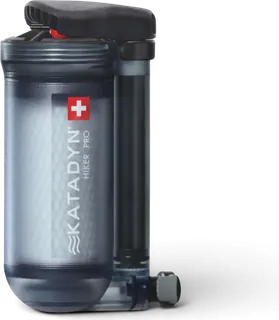
Hiker Pro · Katadyn
A classic hand pump with a carbon core that improves taste, quick-connects for bottles and hydration bladders, and a cleanable prefilter. Pumps from shallow pools where squeeze filters struggle.
-
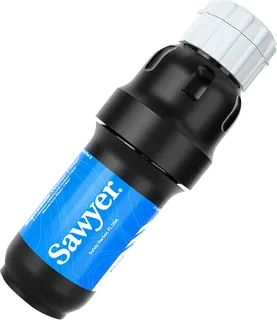
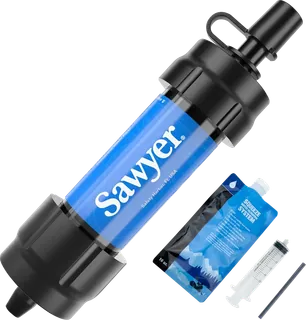
Sawyer Squeeze · Sawyer
The long-time thru-hiker standard: a 0.1 micron squeeze filter that threads onto 28 mm bottles and comes with gravity tubing and an inline adapter. Backflush it with the plunger; keep it from freezing. Sawyer sells through retailers.
-
Sawyer Mini · Sawyer
A cheaper, smaller Squeeze sibling: same 0.1 micron filtration at about 2 oz, but slower flow and a small 16 oz pouch. Good for emergency kits, travel and as a backup.
-
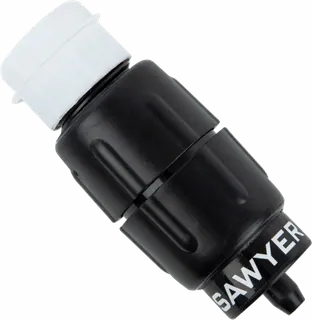
Sawyer Micro Squeeze · Sawyer
A middle ground between the Mini and Squeeze: about 2 oz, a 1 L pouch, and flow close to the full Squeeze.
Suggest a change
Related comparisons
-
 Camping hammocks
 trade a flat ground bed for lighter weight, comfort on rough terrain, and a faster setup between two trees. The real decisions are single or double width, how much weight you carry, whether bug netting, a rainfly and straps come in the box, and what load the fabric is rated for.
-
 Camping tarps and shelters
A tarp or open shelter keeps rain and sun off without the weight and bulk of a tent, or adds a dry kitchen and living room next to one. The choice is mostly about where you'll carry it: ultralight tarps and pyramids weigh a pound or less but need trekking poles or trees and some pitching skill, while canopies and vehicle tarps stand on their own poles and weigh 8 to 12 lb.
-
 Tents
Popular camping tents side by side, from ultralight trekking-pole shelters to roomy family cabins. The choice comes down to how far you carry it: every pound saved costs money and some durability, while car camping tents trade weight for space, standing height and easy setup. Weather, ground and how many people (and dogs) share it decide the rest.
-
 Satellite messengers
 let you send an SOS, check in, and text family from places with no cell signal. They differ in the satellite network they use, whether you can type without your phone, whether anyone can reply, and above all in the monthly plan you keep paying after you buy the device.
-
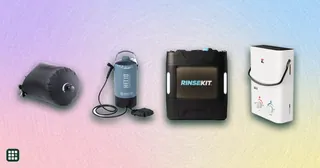 Portable camping showers
A portable shower can be anything from a 4 oz solar bag to a propane heater that gives endless hot water. The choice comes down to how you'll heat the water (the sun, a propane burner, a 12V element, or filling with warm water yourself), how you'll pressurize it (gravity, a foot pump, or a battery pump), and how much weight and money you want to carry.
-
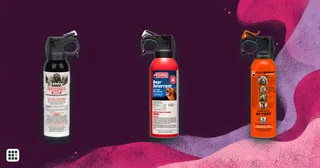 Bear spray
 is a pepper-based deterrent you carry in bear country. This grid sets the main EPA-registered US brands side by side on canister size, how far and how long they spray, and what each one includes. The real trade-off is range and spray time against weight and price.