



Tents
Popular camping tents side by side, from ultralight trekking-pole shelters to roomy family cabins. The choice comes down to how far you carry it: every pound saved costs money and some durability, while car camping tents trade weight for space, standing height and easy setup. Weather, ground and how many people (and dogs) share it decide the rest.
Last updated
How to choose
Decide how you will carry it
- Car camping: weight barely matters. Look for floor area, peak height you can stand in, big doors and quick setup.
- Backpacking: aim for about 2 to 3 lb per person of minimum weight, two doors and vestibules for packs and boots.
- Ultralight and thru-hiking: trekking-pole and single-wall designs drop below 2 lb, but need practice pitching, good stake ground and some tolerance for condensation.
Size up
Capacity ratings assume adults packed shoulder to shoulder on narrow pads. Two people who want room for gear, a wide pad or a dog usually buy a 3-person tent; families often go two sizes up. Check floor area and the width at the head end, not just the number.
Match it to the weather
- Three-season tents cover most US camping from spring to fall; mesh-heavy bodies are cooler but colder in wind.
- For storms, look at pole structure, guy-out points and a fly that reaches close to the ground. Four-season tents are for snow and exposed camps, not just colder nights.
- Floor waterproof ratings of 1,200 mm and up resist wet ground; a footprint helps on rough sites.
Freestanding or not
Freestanding tents pitch on rock, platforms and sand and can be picked up to shake out. Semi- and non-freestanding tents save weight but need stakes that hold, which can be hard on hard or loose ground.
Count the full cost
Add a footprint if one is not included, extra stakes, and seam sealer for some ultralight shelters. Compare warranties and whether the maker repairs poles and zippers, since those fail first.
Before your first trip
Pitch it at home, check every part is there, and practice in the dark. Dry it fully before storing to stop mildew and coating breakdown.
Answer
Browse the table. Filter to what matters.
Use the filters below, then sign in if you want to shortlist and decide with friends.
Sign in to vote, hide products and features, and reorder.
Verified: hover a cell and click its green dot for the source Estimate: no cited source Not stated: the maker doesn't publish it
| Feature | ⠿ | ⠿ | ⠿ | ⠿ | ⠿ | ⠿ | ⠿ | ⠿ | ⠿ | ⠿ | ⠿ | ⠿ | ⠿ | ⠿ | ⠿ | ⠿ | ⠿ | ⠿ | ⠿ | ⠿ | ⠿ | ⠿ |
|---|---|---|---|---|---|---|---|---|---|---|---|---|---|---|---|---|---|---|---|---|---|---|
|
⠿
Price
|
$319
|
$260
|
||||||||||||||||||||
|
⠿
Capacity
|
2 people
|
2 people
|
||||||||||||||||||||
|
⠿
Use type
|
Backpacking
|
Backpacking
|
Backpacking
|
Backpacking
|
Backpacking
|
Car camping
|
Car camping
|
Car camping
|
Car camping
|
Car camping
|
Car camping
|
Backpacking
|
||||||||||
|
⠿
Season rating
|
3-season
|
3-season
|
3-season
|
3-season
|
3-season
|
3-season
|
3-season
|
3-season
|
||||||||||||||
|
⠿
Minimum weight
|
72.5 lb
|
|||||||||||||||||||||
|
⠿
Packaged weight
|
1.28 lb
|
|||||||||||||||||||||
|
⠿
Floor area
|
56 sq ft
|
63 sq ft
|
90 sq ft
|
126 sq ft
|
140 sq ft
|
29.4 sq ft
|
||||||||||||||||
|
⠿
Peak height
|
41.3 in
|
|||||||||||||||||||||
|
⠿
Vestibule area
|
0 sq ft
|
|||||||||||||||||||||
|
⠿
Doors
|
2
|
2
|
1
|
1
|
1
|
|||||||||||||||||
|
⠿
Freestanding
|
Freestanding
|
Non-freestanding
|
Freestanding
|
Freestanding
|
Freestanding
|
Freestanding
|
Freestanding
|
|||||||||||||||
|
⠿
Setup type
|
Hubbed aluminum poles
|
Hubbed aluminum poles
|
Aluminum poles
|
Fiberglass poles
|
Aluminum poles with color-coded clips
|
Freestanding aluminum poles
|
||||||||||||||||
|
⠿
Pole material
|
None
|
Fiberglass
|
Fiberglass
|
Steel
|
||||||||||||||||||
|
⠿
Fly fabric
|
Integrated partial rainfly, Polyguard 2X polyester
|
68D polyester, 1200 mm
|
||||||||||||||||||||
|
⠿
Floor waterproof rating
|
||||||||||||||||||||||
|
⠿
Footprint included
|
|
|
|
|
|
|
|
|
|
|||||||||||||
|
⠿
Packed size
|
24.2 x 8.9 x 4.9
|
24 x 6.75 x 7
|
47.2 x 8.7 x 8.7
|
|||||||||||||||||||
|
⠿
Warranty
|
Limited lifetime
|
Limited lifetime
|
Lifetime
|
2 years
|
1-year satisfaction guarantee
|
1-year satisfaction guarantee
|
1-year satisfaction guarantee
|
1-year limited
|
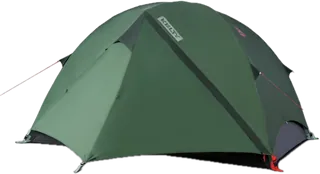
Why these features matter
-
Price ($)
Backpacking tents trade money for weight: each pound saved often costs $100 or more.
-
Capacity (people)
Ratings assume tightly packed adults; most people size up one person for comfort or gear.
-
Use type
Car camping tents are roomier, tougher and cheaper but too heavy to carry far; ultralight tents need more care.
-
Season rating
Three-season tents are for spring to fall; 4-season tents handle snow loads and strong wind but are heavier and stuffier in summer.
-
Minimum weight (lb)
The number that matters on your back; compare it across tents rather than packaged weight.
-
Packaged weight (lb)
Closer to what you really carry, since you will bring stakes and guylines.
-
Floor area (sq ft)
More floor means room to sit up gear inside and to sleep without touching the walls.
-
Peak height (in)
Under about 40 inches you cannot sit up comfortably; family tents above 70 inches let adults stand.
-
Vestibule area (sq ft)
Vestibules keep boots and packs dry outside the sleeping area and let you cook out of the rain.
-
Doors
Two doors in a 2-person tent mean no crawling over your partner at night.
-
Freestanding
Freestanding tents pitch on rock or platforms and are easy to move; non-freestanding designs are lighter but need good staking ground.
-
Setup type
Instant and hubbed designs go up fastest; trekking-pole tents save weight if you already hike with poles.
-
Pole material
Aluminum poles are light and repairable; fiberglass is cheap but heavier and can snap in the cold.
-
Fly fabric
Lower denier saves weight but tears more easily; silicone-coated nylon stretches when wet, polyester and DCF stay taut.
-
Floor waterproof rating (mm)
Higher numbers resist water pressing through when you kneel on wet ground; 1,200 mm and up is typical for backpacking.
-
Footprint included
A footprint protects a thin floor and can let you pitch fly-only; buying one separately adds $40 to $80.
-
Packed size (in)
Matters for fitting a tent inside a backpack or a car trunk.
-
Warranty
Tents get hard use; strong warranties and repair programs keep a good tent going for many seasons.
About the products
-
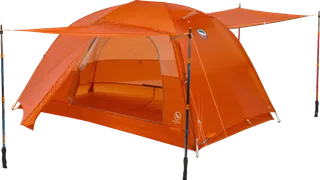
Copper Spur UL2 · Big Agnes
A roomy, freestanding two-door ultralight tent with big awning-style vestibules, now in Big Agnes HyperBead fabric. Thin 15D/20D fabrics need care, and the footprint is extra.
-
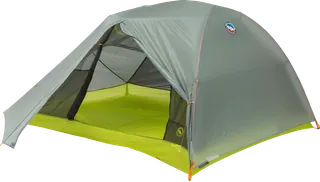
Tiger Wall UL2 · Big Agnes
A lighter, semi-freestanding sibling of the Copper Spur with two side doors; the foot corners must be staked out. Slightly less floor and headroom, and the footprint is sold separately.
-
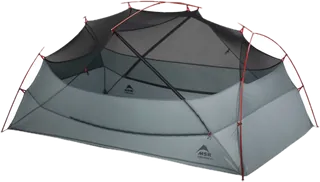
MSR Hubba Hubba LT 2 · MSR
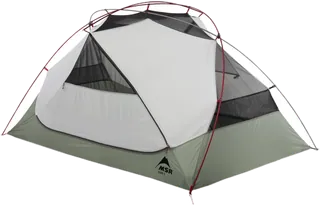
The lighter of MSR's two current Hubba Hubba 2-person tents, with a rectangular 32 sq ft floor that fits two wide pads and a mostly mesh body for airflow. The mesh-heavy body is less sheltered in cold wind; footprint sold separately.
-
MSR Elixir 2-Person Backpacking Tent · MSR
A budget, durable two-door backpacking tent from MSR that comes with a footprint. Heavier than ultralight models, so it suits beginners and shorter trips.
-
Dagger OSMO 2P · NEMO Equipment
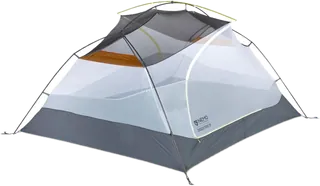
A roomy two-door freestanding backpacking tent with NEMO's OSMO fabric, which stays taut when wet. Costs more than budget tents and the footprint is extra.
-
Aurora 2P · NEMO Equipment
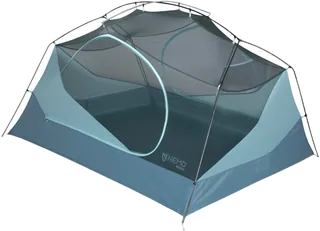
A budget two-door tent with near-vertical walls and a footprint included, suited to car camping and short backpacking trips. At about 4 lb 11 oz it is heavy for long hauls.
-
Telos Evo TR2 · Sea to Summit
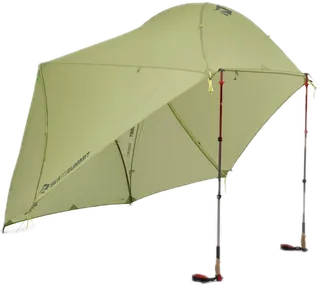
A freestanding 2-person backpacking tent whose upswept Tension Ridge poles give unusually tall doors and head room, with a low-stretch Ultra-Sil LS fly and a vent to cut condensation. Replaces the Telos TR2; pricier than most 2P tents of its weight.
-
X-Mid 2 · Durston Gear
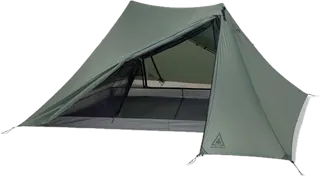
A roomy double-wall 2-person trekking-pole tent that pitches fly-first with four stakes and has two doors and two big vestibules. Sold only direct; you need two trekking poles, and the groundsheet is extra.
-
Duplex Classic Tent · Zpacks
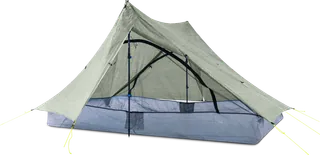
A single-wall Dyneema (DCF) 2-person trekking-pole shelter at about 1.1 lb, popular with thru-hikers. Very light and quick to dry, but expensive, snug for two at 45 in wide, and stakes and poles are sold separately.
-
Gossamer Gear The Two · Gossamer Gear
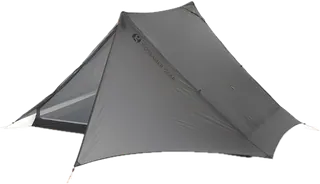
A single-wall 2-person trekking-pole tent in silicone/PU-coated nylon with two doors, two vestibules and ridge vents. Light and roomy for the price, but single-wall condensation is a trade-off and poles are not included.
-
Lunar Solo · Six Moon Designs
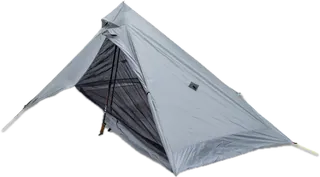
A budget single-wall 1-person tent that pitches on one trekking pole, with a 49 in peak and room for gear or a dog. Seams must be sealed before use (or paid to have sealed), and single-wall tents get condensation.
-
Half Dome 2 Plus Tent with Footprint · REI Co-op
A freestanding 2-person backpacking tent with extra floor space, two doors, a hubbed aluminum pole set and a footprint in the box. Durable and roomy, but at about 5 lb it is heavy for long trips.
-
Trailmade 2 Tent with Footprint · REI Co-op
REI's budget freestanding 2-person tent with two doors and an included footprint. Low price and tough polyester fabric, but heavy for backpacking and short on headroom.
-
REI Co-op Base Camp 6 Tent · REI Co-op
A sturdy 6-person dome tent for car camping that handles wind and cold weather better than most family tents, with two doors and two vestibules. Heavy (about 21 lb) and less airy than taller cabin-style tents.
-
4-Person Skydome Camping Tent · Coleman
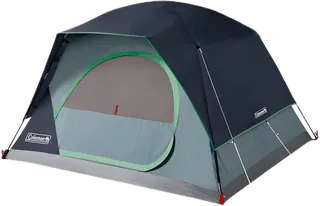
A cheap, quick-pitching 4-person dome with pre-attached poles and steeper walls than Coleman's classic domes. Realistically roomy for two adults or a parent and two kids; no vestibule, single door and a partial fly limit it to fair-weather car camping.
-
Sundome 4-Person Camping Tent · Coleman
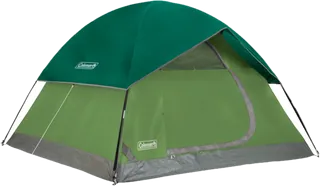
Coleman's long-running budget dome: 9 x 7 ft floor, big windows and a ground vent for warm-weather airflow, and an E-Port for a power cord. Poles thread through by hand (about 10 minutes), there is one door and no vestibule, and it is best for mild summer car camping.
-
Coleman 6-Person Instant Cabin Tent · Coleman
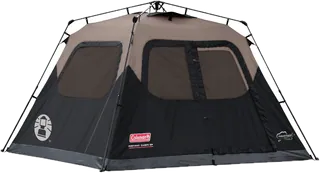
A 10 x 9 ft cabin with pre-attached telescoping poles that unfolds in about a minute and has 6 ft of standing room. The rainfly is built in rather than full coverage, so it is a fair-weather family tent, and at about 25 lb it is strictly a car-camping tent.
-
CORE 9 Person Instant Cabin Tent · CORE Equipment
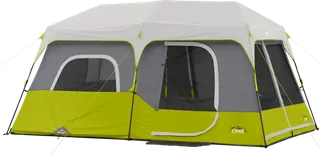
A big 14 x 9 ft instant cabin with hubbed pre-attached steel poles, two doors, a room divider and 78 in of headroom, for families who want lots of space for little money. CORE itself says it is most comfortable for 4 plus gear; it weighs 37 lb and packs 4 ft long, and its warranty is only one year.
-
Kodiak Canvas 10 x 14 ft. Flex-Bow Deluxe Canvas Camping Tent (8-person) · Kodiak Canvas
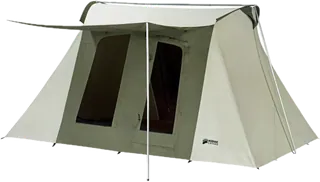
A heavy-duty cotton-canvas cabin with a steel Flex-Bow frame, 6'6" ceiling and two doors, built to sit at a base camp or hunting camp for days in wind, rain and some snow. It weighs 79 lb packed and canvas needs drying before storage, so it is for drive-up camps only.
-
Wireless 4P Tent · Kelty
A budget car-camping tent with two doors and two vestibules, Quick Corners for fast setup and a Shark Mouth duffel for easy pack-up. The poles are fiberglass and it weighs about 12.5 lb, so it is for drive-in camping rather than backpacking.
-
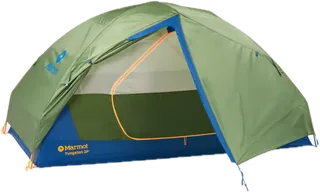
Tungsten 2-Person Tent · Marmot
A durable, freestanding entry-level backpacking tent with two doors, two big vestibules, aluminum poles and a footprint in the box. At about 5 lb it is heavy next to lightweight 2P tents, but it costs less and holds up to rough use.
-
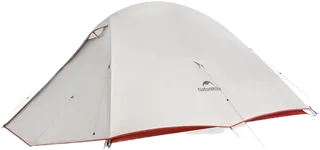
Cloud Up Pro 2-Person Ultralight Backpacking Tent · Naturehike
A low-cost freestanding 3-lb 2-person tent with a 20D silicone-coated nylon fly, aluminum poles and a footprint included. It is the successor to the discontinued Cloud Up 2. Interior space and fit-and-finish are tight for two, and warranty support is thinner than at US brands.
Suggest a change
Related comparisons
-
 Camping cots
 get you off cold, lumpy, wet ground. The choice is mostly about where the cot travels: ultralight aluminum cots pack into a backpack but sit low and cost more, while steel car-camping cots are cheap, tall and roomy but weigh 20 to 30 lb. Tent cots and bunk cots trade even more bulk for a built-in shelter or a second bed.
-
 Camping hammocks
 trade a flat ground bed for lighter weight, comfort on rough terrain, and a faster setup between two trees. The real decisions are single or double width, how much weight you carry, whether bug netting, a rainfly and straps come in the box, and what load the fabric is rated for.
-
 Camping tarps and shelters
A tarp or open shelter keeps rain and sun off without the weight and bulk of a tent, or adds a dry kitchen and living room next to one. The choice is mostly about where you'll carry it: ultralight tarps and pyramids weigh a pound or less but need trekking poles or trees and some pitching skill, while canopies and vehicle tarps stand on their own poles and weigh 8 to 12 lb.
-
 Backpacking water filters
Portable water filters and purifiers for backpacking and hiking, from 2 oz squeeze filters to pumps, gravity bags and press bottles. The main choices are whether you need virus protection, how fast and how often you filter, and how much weight and fuss you will carry.
-
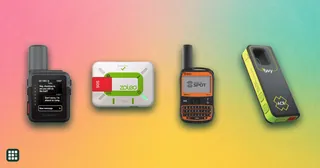 Satellite messengers
 let you send an SOS, check in, and text family from places with no cell signal. They differ in the satellite network they use, whether you can type without your phone, whether anyone can reply, and above all in the monthly plan you keep paying after you buy the device.
-
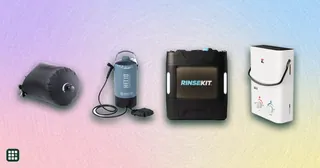 Portable camping showers
A portable shower can be anything from a 4 oz solar bag to a propane heater that gives endless hot water. The choice comes down to how you'll heat the water (the sun, a propane burner, a 12V element, or filling with warm water yourself), how you'll pressurize it (gravity, a foot pump, or a battery pump), and how much weight and money you want to carry.