




Gas lawn mowers
Gas walk-behind mowers trade lower up-front cost and no battery runtime limit against engine maintenance, noise, and exhaust. Compare push and self-propelled drive, deck width, cut adjustment, and bagging or discharge options for your yard.
Last updated
How to choose
Start with your yard and terrain. A push mower is simpler and costs less, while self-propelled drive helps on slopes and larger lawns; front-wheel drive turns easily on flat ground, while rear-wheel drive can maintain traction on uneven terrain. Match the deck width to gates and obstacles as well as mowing time.
Compare how each mower handles clippings. Mulching returns finely cut grass to the lawn, bagging collects it for disposal or compost, and side discharge is useful when grass is long. Check whether the chute, plug, or bag is included. Cutting-height range and adjustment positions matter when you change grass length through the season.
Engine displacement alone does not measure cutting performance. Look at the maker’s engine and starting features, then check warranty terms and service access. Gas mowers need fuel and routine engine maintenance; verify regional emissions and shipping limits before ordering, especially in California.
Answer
Browse the table. Filter to what matters.
Use the filters below, then sign in if you want to shortlist and decide with friends.
Sign in to vote, hide products and features, and reorder.
Verified: hover a cell and click its green dot for the source Estimate: no cited source Not stated: the maker doesn't publish it
| Feature | ⠿ | ⠿ | ⠿ | ⠿ | ⠿ | ⠿ | ⠿ | ⠿ | ⠿ | ⠿ | ⠿ | ⠿ |
|---|---|---|---|---|---|---|---|---|---|---|---|---|
|
⠿
Price
|
||||||||||||
|
⠿
Engine displacement
|
196 cc
|
|||||||||||
|
⠿
Cutting width
|
||||||||||||
|
⠿
Drive
|
||||||||||||
|
⠿
Cutting modes
|
||||||||||||
|
⠿
Cutting height range
|
||||||||||||
|
⠿
Grass bag capacity
|
||||||||||||
|
⠿
Residential warranty
|
2 years, professional line
|
|||||||||||
|
⠿
Start type
|
Recoil pull start
|
Recoil pull start
|
Recoil pull start
|
|||||||||
|
⠿
Deck material
|
||||||||||||
|
⠿
Weight
|
||||||||||||
|
⠿
Rear wheel size
|
||||||||||||
|
⠿
Fuel capacity
|
0.91 L
|
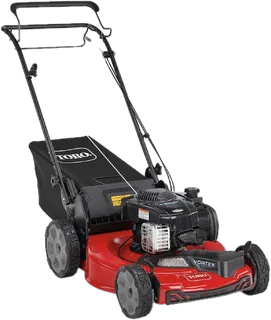
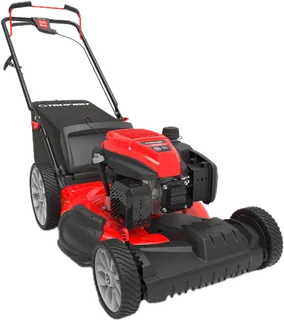
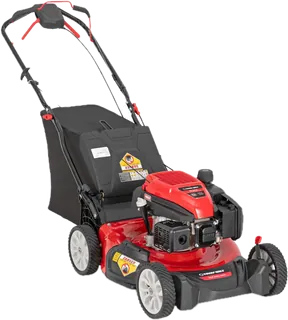
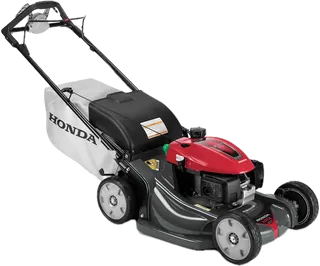
Why these features matter
-
Price ($)
The price helps set a budget, while local dealer prices can differ from manufacturer list prices.
-
Engine displacement (cc)
Displacement is a rough size measure; engine design and mower setup also affect performance.
-
Cutting width (in)
A wider deck can reduce passes, but may be harder to maneuver around gates and obstacles.
-
Drive
Drive type affects effort on slopes and how easily the mower turns.
-
Cutting modes
Clipping options determine whether grass is returned to the lawn, collected, or spread aside.
-
Cutting height range (in)
The adjustment range helps match the cut to grass type and seasonal conditions.
-
Grass bag capacity (bushels)
A larger bag can mean fewer stops to empty clippings.
-
Residential warranty (years)
Warranty terms affect repair coverage if a defect appears during normal residential use.
-
Start type
Pull-cord starting is standard and simple; electric start saves effort for people with weak shoulders or wrists.
-
Deck material
Steel is strong but can rust; aluminum resists rust and weighs less but costs more.
- Steel
- : Strong and dent resistant and the norm at every price; can rust if clippings are left on the deck or it is stored wet.
- Aluminum
- : Does not rust and is light for its size, but costs more. Worth it for wet climates or long ownership.
-
Weight (lb)
A lighter mower is easier to push, turn, and lift into a truck; a heavier one can feel steadier and cut more evenly.
-
Rear wheel size (in)
Larger rear wheels roll over uneven ground and wet grass more easily; smaller wheels are lighter and turn tighter.
-
Fuel capacity (L)
A bigger tank means fewer refills on a large lawn; it matters less on a small yard.
About the products
-
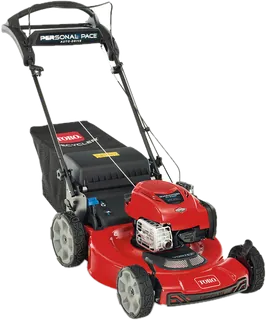
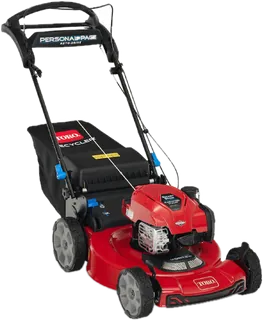
22-inch Recycler 21462 · Toro
Personal Pace rear-wheel-drive mower with 22-inch deck.
-
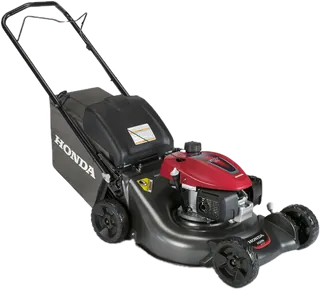
HRN216PKA · Honda · Discontinued
Push mower with 21-inch steel deck and Honda GCV170 engine.
-
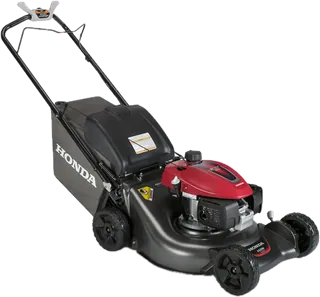
HRN216VKA · Honda · Discontinued
Variable-speed Smart Drive self-propelled mower with 21-inch steel deck.
-
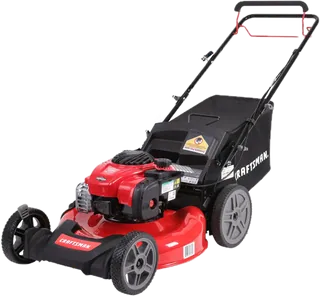
M300B 21-inch · CRAFTSMAN
Single-speed rear-wheel-drive model with 140cc Briggs & Stratton engine.
-
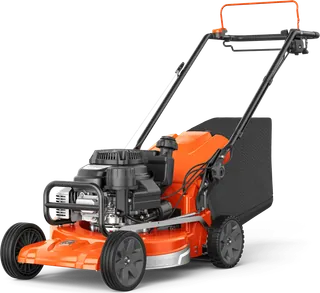
W520 · Husqvarna
Commercial walk-behind with variable-speed self-propel and Kawasaki engine.
-
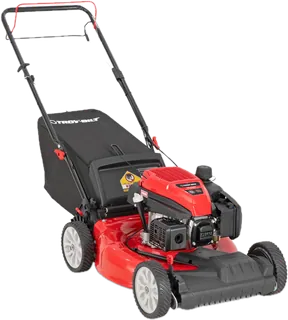
TB200C · Troy-Bilt
Single-speed front-wheel-drive mower with 163cc engine.
-
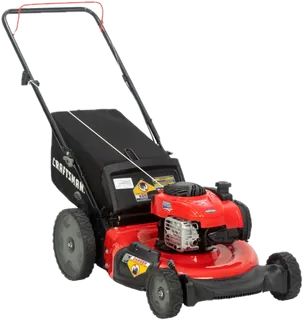
M105 21-inch · CRAFTSMAN
Push mower with a 140cc engine, 21-inch deck, and 3-in-1 clipping options.
-
22-inch Recycler 21465 SmartStow · Toro
Personal Pace rear-wheel drive with vertical SmartStow storage.
-
22-inch Recycler 21442 · Toro
Front-wheel-drive self-propelled Recycler with a 150cc Briggs & Stratton engine and 22-inch steel deck; the lowest-priced Toro self-propelled model in this grid.
-
TB230C · Troy-Bilt
Single-speed front-wheel-drive mower with 11-inch rear high wheels and a side-discharge-capable tri-action deck; 163cc engine.
-
TB310C · Troy-Bilt
Rear-wheel-drive self-propelled mower with dual-lever ergo drive controls, 163cc engine and the largest bag of the Troy-Bilt walk-behind lineup here.
-
HRX217VKA · Honda · Discontinued
Honda's premium 21-inch variable-speed mower with a rust-proof Nexite deck, 4-in-1 mulch, bag, discharge and leaf-shred, and a 5-year residential warranty. Listed under Honda's discontinued gas lineup.
Suggest a change
Related comparisons
-
 Grass seed
 comes as single species, regional blends, and seed-plus-fertilizer products, and the right one depends on your climate, how much sun the spot gets, and whether you are starting a new lawn, overseeding, or patching. This grid compares the main national brand lines and farm-direct mixes on grass type, shade and drought tolerance, germination time, seeding rate, price per pound, and whether fertilizer is included.
-
 Reel mowers
 cut grass with a scissor action that leaves a clean, even cut and uses no gas, oil or electricity. This grid compares push models from 14 to 20 inches wide on blades, cutting height, weight, wheels and warranty. The trade-off: they cut best on flat lawns of grass mowed often, and struggle with tall weeds, sticks and bumpy ground.
-
 Greenhouses
Greenhouse kits let you start seedlings early, protect tender crops from frost and grow through a longer season. This grid compares backyard walk-in kits from small budget aluminum and polycarbonate models to premium and wood-framed greenhouses on size, glazing, weather ratings, vents, doors, warranty and price. The main trade-off is price against strength and insulation: budget kits are cheap but state few weather ratings, while premium kits cost many times more.
-
 Tillers and cultivators
Tillers break up and mix soil for a new or existing garden. Cultivators are lighter machines that loosen soil and weed between rows. The choice comes down to how hard your soil is, how much ground you work, and whether you want gas power, a battery, or a cord.
-
 Solar pathway lights
Compare solar pathway lights by price per light, brightness, nightly runtime, battery, weather rating, and materials. Choices range from dim decorative plastic stakes to brighter metal lights and smart motion-sensing pathlights. Real output and runtime depend on sunlight, season, and shade.
-
 Pruning shears
 (hand pruners or secateurs) are one-handed cutters for stems and small branches. The choice comes down to cut type (bypass slices live wood cleanly, anvil crushes dry wood, ratchet adds leverage), hand size, and whether you want a repairable tool that lasts decades or a cheap one you replace.