




Grass seed
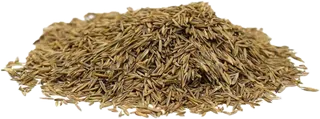
Grass seed comes as single species, regional blends, and seed-plus-fertilizer products, and the right one depends on your climate, how much sun the spot gets, and whether you are starting a new lawn, overseeding, or patching. This grid compares the main national brand lines and farm-direct mixes on grass type, shade and drought tolerance, germination time, seeding rate, price per pound, and whether fertilizer is included.
Last updated
How to choose
Start with where you live and what the spot looks like. Everything else comes second.
1. Match the grass to your climate
- Cool-season grasses (tall fescue, Kentucky bluegrass, perennial ryegrass, fine fescues) suit the north and the transition zone. Plant in early spring or early fall.
- Warm-season grasses (bermudagrass, zoysia) suit the south and go in late spring or early summer. They need full sun.
- A tall fescue mix is the usual choice in the transition zone and hot, humid southern lawns where cool-season grass is still wanted.
2. Measure the sun
Watch the spot over a day. Full sun is 6 to 8 or more hours; moderate shade is 4 to 6 hours; heavy shade is under 4. A sun and shade mix covers a lawn with both; pure sun grasses like bermudagrass fail in shade, and shade mixes thin out in open sun.
3. Decide what you are doing
- New lawn: the highest seeding rate, plus soil preparation.
- Overseeding: about a third of the new-lawn rate in many products.
- Patching: a patch product with mulch costs far more per square foot but holds seed in place.
4. Compare the real cost
Bag prices mislead because bags differ in size and seeding rate. Use price per pound times the pounds per 1,000 sq ft for your project, and note that larger bags are usually cheaper per pound. Seed with a fertilizer coating saves a step but you pay for the coating; plain seed plus a separate starter fertilizer can cost less.
5. Check the label
Look for the germination percentage, weed seed content, and the test date on the bag, and buy seed that was tested this year. Ratings such as drought or shade tolerance are the maker's own and are not comparable between brands, so use them to tell one product from another within a brand.
6. Care matters most
Keep the top inch of soil moist until the seed sprouts and the new grass is a few inches tall. Most failed seedings come from uneven watering or planting out of season, not from the bag.
Answer
Browse the table. Filter to what matters.
Use the filters below, then sign in if you want to shortlist and decide with friends.
Sign in to vote, hide products and features, and reorder.
Verified: hover a cell and click its green dot for the source Estimate: no cited source Not stated: the maker doesn't publish it
| Feature | ⠿ | ⠿ | ⠿ | ⠿ | ⠿ | ⠿ | ⠿ | ⠿ | ⠿ | ⠿ | ⠿ | ⠿ | ⠿ | ⠿ | ⠿ | ⠿ | ⠿ | ⠿ | ⠿ | ⠿ | ⠿ | ⠿ |
|---|---|---|---|---|---|---|---|---|---|---|---|---|---|---|---|---|---|---|---|---|---|---|
|
⠿
Price per lb
|
$4/lb
|
$6.66/lb
|
$12.57/lb
|
$6.66/lb
|
$6.66/lb
|
$2.75/lb
|
||||||||||||||||
|
⠿
Smallest bag
|
||||||||||||||||||||||
|
⠿
Grass type
|
||||||||||||||||||||||
|
⠿
Climate
|
Cool-season, northern US
|
Cool-season, most regions
|
Warm-season, southern US
|
Cool-season, northern US
|
Cool-season, transition zone
|
Cool-season, northern US
|
Cool-season, northern US
|
Warm-season, southern US
|
Warm-season, southern US
|
|||||||||||||
|
⠿
Light conditions
|
Full sun
|
|||||||||||||||||||||
|
⠿
Shade tolerance
|
Poor
|
|||||||||||||||||||||
|
⠿
Drought tolerance
|
||||||||||||||||||||||
|
⠿
Traffic tolerance
|
||||||||||||||||||||||
|
⠿
Germination time
|
||||||||||||||||||||||
|
⠿
New lawn seeding rate
|
Doesn't apply
|
|||||||||||||||||||||
|
⠿
Overseeding rate
|
Doesn't apply
|
|||||||||||||||||||||
|
⠿
Includes fertilizer
|
|
|
|
|
||||||||||||||||||
|
⠿
Best planting season
|
||||||||||||||||||||||
|
⠿
Use
|
New lawn or overseeding
|
New lawn or overseeding
|
New lawn or overseeding
|
New lawn or overseeding
|
New lawn or overseeding
|


Why these features matter
-
Price per lb ($/lb)
Bags range from about $3 to $16 a pound. Compare the cost of covering your lawn, not just the bag price, since seeding rates differ.
-
Smallest bag (lb)
Small lawns and patches need a small bag; seed left over after opening loses germination over time.
-
Grass type
Species decide climate fit, shade and drought tolerance, and how fast it grows in.
-
Climate
A cool-season seed in a hot southern lawn, or bermudagrass in the north, will fail.
-
Light conditions
Match it to your yard: full-sun grass dies in shade, and shade mixes thin out in open sun.
-
Shade tolerance
Under trees and north of buildings this matters more than almost anything else.
-
Drought tolerance
Drought-tolerant seed saves watering, but all grass needs steady water until established.
-
Traffic tolerance
Matters most for play areas and lawns with dogs.
-
Germination time
Faster sprouting means less time for weeds and washouts; slow grasses need more patience and watering.
-
New lawn seeding rate (lb/1000 sq ft)
Together with price per lb, this sets what your lawn costs to seed.
-
Overseeding rate (lb/1000 sq ft)
Overseeding is the most common use; this tells you how much to buy.
-
Includes fertilizer
Built-in fertilizer saves a step but adds cost; coated seed also weighs more per bag.
-
Best planting season
Planting out of season is the commonest reason new grass fails.
-
Use
A patch product is far costlier per square foot than seed for a whole lawn.
About the products
-
Smart Seed Sun & Shade · Pennington
Northern seed and fertilizer coating mix for lawns with sun and moderate shade. Very good drought tolerance once established; sold in 3, 7 and 20 lb bags.
-
Smart Seed Sun & Shade (Southern) · Pennington
Tall fescue mix with fertilizer coating for sun and moderate shade in hot, humid southern lawns. Needs a heavier seeding rate than the northern mix.
-
Smart Seed Dense Shade · Pennington
Seed and fertilizer mix for heavy shade, as little as 2 to 6 hours of sun. Weak in full sun, so it is not the pick for open lawns.
-
Smart Seed Bermudagrass Mix · Pennington
Warm-season bermudagrass with fertilizer coating for full sun (8+ hours). Excellent traffic tolerance, but shade tolerance is rated inadequate.
-
Smart Seed Kentucky Bluegrass Mix · Pennington
Kentucky bluegrass blend with fertilizer coating for a dense, durable northern lawn. Slowest to germinate (15 to 30 days) of the Pennington mixes.
-
Smart Seed Perennial Ryegrass · Pennington
Single-species ryegrass for fast cover: germinates in 8 to 14 days and also works as a temporary winter overseed on warm-season lawns.
-
Smart Seed Northeast Grass Mix · Pennington
Tall fescue, perennial ryegrass and Kentucky bluegrass mix built for northeastern winters and humid summers.
-
The Rebels Tall Fescue · Pennington
Turf-type tall fescue for northern and transition lawns with deep roots and excellent drought and traffic tolerance. Plain seed with no fertilizer coating, and the lowest price per pound here.
-
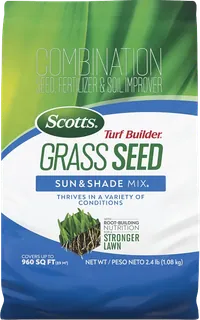
Turf Builder Grass Seed Sun & Shade Mix · Scotts
Seed, fertilizer and soil improver in one bag, for lawns from full sun to dense shade. Moderate drought tolerance; seed is treated with a fungicide.
-
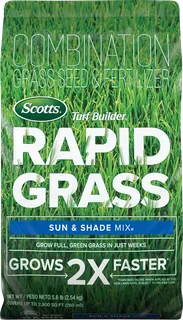
Turf Builder Rapid Grass Sun & Shade Mix · Scotts
Seed plus a stronger 13-0-0 fertilizer coating for northern lawns with sun and shade; pricier per pound than the standard Sun & Shade mix.
-
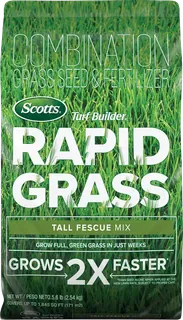
Turf Builder Rapid Grass Tall Fescue Mix · Scotts
Tall fescue seed with 9-0-0 fertilizer, made for transition-zone lawns; Scotts says it grows grass twice as fast as seed alone.
-
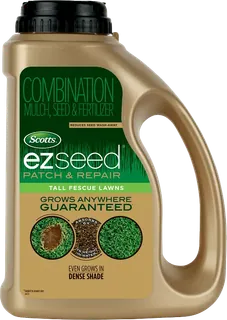
EZ Seed Patch & Repair Tall Fescue · Scotts
Seed, expanding mulch and fertilizer for patching bare spots in tall fescue lawns, including dense shade, slopes and high-traffic areas. Not meant for whole-lawn seeding.
-
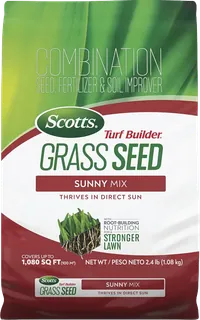
Turf Builder Grass Seed Sunny Mix · Scotts
Kentucky bluegrass and perennial ryegrass with fertilizer for full sun and light shade; medium-to-high drought resistance.
-
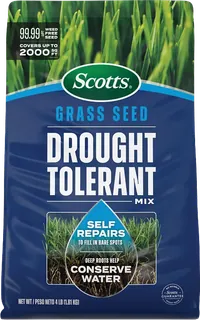
Grass Seed Drought Tolerant Mix · Scotts
Tall fescue and Kentucky bluegrass for northern lawns, with deep roots to save water. Plain seed, sold at the lowest per-pound Scotts price among full-lawn mixes.
-
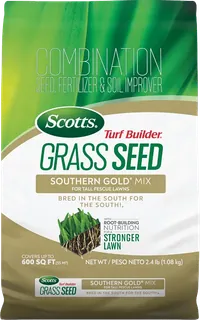
Turf Builder Grass Seed Southern Gold Mix · Scotts
Tall fescue for southern lawns, in full sun and partial shade, with fertilizer and soil improver; high durability.
-
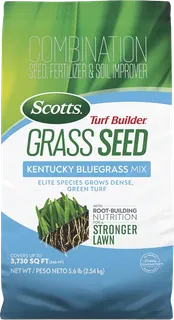
Turf Builder Grass Seed Kentucky Bluegrass Mix · Scotts
Elite Kentucky bluegrass with fertilizer for a thick, classic lawn in sunny areas. Slow to sprout (14 to 21 days) but spreads to fill gaps.
-
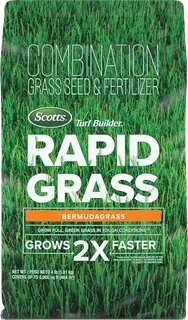
Turf Builder Rapid Grass Bermudagrass · Scotts
Bermudagrass seed with 23-0-0 fertilizer for warm-season lawns in full sun; plant in spring or early summer.
-
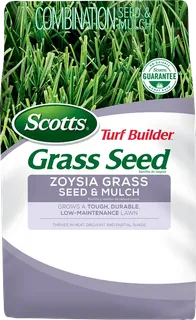
Turf Builder Zoysia Grass Seed & Mulch · Scotts
Zoysiagrass seed with mulch for warm-season lawns in full sun and light shade; plant late spring or early summer. Pricey per pound and slow to sprout.
-
Sun & Shade Grass Seed Mix · Hancock Seed
Chewings fescue and perennial ryegrass sold raw (no coating or fertilizer) direct from the farm, down to 5 lb bags with free shipping.
-
Northeast/Midwest Lawn Seed Mix · Hancock Seed
Low-maintenance Kentucky bluegrass, ryegrass and fescue mix for full sun to moderate shade in the northern states. Sold in 25 lb bags only.
-
Central States Lawn Seed Mix · Hancock Seed
Mostly fescue mix for the transition zone, full sun to moderate shade, with low maintenance. Sold in 25 lb bags only.
-
Choice Shade Seed Mix · Hancock Seed
Fine fescues, Kentucky bluegrass and ryegrass for moderate to dense shade, usable for new seeding, overseeding and patching.
Suggest a change
Related comparisons
-
 Gas lawn mowers
Gas walk-behind mowers trade lower up-front cost and no battery runtime limit against engine maintenance, noise, and exhaust. Compare push and self-propelled drive, deck width, cut adjustment, and bagging or discharge options for your yard.
-
 Reel mowers
 cut grass with a scissor action that leaves a clean, even cut and uses no gas, oil or electricity. This grid compares push models from 14 to 20 inches wide on blades, cutting height, weight, wheels and warranty. The trade-off: they cut best on flat lawns of grass mowed often, and struggle with tall weeds, sticks and bumpy ground.
-
 Tillers and cultivators
Tillers break up and mix soil for a new or existing garden. Cultivators are lighter machines that loosen soil and weed between rows. The choice comes down to how hard your soil is, how much ground you work, and whether you want gas power, a battery, or a cord.
-
 Greenhouses
Greenhouse kits let you start seedlings early, protect tender crops from frost and grow through a longer season. This grid compares backyard walk-in kits from small budget aluminum and polycarbonate models to premium and wood-framed greenhouses on size, glazing, weather ratings, vents, doors, warranty and price. The main trade-off is price against strength and insulation: budget kits are cheap but state few weather ratings, while premium kits cost many times more.
-
 Solar pathway lights
Compare solar pathway lights by price per light, brightness, nightly runtime, battery, weather rating, and materials. Choices range from dim decorative plastic stakes to brighter metal lights and smart motion-sensing pathlights. Real output and runtime depend on sunlight, season, and shade.
-
 Window film
 is a thin layer you stick to glass to change what the window does: reflect heat, hide the view in, soften light, or insulate against drafts. This grid compares do-it-yourself films for home windows on price, privacy day and night, heat and UV blocked, how they attach, and whether you can take them off and reuse them.