



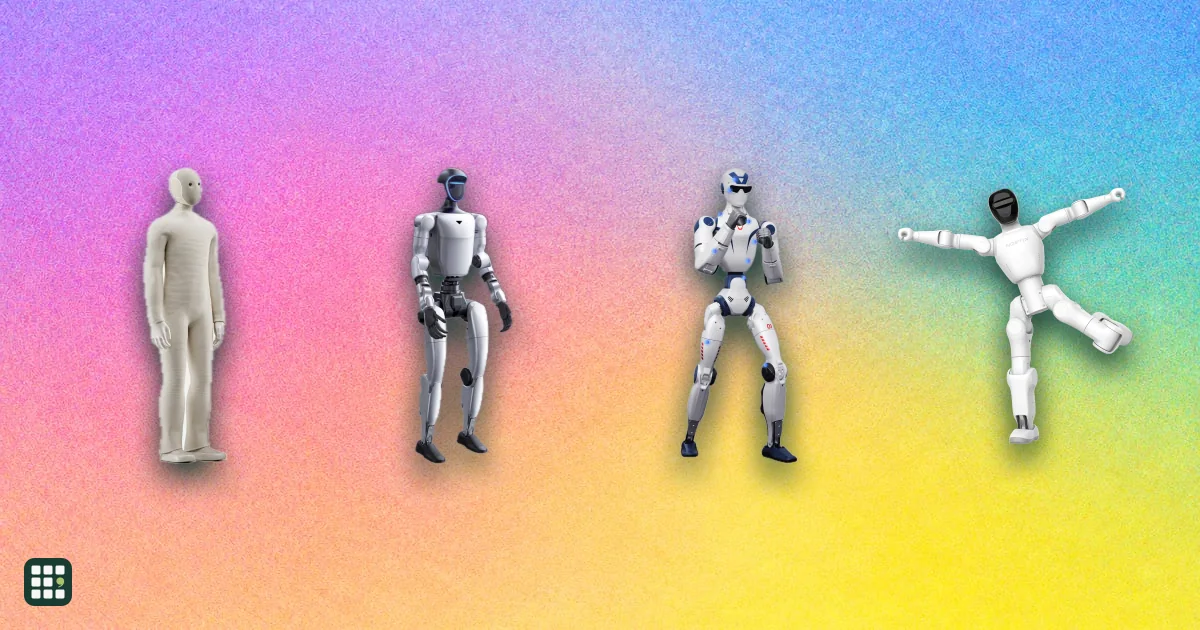
Humanoid home robots
Humanoid robots you can actually order for your home today, from household helpers sold on preorder to child-size companions and developer robots. Compare price, what each can really do on its own, hands, payload, battery life, safety and privacy. The big trade-off: only a few are sold to do chores, and those still lean on remote human help, while the cheaper ones are programmable platforms that walk, talk and dance but do little housework.
Last updated
How to choose
Home humanoid robots are new, expensive and changing fast. Start by being honest about what you want one to do, because the gap between the videos and what arrives at your door is still wide.
1. Decide what the robot is for
- Chores: only robots sold as household helpers (check Household chores and Main purpose) are designed to tidy, fetch or do laundry. Expect early units to be slow and to need help with new tasks.
- Companion, education or fun: child-size robots like Bumi talk, dance and run apps for kids and hobbyists. They cannot pick things up.
- Developing or research: robots with an SDK, more joints and more on-board computing power (TOPS) are platforms for writing your own software. Out of the box they mostly walk, balance and perform preset moves.
2. Rule out deal-breakers
- Hands: a robot without gripping hands cannot do housework. Dexterous hands are often a costly add-on.
- Payload: carrying a laundry basket or groceries needs several kilograms; many humanoids manage 1 to 3 kg per arm.
- Remote human operator: some home robots let the maker's staff see through the cameras and guide the robot through tasks it cannot do alone. Ask when this happens, whether you must approve each session, and what is recorded.
- US sales and support: several robots are only sold in the US through resellers that import them. Check who handles warranty repairs and how long shipping a 20 to 40 kg robot back would take.
3. Compare the practical specs
- Battery life and charging: most humanoids run 1 to 3 hours. Self-charging or a swappable battery decides whether it can work through the day.
- Size and weight: lighter robots are safer around children and pets and easier to lift if they fall; full-size ones reach counters and shelves.
- Safety: look for a soft or padded body, pinch-proof joints, an emergency stop and automatic fall recovery.
- Noise: motors and footsteps can be loud in a quiet home; few makers publish a figure.
4. Work out the full cost
- Compare the purchase price with any monthly subscription, and read whether the order deposit is refundable.
- Reseller prices for Chinese-made robots are often two to three times the maker's home price and may exclude import duties, shipping and setup.
- Budget for options you may need: dexterous hands, extra batteries, a higher-compute EDU edition, or a paid skill package.
5. Judge the claims
- Demo videos are often teleoperated (a person controls the robot) or sped up. Look for unedited, real-time footage of the exact task you care about.
- Treat delivery dates on preorders as targets. Robots announced for homes but not yet sold, such as Tesla Optimus and Figure 03, are not in this grid.
- Where the maker is based matters to some buyers for data privacy, import duties, support hours and parts.
6. Before you order
Confirm the exact edition and what is in the box, the warranty and who services it in the US, the delivery window, the return policy, and whether the features you want work today or are promised in a future software update.
Answer
Browse the table. Filter to what matters.
Use the filters below, then sign in if you want to shortlist and decide with friends.
Sign in to vote, hide products and features, and reorder.
Verified: hover a cell and click its green dot for the source Estimate: no cited source Not stated: the maker doesn't publish it
| Feature | ⠿ | ⠿ | ⠿ | ⠿ | ⠿ | ⠿ | ⠿ | ⠿ |
|---|---|---|---|---|---|---|---|---|
|
⠿
Price
|
||||||||
|
⠿
Monthly subscription
|
Doesn't apply
|
Doesn't apply
|
Doesn't apply
|
Doesn't apply
|
Doesn't apply
|
Doesn't apply
|
Doesn't apply
|
|
|
⠿
Order deposit
|
Doesn't apply
|
Doesn't apply
|
Doesn't apply
|
Doesn't apply
|
Doesn't apply
|
Doesn't apply
|
Doesn't apply
|
|
|
⠿
Availability
|
||||||||
|
⠿
Official US sales
|
|
|
|
|
|
|
||
|
⠿
Main purpose
|
||||||||
|
⠿
Household chores
|
|
|
|
|
|
|
||
|
⠿
Remote human operator
|
|
|
|
|
|
|
|
|
|
⠿
Voice conversation
|
||||||||
|
⠿
Control methods
|
||||||||
|
⠿
Height
|
||||||||
|
⠿
Weight
|
||||||||
|
⠿
Degrees of freedom
|
||||||||
|
⠿
Hands
|
Fixed model hands, no grip
|
Ball or shaped hands, no grip
|
No hands (fixed fists)
|
|||||
|
⠿
Arm payload
|
||||||||
|
⠿
Walking speed
|
||||||||
|
⠿
Battery life
|
||||||||
|
⠿
Charging time
|
||||||||
|
⠿
Self charging
|
|
|
|
|
|
|
|
|
|
⠿
Swappable battery
|
||||||||
|
⠿
Fall recovery
|
||||||||
|
⠿
Noise level
|
||||||||
|
⠿
Soft body
|
|
|
|
|
|
|
|
|
|
⠿
Washable cover
|
|
|
|
|
|
|
|
|
|
⠿
AI computing power
|
||||||||
|
⠿
LiDAR
|
|
|
|
|||||
|
⠿
Depth camera
|
|
|
|
|
||||
|
⠿
Developer SDK
|
|
|||||||
|
⠿
Mobile app
|
||||||||
|
⠿
Emergency stop
|
||||||||
|
⠿
Software updates
|
||||||||
|
⠿
Folds for storage
|
|
|
|
|
|
|
|
|
|
⠿
Warranty
|
||||||||
|
⠿
Maker headquarters
|
||||||||
|
⠿
Release year
|

Why these features matter
-
Price ($)
Prices run from a few thousand dollars to the price of a car. Reseller prices for Chinese-made robots are often two to three times the maker's home-market price, and usually exclude duties.
-
Monthly subscription ($/month)
A subscription lowers the upfront cost and shifts repair risk to the maker, but costs more over a few years and you never own the robot.
-
Order deposit ($)
A deposit holds your place in line for a robot that may ship months later; check whether it is refundable before paying.
-
Availability
A preorder is a promise, not a robot. Early home humanoids have slipped their dates, so weigh how soon you need it.
-
Official US sales
Buying direct or through an authorized channel makes warranty claims, repairs and software support far easier than importing.
-
Main purpose
Most humanoids sold today are development platforms that do little on their own out of the box. Only a few are built and sold to do chores.
-
Household chores
If you want help around the house, this is the deal-breaker: a robot that dances and talks will not fold your laundry.
-
Remote human operator
Remote operators help robots do tasks they cannot yet do alone, but it means a stranger can see inside your home through its cameras. Check when, how it is scheduled and what you can switch off.
-
Voice conversation
Talking to the robot is the main way most owners interact with it, and the most useful built-in feature on developer humanoids.
-
Control methods
An app or voice is enough for everyday use; a handheld controller or VR headset is needed to drive it manually or teach it moves.
-
Height (cm)
Full-size robots reach counters and shelves; child-size ones are lighter, cheaper and less intimidating but cannot reach high places.
-
Weight (kg)
A lighter robot is safer if it falls or bumps someone, and easier to lift or move; heavier robots usually carry more.
-
Degrees of freedom
More joints let a robot move more naturally and handle objects, but add cost and things that can break.
-
Hands
Without working hands a humanoid cannot pick things up, so it cannot do chores; dexterous hands are often a costly add-on.
-
Arm payload (kg)
Carrying laundry baskets or groceries needs several kilograms; developer robots often manage only 1 to 3 kg per arm.
-
Walking speed (m/s)
Speed matters less at home than steadiness, but a slow robot takes longer to cross a house to do a task.
-
Battery life (hr)
Short runtime means the robot spends much of the day charging; for chores, look for self-charging as well.
-
Charging time (hr)
Faster charging means less downtime between tasks.
-
Self charging
A robot that charges itself can work through the day without you; otherwise you plug it in or swap batteries.
-
Swappable battery
A spare battery lets you keep a robot running while the other one charges.
-
Fall recovery
Legged robots do fall; one that cannot stand up again needs you to lift a heavy machine off the floor.
-
Noise level (dB)
A robot working in a living room or at night needs to be quiet; motor whine and footsteps are a common complaint.
-
Soft body
Soft covers and pinch-proof joints make a robot much safer around children and pets.
-
Washable cover
A home robot gets dirty doing chores; a washable cover keeps it clean and replaceable.
-
AI computing power (TOPS)
More on-board compute lets the robot run larger AI models without the cloud, mainly matters to developers.
-
LiDAR
LiDAR helps the robot map rooms and avoid obstacles in low light.
-
Depth camera
Depth cameras let the robot judge distance to objects and people, needed for grasping and safe movement.
-
Developer SDK
An SDK lets you program new skills; without it you are limited to what the maker ships.
-
Mobile app
An app makes everyday control and checking on the robot easy without a separate controller.
-
Emergency stop
A quick way to freeze a heavy moving robot matters around children and pets.
-
Software updates
Home humanoids improve mostly through software; updates add skills and fix problems after you buy.
-
Folds for storage
Folding makes a robot easier to store in a closet or carry in a car.
-
Warranty
Humanoids are complex machines with many motors; a longer warranty matters because repairs are expensive and parts may need shipping abroad.
-
Maker headquarters
Some buyers weigh where a camera-equipped home device's maker is based, for data privacy, import duties, support hours and parts.
-
Release year
Newer models usually have better AI and safety features; older ones may be cheaper or better supported by the community.
About the products
-
NEO · 1X Technologies
The only humanoid here sold to do household chores: a soft, quiet, 30 kg robot with dexterous hands, for $20,000 or $499 a month. Early units rely on scheduled remote help from 1X staff for tasks they cannot do alone, which means a person may see inside your home; US deliveries start in 2026.
-
Unitree R1 Air · Unitree Robotics
The cheapest full-size-looking humanoid from Unitree: the R1 body with fewer joints (no waist or head movement) and a shorter 6-month warranty. Talks and moves but has no hands and only about an hour of battery; ships from China with no returns.
-
Unitree R1 · Unitree Robotics
A light 123 cm humanoid that walks, runs and talks through a built-in multimodal AI, at a low price for its size. No hands and about an hour of battery; programming needs the pricier EDU edition, and the Unitree store ships from China with no returns.
-
Unitree G1 · Unitree Robotics
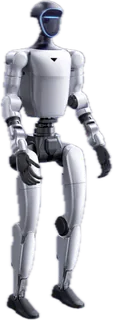
Unitree's popular research humanoid: agile, folds for storage, with LiDAR and depth sensing, but the base model has no hands, no programming access and an 8-month warranty. The EDU version adds hands, more joints and development tools at a much higher price.
-
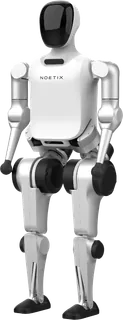
Bumi · Noetix Robotics
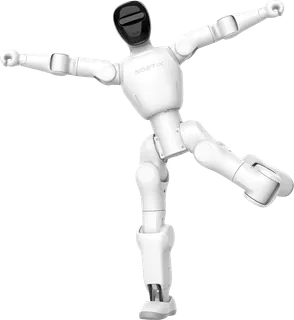
A child-size (98 cm, 17 kg) family robot that dances, follows voice commands and runs for up to 3 hours, sold in China for about $1,400. US buyers pay roughly $3,500 through importers, with no official US support; its hands cannot grip.
-
Noetix N2 · Noetix Robotics
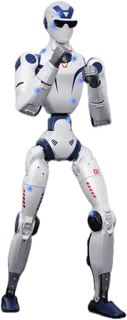
An athletic 118 cm humanoid built for flips, shows and university research, with a quick-swap battery and an SDK. Only available in the US through resellers at a large markup; its hands are simple balls.
-
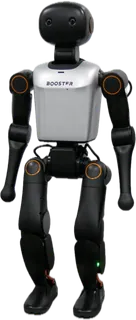
Booster K1 · Booster Robotics
A compact 95 cm developer and education robot known from robot soccer: gets up after falls, chats in English or Chinese, and has a Python and C++ SDK and a 1-year warranty. No hands, about 70 minutes of walking per charge; US buyers order through resellers.
-
FF Master · Faraday Future
A 131 cm entertainment and education humanoid from US carmaker Faraday Future, sold directly in the US with a skill pack and a 1-year warranty. Expensive for what it does; the EDU edition has no hands or on-board AI computer (the $64,990 Ultra adds both), and its app is still in development.
Suggest a change
Related comparisons
-
 Robot vacuums
Compare popular robot vacuums by advertised suction, mop design, carpet handling, navigation, and how much work the dock takes over. Manufacturer suction ratings are not directly comparable cleaning-performance tests.
-
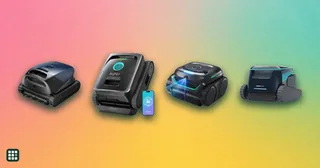 Robotic pool cleaners
 scrub the floor, walls and waterline of your pool on their own, replacing a manual vacuum and a pump-driven cleaner. The decision is mostly cordless convenience versus corded reliability, how much of the pool you need cleaned (surface skimming is rare), how fine a filter you want, and how much you will pay.
-
 Robot window cleaners
 stick to glass with suction and wipe it in a planned pattern while you do something else. This grid compares the Ecovacs Winbot lineup and HOBOT robots sold in the US. The real choices are safety (rope and backup battery for outside panes), whether you need cordless cleaning or a station, built-in spray, frameless-glass support, and how much you want to spend.
-
 AI voice generators
 turn text into natural speech and can clone or design voices. The market splits three ways: developer platforms sold by the character, creator apps sold by the month, and open-weights models you run yourself for free. This grid compares popular products side by side on what decides a choice: price and allowance, languages and voices, cloning and emotion control, speed for live conversation, commercial rights and consent safeguards. The real trade-offs are quality and polish against cost, and convenience against control.
-
 AI image generators
 turn a text prompt or a reference picture into a finished image. This grid compares popular tools side by side on what decides a choice: what you can do for free, what the paid plans really include, which model powers each one, whether it edits and keeps characters consistent, and what rights you get to use the results commercially. The real trade-offs are quality and control against price, and ease of use against how open and legally safe the output is.
-
 Browser-based AI writing tools
 draft, rewrite, and polish text where you already write: in a web app or through a browser extension in email, documents, and web forms. The choice comes down to what you write (marketing copy, everyday email, or polished English), how much you pay per month, and whether your team needs brand voice and team administration.