



Sleeping bags
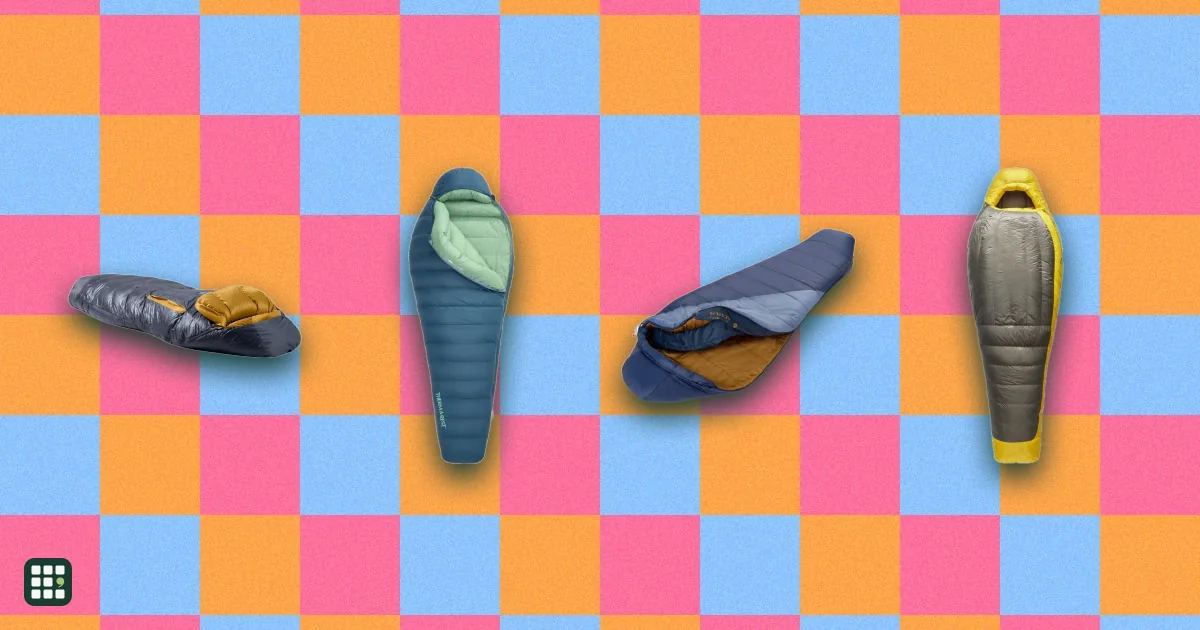
Popular sleeping bags side by side, from ultralight down mummies for backpacking to roomy synthetic bags for car camping. The choice is warmth for the coldest night you expect against weight, packed size and price, with down lighter and more compact and synthetic cheaper and better when wet.
Last updated
How to choose
Pick the temperature rating for your coldest night
Some bags publish separate ISO 23537 (formerly EN 13537) lab ratings. The comfort rating estimates the lower temperature for a standard sleeper resting in a relaxed position; the lower-limit rating is for a standard warm sleeper curled up for eight hours. A product name or marketing temperature is not always either ISO figure: compare the separate lab values when available, and treat a maker-only temperature as that maker’s claim. For example, the REI Trailmade 25 is listed with a 25°F temperature rating but also publishes an ISO comfort rating of 31°F and lower limit of 20°F. Choose for your expected overnight low, your cold sensitivity, pad insulation, clothing and conditions; add a margin if unsure.
Choose down or synthetic
- Down is lighter and packs smaller for the same warmth, and lasts for many years. Higher fill power (650 to 950) means less weight and bulk. It loses warmth when wet, although water-resistant treated down helps.
- Synthetic costs less, keeps insulating when damp and is easy to wash, but is heavier and bulkier and loses loft over the years. A good pick for damp climates, car camping and kids.
Remember the pad
Bag ratings assume you sleep on an insulating pad. The insulation under you is crushed flat, so on cold ground a bag can't keep you warm without a pad with a suitable R-value: about 4 or more for freezing nights.
Get the fit right
- Shape: mummy bags are warmest for their weight; spoon and semi-rectangular shapes give side sleepers and restless sleepers room for knees and elbows; rectangular bags are for car camping.
- Length: regular sizes fit people up to about 6 ft; choose long if you're taller. Women's versions are shorter, add insulation at the feet and core, and have ratings for colder sleepers.
- Room: compare shoulder girth if you feel confined; too much empty space makes a bag colder.
Check the details
Look for a draft collar and a hood that cinches for cold nights, a full-length zipper if you like to vent or use the bag as a quilt, ethically sourced (RDS) down, and the warranty. Store the bag loose in its storage sack, not compressed, to keep its loft.
Answer
Browse the table. Filter to what matters.
Use the filters below, then sign in if you want to shortlist and decide with friends.
Sign in to vote, hide products and features, and reorder.
Verified: hover a cell and click its green dot for the source Estimate: no cited source Not stated: the maker doesn't publish it
| Feature | ⠿ | ⠿ | ⠿ | ⠿ | ⠿ | ⠿ | ⠿ | ⠿ | ⠿ | ⠿ | ⠿ | ⠿ | ⠿ | ⠿ | ⠿ | ⠿ | ⠿ | ⠿ | ⠿ |
|---|---|---|---|---|---|---|---|---|---|---|---|---|---|---|---|---|---|---|---|
|
⠿
Price
|
$680
|
||||||||||||||||||
|
⠿
Comfort rating
|
|||||||||||||||||||
|
⠿
Limit rating
|
20°F
|
20°F
|
20°F
|
||||||||||||||||
|
⠿
Insulation
|
|||||||||||||||||||
|
⠿
Weight
|
|||||||||||||||||||
|
⠿
Fill power
|
Doesn't apply
|
Doesn't apply
|
Doesn't apply
|
Doesn't apply
|
Doesn't apply
|
||||||||||||||
|
⠿
Fill weight
|
|||||||||||||||||||
|
⠿
Packed length
|
|||||||||||||||||||
|
⠿
Packed diameter
|
|||||||||||||||||||
|
⠿
Shape
|
Semi-rectangular
|
||||||||||||||||||
|
⠿
Fits up to
|
72 in
|
72 in
|
|||||||||||||||||
|
⠿
Shoulder girth
|
|||||||||||||||||||
|
⠿
Zipper
|
Full-length
|
Full-length
|
|||||||||||||||||
|
⠿
Draft collar
|
|
||||||||||||||||||
|
⠿
Womens version
|
|
|
|
|
|
|
|||||||||||||
|
⠿
Responsibly sourced down
|
Doesn't apply
|
Doesn't apply
|
Doesn't apply
|
Doesn't apply
|
Doesn't apply
|
||||||||||||||
|
⠿
Warranty
|
Lifetime
|
1-year satisfaction guarantee
|
1-year satisfaction guarantee
|
Limited lifetime
|
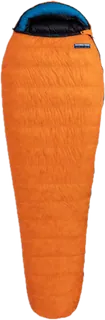
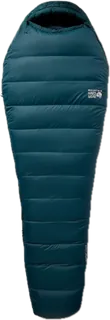
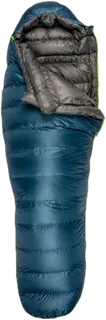
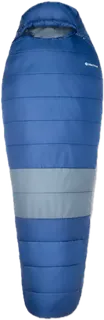
Why these features matter
-
Price ($)
Down bags cost more up front but save weight and bulk and last longer; synthetic bags are the budget choice.
-
Comfort rating (°F)
The temperature a typical cold sleeper stays comfortable at; choose by this if you sleep cold.
-
Limit rating (°F)
The lowest temperature a warm sleeper can sleep through curled up; most bag names use this number.
-
Insulation
Down is lighter and more compressible; synthetic is cheaper and keeps insulating when damp.
-
Weight (oz)
Every ounce counts on long hikes; car campers can trade weight for room and price.
-
Fill power (fill)
Higher fill power gives the same warmth with less weight and bulk, at a higher price.
-
Fill weight (oz)
More fill means more warmth; comparing fill weight and fill power shows how much insulation you are paying for.
-
Packed length (in)
A small packed bag leaves room in your pack for food and gear.
-
Packed diameter (in)
Together with packed length, shows how much pack space the bag takes.
-
Shape
Mummies are warmest for the weight; spoon and semi-rectangular cuts give side sleepers room; rectangular bags are for car camping.
-
Fits up to (in)
A bag that's too short compresses the insulation at your head and feet; too long leaves cold empty space.
-
Shoulder girth (in)
Broad-shouldered and restless sleepers feel confined below about 60 in; more girth adds weight.
-
Zipper
Full-length zippers let you vent or open the bag as a quilt on warm nights; shorter ones save weight.
-
Draft collar
A draft collar keeps warm air in when you move; it matters most below freezing.
-
Womens version
Women's versions are shorter and wider at the hips, add insulation where women tend to sleep cold, and have ratings for colder sleepers.
-
Responsibly sourced down
Certification means the down comes from birds that weren't live-plucked or force-fed.
-
Warranty
A good bag lasts a decade or more; makers with long warranties and repair services keep it going.
About the products
-
Disco 15 · NEMO Equipment
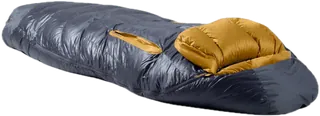
A roomy 650-fill down spoon bag for side sleepers, with zippered Thermo Gill vents, a draft collar and waterproof hood and footbox. Heavier than slim mummies, but much less confining.
-
Riff 30 · NEMO Equipment
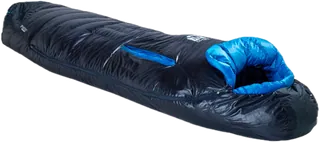
An ultralight 800-fill down spoon bag: under 2 lb with room to shift on your side, vents for warm nights and RDS-certified water-resistant down. The 15 F version was out of stock when checked.
-
Forte 20 · NEMO Equipment
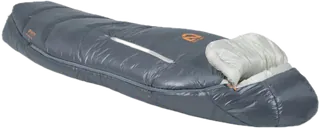
A synthetic spoon bag with recycled Zerofiber insulation that keeps warming when damp, vents and a draft collar. Cheaper than down but heavier and much bulkier packed.
-
Parsec 20 · Therm-a-Rest
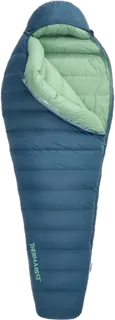
A premium 900-fill down mummy for fast three-season trips: 1 lb 13 oz, packs small, with a foot-warmer pocket, draft tubes and recycled fabrics. Among the lightest bags here, and among the priciest.
-
Boost 650 20 · Therm-a-Rest
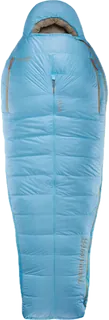
A 650-fill down bag that zips from roomy semi-rectangular to snug mummy with its center WarmZip, plus arm holes for reading or venting. Comfortable and versatile, but heavier and bulkier than premium mummies.
-
Spark 30 · Sea to Summit
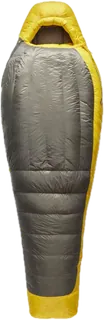
An ultralight 850-fill down mummy at just over 1 lb, with water-resistant treated down and 10D fabrics. Packs tiny for thru-hikes, but the 30 F limit means comfort only to about 39 F, and thin fabrics need care.
-
Sea to Summit Trek 15 · Sea to Summit
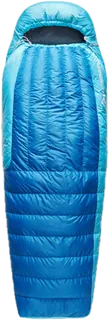
A roomy tapered-rectangular 650-fill down bag with a full-length two-way zip and a foot-vent zip, so it opens flat as a quilt. Comfortable for camping and travel, but heavy for backpacking at over 3 lb.
-
Torchlight EXP 20 · Big Agnes
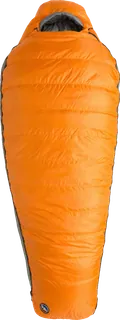
A 650-fill water-resistant down mummy with zippered side panels that add up to 10 in of girth when you want room, plus a sleeve that locks it to your pad. A smart pick for restless sleepers who still carry their bag.
-
Echo Park 20 · Big Agnes
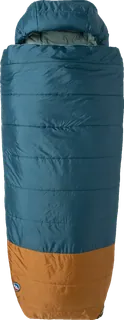
A roomy synthetic camping bag with a comforter-style quilted top, hand pockets, a pad sleeve and an oversized draft collar, cut long and wide for sleepers up to 6 ft 6 in. Heavy and bulky at about 5 lb: one for the car. Its 20 F rating is not lab tested.
-
Cosmic Down 20 · Kelty
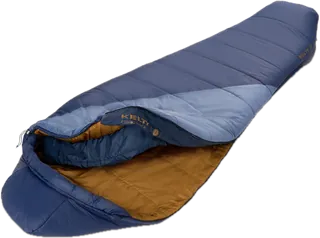
The classic budget down bag: 550-fill down in a trapezoid semi-rectangular cut with a draft collar, under $200. Heavier and bulkier than premium down, but light enough for backpacking at about 2.5 lb.
-
Cosmic Synthetic 20 · Kelty
The cheapest bag here: a recycled-synthetic mummy with an upper draft collar and compression sack for about $110. Warm enough for three-season camping, but heavy and bulky for long hikes.
-
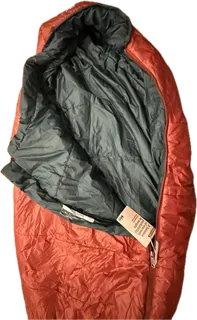
Radiant 20 · REI Co-op
A 600-fill down mummy with synthetic insulation at the draft collar and footbox, in nine sizes including narrow and wide. Good value for cool-weather backpacking; sold only at REI.
-
Trailmade 25 · REI Co-op
REI's budget synthetic mummy for backpacking and car camping, in six sizes with wide options. Cheap and tough, but nearly 3 lb and comfortable only to about 31 F.
-
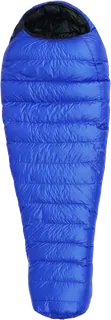
Western Mountaineering UltraLite · Western Mountaineering
A US-made 850+ fill goose down mummy rated to 20 F at 1 lb 13 oz, with a full collar, full-length zipper and continuous baffles for shifting down. A long-lasting benchmark backpacking bag, at a premium price; its rating is the maker's own, not ISO tested.
-
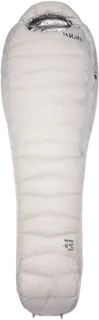
Mythic Ultra 20 · Rab
A 900-fill down mummy that weighs about 1.5 lb with a heat-reflective lining and sidewall baffles for side sleepers. Premium price and a narrow cut; sold at REI as the Mythic 20.
-
Swallow UL 20 · Feathered Friends
A Seattle-made 950+ fill goose down mummy with a roomier cut than the brand's Hummingbird. Very light for its warmth and RDS-certified, but it costs more than most bags here and has no lab-tested comfort rating.
-
Bishop Pass 15 · Mountain Hardwear
A mid-priced 650-fill RDS down bag with a roomier Performance Plus mummy cut, draft collar and face gasket. Rated colder than its 26 F comfort figure suggests, and heavier than ultralight bags.
-
Terra 15 · Exped
A value 650+ fill RDS duck-down mummy in five sizes, with a thermal collar and an 11-chamber foot box. Heavier and bulkier than ultralight down, but warm for the price.
-
Trestles Elite Eco 20 · Marmot
A budget recycled-synthetic mummy with a full-length zipper, for car camping and wetter trips. It is heavy and bulky for backpacking, and its tested comfort rating is 24 F.
Suggest a change
Related comparisons
-
 Camping cots
 get you off cold, lumpy, wet ground. The choice is mostly about where the cot travels: ultralight aluminum cots pack into a backpack but sit low and cost more, while steel car-camping cots are cheap, tall and roomy but weigh 20 to 30 lb. Tent cots and bunk cots trade even more bulk for a built-in shelter or a second bed.
-
 Sleeping pads
Popular sleeping pads side by side, from ultralight insulated air pads to closed-cell foam and thick self-inflating car camping mats. A pad does two jobs, comfort and keeping the cold ground from stealing your heat, and every gain in warmth, thickness or toughness costs weight, packed size or money.
-
 Bear spray
 is a pepper-based deterrent you carry in bear country. This grid sets the main EPA-registered US brands side by side on canister size, how far and how long they spray, and what each one includes. The real trade-off is range and spray time against weight and price.
-
 Camping chairs
Popular camping chairs side by side, from 1 lb backpacking chairs that pack smaller than a water bottle to padded recliners and rockers for the campsite. The trade-off is comfort, height and sturdiness against weight, packed size and price.
-
 Trekking poles
 take load off your knees on descents and add stability on rough or wet trails. This grid compares popular carbon and aluminum poles across price, weight per pair, shaft material, folding or telescoping design, lock type, grip, length range and warranty, so you can see the real trade-offs between a light, packable carbon pole and a cheaper, tougher aluminum one.
-
 Camping hammocks
 trade a flat ground bed for lighter weight, comfort on rough terrain, and a faster setup between two trees. The real decisions are single or double width, how much weight you carry, whether bug netting, a rainfly and straps come in the box, and what load the fabric is rated for.