



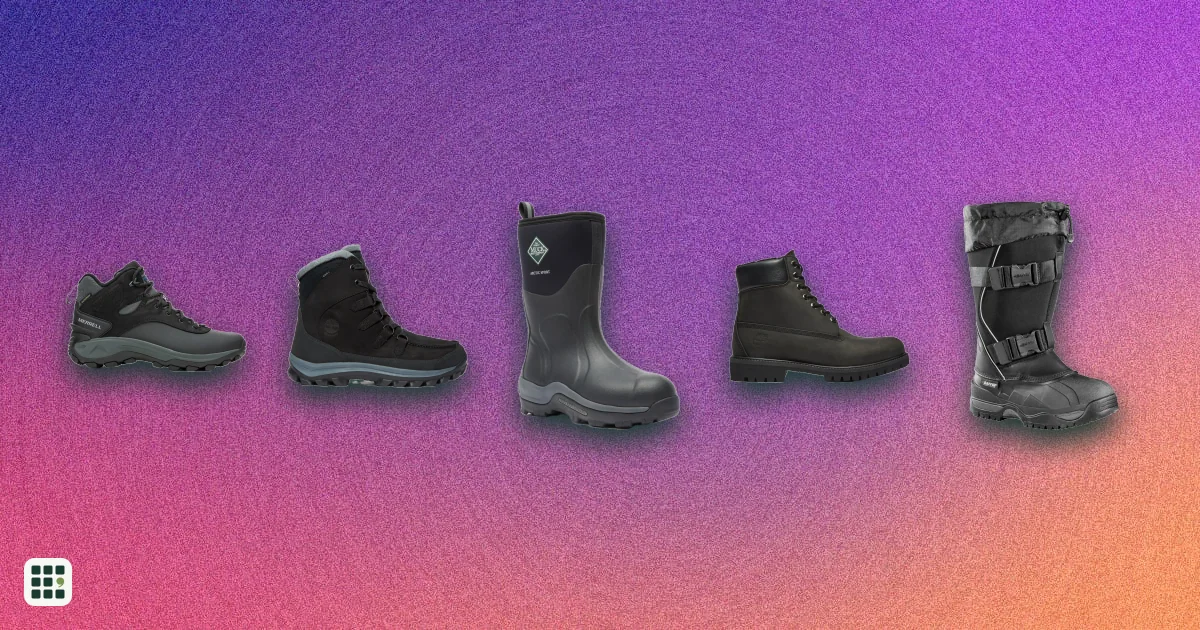
Winter boots
Winter boots keep your feet warm and dry in snow, slush and cold. This grid compares insulated, waterproof men's boots from Merrell, Timberland, The North Face, KEEN, Muck and Baffin by insulation, stated temperature rating, weight and price.
Last updated
How to choose
Start with how you will use them. Standing or sitting in the cold (ice fishing, watching games) needs far more insulation than walking, because moving makes heat and sweat.
Key questions
- How cold does it get? Makers rate boots differently, so treat a temperature rating as a rough guide for moderate activity. Compare insulation grams only within the same brand.
- Slush or dry snow? Rubber shells and pull-ons shed slush; leather boots need regular waterproofing care.
- How much walking? Heavy, tall boots tire you out. Light leather boots suit commuting and short trails.
- Traction on ice? Check the outsole name; some makers use specialist ice-grip rubber.
- Fit. Insulated boots need room for thick socks and some run large or small; read the size note on the page.
Before you buy, check the full cost, the return policy for worn-in tests indoors, and whether a removable liner can be replaced.
Answer
Browse the table. Filter to what matters.
Use the filters below, then sign in if you want to shortlist and decide with friends.
Sign in to vote, hide products and features, and reorder.
Verified: hover a cell and click its green dot for the source Estimate: no cited source Not stated: the maker doesn't publish it
| Feature | ⠿ | ⠿ | ⠿ | ⠿ | ⠿ | ⠿ | ⠿ | ⠿ | ⠿ | ⠿ | ⠿ | ⠿ | ⠿ |
|---|---|---|---|---|---|---|---|---|---|---|---|---|---|
|
⠿
Price
|
|||||||||||||
|
⠿
Insulation
|
None stated; 5 mm neoprene upper
|
||||||||||||
|
⠿
Temperature rating
|
|||||||||||||
|
⠿
Waterproofing
|
Leather upper on rubber bottom
|
||||||||||||
|
⠿
Upper material
|
Rubber with neoprene
|
||||||||||||
|
⠿
Closure
|
Lace-up
|
Lace-up
|
|||||||||||
|
⠿
Outsole
|
|||||||||||||
|
⠿
Boot height
|
|||||||||||||
|
⠿
Weight per boot
|
|||||||||||||
|
⠿
Removable liner
|
|
|
|
|
|
|
|
|
|
|
|
||
|
⠿
Warranty
|
|||||||||||||
|
⠿
Ice grip outsole
|
|
|
|
|
|
|
|
|
|
|
Why these features matter
-
Price ($)
Winter boots span about $140 to $310; pay for warmth you will actually need.
-
Insulation
Insulation is what keeps your feet warm standing still; more is not better if you are active and sweat.
-
Temperature rating
A maker rating is a rough guide for moderate activity; cold feet depend on socks, circulation and how still you stand.
-
Waterproofing
Melting snow and slush soak non-waterproof boots fast; a rubber shell or membrane keeps feet dry.
-
Upper material
Leather lasts and wipes clean; rubber and nylon shed slush; each needs different care.
-
Closure
Laces give a tuned fit; pull-on boots are fast but fit looser; buckles work with gloves.
-
Outsole
Grip on ice and packed snow depends on the rubber and lug design.
-
Boot height (in)
Taller boots keep out deep snow; shorter ones are lighter and easier to walk in.
-
Weight per boot (lb)
Heavy boots tire you on long walks; for standing or short trips weight matters less.
-
Removable liner
A removable liner dries overnight and can be replaced when it packs down.
-
Warranty
Tells you what the maker will repair or replace if seams or soles fail.
-
Ice grip outsole
Ice, not snow, is what causes most winter falls; an ice-rated outsole grips wet ice far better than ordinary lugs. Matters less on deep snow or trails.
About the products
-
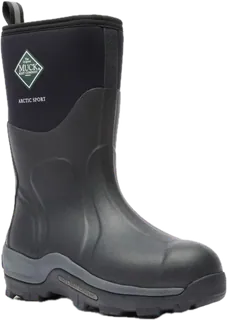
Arctic Sport Mid · Muck Boot Company
Rubber and neoprene pull-on for wet, slushy cold; fleece lining and a 5 mm neoprene bootie. Best for chores and dog walks in deep cold, not long hikes.
-
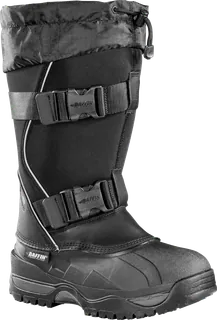
Impact · Baffin
Polar-rated 15 in boot with a removable multi-layer liner you can dry overnight. For extreme cold and low to moderate activity; heavy and pricey. The page showed it sold out when checked.
-
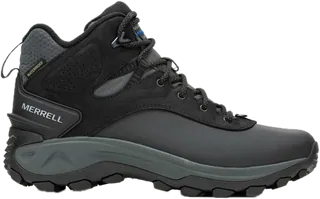
Thermo Kiruna 2 Mid · Merrell
Light leather winter hiker with 200 g insulation. Suits snowy trails and commutes in moderate cold; not meant for deep freeze.
-
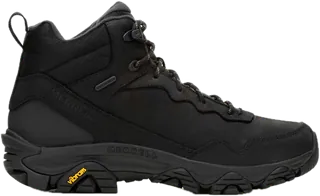
Coldpack 3 Thermo Mid · Merrell
Leather and mesh winter boot with 200 g insulation, an aerogel insole and Vibram traction for icy ground. A step up in grip from the Kiruna.
-
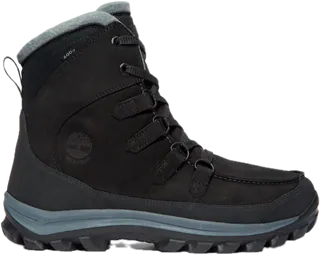
Chillberg Waterproof Winter Boot · Timberland
Insulated leather hiking-style boot with 400 g PrimaLoft; the warmest insulation among the lace-up leather boots here, at a mid price.
-
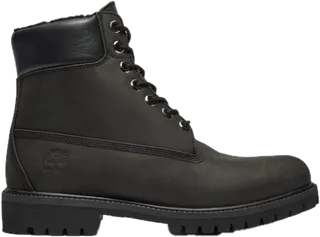
Premium 6-Inch Waterproof Warm-Lined Boot · Timberland
The classic yellow-boot look with a faux shearling lining. Town and light snow wear; no insulation rating is given.
-
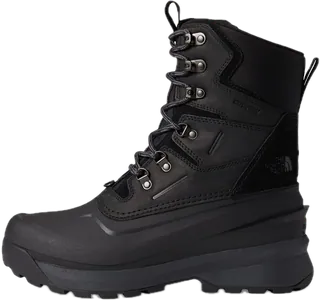
Chilkat V 400 Waterproof Boots · The North Face
A leather and suede lace-up with 400 g of synthetic insulation, the warmest in this grid's lace-ups, and a heel clip for snowshoes. No temperature rating or shaft height is published.
-
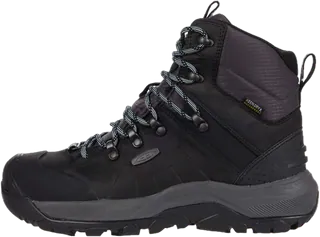
Revel IV Mid Polar Waterproof Boot · KEEN
A light winter hiker with 200 g insulation rated to -25°F and an ice-grip outsole. Its ankle-height shaft (about 4.5 in) keeps out less deep snow than taller boots.
-
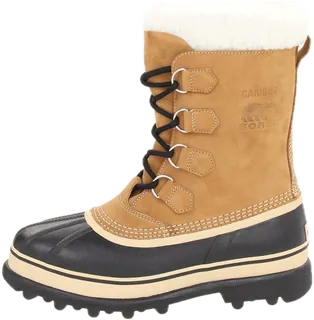
Caribou · Sorel
Classic felt-lined, waterproof leather and rubber-shell snow boot with a removable 9 mm felt innerboot; warm and heavy, best for cold, wet walking rather than long hikes.
-
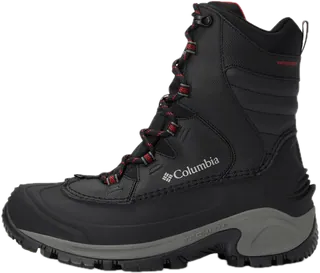
Bugaboot III · Columbia
Lace-up winter hiker with 200 g insulation and a waterproof leather upper; light for a rated -25°F boot and a budget-friendly price. Also sold in wide.
-
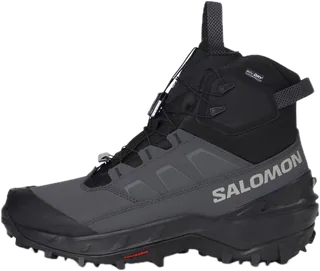
Crosstrak Powder Waterproof · Salomon
High-cut leather winter hiker with a waterproof membrane, insulation and bungee closure for quick, glove-friendly on and off; the maker gives no temperature rating.
-
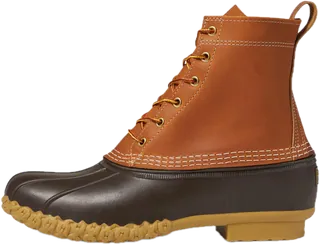
Bean Boots 8" Insulated · L.L.Bean
Maine-made leather-and-rubber lace-up with PrimaLoft insulation; a classic, lighter than most pac boots, with a sized-down fit.
-
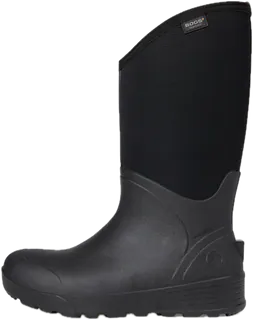
Bozeman II Vibram Arctic Grip · Bogs
Pull-on waterproof neoprene mid-calf boot with Vibram Arctic Grip outsole for slick ice; a mediumweight chore and snow-shoveling boot rather than an arctic one (comfort range from 5°F).
Suggest a change
Related comparisons
-
 Avalanche transceivers
Compare current avalanche transceivers on core search specifications and handling features. Published search-strip widths are manufacturer specifications, not a guarantee of real-world detection distance; practice with your device and follow its manual.
-
 Water shoes
 and water-ready sandals compared side by side: how much they protect your toes, how they grip wet rock, how fast they dry and what they cost. Options range from a $50 foam clog to enclosed river shoes and hybrid sandals; the trade-off is protection and grip against weight and price.
-
 Climbing shoes
 are fitted tightly and built for one job: gripping small holds. The decision is how much downturn, stiffness and sensitivity you want, whether you want laces or Velcro, and how long you will wear them. Aggressive, soft shoes excel on steep boulders but hurt on long routes; flatter, stiffer shoes are comfortable and edge well.
-
 Trail running shoes
Compare 18 trail running shoes from HOKA, Altra, Brooks, La Sportiva, Merrell, New Balance, Nike, On, Salomon, Saucony and adidas, from $145 to $225 in the US. The big trade-offs are cushioning versus ground feel, grip versus road comfort, and drop. Weight, stack height, drop and lug depth are lab measurements from RunRepeat, so the numbers compare like for like rather than relying on each brand's own claims.
-
 Hiking shoes
Compare 15 current low-cut hiking shoes and trail-ready alternatives across nine brands, from cushioned day-hike shoes to waterproof models for rocky terrain. Features cover price, weight, fit and width, waterproofing, outsole, support, protection, materials, and care; fit is personal, so try models on with your hiking socks.