



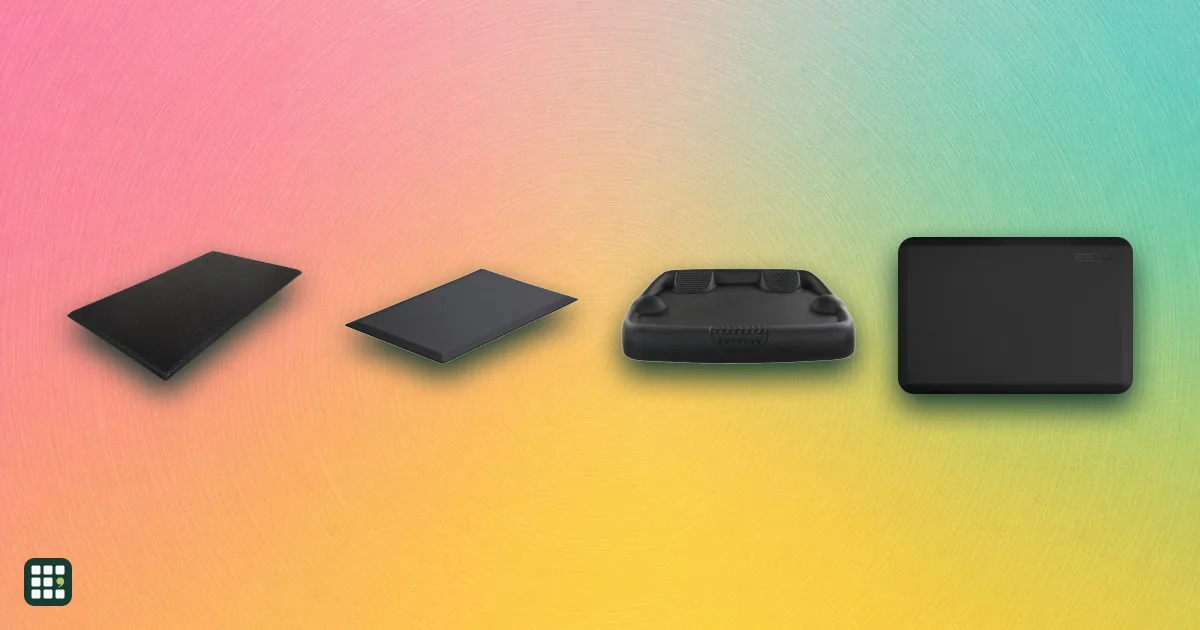
Anti-fatigue mats
Anti-fatigue mats cushion the floor where you stand at a standing desk, kitchen counter or workbench, so long stretches on your feet are easier on your legs, feet and back. This grid compares flat foam and gel mats, contoured mats that keep you moving, and hybrid mats a rolling office chair can use too, by cushioning, size, edges, chair compatibility, warranty and price.
Last updated
How to choose
1. Decide how you'll use it
Standing for a few minutes now and then needs little more than a basic flat foam mat. Standing for hours a day, or on a hard concrete or tile floor, is where denser polyurethane or gel cushioning and a longer warranty pay off. If you switch between sitting and standing many times a day, decide whether you'll move the mat each time or want one your chair can roll onto.
2. Flat or contoured
- Flat mats feel like a softer floor, fit under any desk, and work in kitchens and at workbenches.
- Contoured mats have mounds, ridges or ramps that prompt you to shift your weight and stretch your calves. Many people find they reduce fatigue over a long day, but they cost more and need more room.
3. Check the chair question first
Most foam and gel mats are not made for chair casters: wheels dent or tear them, and some makers void the warranty. If you want one surface for sitting and standing, look for a hybrid mat the maker says is rolling chair safe, and check it is big enough for your chair's base to stay on it.
4. Get the size and thickness right
- Measure the space under your desk with the chair moved aside. About 20 x 30 to 36 in suits one person at a typical desk.
- Around 3/4 in is the usual thickness; 1 in or more feels plush but can feel less stable. A thicker mat raises you slightly, so you may need to raise the desk a little.
- Beveled edges reduce tripping and help a chair or stool roll on; a non-slip bottom matters on smooth wood or tile.
5. Weigh durability against price
Cheap PVC and memory foam can flatten or curl within months of daily use. Compare the warranty length, the cushion material, and the return window, which lets you test the mat for a few weeks. In a kitchen, a waterproof surface that wipes clean is worth having.
6. Judge claims carefully
"Anti-fatigue" is a marketing term, not a standard. The APMA Seal of Acceptance is one of the few independent checks. If you have foot, knee or back pain, a mat helps most when you also vary your posture and wear supportive shoes; ask a clinician if pain persists.
Answer
Browse the table. Filter to what matters.
Use the filters below, then sign in if you want to shortlist and decide with friends.
Sign in to vote, hide products and features, and reorder.
Verified: hover a cell and click its green dot for the source Estimate: no cited source Not stated: the maker doesn't publish it
| Feature | ⠿ | ⠿ | ⠿ | ⠿ | ⠿ | ⠿ | ⠿ | ⠿ | ⠿ | ⠿ | ⠿ | ⠿ | ⠿ | ⠿ | ⠿ |
|---|---|---|---|---|---|---|---|---|---|---|---|---|---|---|---|
|
⠿
Price
|
$39.96
|
$59.95
|
$41.87
|
$51.99
|
|||||||||||
|
⠿
Surface shape
|
Flat
|
Flat, patterned top
|
Flat
|
Flat
|
Flat, textured top
|
Flat
|
Flat
|
Flat
|
Flat
|
Flat
|
|||||
|
⠿
Thickness
|
|||||||||||||||
|
⠿
Rolling chair safe
|
|
|
|
|
|
|
|
|
|
|
|
|
|
||
|
⠿
Length
|
|||||||||||||||
|
⠿
Width
|
|||||||||||||||
|
⠿
Sizes offered
|
4 sizes
|
6 sizes
|
1 sizes
|
1 sizes
|
1 sizes
|
1 sizes
|
7 sizes
|
1 sizes
|
|||||||
|
⠿
Cushion material
|
|||||||||||||||
|
⠿
Beveled edges
|
|||||||||||||||
|
⠿
Non slip bottom
|
|
||||||||||||||
|
⠿
Waterproof
|
|
|
|||||||||||||
|
⠿
Weight
|
|||||||||||||||
|
⠿
Warranty
|
|||||||||||||||
|
⠿
Return window
|
30 days
|
30 days
|
30 days
|
30 days
|
30 days
|
||||||||||
|
⠿
APMA seal
|
|
|
|
|
|
|
|
|
|
|
|
|
|||
|
⠿
PVC free
|
|
|
|
||||||||||||
|
⠿
Phthalate free
|
|
||||||||||||||
|
⠿
Colors
|
18 colors
|
3 colors
|
2 colors
|
1 colors
|
|||||||||||
|
⠿
Made in
|

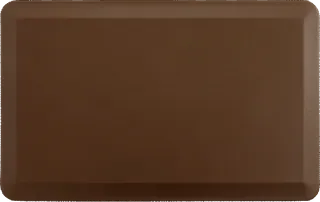
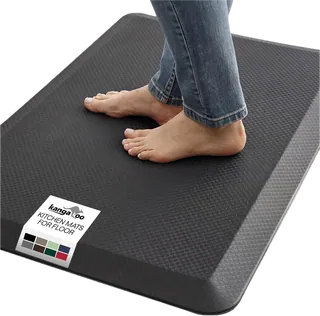
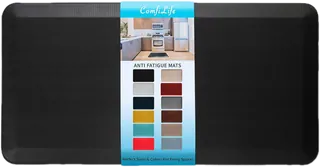
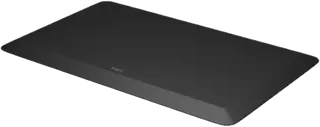
Why these features matter
-
Price ($)
Mats range from about $30 to over $200. Cheap foam can flatten within months, so a higher price often buys a longer warranty and denser cushioning, but a basic flat mat is fine for occasional standing.
-
Surface shape
Flat mats feel like a cushioned floor and are easy to slide a chair or stool over. Contoured mats nudge you to move and stretch, which many people find less tiring over long stretches, but they take more floor space and some people find them distracting.
-
Thickness (in)
Thicker usually means more cushioning, but very soft thick mats can feel unstable and make a desk or keyboard sit relatively lower. About 3/4 in is typical; 1 in or more is plush.
-
Rolling chair safe
If you switch between sitting and standing many times a day, a mat a chair can roll over saves moving the mat each time. Casters dent and tear most foam mats, voiding some warranties.
-
Length (in)
The mat should cover the area you stand in, and on a sit-stand desk it must fit with your chair pushed aside. Under a typical desk, 30 to 36 in long works for most people.
-
Width (in)
Around 20 in front to back lets you step back and shift without stepping off; deeper mats suit people who pace or use a footrest.
-
Sizes offered (sizes)
More sizes make it easier to fit a mat to a wide desk, a kitchen run, or a two-person workstation.
-
Cushion material
Polyurethane and gel tend to keep their shape and bounce back longest; memory foam feels soft at first but can flatten; PVC foam is cheap and light but less durable.
-
Beveled edges
Beveled edges are easier to step onto, less of a trip hazard, and let a chair or stool roll up more easily.
-
Non slip bottom
A mat that slides on hard floors is a trip hazard and annoying to keep in place, especially on smooth wood or tile.
-
Waterproof
Matters in kitchens and for anyone with a coffee at the desk; a sealed surface wipes clean and won't absorb spills or odors.
-
Weight (lb)
Heavier mats stay put and usually have denser foam; lighter ones are easier to move aside when you sit or to take to another room.
-
Warranty (years)
A long warranty is a signal the maker expects the foam not to flatten or crack; it matters more for mats used several hours a day.
-
Return window (days)
It's hard to judge cushioning in a store; a long return window lets you try it standing for a few weeks.
-
APMA seal
The APMA seal means podiatrists reviewed the product as beneficial for foot health. It is not a guarantee but is an independent check few mats have.
-
PVC free
Some buyers avoid PVC for environmental reasons or because of plasticizers and odor. Polyurethane and rubber mats are the usual PVC-free choices.
-
Phthalate free
Phthalates are plasticizers used in some vinyl products; people concerned about chemical exposure, or with children and pets nearby, may prefer mats without them.
-
Colors (colors)
A mat stays out all day, so color choice matters if it's in a living space or kitchen.
-
Made in
Some buyers prefer US-made products; country of origin can also hint at lead times and materials standards.
About the products
-
Topo · Ergodriven
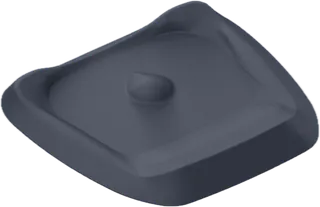
A contoured polyurethane mat with a center mound, side ramps and a back bar that push you to shift and stretch. Best for people who stand for long stretches and want to keep moving; it takes more floor space than a flat mat, and a smaller Mini size suits shorter users.
-
CumulusPRO Commercial Grade · Imprint
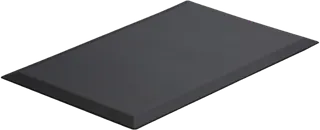
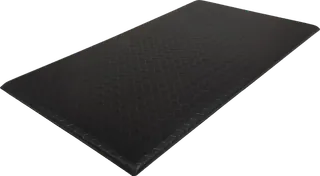
A flat, one-piece polyurethane mat with beveled, no-curl edges and an unconditional lifetime warranty. A durable choice for all-day standing; offered in one 24 x 36 in size.
-
GelPro Elite · GelPro
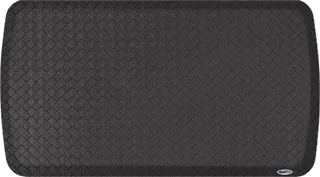
A gel layer over foam, with many decorative patterns made to order in Texas. Aimed at kitchens as much as desks; among the pricier flat mats.
-
WellnessMats Original · WellnessMats
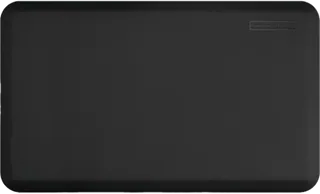
A premium 100% polyurethane mat made in the USA with a 20-year warranty and APMA acceptance. Popular in kitchens; expensive, and larger sizes are made to order.
-
Sky Solutions Anti Fatigue Mat · Sky Solutions
A budget 3/4 in memory foam mat sold mainly on Amazon, with beveled edges and a rubber backing. Fine for occasional standing; memory foam can flatten with heavy daily use.
-
Kangaroo Original Standing Mat · Kangaroo
A budget 3/4 in cushioned mat sold on Amazon in many sizes and colors. A low-cost option for kitchens and standing desks.
-
ComfiLife Anti Fatigue Floor Mat · ComfiLife
A low-cost 3/4 in foam mat with a non-slip bottom, sold direct and on Amazon in three sizes. Good value for kitchens and home offices.
-
Vari Standing Mat · Vari
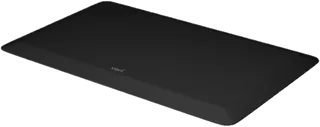
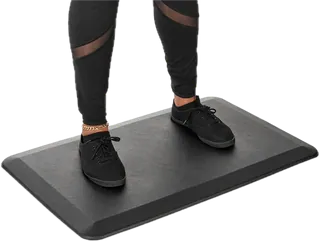
A low-profile 3/4 in polyurethane foam mat made in the USA, from a standing-desk maker. Simple and inexpensive, but only a 1-year warranty.
-
Vari Standing Mat Pro · Vari
The heavy-duty version of Vari's mat: polyurethane foam with an integral skin and a 10-year warranty, same 32 x 20 in size.
-
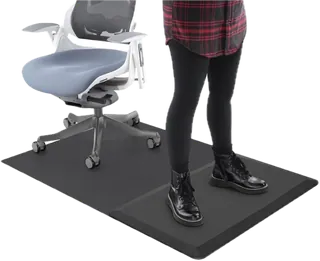
EcoLast Hybrid · WellnessMats
A large 3/4 in polyurethane mat from WellnessMats, sold through iMovR, built so an office chair can roll on with all five casters, letting one mat serve sitting and standing. Made in the USA with APMA acceptance; expensive and only sold in large sizes (from 3 x 5 ft).
-
UPLIFT Standing Desk Mat · UPLIFT Desk
A flat 3/4 in polyurethane foam mat with a faux leather, waterproof surface and a 15-year warranty from UPLIFT Desk. Good value for a desk mat.
-
Amazon Basics Anti-Fatigue Standing Mat · Amazon
A basic 0.6 in foam mat with non-curling edges and a non-slip design, sold by Amazon. Thinner than most; a cheap pick for occasional standing.
-
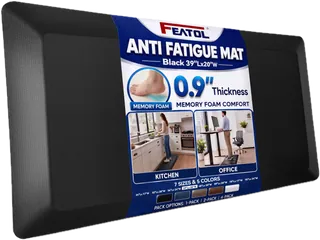
FEATOL Anti Fatigue Mat · FEATOL
A thicker-than-usual 0.9 in memory foam mat with a PU leather top, beveled edges and a non-slip base, sold on Amazon in seven sizes. A popular budget pick for extra cushioning.
-
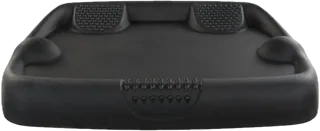
UPLIFT Active Anti-Fatigue Mat E7 · UPLIFT Desk
A contoured 100% polyurethane mat with massage mounds, power wedges and a rest bar, plus a heel grab for sliding it aside. A cheaper rival to the Topo; a Small version suits tight spaces.
-
UPLIFT Chair Mat with Standing Cushion · UPLIFT Desk
A large 36 x 54 in sit-stand mat: a thin chair-mat area for casters at the back and a 0.7 in cushioned standing area at the front. Far cheaper than other hybrids, but the cushion is thinner and the cover is PVC leather.
Suggest a change
Related comparisons
-
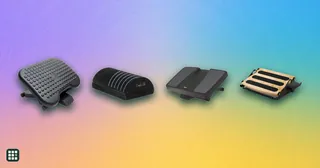 Under-desk footrests
An under-desk footrest supports your feet when they don't sit flat on the floor, so your thighs stay level and your lower back is less strained. Choices range from soft foam cushions to tilting platforms and free-rocking footrests that keep your legs moving. This grid compares height and angle adjustment, stability, surface and materials, cleaning, and price.
-
 Desk lamps
A good desk lamp puts enough light on your work without glare in your eyes or on your screen. Options range from classic spring-balanced arm lamps to LED lamps with adjustable color temperature and automatic brightness, and monitor light bars that take no desk space. This grid compares brightness, color temperature, glare control, adjustability, mounting and price.
-
 Monitor arms
Compare single, dual, and heavy-duty monitor arms by the weight and screen size they hold, how far they reach and lift, how they attach to a desk, and the warranty. The real trade-off is between cheap gas-spring arms that work well within a narrow weight band and premium arms with longer reach, wider weight ranges, and longer warranties.
-
 Conference speakerphones
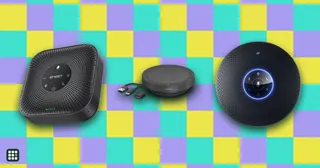
A conference speakerphone puts a speaker and several microphones in one puck-shaped device, so you can take calls hands-free or let a small group join a meeting around a table. This grid compares personal and small-room models by microphone pickup, echo control, noise reduction, connectivity, battery, certifications and price.
-
 Label makers
 compared: Brother P-touch and DYMO handhelds with keyboards, Bluetooth app printers, industrial models for cables and job sites, budget thermal printers, and desktop and 4 x 6 shipping label printers. The choice comes down to how you want to design labels, how long they must survive, barcode and shipping needs, and the real cost of refills.
-
 Blue-light glasses
 filter part of the blue light from screens, either with a nearly clear coating or a yellow or amber tint. They range from $20 drugstore readers to $100+ designer frames and add-ons at online glasses stores. This grid compares specialist brands, online stores' blue-light lenses and blue-light readers by price with and without a prescription, how much they say they filter, lens tint, returns and insurance. Eye doctors' groups say screens' blue light doesn't damage eyes and there's little evidence these glasses prevent eye strain, so treat them as a comfort and sleep-habit choice, not a medical one.