



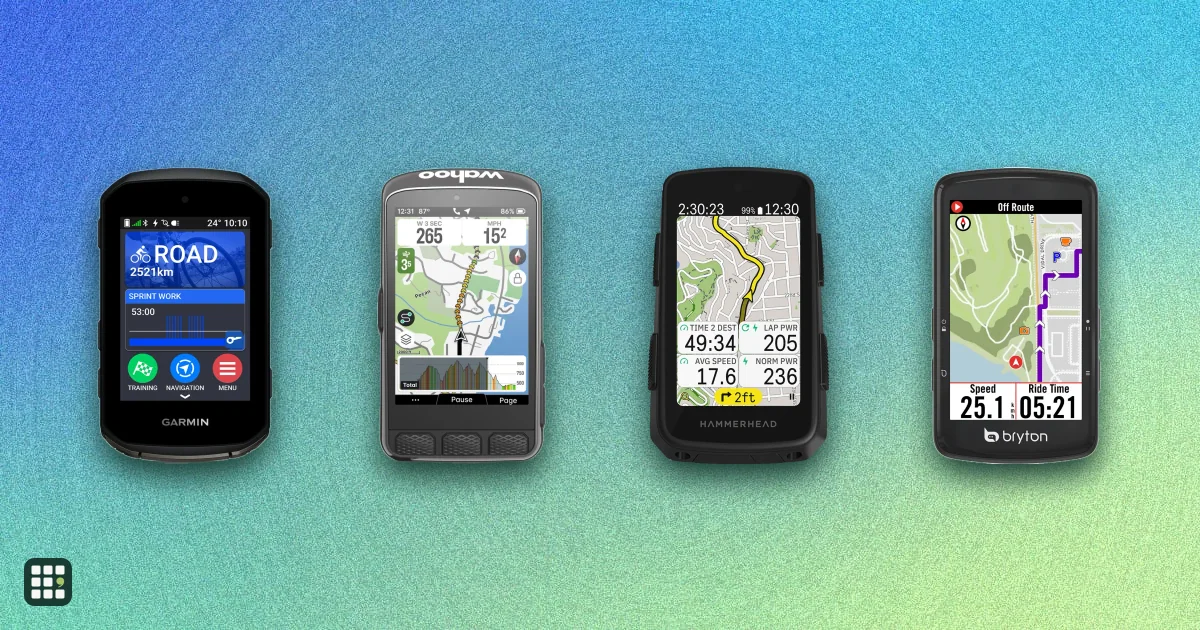
Bike computers
GPS bike computers mount on your handlebars to show speed, power, heart rate and navigation without draining your phone. This grid compares current head units from Garmin, Wahoo, Hammerhead, COROS, Bryton, iGPSPORT and Magene, from about $150 budget units to $800 flagships. The real trade-offs are screen size and readability, how good the maps and rerouting are, battery life, and which sensors and training tools you will actually use.
Last updated
How to choose
Start with how you ride
- Fitness and road riding on known routes: a compact unit with sensor support, structured workouts and breadcrumb routes is enough. You may never use full maps.
- Exploring, gravel and touring: look for full routable maps, on-device rerouting and a larger screen you can read at a glance.
- Ultra-distance and bikepacking: battery hours (and solar or a battery-saver mode) matter most.
- Mountain biking: a tough, compact unit with trail maps and good button control; touchscreens can be awkward with muddy gloves.
Rule out deal-breakers
- Sensors: check that your power meter, heart-rate strap and smart trainer connect over ANT+ or Bluetooth as the unit supports.
- Shifting and radar: if you use Shimano Di2, SRAM AXS or a rear radar, confirm the unit shows them.
- Battery: compare the normal-use figure with your longest ride, with a few hours to spare.
Compare the features that change daily use
- Screen: transflective screens stay readable in bright sun and save battery; AMOLED and bright LCDs look sharper for maps.
- Navigation: breadcrumb routes show the line to follow; routable maps give turn-by-turn and reroute you when you go off course.
- Training: structured workouts, climb previews and trainer control replace a coach screen for many riders.
- Ease of use: Wahoo and Hammerhead set up from a phone app; Garmin offers the most features and settings.
Understand the full cost
None of these needs a subscription for core features, though some brands sell optional premium plans. Sensor bundles cost more than the unit alone, and out-front mounts are sometimes extra. Previous models stay on sale at lower prices and often cover everything a rider needs.
Judge the claims
Battery figures are makers' claims under ideal settings; backlight, navigation, many sensors and cold weather cut them. Check the maker's own spec page for the exact model, since names like "Plus", "Solar" and bundles change features and price.
Answer
Browse the table. Filter to what matters.
Use the filters below, then sign in if you want to shortlist and decide with friends.
Sign in to vote, hide products and features, and reorder.
Verified: hover a cell and click its green dot for the source Estimate: no cited source Not stated: the maker doesn't publish it
| Feature | ⠿ | ⠿ | ⠿ | ⠿ | ⠿ | ⠿ | ⠿ | ⠿ | ⠿ | ⠿ | ⠿ | ⠿ | ⠿ | ⠿ | ⠿ | ⠿ | ⠿ | ⠿ | ⠿ | ⠿ |
|---|---|---|---|---|---|---|---|---|---|---|---|---|---|---|---|---|---|---|---|---|
|
⠿
Price
|
||||||||||||||||||||
|
⠿
Screen size
|
||||||||||||||||||||
|
⠿
Display type
|
||||||||||||||||||||
|
⠿
Touchscreen
|
|
|
|
|||||||||||||||||
|
⠿
Battery life
|
35 hr
|
21 hr
|
||||||||||||||||||
|
⠿
Battery saver mode
|
70 hr
|
Doesn't apply
|
Doesn't apply
|
Doesn't apply
|
30 hr
|
|||||||||||||||
|
⠿
Solar charging
|
|
|
|
|
|
|
|
|
|
|
|
|
|
|
||||||
|
⠿
Weight
|
||||||||||||||||||||
|
⠿
Maps
|
Full routable maps, on-device routing
|
Full routable maps, on-device routing
|
Full routable maps, on-device routing
|
Full routable maps, on-device routing
|
Full routable maps, on-device routing
|
Full routable maps, on-device routing
|
Full routable maps, on-device routing
|
Full routable maps, on-device routing
|
Full routable maps, on-device routing
|
Routable maps (rerouting only)
|
||||||||||
|
⠿
Turn by turn rerouting
|
|
|
|
|
|
|
|
|
|
|
|
|
||||||||
|
⠿
Climb profile
|
||||||||||||||||||||
|
⠿
Multiband GPS
|
|
|
|
|
|
|||||||||||||||
|
⠿
ANT plus sensors
|
|
|||||||||||||||||||
|
⠿
Bluetooth sensors
|
|
|
||||||||||||||||||
|
⠿
Structured workouts
|
|
|
||||||||||||||||||
|
⠿
Smart trainer control
|
|
|
|
|||||||||||||||||
|
⠿
Radar support
|
|
|||||||||||||||||||
|
⠿
Electronic shifting support
|
|
|
|
|
||||||||||||||||
|
⠿
Incident detection
|
|
|
|
|
|
|
|
|||||||||||||
|
⠿
WiFi
|
|
|
|
|
||||||||||||||||
|
⠿
Water rating
|
IPX7
|
IPX7
|
Why these features matter
-
Price ($)
Ranges from about $150 to $800; most riders get the core features well below flagship price.
-
Screen size (in)
Bigger screens show more data fields and readable maps; small units are lighter and tidier on the bars.
-
Display type
Transflective screens read best in sun and save battery; AMOLED and bright LCDs look sharper but use more power.
-
Touchscreen
Touch speeds up maps and menus; buttons are easier with gloves and in rain.
-
Battery life (hr)
Decides whether one charge covers a week of commutes or a full day in the mountains.
-
Battery saver mode (hr)
Matters for multi-day bikepacking and ultra events without charging.
-
Solar charging
Extends long rides in sun; makes little difference for short daily rides.
-
Weight (g)
Weight-conscious road riders notice it; most riders do not.
-
Maps
Full maps and rerouting help when you leave the planned route; breadcrumbs are fine for following planned routes.
-
Turn by turn rerouting
Saves you when a road is closed or you take a wrong turn.
-
Climb profile
Helps pace long climbs; mostly for hilly road and gravel riding.
-
Multiband GPS
More accurate tracks in cities, canyons and forests.
-
ANT plus sensors
Most power meters and older sensors use ANT+.
-
Bluetooth sensors
Many newer and cheaper sensors are Bluetooth only.
-
Structured workouts
Turns the unit into a coach for interval training.
-
Smart trainer control
Handy if you train indoors in winter without a tablet app.
-
Radar support
Radar warns of cars approaching from behind, a big safety aid on roads.
-
Electronic shifting support
Useful only if your bike has electronic shifting.
-
Incident detection
A safety net for solo riders.
-
WiFi
Uploads rides and updates maps without your phone.
-
Water rating
All of these handle rain; higher ratings handle washing and storms better.
About the products
-
Edge 1060 · Garmin
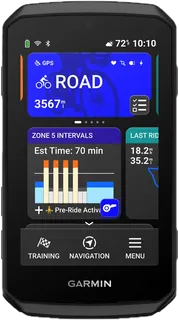
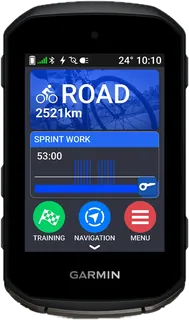
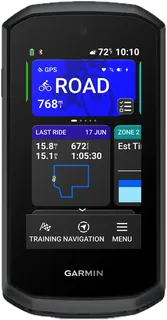
Garmin's October 2026 flagship: 3.5-inch touchscreen, full maps with on-device routing, multi-band GPS and voice control, at 142 g. The most complete feature set here, at the highest price.
-
Edge 1050 · Garmin · Superseded Oct 2026
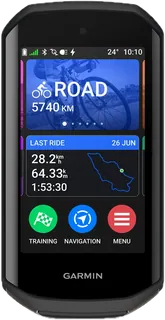
The previous Garmin flagship, replaced by the Edge 1060 in October 2026 but still sold. Same 3.5-inch screen and 20-hour battery as the 1060, a little heavier and without voice control.
-
Edge 1040 Solar · Garmin
Older 3.5-inch Garmin with a sunlight-readable transflective screen and solar charging, aimed at long days and ultra events. Dimmer than the newer bright LCD units.
-
Edge 850 · Garmin
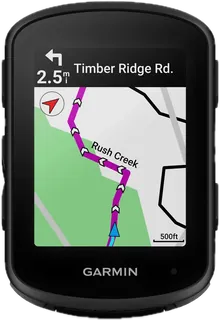
Compact Garmin with a 2.7-inch bright touchscreen and the full training, maps and safety suite. Battery is short at 12 hours in normal use.
-
Edge 840 · Garmin · Superseded Sep 2025
Previous compact Garmin, superseded by the 850 in 2025 but still sold for less. Its transflective screen gives about twice the battery of the 850 (26 hours).
-
Edge 550 · Garmin
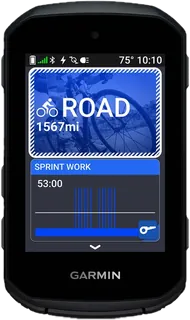
Button-only version of the Edge 850 for riders who prefer buttons in rain, mud and with gloves. Same 12-hour battery.
-
Edge 540 · Garmin · Superseded Sep 2025
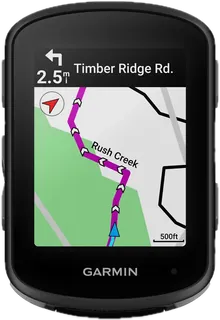
Button-only Edge 840, still sold at a lower price. 26 hours of battery and multi-band GPS for $349.99.
-
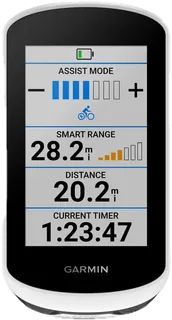
Edge Explore 3 · Garmin
Garmin's 2026 touring unit: 3-inch touchscreen, maps and incident detection for $399.99, with fewer training features and single-band GPS.
-
Edge Explore 2 · Garmin · Superseded Oct 2026
The previous Explore, still sold at $299.99: easy navigation and safety features for leisure and touring riders, with a transflective screen and no structured workouts.
-
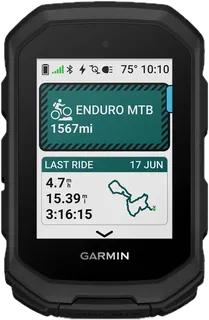
Edge MTB · Garmin
Small, tough, button-operated Garmin for mountain biking, with trail maps and 58 g weight. Short 14-hour battery and a small 2.1-inch screen.
-
ELEMNT ACE · Wahoo
Wahoo's biggest unit, with a 3.8-inch touchscreen, Wi-Fi and simple phone-app setup. Heavy at 209 g; the compare table on Wahoo's site lists $599.99, while the buy page showed $499.99 when checked.
-
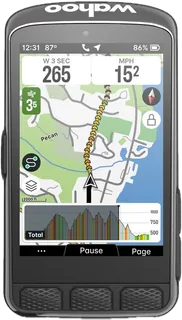
ELEMNT ROAM 3 · Wahoo
Mid-size Wahoo with a 2.8-inch touchscreen, maps and 25-hour battery. Known for easy setup through the ELEMNT app.
-
ELEMNT BOLT 3 · Wahoo
Compact, aero, button-only Wahoo for road racers: 85 g, 20-hour battery and multi-band GPS for $349.99.
-
Hammerhead Karoo · SRAM
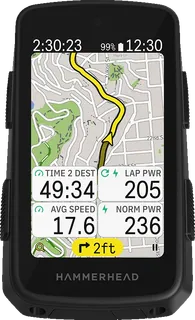
Hammerhead's (SRAM) touchscreen unit with a sharp 3.2-inch display and the deepest SRAM AXS integration, plus offline maps and climb previews. About 35 hours of battery.
-
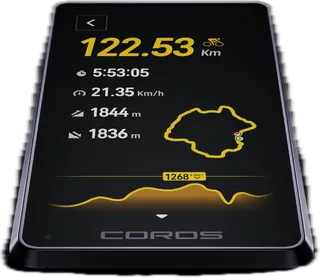
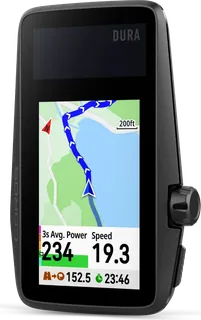
DURA 2 Solar · COROS
COROS's 2026 solar bike computer with a 3.5-inch MIP touchscreen and up to 120 hours of riding. Announced October 2026; coros.com listed it for $499 as 'available soon' when checked.
-
DURA · COROS · Superseded Oct 2026
The original solar COROS DURA, with very long battery (up to 120 hours) at $249. Shown out of stock on coros.com when checked, now replaced by the DURA 2 Solar.
-
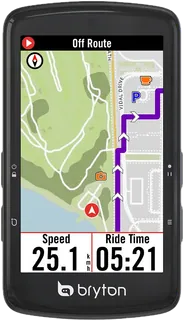
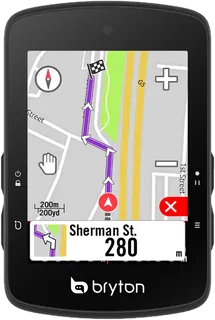
Rider S810 · Bryton
Big 3.5-inch touchscreen, preloaded maps with on-device rerouting and 50-hour battery for $349.99. Strong value, though Bryton's app and support are less polished than Garmin's or Wahoo's.
-
Rider S510 · Bryton
Smaller Bryton touchscreen with maps, rerouting, climb previews, trainer control and 30-hour battery at 96 g.
-
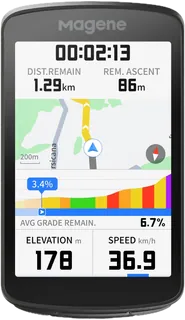
C706 · Magene
Budget-priced 3.3-inch touchscreen with dual-band GPS, Wi-Fi, radar and trainer support for $249. Maps and routing lean on Magene's phone app.
-
BSC300T · iGPSPORT
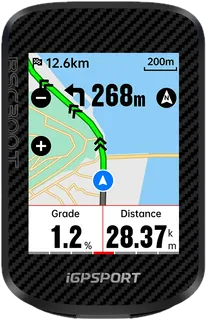
The cheapest unit here at about $110: a 2.4-inch color touchscreen with ANT+ and Bluetooth sensors, radar and shifting support. Basic navigation; fewer verified specs than bigger brands.
Suggest a change
Related comparisons
-
 Indoor bike trainers
 turn your own bike into a stationary trainer for winter, bad weather or structured workouts. The big choices are direct drive versus wheel-on or rollers, smart (app-controlled resistance) versus classic, and how much realism, quietness and accuracy you want to pay for. This grid compares current models on bike fit, resistance, noise, app connectivity and full cost.
-
 Bike helmets
Compare 22 adult bike helmets for road, mountain (trail) and commuting, from $65 to $400, sold in the US. Every helmet sold here passes the same CPSC test, but independent Virginia Tech lab tests show big differences in how well they reduce concussion risk, and price is a poor guide: several $65 to $120 helmets earn the top 5 stars while some $400 ones do not. Beyond safety, the trade-offs are weight, airflow, visors, lights and fit.
-
 Bike rentals in Amsterdam, Netherlands
Amsterdam is built for cycling, and renting a bike is the easiest way to see it like a local. This grid compares ten ways to get one inside the city: seven rental shops, from MacBike and Black Bikes' citywide networks to small independents in the Jordaan and De Pijp, plus the railways' OV-fiets, Donkey Republic's app bikes and the Swapfiets monthly subscription. It covers day, 3-hour and e-bike prices (including any compulsory cover), hand brakes, plain or branded bikes, locks, insurance, deposits, opening hours, booking and cancellation.
-
 Bike rentals in Austin, US
Austin's Lady Bird Lake Hike and Bike Trail makes a bike one of the easiest ways to see Downtown, Zilker Park and Barton Springs. Compare CapMetro Bikeshare's docked e-assist bikes with rental shops near Zilker and Downtown: 2-hour and full-day prices where published, e-bikes, helmets and locks, hours, booking, rider requirements and delivery.
-
 Bike rentals in Barcelona, Spain
Barcelona is a good city for cycling, with a long seafront promenade and a growing network of bike lanes. This grid compares rental shops in the Gothic Quarter, around Plaça de Catalunya and in the Eixample with the city's app-based bike shares on price for 2 hours and a full day on a classic bike and an e-bike, bike types, kids' options, what's included, hours, booking, deposits and insurance.
-
 Kids bike helmets
Compare 14 bike helmets for toddlers and kids, from $34.99 to $84.95, on age range, head size, weight, rotational impact protection (MIPS or KinetiCore), buckle type and extra certifications. Every helmet sold in the US must meet the CPSC bicycle standard, so the choice comes down to a snug fit for a small, fast-growing head, extra protection for angled impacts, and comfort your child will accept.