



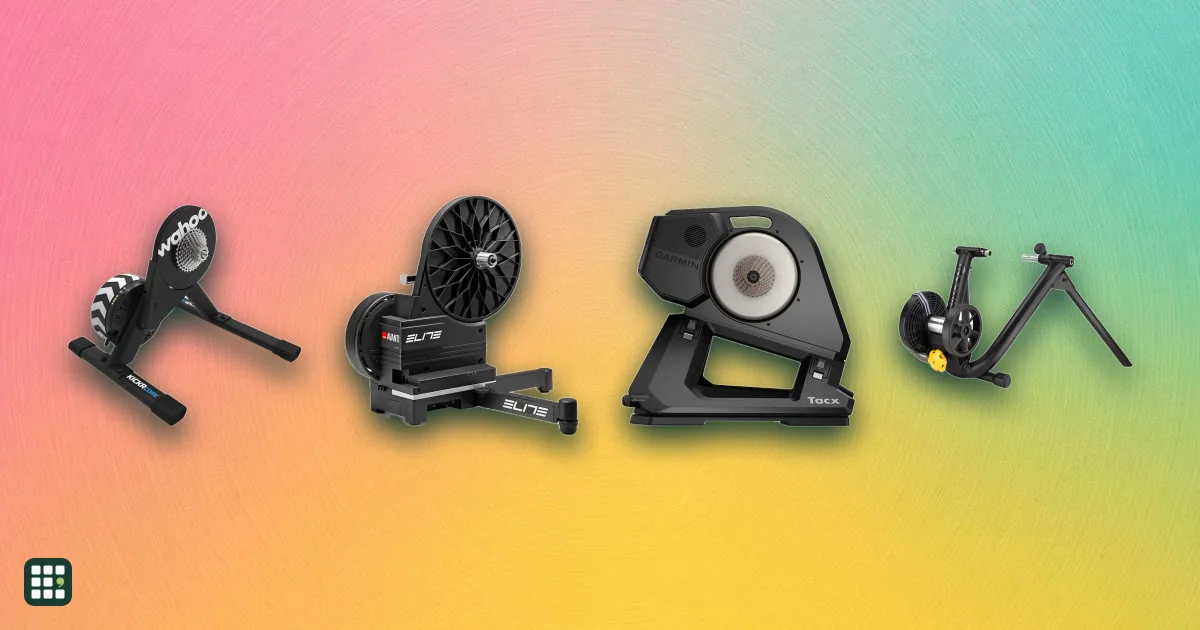
Indoor bike trainers
Indoor bike trainers turn your own bike into a stationary trainer for winter, bad weather or structured workouts. The big choices are direct drive versus wheel-on or rollers, smart (app-controlled resistance) versus classic, and how much realism, quietness and accuracy you want to pay for. This grid compares current models on bike fit, resistance, noise, app connectivity and full cost.
Last updated
How to choose
Start with how you'll ride
If you want to follow structured workouts or ride Zwift, MyWhoosh or TrainerRoad, get a smart trainer: the app sets the resistance for you (ERG mode) and makes virtual hills feel like hills. If you just want to spin while watching something, a classic fluid or magnetic trainer costs a fraction as much and needs no power.
Direct drive, wheel-on or rollers
- Direct drive: you remove the rear wheel and fit the bike to the trainer's cassette. Quieter, more accurate, no tire wear, better road feel. Costs more, and you may need to buy a cassette.
- Wheel-on: the rear wheel presses on a roller. Cheapest and quickest to swap bikes, but noisier, wears the tire and can slip in hard efforts. Use a trainer tire.
- Rollers: the bike sits free on drums. Great for pedalling technique and balance, but you have to stay upright, so they don't suit hard intervals or beginners.
Check your bike fits
- Know your rear axle: quick release (older bikes) or thru-axle (12x142 road, 12x148 Boost mountain). Check the adapters included.
- Check your gearing: an 11- or 12-speed cassette must match your drivetrain. Trainers with virtual shifting avoid this.
- Wheel size matters for wheel-on trainers, kids' bikes and 29ers.
Compare what changes the ride
- Max resistance and incline: only strong sprinters and steep climbers hit the limits of mid-range trainers.
- Power accuracy: plus or minus 1 to 2% matches outdoor power meters; 3 to 5% is fine for fitness.
- Noise: direct drive is far quieter. For apartments, add a mat and consider the drivetrain noise too.
- Movement: rocker plates or built-in motion make long rides more comfortable.
Count the full cost
Add a cassette if not included, thru-axle adapters, a mat, a fan (you will sweat a lot), and an app subscription: Zwift and most training apps cost about $15 to $20 a month. Some trainers include a year of an app. Check the warranty, since smart trainers have motors and electronics.
Judge the claims
Noise and accuracy figures are the maker's own and are measured differently by each brand. Independent tests (DC Rainmaker, GPLama) are the best check on power accuracy and real noise.
Answer
Browse the table. Filter to what matters.
Use the filters below, then sign in if you want to shortlist and decide with friends.
Sign in to vote, hide products and features, and reorder.
Verified: hover a cell and click its green dot for the source Estimate: no cited source Not stated: the maker doesn't publish it
| Feature | ⠿ | ⠿ | ⠿ | ⠿ | ⠿ | ⠿ | ⠿ | ⠿ | ⠿ | ⠿ | ⠿ | ⠿ | ⠿ | ⠿ | ⠿ | ⠿ | ⠿ | ⠿ | ⠿ | ⠿ | ⠿ |
|---|---|---|---|---|---|---|---|---|---|---|---|---|---|---|---|---|---|---|---|---|---|
|
⠿
Price
|
|||||||||||||||||||||
|
⠿
Trainer type
|
|||||||||||||||||||||
|
⠿
Smart control
|
|
|
|
|
|
|
|
||||||||||||||
|
⠿
Bike compatibility
|
|||||||||||||||||||||
|
⠿
Wheel size compatibility
|
Most sizes (rear wheel removed)
|
Most sizes (rear wheel removed)
|
Most sizes (rear wheel removed)
|
Most sizes (rear wheel removed)
|
Most sizes (rear wheel removed)
|
Most sizes (rear wheel removed)
|
Most road and mountain sizes
|
Most road and mountain sizes
|
Most sizes (rear wheel removed)
|
Most sizes (rear wheel removed)
|
Most sizes (rear wheel removed)
|
Most road and mountain sizes
|
Most sizes (rear wheel removed)
|
||||||||
|
⠿
Cassette included
|
Doesn't apply
|
Doesn't apply
|
Doesn't apply
|
|
Doesn't apply
|
Doesn't apply
|
Doesn't apply
|
Doesn't apply
|
Doesn't apply
|
Doesn't apply
|
Doesn't apply
|
||||||||||
|
⠿
Max resistance
|
Doesn't apply
|
Doesn't apply
|
|||||||||||||||||||
|
⠿
Max incline
|
Doesn't apply
|
Doesn't apply
|
Doesn't apply
|
Doesn't apply
|
Doesn't apply
|
Doesn't apply
|
|||||||||||||||
|
⠿
Power accuracy
|
1%
|
2.5%
|
1%
|
Doesn't apply
|
Doesn't apply
|
Doesn't apply
|
Doesn't apply
|
Doesn't apply
|
Doesn't apply
|
||||||||||||
|
⠿
Flywheel weight
|
Doesn't apply
|
Doesn't apply
|
Doesn't apply
|
||||||||||||||||||
|
⠿
Noise level
|
|||||||||||||||||||||
|
⠿
Needs power outlet
|
|
|
|
|
|
|
|
|
|
|
|
|
|||||||||
|
⠿
Connectivity
|
None
|
None
|
|||||||||||||||||||
|
⠿
Cadence measurement
|
|
|
|
|
|
|
|
|
|
||||||||||||
|
⠿
Virtual shifting
|
|
|
|
|
|
|
|
|
|
|
|
|
|
|
|||||||
|
⠿
Side to side movement
|
|
|
|
|
|
|
|
|
|
|
|
|
|
||||||||
|
⠿
Downhill simulation
|
|
|
|
|
|
|
|
|
|
|
|
|
|
|
|
|
|
|
|
||
|
⠿
Included app subscription
|
None stated in US
|
1 month Tacx Premium
|
None
|
None
|
None stated
|
None
|
|||||||||||||||
|
⠿
Trainer weight
|
|||||||||||||||||||||
|
⠿
Foldable
|
|
|
|
|
|
|
|||||||||||||||
|
⠿
Max rider weight
|
|||||||||||||||||||||
|
⠿
Warranty
|
1 years
|
1 years
|
1 years
|
2 years
|
1 years
|
1 years
|
1 years
|
1 years
|
2 years
|
2 years
|
2 years
|
Why these features matter
-
Price ($)
Trainers run from about $150 for a basic wheel-on unit to $1,400+ for a flagship direct-drive. Spending more mostly buys realism, quietness and accuracy, not fitness.
-
Trainer type
Direct drive is quieter, more accurate and feels more like the road but costs more and needs a cassette. Wheel-on is cheap and quick to swap bikes but wears tires and slips. Rollers train balance but can't hold you upright.
-
Smart control
Smart control lets workout apps hold a target wattage and makes virtual hills feel real. If you only want to spin with a video, a classic trainer at a fraction of the price works.
-
Bike compatibility
Most modern road and mountain bikes use thru-axles; older bikes use quick release. Check your bike's axle before buying; some trainers need extra adapters for Boost or Superboost frames.
-
Wheel size compatibility
Matters for kids' bikes, small frames, 29er mountain bikes and wheel-on trainers that clamp the tire.
-
Cassette included
A cassette adds $50 to $150 and needs a tool to fit. If yours doesn't match your bike's gearing, budget for one.
-
Max resistance (W)
Sprinters and strong riders need 1,500 W or more. Most riders never exceed 600 W, so a lower figure rarely matters.
-
Max incline (%)
A higher figure lets steep virtual climbs feel steep. Matters to riders who ride hilly Zwift routes; irrelevant if you train in ERG mode.
-
Power accuracy (%)
Accurate power makes your training zones and race results trustworthy and matches outdoor power meters. Plus or minus 1 to 2% is flagship level; 3 to 5% is fine for fitness.
-
Flywheel weight (lb)
A heavier flywheel feels smoother and more road-like, especially at low cadence and on climbs.
-
Noise level (dB)
Matters for apartments, shared walls and early-morning rides. Direct-drive trainers are much quieter than wheel-on ones; the drivetrain is often the loudest part.
-
Needs power outlet
Unplugged trainers can go anywhere, such as a race warm-up. Smart direct-drive trainers almost all need an outlet.
-
Connectivity
Bluetooth FTMS and ANT+ FE-C work with nearly every app. WiFi or Ethernet gives a steadier connection than Bluetooth in busy homes.
-
Cadence measurement
Saves buying a cadence sensor for workouts that set cadence targets.
-
Virtual shifting
Virtual shifting means any bike works without swapping cassettes and lets apps simulate gears. It is newer and supported mainly in Zwift and a few other apps.
-
Side to side movement
Movement makes long rides and out-of-the-saddle efforts more comfortable. Rollers move naturally.
-
Downhill simulation
A rare flagship feature that makes descents feel real. Most riders don't miss it.
-
Included app subscription
Most smart trainers are used with a paid app (Zwift is about $20/month). An included subscription can offset part of the price.
-
Trainer weight (lb)
Heavier trainers are more stable but harder to move and store.
-
Foldable
Folding legs make storing a trainer under a bed or in a closet easier.
-
Max rider weight (lb)
Heavier riders should check the limit, especially for rollers and wheel-on trainers.
-
Warranty (years)
Smart trainers have motors and electronics; a longer warranty protects an expensive purchase.
About the products
-
KICKR · Wahoo
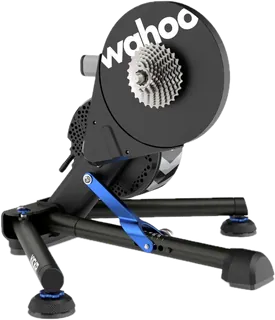
Wahoo's flagship direct-drive smart trainer: 2,200 W, 20% climbs, ±1% power, WiFi and AXIS feet that flex side to side. Ships with an 11-speed cassette or, at the same price, a Zwift Cog and Click for virtual shifting. Needs mains power.
-
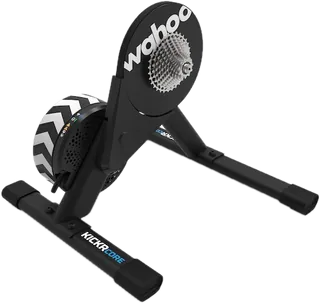
KICKR CORE 2 · Wahoo
Mid-range direct-drive smart trainer with ±2% power, 1,800 W, 16% climbs and WiFi, and a pre-installed 11-speed cassette (or a Zwift Cog and Click version for virtual shifting). A good all-rounder for Zwift and structured training; no built-in movement.
-
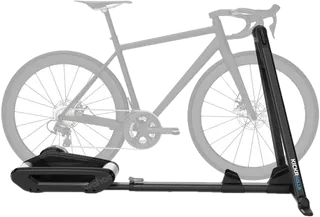
KICKR ROLLR · Wahoo
Smart rollers with a front-wheel cradle: no wheel removal or cassette, so any bike fits fast. Controlled resistance up to 1,500 W, but power and cadence come from your own power meter or sensors, which you must have.
-
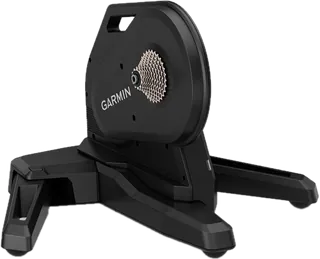
Tacx NĒRA · Garmin
Garmin's newer direct-drive smart trainer with built-in forward, backward and side-to-side motion, an 11-speed cassette, WiFi, ±1% power and foldable legs. Heavy at about 54 lb.
-
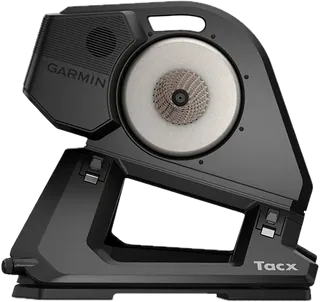
Tacx NEO 3M · Garmin
Top-end direct-drive smart trainer with a motor-driven virtual flywheel that can simulate descents and road surfaces, 2,200 W, 25% climbs and ±1% power. Cassette and network adapter for WiFi or Ethernet included. The most expensive option here.
-
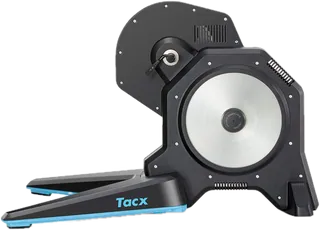
Tacx FLUX 2 · Garmin
Mid-range direct-drive smart trainer with a 16.8 lb flywheel, 2,000 W and 16% climbs. Power is ±2.5% and the cassette is sold separately; ANT+ and Bluetooth only.
-
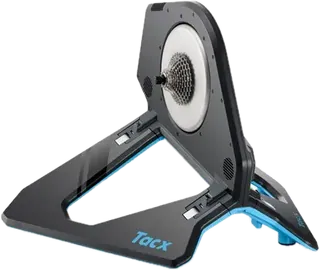
Tacx NEO 2T · Garmin
Earlier NEO flagship with the same virtual flywheel, descent simulation, 2,200 W and 25% climbs as the NEO 3M, but no cassette, no WiFi and no built-in movement. Often discounted.
-
Tacx Galaxia · Garmin
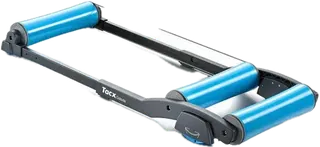
Classic rollers with a swinging frame that absorbs sudden movements, making them easier to learn than fixed rollers. No electronics or resistance control; folds flat.
-
Tacx Antares · Garmin
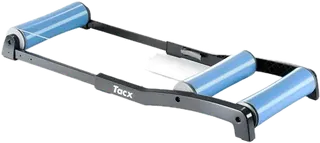
Basic classic rollers for balance and pedaling technique, and the cheapest Tacx here. No resistance control or electronics; folds flat.
-
Justo 2 · Elite
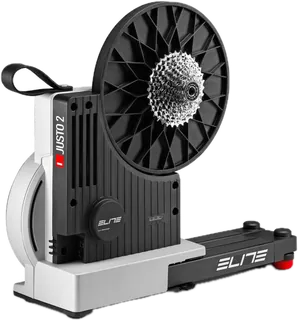
Elite's flagship direct-drive smart trainer: 2,300 W, 24% climbs, a pre-installed 12-speed cassette, WiFi and Ethernet, and Flex Feet with 7° of side-to-side sway. Includes 36 months of Elite's My E-Training app.
-
Avanti · Elite
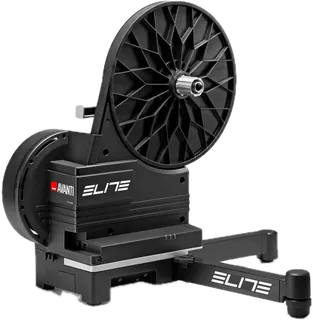
Mid-range direct-drive smart trainer with ±1% power, 2,100 W, 18% climbs, WiFi and 7° sway feet. Supports Zwift Cog virtual shifting; Ethernet needs a separate dongle.
-
Rivo · Elite
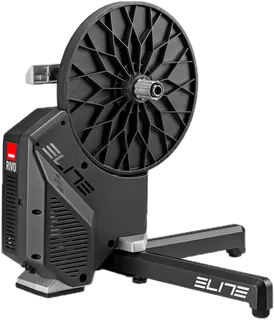
Lightweight, compact direct-drive smart trainer (about 22 lb) with foldable legs, ±2.5% power, Bluetooth and WiFi but no ANT+. Supports virtual shifting with a Zwift Cog; cassette not included.
-
Tuo · Elite
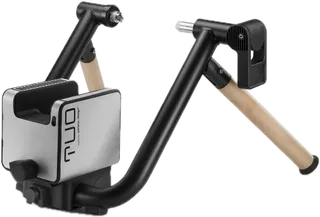
Entry-level smart wheel-on trainer: no wheel removal or cassette needed, 1,300 W and 10% climbs, ±5% power. Noisier than direct drive and wears the tire; use a trainer tire.
-
Novo Force · Elite
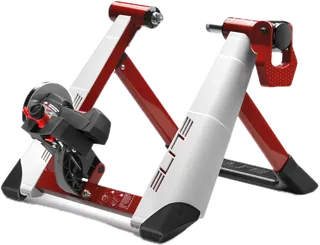
Simple, cheap classic wheel-on trainer with magnetic resistance and no electronics. Works with apps only through an optional speed sensor.
-
Nero · Elite
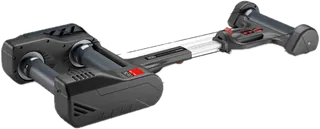
Smart rollers with app-controlled resistance up to 760 W, combining roller balance training with Zwift-style virtual rides. Folds into three sections.
-
Saris H3 Plus · Saris · No longer sold
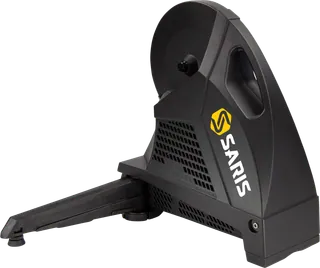
Saris's quiet direct-drive smart trainer (59 dB at 20 mph), 2,000 W, 20% climbs and ±2% power, with 12-speed compatibility. Listed as no longer available on Saris's US site; cassette sold separately.
-
Saris M2 · Saris
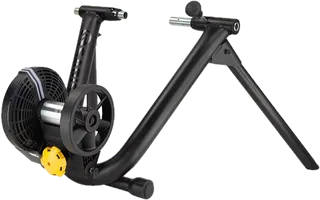
Smart wheel-on trainer from Saris with 1,500 W, 15% climbs and ±5% power that reports speed, cadence and power to apps. A budget way into Zwift; often on sale well below list.
-
Fluid2 · Saris
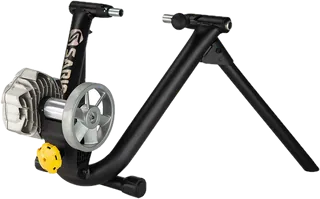
Long-running classic fluid wheel-on trainer with a progressive, road-like resistance curve. No electronics; pair a speed sensor to use apps. Thru-axle adapter sold separately.
-
Saris Mag · Saris
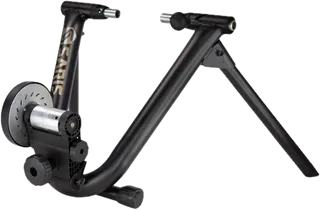
Basic magnetic wheel-on trainer with five manual resistance levels, the cheapest option here. No electronics; pair a speed sensor to use apps.
-
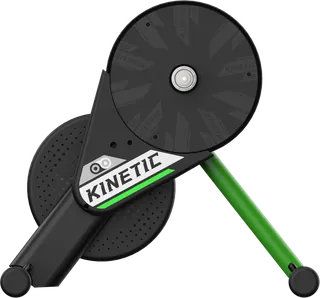
Kinetic RS Power · Kinetic · No longer sold Nov 2026
Budget direct-drive trainer with cassette included that works unplugged and sends power (±3%) to apps over ANT+ and Bluetooth. Foldable. Showed as sold out when checked.
-
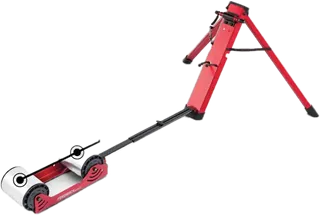
Omnium Over-Drive · Feedback Sports
Ultra-portable 14 lb fork-mount roller trainer that folds into its included bag: popular for race warm-ups and travel. No electronics; resistance builds with speed.
Suggest a change
Related comparisons
-
 Climbing gyms in Austin, US
Austin has a handful of big climbing gyms inside city limits: two bouldering-only Bouldering Project gyms in East and South Austin, Mesa Rim's 55-foot rope walls in North Austin, Crux's bouldering gym in Central Austin and its new rope-and-bouldering gym in far South Austin, plus the University of Texas wall in Gregory Gym. This grid compares what you can climb (bouldering, top rope, lead), wall height, day pass, rentals, punch cards and memberships with joining fees, belay certification, yoga and sauna, age rules, who can use it, hours, parking and how membership cancellation works.
-
 Kayaks
Compare recreational, touring, sit-on-top, fishing, inflatable and folding kayaks from Eddyline, Old Town, Ocean Kayak, Dagger, Wilderness Systems, Perception, Delta, Sea Eagle and Oru on price, length, width, weight, capacity, hatches, bulkheads, skeg or rudder and seating. The main trade-offs: stability versus speed, weight on your shoulders versus price, and storage space versus setup time.
-
 Trekking poles
 take load off your knees on descents and add stability on rough or wet trails. This grid compares popular carbon and aluminum poles across price, weight per pair, shaft material, folding or telescoping design, lock type, grip, length range and warranty, so you can see the real trade-offs between a light, packable carbon pole and a cheaper, tougher aluminum one.
-
 Treadmills
Compare home treadmills side by side: motor power, top speed, incline and decline, deck size, user weight limit, folding, screen, subscription and warranty. The main choices are how hard you will use it (walking or running), how much space you have, and whether you want built-in classes or a simple machine that works with any app.
-
 Rowing machines
Home rowing machines compared: the Concept2 RowErg and WaterRower classics, smart rowers from Hydrow, Ergatta, Aviron, Peloton, Echelon and NordicTrack, and budget magnetic and water rowers from Sunny, Merach and others. They differ in how resistance feels and sounds, whether you need a monthly membership, how much space they take and how they store, and how well they fit tall or heavy rowers.
-
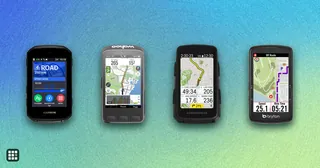 Bike computers
GPS bike computers mount on your handlebars to show speed, power, heart rate and navigation without draining your phone. This grid compares current head units from Garmin, Wahoo, Hammerhead, COROS, Bryton, iGPSPORT and Magene, from about $150 budget units to $800 flagships. The real trade-offs are screen size and readability, how good the maps and rerouting are, battery life, and which sensors and training tools you will actually use.