



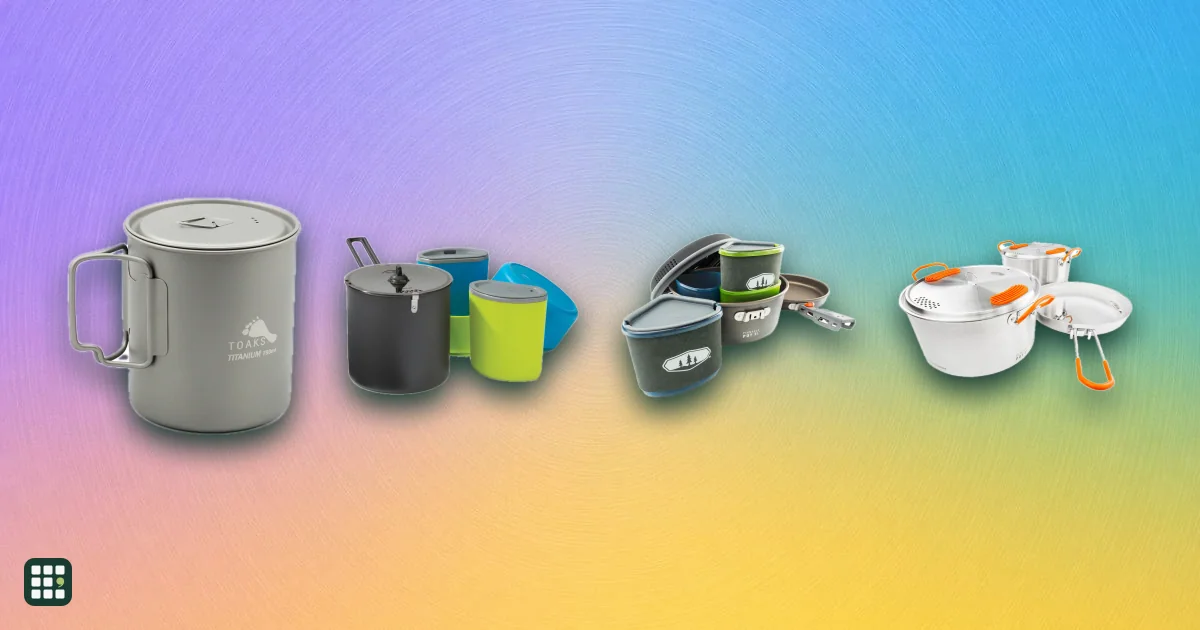
Camping cookware sets
Camping and backpacking cook sets side by side, from 100 g titanium pots for one to stainless and nonstick sets that cook full meals for a group. The choice comes down to how many people you feed, how much real cooking you do, and how much weight you will carry.
Last updated
How to choose
Start with how you cook
- Boil water only (dehydrated meals, coffee): a single titanium or aluminum pot of 0.75 to 1 L is enough, and the lightest.
- Simple meals for two: a 1.5 to 2 L pot with a strainer lid, plus bowls and mugs that nest inside.
- Real cooking or car camping: two pots and a frying pan, ideally nonstick or clad stainless, and a set that serves your whole group.
Pick the material
- Titanium is the lightest and very strong, but heats unevenly and burns food. Best for boiling.
- Hard-anodized aluminum heats evenly and is light and affordable; a ceramic nonstick coating makes cooking and cleanup easy, but treat it gently.
- Stainless steel is nearly indestructible and fine on campfires and coals, but heavy.
Check the size against your group
Plan on roughly 0.5 to 1 L of pot per person. Compare the largest pot and the people served, and remember that included mugs and bowls usually match the people served.
Packing details that matter
- Many backpacking sets hold a fuel canister and a small stove inside; check which canister size fits.
- Folding handles stay with the pot; removable grippers save weight but are easy to lose.
- Strainer lids save your pasta; a stuff sack keeps soot off the rest of your pack.
Weigh the whole kit
Makers list set weights differently, so compare like with like, and add the utensils and dishes you will really bring. For car camping, weight hardly matters; durability and cooking surface do.
Answer
Browse the table. Filter to what matters.
Use the filters below, then sign in if you want to shortlist and decide with friends.
Sign in to vote, hide products and features, and reorder.
Verified: hover a cell and click its green dot for the source Estimate: no cited source Not stated: the maker doesn't publish it
| Feature | ⠿ | ⠿ | ⠿ | ⠿ | ⠿ | ⠿ | ⠿ | ⠿ | ⠿ | ⠿ | ⠿ | ⠿ | ⠿ | ⠿ | ⠿ |
|---|---|---|---|---|---|---|---|---|---|---|---|---|---|---|---|
|
⠿
Price
|
|||||||||||||||
|
⠿
Material
|
Aluminum
|
||||||||||||||
|
⠿
People served
|
2 people
|
2 people
|
2 people
|
2 people
|
1 people
|
2 people
|
1 people
|
||||||||
|
⠿
Weight
|
399 g
|
748 g
|
526 g
|
||||||||||||
|
⠿
Largest pot capacity
|
1.8 L
|
2 L
|
1.1 L
|
||||||||||||
|
⠿
Pots
|
1
|
1
|
2
|
1
|
2
|
1
|
1
|
1
|
1
|
||||||
|
⠿
Frying pan
|
|
|
|
|
|
|
|
||||||||
|
⠿
Nonstick
|
Hard-anodized (no coating)
|
Bare
|
Hard-anodized (no coating)
|
Hard-anodized (no coating)
|
Bare
|
Bare
|
Bare
|
Bare
|
Bare
|
Bare
|
|||||
|
⠿
Fits a fuel canister inside
|
110 g canister
|
||||||||||||||
|
⠿
Dishes included
|
None
|
None
|
|||||||||||||
|
⠿
Utensils included
|
2 telescoping sporks
|
None
|
None
|
None
|
None
|
None
|
|||||||||
|
⠿
Handles
|
Removable gripper
|
Folding
|
|||||||||||||
|
⠿
Lid strainer
|
|
|
|
||||||||||||
|
⠿
Kettle
|
|
|
|
|
|
|
|
|
|
||||||
|
⠿
Stuff sack included
|
|
|
|||||||||||||
|
⠿
Warranty
|
Lifetime
|
Lifetime
|
Lifetime
|
Lifetime
|
Lifetime
|
Why these features matter
-
Price ($)
Ultralight titanium and big car-camping sets cost the most; aluminum sets for one or two people are the cheapest way to cook real meals.
-
Material
Titanium is lightest but scorches food; aluminum heats evenly and is cheap; stainless is tough and good on campfires but heavy.
-
People served (people)
A solo kit saves weight; a group set saves cooking twice.
-
Weight (g)
On a backpacking trip every 100 g counts; for car camping weight barely matters.
-
Largest pot capacity (L)
The biggest pot decides how much water you can boil and how big a meal you can cook at once.
-
Pots
Two pots let you cook a meal and boil water for drinks at the same time.
-
Frying pan
A pan lets you fry eggs or fish; ultralight sets usually skip it.
-
Nonstick
Nonstick makes real cooking and cleanup easy but scratches; bare metal is for boiling water.
-
Fits a fuel canister inside
A set that nests your stove and fuel packs into one compact bundle.
-
Dishes included
Included dishes save buying and packing extras, and usually nest inside.
-
Utensils included
Included utensils are convenient, but many people prefer their own long spoon.
-
Handles
Folding and removable handles pack small; a removable gripper is one more thing to lose.
-
Lid strainer
A strainer lid lets you drain pasta water without losing dinner.
-
Kettle
A kettle pours hot water cleanly for coffee and dehydrated meals.
-
Stuff sack included
A sack keeps soot off the rest of your gear.
-
Warranty
Cookware takes a beating; a lifetime warranty covers dents and broken handles from defects.
About the products
-
Halulite Dualist · GSI Outdoors
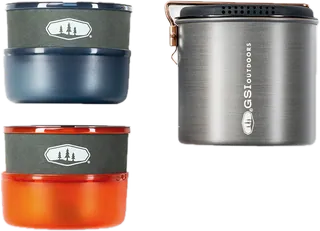
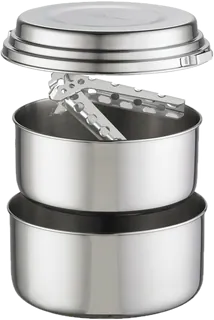
A classic two-person backpacking kit: one hard-anodized pot with a strainer lid, two nesting bowls and insulated mugs, all locked together by the folding handle. Room inside for a small fuel canister.
-
Pinnacle Ceramic Backpacker · GSI Outdoors
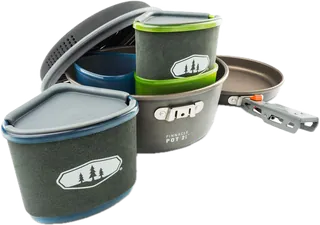
A two-person set built around a ceramic nonstick pot for real cooking, with a strainer lid, bowls and insulated mugs. Heavier and pricier than the Dualist.
-
Bugaboo Ceramic Base Camper · GSI Outdoors
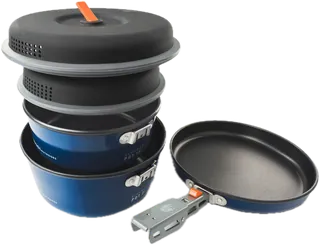
A ceramic nonstick car-camping set with two pots, a frying pan, strainer lids, a cutting board and a sink sack. Comes in small, medium and large; prices and figures here are for the small.
-
Glacier Stainless Base Camper Medium · GSI Outdoors
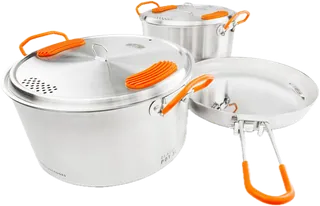
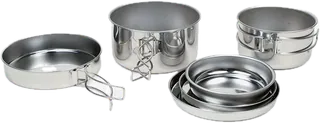
A tough clad stainless steel set (3 L and 2 L pots and a frying pan) that can go on coals or an open fire. No nonstick coating and heavy, so it's for car camping.
-
Trail Lite Duo Cook Set · MSR
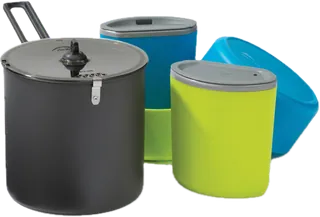
A light two-person kit: a tall 2 L hard-anodized pot with a strainer lid, two bowls and two insulated mugs that nest inside, held together by the folding handle.
-
Quick 2 Cook Set · MSR
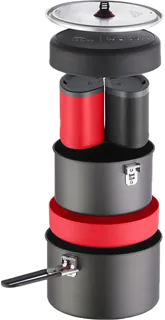
A complete two-person cook-and-eat set with two pots (one nonstick), a strainer lid, deep plates, insulated mugs and a removable handle, for people who cook real meals on the trail.
-
Trail Mini Solo Cook Set · MSR
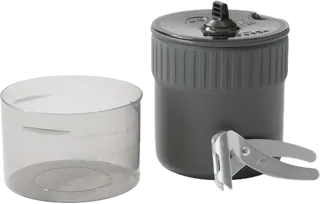
A mug-sized solo kit (about 200 g) whose 0.75 L pot holds a small canister and a PocketRocket stove. Enough for one pouch meal or a big coffee.
-
Alpine 2 Pot Set · MSR
A nearly indestructible stainless steel pair of pots (1.5 L and 2 L) with a lid that doubles as a plate and a removable pot handle. Heavier than aluminum, but fine on campfires and for groups and guides.
-
Trek 900 Titanium · Snow Peak
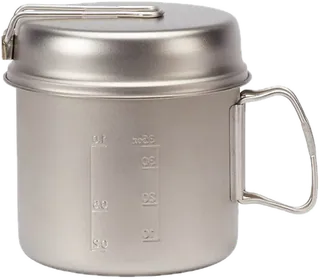
A 175 g titanium pot with a lid that doubles as a small pan, big enough to hold a 250 g fuel canister and a stove. A favorite solo kit for boiling water; titanium scorches real cooking.
-
Snow Peak Personal Cooker 3 · Snow Peak
An inexpensive polished stainless set for two: two pots, a fry pan, lid, plate, bowl and carry case. Durable, but heavier than aluminum or titanium.
-
Snow Peak Multi Compact Cookset Titanium · Snow Peak
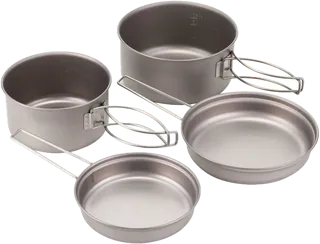
Two titanium pots and two pans with folding handles for two people at only 330 g. Light and tough, but thin titanium burns food easily.
-
Wildfare Go Two Cup Cookset · Stanley
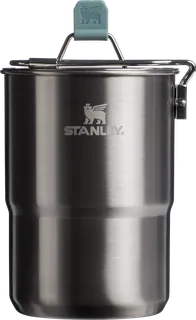
A cheap, tough stainless pot (about 0.95 L) with a vented strainer lid and two insulated cups nested inside. Fine for boiling water for two; heavy for its size.
-
Wildfare Go Two Bowl Prep and Cook Set · Stanley
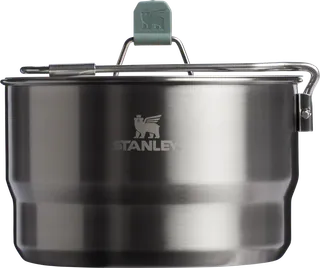
A 14-piece stainless set for two: a 1.5 L saucepan with strainer lid, two bowls, two sporks, a folding spatula and two small cutting boards that nest together.
-
Frontier UL One Pot Cook Set 2L (5 piece) · Sea to Summit
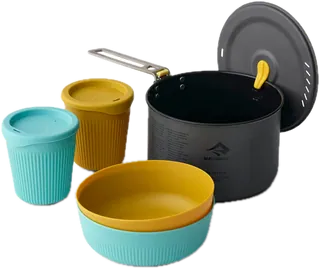
A two-person set: a 2 L ceramic nonstick pot with a strainer lid that clips to the rim, plus two bowls and two cups that nest inside, locked by a reversible removable handle.
-
Toaks Titanium 750ml Pot · Toaks
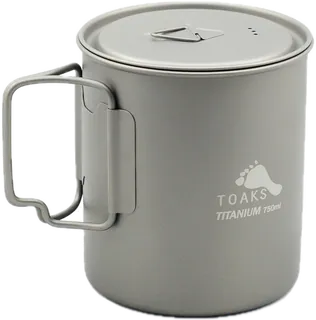
The ultralight solo standard: a 103 g titanium pot and lid that holds a 110 g canister and a small stove. For boiling water and pouch meals, not real cooking.
Suggest a change
Related comparisons
-
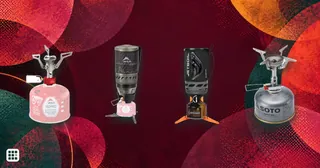 Camping stoves
 for backpacking range from 3-ounce burners that screw onto a gas canister to integrated systems and liquid-fuel stoves for cold or remote trips. The choice comes down to how far you carry it, what you cook (boiling water or real meals), the fuel you can get, and how the stove copes with wind and cold.
-
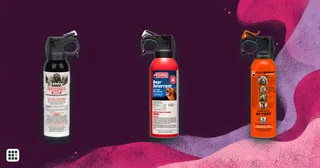 Bear spray
 is a pepper-based deterrent you carry in bear country. This grid sets the main EPA-registered US brands side by side on canister size, how far and how long they spray, and what each one includes. The real trade-off is range and spray time against weight and price.
-
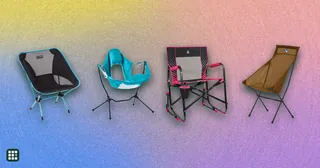 Camping chairs
Popular camping chairs side by side, from 1 lb backpacking chairs that pack smaller than a water bottle to padded recliners and rockers for the campsite. The trade-off is comfort, height and sturdiness against weight, packed size and price.
-
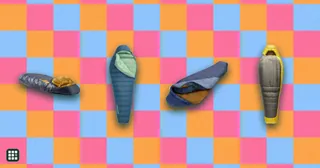 Sleeping bags
Popular sleeping bags side by side, from ultralight down mummies for backpacking to roomy synthetic bags for car camping. The choice is warmth for the coldest night you expect against weight, packed size and price, with down lighter and more compact and synthetic cheaper and better when wet.
-
 Trekking poles
 take load off your knees on descents and add stability on rough or wet trails. This grid compares popular carbon and aluminum poles across price, weight per pair, shaft material, folding or telescoping design, lock type, grip, length range and warranty, so you can see the real trade-offs between a light, packable carbon pole and a cheaper, tougher aluminum one.
-
 Camping hammocks
 trade a flat ground bed for lighter weight, comfort on rough terrain, and a faster setup between two trees. The real decisions are single or double width, how much weight you carry, whether bug netting, a rainfly and straps come in the box, and what load the fabric is rated for.