



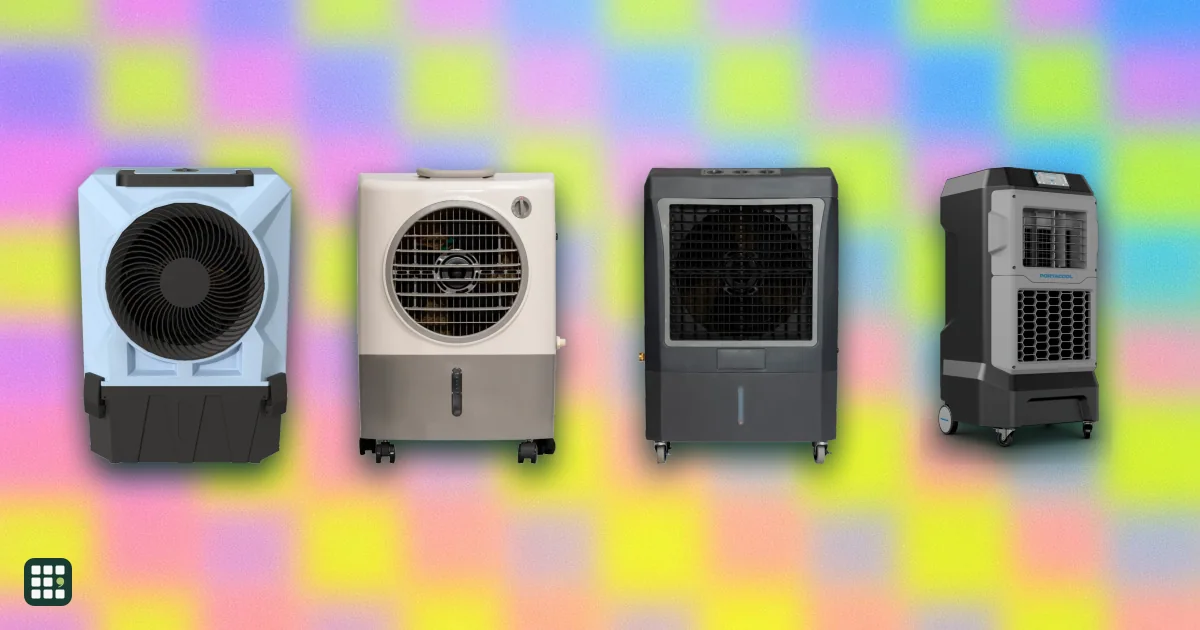
Evaporative coolers
Evaporative coolers, also called swamp coolers, cool air by blowing it through wet pads. They use a fraction of an air conditioner's power and need no window kit, but they only work well in dry heat and add humidity to the space. This grid compares portable models from bedroom towers to garage and shop units on rated coverage, airflow, tank size, water hookup, noise, smart controls and warranty.
Last updated
How to choose
Check your climate first
Evaporative coolers lower air temperature only when the air is dry. They work best when relative humidity is under about 50 to 60%, as in the Southwest and Mountain West. In humid places such as the Gulf Coast or the Southeast in summer, they mostly add moisture and feel like a damp fan; a portable or window air conditioner is the better buy there.
Size it to the space, not the box
- Cooling area is the maker's best case: dry air, fresh air coming in. Pick a unit rated for more than your floor area if the space is hot, sunny, or has high ceilings.
- Airflow (CFM) tells you how much air it moves. Small towers move a few hundred CFM and suit one person in a room; 1,000 to 3,000 CFM suits a garage or patio; 5,000 CFM and up is for shops and big open areas.
- Keep a window or door open. A swamp cooler in a sealed room just raises the humidity until it stops cooling.
Water: tank, refills and hookup
- A bigger tank means fewer refills, but water weighs about 8.3 lb per gallon, so a full large unit is heavy to move.
- For all-day use in a shop or on a patio, choose a model with a continuous water hookup (garden hose and float valve), so it never runs dry.
- Low water shutoff and a drain plug make ownership easier: the first protects the pump, the second lets you empty and dry the tank so it does not grow algae or smell.
Indoor, outdoor and power
- Use an outdoor-rated unit on an open patio or job site; indoor towers are not built for sun and splashes.
- Power draw is low (tens to a few hundred watts), so running cost is small. A battery or 12 V model can cool a campsite or tailgate with no outlet.
- Bigger fans are louder. For a bedroom or office, look at noise level and fan speeds, and a timer.
Media and upkeep
Thick rigid media cools better and lasts longer than thin pads, and costs more to replace. Plan to rinse pads and clean the tank every couple of weeks in season, and drain it before storing. Hard water leaves scale on the media faster.
Judge the claims
Treat "air conditioner" claims and big temperature drops with care: the drop depends on the outdoor humidity, not the cooler. Compare warranties, since pumps and motors are the parts that fail, and check that replacement media is sold for the model you choose.
Answer
Browse the table. Filter to what matters.
Use the filters below, then sign in if you want to shortlist and decide with friends.
Sign in to vote, hide products and features, and reorder.
Verified: hover a cell and click its green dot for the source Estimate: no cited source Not stated: the maker doesn't publish it
| Feature | ⠿ | ⠿ | ⠿ | ⠿ | ⠿ | ⠿ | ⠿ | ⠿ | ⠿ | ⠿ | ⠿ | ⠿ | ⠿ | ⠿ |
|---|---|---|---|---|---|---|---|---|---|---|---|---|---|---|
|
⠿
Price
|
||||||||||||||
|
⠿
Cooling area
|
||||||||||||||
|
⠿
Airflow
|
217 CFM
|
|||||||||||||
|
⠿
Air throw
|
||||||||||||||
|
⠿
Water tank
|
||||||||||||||
|
⠿
Run time per tank
|
||||||||||||||
|
⠿
Continuous water hookup
|
|
|
||||||||||||
|
⠿
Power use
|
288 W
|
288 W
|
600 W
|
960 W
|
492 W
|
|||||||||
|
⠿
Noise level
|
||||||||||||||
|
⠿
Fan speeds
|
||||||||||||||
|
⠿
Oscillating louvers
|
||||||||||||||
|
⠿
Remote control
|
|
|
|
|
|
|
|
|
||||||
|
⠿
App control
|
|
|
|
|
|
|
|
|
|
|||||
|
⠿
Timer
|
|
|
||||||||||||
|
⠿
Weight
|
||||||||||||||
|
⠿
Height
|
||||||||||||||
|
⠿
Outdoor use
|
|
|
|
|
|
|
|
|||||||
|
⠿
Ice compartment
|
|
|
|
|
|
|
|
|
|
|
||||
|
⠿
Cooling media
|
||||||||||||||
|
⠿
Water level indicator
|
||||||||||||||
|
⠿
Low water shutoff
|
|
|
|
|
|
|||||||||
|
⠿
Battery power
|
|
|
|
|
|
|
||||||||
|
⠿
Drain plug
|
|
|
||||||||||||
|
⠿
Warranty
|
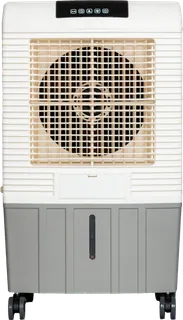
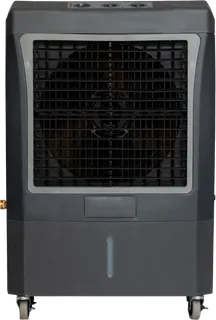
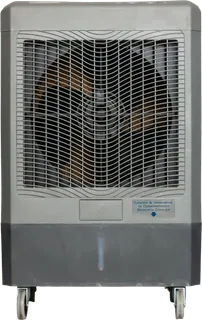
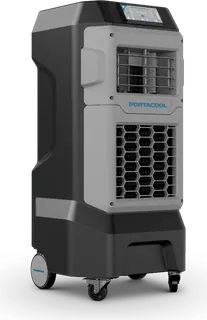
Why these features matter
-
Price ($)
Prices run from under $200 for indoor towers to several thousand for shop units; compare against the area you actually need to cool.
-
Cooling area (sq ft)
The quickest way to size a cooler. Makers rate for dry heat with fresh air coming in; in humid weather or a closed room the real area is smaller.
-
Airflow (CFM)
More CFM moves more cooled air and reaches further. Big numbers also mean more noise and water use, so match it to the space.
-
Air throw (ft)
Tells you how far from the unit you will still feel the breeze, useful in long garages and patios.
-
Water tank (gal)
A bigger tank means fewer refills. A full large tank is heavy, so it also makes moving the unit harder.
-
Run time per tank (hr)
Decides whether it lasts the night or the workday without a refill or hose.
-
Continuous water hookup
A hose hookup turns a cooler into an all-day unit with no refills; essential for shops and patios.
-
Power use (W)
Evaporative coolers use a fraction of an air conditioner's power; this shows the running cost and whether a battery or small circuit can handle it.
-
Noise level (dB)
Matters most for bedrooms, offices and patios where you want to talk; big fans are loud.
-
Fan speeds
More steps let you trade noise for airflow; variable speed is easiest to fine-tune.
-
Oscillating louvers
Automatic swing spreads the breeze across a wider area instead of one spot.
-
Remote control
Handy when the unit is across a garage or room, or set up on a patio.
-
App control
Lets you start cooling before you arrive and check water alerts remotely.
-
Timer (hr)
A timer stops it after you fall asleep or leave the shop, saving water and power.
-
Weight (lb)
Water adds about 8.3 lb per gallon, so a light unit stays movable even when full.
-
Height (in)
Taller units throw air over cars and benches; short ones fit under counters and windows.
-
Outdoor use
Patio and job site units must handle sun and splashes; indoor units can crack or short outside.
-
Ice compartment
Ice gives a few degrees of extra cooling for a short while; nice in a bedroom, pointless for a big shop.
-
Cooling media
Thicker rigid media cools more and lasts longer; thin pads are cheaper but need replacing sooner.
- Rigid media
- : Thick, stiff cellulose blocks rather than thin pads. They cool more, shed less and last longer, but cost more to replace.
- 3-sided
- : Media on three sides of the cabinet pulls in more air through wet pads, so it cools more air than a single pad of the same size.
- HydroTek
- : Portacool's own evaporative media, made to add less humidity and resist mineral buildup.
- Single pad
- : One thin pad, as on indoor towers. Fine for a person at a desk or bed, but it cools much less air than rigid media.
-
Water level indicator
Lets you see when to refill before the pump runs dry.
-
Low water shutoff
Protects the pump from running dry and burning out, a common failure point.
-
Battery power
Lets you cool a campsite, tailgate or job site with no outlet.
-
Drain plug
Draining between uses keeps the tank from growing algae and odors, and makes storage easier.
-
Warranty (years)
Pumps and motors are the parts that fail; a longer warranty covers more of a cooler's working life.
About the products
-
Hessaire MC12V · Hessaire
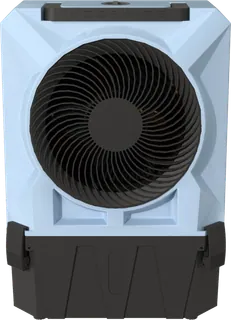
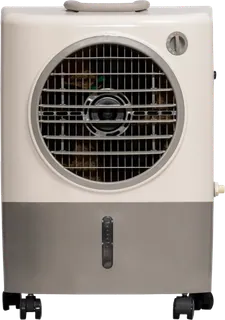
The smallest and cheapest Hessaire: 900 CFM for a workshop corner, small patio or one room up to about 400 sq ft. The 2.8 gal tank needs frequent refills, but it is light and simple to move.
-
Hessaire DC18 · Hessaire
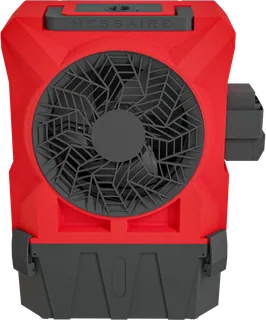
A 900 CFM cooler that runs on 12 V DC, from a battery or an outlet adapter, for campsites, tailgates and job sites without power. Small 2.8 gal tank and about 300 sq ft of coverage.
-
Hessaire MC18V · Hessaire
A popular low-cost patio and garage cooler: 1,300 CFM, a 4.8 gal tank and a hose hookup, rated for about 500 sq ft. Only two speeds and no remote.
-
Hessaire MC26T · Hessaire
A compact 2,100 CFM cooler with digital controls, remote, 24-hour timer and oscillating louvers, rated for 700 sq ft. Good for a garage or covered porch; not rated for open outdoor use.
-
Hessaire MC37V · Hessaire
A 3,100 CFM workhorse for two-car garages and patios up to about 950 sq ft, with a 10.3 gal tank and hose hookup. Simple knob controls and no remote.
-
Hessaire MC61V · Hessaire
Hessaire's biggest unit in this grid: 5,300 CFM for shops and large patios up to 1,600 sq ft, with a 14.6 gal tank and UV-resistant housing. At 57 lb empty it is heavy once filled.
-
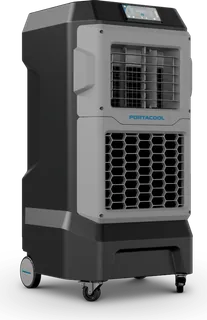
Apex 500 · Portacool
A slim, quiet (53 dB) Portacool that can sit against a wall, rated for 1,000 sq ft with Wi-Fi app control and auto louvers. Costs far more than Hessaire units of similar airflow, with a longer 3-year warranty.
-
Apex 700 · Portacool
A larger Apex with a 22 gal tank and a 60 ft air throw for spaces up to 1,350 sq ft, still quiet at 53 dB and app-controlled. Premium price for patios, gyms and shops.
-
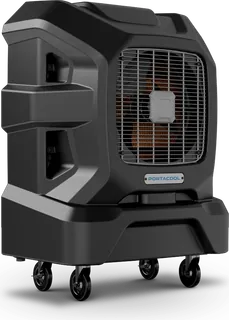
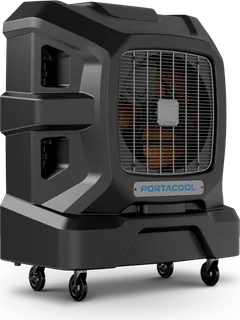
Apex 1200 · Portacool
A garage and warehouse Portacool rated for 2,800 sq ft and 6,250 CFM, with a 40 gal tank and app control. Very quiet for its size (51 dB) but has no swinging louvers.
-
Apex 2000 · Portacool
The largest unit in this grid: 9,000 CFM for up to 4,000 sq ft, a 45 gal tank and a 60 ft throw. A 191 lb shop machine for big garages, barns and outdoor venues.
-
Cool-Space 300 · Big Ass Fans
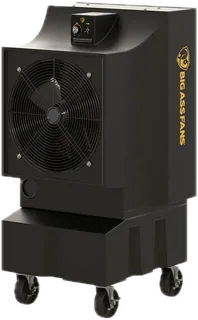
A commercial-grade cooler from Big Ass Fans with 8 in rigid media and a 5-year warranty, rated for 1,200 sq ft. Expensive for its airflow, and loud at 63 dB on high.
-
Evaporative Cooler 712S · Dreo
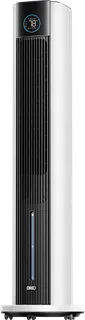
A 43 in indoor tower with app and voice control, remote, 85° oscillation and a 1.6 gal tank. Cools one person in a bedroom or office; Dreo gives no airflow or coverage figures.
-
Evaporative Cooler 511 · Dreo
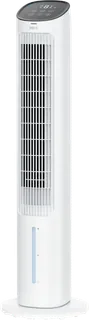
A cheaper, non-smart Dreo tower with a remote and 80° oscillation for a bedroom or desk. Small single pad and modest airflow, so think of it as a cooler fan, not a room cooler.
-
Honeywell CO48PM · Honeywell · Discontinued
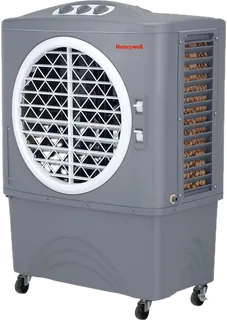
A 1,062 CFM indoor/outdoor cooler with a 10.6 gal tank and hose hookup, rated for 610 sq ft. Honeywell's US store lists it as discontinued, but it is still common on the used and clearance market.
Suggest a change
Related comparisons
-
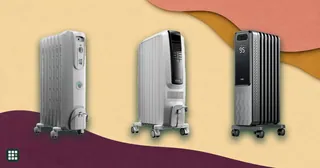 Oil-filled radiators
 warm a room slowly and quietly with sealed oil that never needs refilling. Most put out the same 1500 W, so the real choice is controls (dial or digital), timer, remote, safety features, weight and price.
-
 Bug zappers
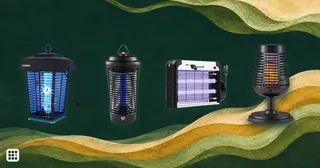
 draw flying insects to a UV light and kill them on an electrified grid. The choice is between plug-in lanterns for the yard, quiet solar or cordless units, indoor models, and handheld rackets. They kill many harmless moths and beetles and fewer mosquitoes than their coverage claims suggest, so match the type to the pest and the place.
-
 Greenhouses
Greenhouse kits let you start seedlings early, protect tender crops from frost and grow through a longer season. This grid compares backyard walk-in kits from small budget aluminum and polycarbonate models to premium and wood-framed greenhouses on size, glazing, weather ratings, vents, doors, warranty and price. The main trade-off is price against strength and insulation: budget kits are cheap but state few weather ratings, while premium kits cost many times more.
-
 Pruning shears
 (hand pruners or secateurs) are one-handed cutters for stems and small branches. The choice comes down to cut type (bypass slices live wood cleanly, anvil crushes dry wood, ratchet adds leverage), hand size, and whether you want a repairable tool that lasts decades or a cheap one you replace.
-
 Bird feeders
 range from simple seed tubes and hoppers to squirrel-proof designs and solar camera feeders that identify visiting species. This grid compares popular US models on price, what they hold, squirrel resistance, ease of cleaning, and what the smart ones cost to run.
-
 Motion sensor lights
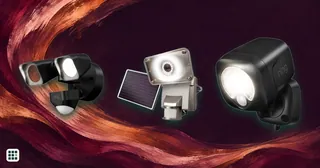
 switch on when someone or something moves past, so you light a driveway, door or path only when needed. This grid compares outdoor models by power source (hardwired, battery or solar), real brightness, how far they sense motion, weather rating, smart features and warranty.