



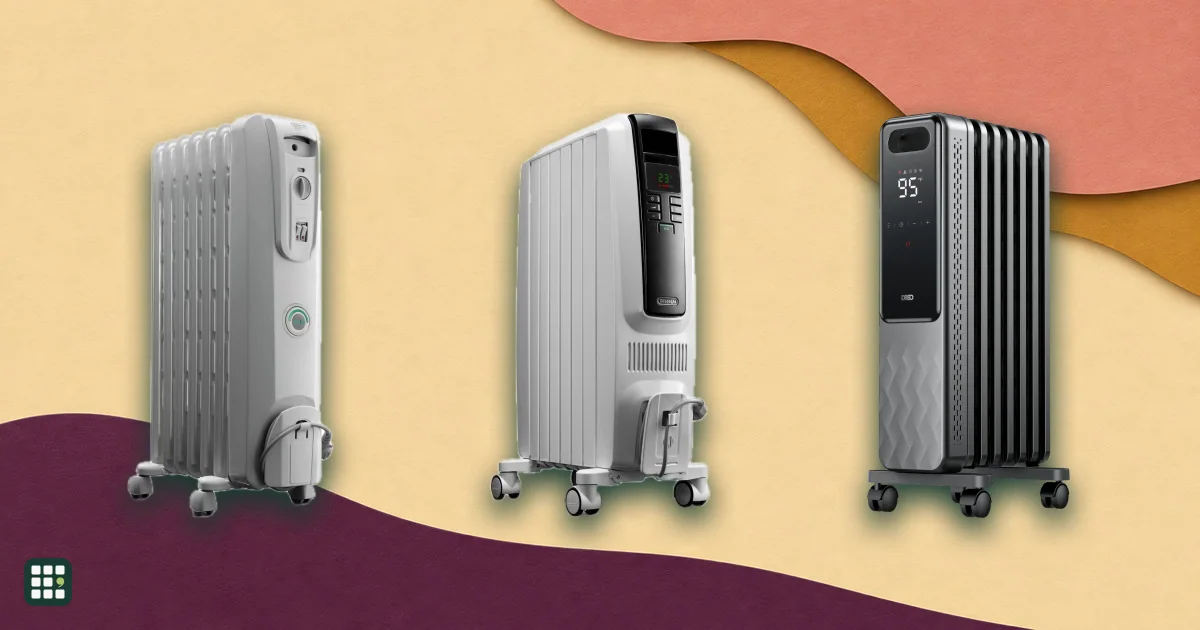
Oil-filled radiators
Oil-filled radiators warm a room slowly and quietly with sealed oil that never needs refilling. Most put out the same 1500 W, so the real choice is controls (dial or digital), timer, remote, safety features, weight and price.
Last updated
How to choose
Start with the room. A 1500 W radiator, the most a standard US outlet supports, suits a bedroom or small office and works best in a closed, well-insulated space. It heats more slowly than a fan heater but keeps giving off warmth after it cycles off, and it has no fan noise.
Next pick the controls. A mechanical dial is simple and costs less. A digital model adds a display, an exact temperature target, a timer and often a remote, which matters if you want it to switch off after you fall asleep. Check the heat settings: 600, 900 and 1500 W levels let you run it at lower power once the room is warm.
Check safety: tip-over shut-off and overheat protection. Keep it a few feet from curtains and bedding, plug it directly into a wall outlet and never use an extension cord. Finally compare weight, height and warranty length, and check the current price at checkout because makers run frequent sales.
Answer
Browse the table. Filter to what matters.
Use the filters below, then sign in if you want to shortlist and decide with friends.
Sign in to vote, hide products and features, and reorder.
Verified: hover a cell and click its green dot for the source Estimate: no cited source Not stated: the maker doesn't publish it
| Feature | ⠿ | ⠿ | ⠿ | ⠿ | ⠿ | ⠿ | ⠿ |
|---|---|---|---|---|---|---|---|
|
⠿
Price
|
|||||||
|
⠿
Max power
|
|||||||
|
⠿
Heat settings
|
|||||||
|
⠿
Thermostat control
|
Mechanical, adjustable thermostat
|
||||||
|
⠿
Remote control
|
|
|
|
|
|||
|
⠿
Timer
|
None
|
None
|
|||||
|
⠿
Energy saving mode
|
|
||||||
|
⠿
Tip over protection
|
|||||||
|
⠿
Overheat protection
|
|
||||||
|
⠿
Weight
|
|||||||
|
⠿
Height
|
|||||||
|
⠿
Warranty
|

Why these features matter
-
Price ($)
Price sets the budget; a $100 radiator and a $190 one both put out 1500 W, so you are paying for controls, not heat.
-
Max power (W)
Maximum power sets how fast a room warms. Nearly all home radiators top out at 1500 W, the limit of a standard US outlet, so this rarely separates them.
-
Heat settings (settings)
More levels let you run at lower power for steady, cheaper heat once the room is warm.
-
Thermostat control
Dials are simple and hard to break; a digital display shows the room temperature and lets you set an exact target and use a timer.
- Mechanical
- : Knobs or a dial set heat and temperature. Simple and sturdy; you cannot set an exact temperature or use a timer.
- Digital
- : A display shows the room temperature and you set a target. Better for precise, steady heat; adds features like a timer.
-
Remote control
A remote lets you adjust heat from bed or the couch, which matters for bedrooms and anyone with limited mobility.
-
Timer
A timer shuts the heater off after you fall asleep or pre-heats a room, which saves electricity.
-
Energy saving mode
These modes lower power once the room is warm, which can cut running costs.
-
Tip over protection
A tip-over switch is a basic fire safeguard, especially with pets and children.
-
Overheat protection
Overheat protection stops the heater if it is blocked or covered and is a core safety feature.
-
Weight (lb)
A lighter radiator is easier to carry up stairs and between rooms.
-
Height (in)
Height decides whether it fits under a window sill or sits low beside a bed.
-
Warranty
A longer warranty matters because a heater that fails mid-winter is a hassle to replace.
About the products
-
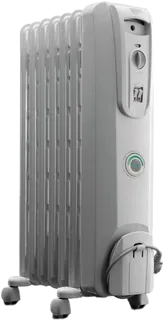
ComforTemp EW7707CM · De’Longhi
A basic mechanical radiator with 3 power settings and a thermostat dial. Cheapest of the De'Longhi pair, with no timer or remote.
-
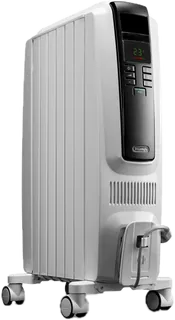
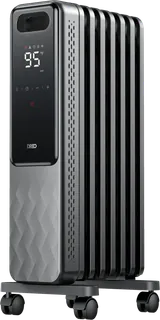
Dragon Digital TRD40615E · De’Longhi
De'Longhi's digital model: LED control panel, 24-hour timer, eco function and a 700 W minimum power. Costs the most here.
-
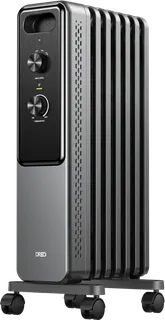
Oil-filled Radiator 153 · Dreo
A low-cost DREO with dual knobs for heat level and thermostat and 3 power levels; the lightest model here.
-
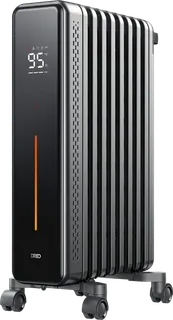
Oil-filled Radiator 310 · Dreo
DREO's digital radiator with a touchscreen, LED display, remote, eco mode and 24-hour timer at about the price of the basic models.
-
Oil-filled Radiator 521 · Dreo
DREO's top radiator: touch buttons, remote, timer and eco mode, in a wider, taller body than the 310.
-
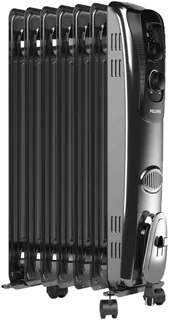
NY1506-18SRA · Pelonis
A steel-cover digital radiator with remote, 24-hour timer, eco mode and child lock; sold under Pelonis and store brands.
-
NY1507-17LA · Pelonis
A plain 1500 W Pelonis radiator with 3 heat settings and an adjustable thermostat; no digital features stated.
Suggest a change
Related comparisons
-
 Evaporative coolers
, also called swamp coolers, cool air by blowing it through wet pads. They use a fraction of an air conditioner's power and need no window kit, but they only work well in dry heat and add humidity to the space. This grid compares portable models from bedroom towers to garage and shop units on rated coverage, airflow, tank size, water hookup, noise, smart controls and warranty.
-
 Upright freezers
An upright freezer has shelves and a door like a refrigerator, so food is easier to find and rotate than in a chest freezer, and it fits a kitchen, garage or basement corner. The real choices are size against the floor space you have, frost-free versus manual defrost, and whether the unit can handle a garage.
-
 Chest freezers
A chest freezer stores bulk meat, garden produce, and stock-up groceries more efficiently than an upright, because cold air stays in when you open the lid. The real choice is size versus the wall space you have, and whether the unit can hold temperature in a garage.
-
 Tankless water heaters
 heat water on demand instead of storing it in a tank, so they can run longer, save space and last years longer than a tank. The decision is gas or electric, how much flow you need for the taps running at once, and what it takes to install: a gas line, a vent, or a heavy electrical circuit. This grid compares whole-house gas and electric models from Rinnai, Navien, Rheem, Stiebel Eltron and EcoSmart.
-
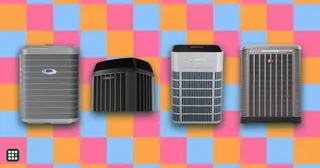 Heat pumps
Compare leading U.S. ducted air-source heat pump systems by efficiency, low-temperature heating, modulation, sound, refrigerant, and warranty. Published maximum ratings are achieved only with eligible matched components; ask a licensed HVAC contractor for a load calculation and AHRI-rated match for your home.
-
 Tower fans
 stand tall on a small footprint and spread a breeze across a bedroom, office, or living room. They range from basic $40 models with a few speeds to quiet DC-motor fans with apps, and premium bladeless towers that also purify or heat the air. The real trade-offs are quiet versus power, smart features versus price, and how easy the fan is to keep clean.