



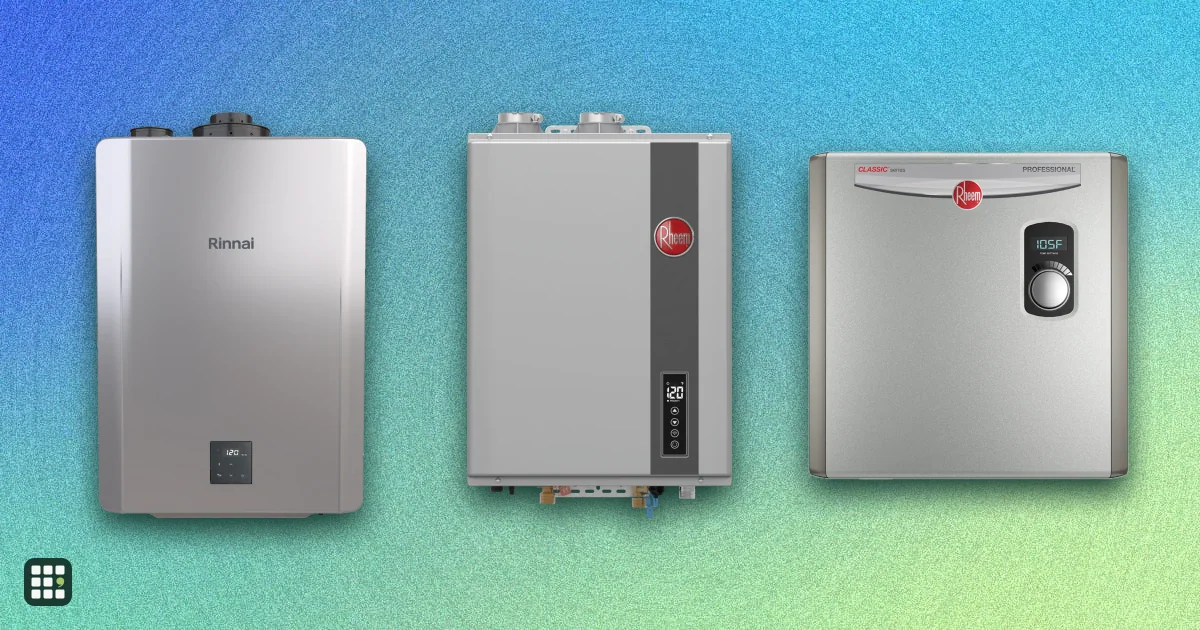
Tankless water heaters
Tankless water heaters heat water on demand instead of storing it in a tank, so they can run longer, save space and last years longer than a tank. The decision is gas or electric, how much flow you need for the taps running at once, and what it takes to install: a gas line, a vent, or a heavy electrical circuit. This grid compares whole-house gas and electric models from Rinnai, Navien, Rheem, Stiebel Eltron and EcoSmart.
Last updated
How to choose
Start with fuel. Gas models heat more water faster and usually cost less to run, but need a gas line big enough for the unit and a vent. Electric models need no vent, are small and cheap to buy, but need a large circuit (often 3 x 40 A) and heat less water in cold climates.
Size it
- Add up the flow of the fixtures you run at once (a shower is about 2 gallons per minute).
- Check the maker's flow at your temperature rise: incoming water temperature to the setting you want (for example 55°F to 120°F is a 65°F rise). Rated flow drops as the rise grows.
- Electric units rated 4 to 7 GPM often only deliver 2 to 3 GPM in cold regions.
Check the install
- Gas: gas pipe size, vent length and material, a drain for condensate (condensing models), outdoor or indoor placement.
- Electric: breaker size, wire and panel capacity. A panel upgrade can add real cost.
- Ask for a quote on the full installed price; it can match the unit price.
Compare running cost and care
- UEF is the efficiency rating; condensing gas models score about 0.9 to 0.98.
- Look at the heat exchanger warranty, and plan yearly flushing in hard water areas.
- A recirculation pump gives faster hot water at the tap but uses extra energy and water pipes.
Check federal and local rebates; ENERGY STAR models may qualify.
Answer
Browse the table. Filter to what matters.
Use the filters below, then sign in if you want to shortlist and decide with friends.
Sign in to vote, hide products and features, and reorder.
Verified: hover a cell and click its green dot for the source Estimate: no cited source Not stated: the maker doesn't publish it
| Feature | ⠿ | ⠿ | ⠿ | ⠿ | ⠿ | ⠿ | ⠿ | ⠿ | ⠿ |
|---|---|---|---|---|---|---|---|---|---|
|
⠿
Price
|
$1,500
|
$700
|
$959
|
||||||
|
⠿
Fuel
|
|||||||||
|
⠿
Maximum flow rate
|
|||||||||
|
⠿
Maximum gas input
|
Doesn't apply
|
Doesn't apply
|
Doesn't apply
|
||||||
|
⠿
Maximum electric power
|
Doesn't apply
|
Doesn't apply
|
Doesn't apply
|
Doesn't apply
|
Doesn't apply
|
Doesn't apply
|
|||
|
⠿
UEF
|
|||||||||
|
⠿
Condensing
|
Doesn't apply
|
Doesn't apply
|
Doesn't apply
|
||||||
|
⠿
ENERGY STAR
|
|
||||||||
|
⠿
Venting
|
Direct vent or room air; 2 in PVC, CPVC or PP, or concentric
|
Direct vent or room air; 2 in or 3 in PVC, CPVC or PP, or concentric
|
Direct vent; 3 in or 4 in PVC or CPVC
|
||||||
|
⠿
Installation location
|
Indoor, wall-mounted, frost-free area
|
||||||||
|
⠿
Built in recirculation pump
|
|
|
|
|
|
|
|||
|
⠿
Wi Fi control
|
None listed
|
Optional module
|
Optional module
|
Optional module
|
None listed
|
None listed
|
|||
|
⠿
Heat exchanger warranty
|
15 years or 12,000 hours
|
15 years or 12,000 hours
|
12 years
|
||||||
|
⠿
Gas or electrical requirement
|
3/4 in gas inlet; 120 V power
|
3/4 in gas inlet; 120 V power
|
|||||||
|
⠿
Weight
|
|||||||||
|
⠿
Minimum activation flow
|
0.13 GPM
|
0.13 GPM
|
0.4 GPM
|
||||||
|
⠿
Maximum temperature setting
|
140°F
|
140°F
|
140°F
|
140°F
|
Why these features matter
-
Price ($)
Installation often costs as much as the unit, and gas models need venting and sometimes a larger gas line; electric models need a heavy circuit. Price alone is not the full cost.
-
Fuel
Fuel decides your running cost and what has to be installed. Gas needs a gas line and vent; electric needs a big electrical circuit.
-
Maximum flow rate (GPM)
More flow lets you run more showers and taps at once. Rated flow falls as incoming water gets colder, so check the flow at your own temperature rise.
-
Maximum gas input (BTU/hr)
More input means more hot water at a given rise, and needs a gas line that can supply it (some need a larger gas pipe).
-
Maximum electric power (kW)
Higher kW heats more water but needs a bigger circuit and a service panel that can carry it.
-
UEF
UEF shows how much of the energy becomes hot water. The gap between 0.8 and 0.98 matters over a heater's life if you use a lot of hot water.
-
Condensing
Condensing gas heaters are more efficient and use plastic vent pipe, but need a drain for the condensate.
-
ENERGY STAR
ENERGY STAR gas tankless heaters can qualify for rebates and tax credits in some places.
-
Venting
Venting decides where the heater can go and the install cost. Plastic vent pipe is cheaper and easier than metal.
-
Installation location
Outdoor models free up indoor space and need no vent through the house, but need freeze protection in cold climates.
-
Built in recirculation pump
A recirculation pump gives hot water at the tap faster and cuts wasted water, but can add energy use.
-
Wi Fi control
Wi-Fi lets you see errors, usage and set temperature from your phone.
-
Heat exchanger warranty (years)
The heat exchanger is the costliest part. A longer warranty protects against the most expensive repair.
-
Gas or electrical requirement
Installers have to match your gas line or electrical panel. Electric whole-house units often need a panel upgrade.
-
Weight (lb)
A lighter unit is easier to hang on a wall for one person.
-
Minimum activation flow (GPM)
A low activation flow means the heater fires for a trickle, so you don't get cold bursts at low flow.
-
Maximum temperature setting (°F)
A hotter maximum helps with a large soaking tub, but 120°F is the safe default for most households.
About the products
-
RTGH-95DVELN-3 · Rheem
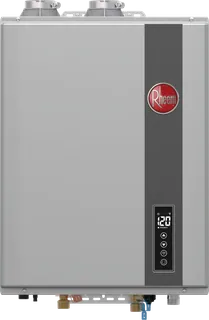
Condensing natural-gas whole-house heater with built-in Wi-Fi and a 15-year heat exchanger. Rated for 9.5 GPM, so it can serve a large household with several showers running. Needs a gas line, a vent and a drain for condensate; a recirculation pump is a separate accessory.
-
RTEX-24 · Rheem
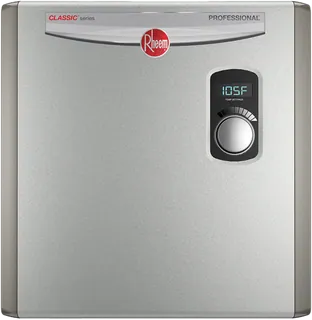
Electric 24 kW whole-house heater that needs no vent or gas line. Output depends on how cold your incoming water is; it suits warmer climates and smaller households. Needs a heavy electrical circuit (3 x 40 A) and a 200 A service panel is recommended.
-
Sensei RX199iN · Rinnai
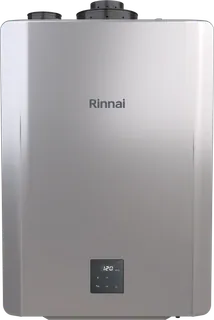
Rinnai's top condensing gas model at 199,000 BTU/h and up to 11.1 GPM, with a 0.98 UEF. Installs indoors, or outdoors with a vent cap. Sold at about $1,703 at several retailers against a $2,433 list price.
-
Sensei RX130iN · Rinnai
Smaller condensing gas model in Rinnai's Sensei line: 7.1 GPM and a 0.97 UEF at a lower price. A fit for one or two bathrooms; recirculation needs an add-on kit.
-
RUS75eN · Rinnai
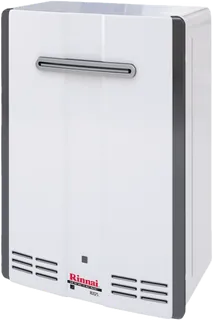
Outdoor-only condensing gas unit rated 7.5 GPM, 0.89 UEF. Good when there is no indoor wall or vent route. Rinnai's page is still live, but retailers' listings suggest it may be being phased out; check availability before buying.
-
NPE-240A2 · Navien
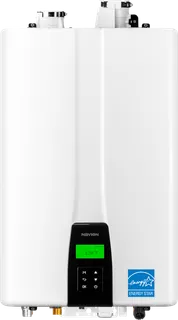
Navien's largest NPE-A2 condensing gas model (199,900 BTU/h), with a built-in recirculation pump and buffer tank. Rated 11.2 GPM at a 35°F rise. Indoor or outdoor wall-hung.
-
NPE-180A2 · Navien
Mid-size Navien condensing gas model (150,000 BTU/h, 8.4 GPM at a 35°F rise) with the same built-in recirculation pump and buffer tank as the 240A2, at a lower price.
-
Tempra 24 Plus · Stiebel Eltron
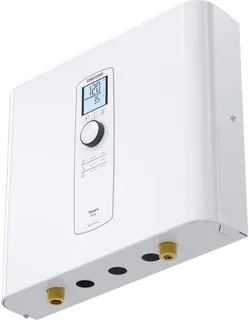
Compact 24 kW electric heater (16 lb) with Advanced Flow Control to hold the set temperature as flow changes. No vent or gas needed. Like all electric units, its output drops when incoming water is cold.
-
ECO 27 · EcoSmart
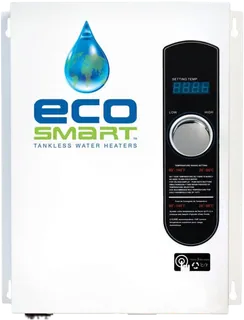
27 kW electric whole-house heater at the lowest price in this grid, with a limited lifetime warranty in the US and Canada. Needs three 40 A breakers; indoors only. Sold by the Rheem family's EcoSmart brand.
Suggest a change
Related comparisons
-
 Window film
 is a thin layer you stick to glass to change what the window does: reflect heat, hide the view in, soften light, or insulate against drafts. This grid compares do-it-yourself films for home windows on price, privacy day and night, heat and UV blocked, how they attach, and whether you can take them off and reuse them.
-
 Ceiling fans
Compare ceiling fans from budget pull-chain models to quiet smart DC fans and large-room fans: price, blade span, airflow, efficiency, motor type, lights, controls, smart home support and wet or damp ratings. The real trade-offs are cost against quietness and efficiency (AC versus DC motors), the size of fan your room needs, and where it can safely go (indoors, a bathroom, or an open porch).
-
 Smart bulbs
 screw into an ordinary lamp or fixture and let you dim, schedule and change the light from your phone or voice assistant. This grid compares standard A19 smart bulbs sold in the US, from budget Wi-Fi bulbs to premium Zigbee and Thread ones, by price per bulb, color, brightness, how they connect, and which smart home systems they work with.
-
 Smart thermostats
 from Google Nest, ecobee, Honeywell Home, Amazon, Sensi, and Mysa, compared on price, wiring needs, room sensors, smart-home platforms, and energy-saving features. The real choice is less about temperature control, which all of them do well, and more about whether your wiring needs a C wire, whether you want sensors to even out hot and cold rooms, and which smart-home system you use.
-
 Upright freezers
An upright freezer has shelves and a door like a refrigerator, so food is easier to find and rotate than in a chest freezer, and it fits a kitchen, garage or basement corner. The real choices are size against the floor space you have, frost-free versus manual defrost, and whether the unit can handle a garage.
-
 Evaporative coolers
, also called swamp coolers, cool air by blowing it through wet pads. They use a fraction of an air conditioner's power and need no window kit, but they only work well in dry heat and add humidity to the space. This grid compares portable models from bedroom towers to garage and shop units on rated coverage, airflow, tank size, water hookup, noise, smart controls and warranty.