



Ceiling fans
Compare ceiling fans from budget pull-chain models to quiet smart DC fans and large-room fans: price, blade span, airflow, efficiency, motor type, lights, controls, smart home support and wet or damp ratings. The real trade-offs are cost against quietness and efficiency (AC versus DC motors), the size of fan your room needs, and where it can safely go (indoors, a bathroom, or an open porch).
Last updated
How to choose
Start with the room
- Size the blade span to the floor area: about 36 to 44 in for rooms up to 144 sq ft, 50 to 54 in for typical bedrooms and living rooms up to about 350 sq ft, and 60 in or more for large or open-plan rooms.
- Check the ceiling height. Blades must sit at least 7 ft above the floor. Under about 8 ft you need a flush (hugger or low profile) mount; above 9 ft, a longer downrod brings the fan into the room where it does its work.
- Match the location rating: dry for indoor rooms, damp for bathrooms and covered porches, wet for anywhere rain can reach the fan.
- Vaulted ceiling? Confirm the fan supports sloped mounting and check the maximum angle.
AC or DC motor
DC motors are quieter, use a fraction of the power and usually offer six or more speeds, but cost more and rely on the maker's remote or wall control. AC fans are cheaper, simpler and work with standard fan wall switches. If the fan will run all night in a bedroom, the quieter, finer speed control of a DC motor is often worth it.
Compare airflow fairly
Airflow (CFM) at high speed tells you how much air the fan moves; airflow efficiency (CFM per watt) tells you what it costs to run. Compare fans of similar size, and use the EnergyGuide label figures, which every fan sold in the US must show. ENERGY STAR certification is a quick check for efficiency.
Light and controls
- If the fan replaces the room's only ceiling light, check the light output in lumens; around 800 lumens suits a bedroom, more for a living room or kitchen. Adjustable color temperature lets you choose warm or cool white.
- Decide how you want to control it: pull chains are cheapest, a remote suits one-switch rooms, a wall control can't be lost, and app or voice control (Alexa, Google, Siri) adds schedules and smart home routines.
Full cost and long-term ownership
- Budget for installation, a fan-rated ceiling box if you don't have one, and any downrod or sloped-ceiling kit not in the box.
- A long motor warranty from a maker that still sells remotes and parts saves trouble later, because a ceiling fan is hard to swap out.
- Prices here are regular list prices; fans go on sale often, so check current prices before you buy.
Answer
Browse the table. Filter to what matters.
Use the filters below, then sign in if you want to shortlist and decide with friends.
Sign in to vote, hide products and features, and reorder.
Verified: hover a cell and click its green dot for the source Estimate: no cited source Not stated: the maker doesn't publish it
| Feature | ⠿ | ⠿ | ⠿ | ⠿ | ⠿ | ⠿ | ⠿ | ⠿ | ⠿ | ⠿ | ⠿ | ⠿ | ⠿ | ⠿ | ⠿ | ⠿ | ⠿ |
|---|---|---|---|---|---|---|---|---|---|---|---|---|---|---|---|---|---|
|
⠿
Price
|
$830
|
||||||||||||||||
|
⠿
Blade span
|
|||||||||||||||||
|
⠿
Airflow
|
|||||||||||||||||
|
⠿
Airflow efficiency
|
81.4 CFM/W
|
324 CFM/W
|
256 CFM/W
|
273 CFM/W
|
64 CFM/W
|
68 CFM/W
|
|||||||||||
|
⠿
Power use
|
30 W
|
||||||||||||||||
|
⠿
Motor type
|
AC
|
||||||||||||||||
|
⠿
Speeds
|
6 speeds
|
3 speeds
|
|||||||||||||||
|
⠿
Reversible
|
|
|
|
|
|||||||||||||
|
⠿
Light included
|
|||||||||||||||||
|
⠿
Light output
|
Doesn't apply
|
Doesn't apply
|
Doesn't apply
|
||||||||||||||
|
⠿
Adjustable color temperature
|
Doesn't apply
|
|
|
Doesn't apply
|
Doesn't apply
|
|
|
||||||||||
|
⠿
Controls included
|
|||||||||||||||||
|
⠿
App control
|
|
|
|
|
|||||||||||||
|
⠿
Voice assistants
|
None
|
None
|
None
|
None
|
None
|
None
|
None
|
Alexa, Google Assistant
|
|||||||||
|
⠿
Location rating
|
Dry (indoor)
|
Dry (indoor)
|
Dry (indoor)
|
Dry (indoor)
|
Dry (indoor)
|
Dry (indoor model); outdoor model sold separately
|
Dry (indoor)
|
||||||||||
|
⠿
ENERGY STAR
|
|
|
|
|
|
|
|
|
|
||||||||
|
⠿
Flush mount option
|
|
|
|
|
|||||||||||||
|
⠿
Sloped ceiling compatible
|
|||||||||||||||||
|
⠿
Blades
|
|||||||||||||||||
|
⠿
Fan weight
|
17.64 lb
|
||||||||||||||||
|
⠿
Motor warranty
|
Lifetime limited
|
Lifetime limited
|
|||||||||||||||
|
⠿
Ceiling to blade height
|
8.15 in
|
Why these features matter
-
Price ($)
The fan itself is a fraction of the job: installation, a downrod or a smart control add-on can cost as much. Premium DC fans cost several times a budget AC fan but are quieter, more efficient and have more speeds.
-
Blade span (in)
Size the fan to the room: about 36 to 44 in for small rooms up to 144 sq ft, 50 to 54 in for typical bedrooms and living rooms, 60 in and up for large or open spaces. Too big a fan in a small room feels gusty.
-
Airflow (CFM)
More airflow cools a bigger room and makes a hotter room feel comfortable. Compare fans of similar blade span; a huge CFM matters less in a small bedroom where you run the fan on low.
-
Airflow efficiency (CFM/W)
Shows how much breeze you get for the electricity. DC motors usually score far higher than AC. It matters most for fans that run many hours a day.
-
Power use (W)
Lower wattage means lower running cost. Even so, most ceiling fans cost a few dollars a month to run, far less than air conditioning.
-
Motor type
DC motors are quieter, use much less power and usually offer more speeds, but cost more and need the maker's remote or control. AC fans are cheaper and work with standard wall controls.
-
Speeds (speeds)
More speeds let you find a gentle setting for sleeping. Three speeds is typical for AC fans; DC fans often have six or more.
-
Reversible
Reverse mode moves warm air off the ceiling in winter. Useful in rooms with high ceilings; less important in warm climates.
-
Light included
A built-in light saves a separate fixture when the fan replaces a ceiling light. Skip it if the room is already well lit or you want a cleaner look.
-
Light output (lm)
A fan light often replaces the room's main light, so it needs to be bright enough: roughly 800 lumens or more for a bedroom, more for a living room or kitchen.
-
Adjustable color temperature
Lets you pick warm light for evenings and cooler light for tasks, without swapping bulbs.
-
Controls included
A remote is handy where there is one wall switch; a wall control avoids lost remotes; pull chains are cheapest but awkward on high ceilings.
-
App control
App control lets you set schedules, control the fan from bed or away from home, and group it with other smart devices. Not needed if a remote is enough.
-
Voice assistants
Pick a fan that works with the assistant already in your home. Fans without built-in support can sometimes use a smart wall switch instead (AC fans only).
-
Location rating
Install only where the rating allows: a dry-rated fan on a porch can fail early and be unsafe. Wet-rated fans can be hosed down and work anywhere.
- Damp rated
- : Safe in humid spots and under a covered porch, but not where rain or spray can hit the fan directly.
-
ENERGY STAR
Certified fans are independently tested to be more efficient. It can also qualify for utility rebates in some areas.
-
Flush mount option
Needed for ceilings under about 8 ft so the blades stay at least 7 ft above the floor. Flush mounting reduces airflow a little.
-
Sloped ceiling compatible
Vaulted ceilings need a fan whose canopy can pivot. Check the maximum angle against your ceiling's slope.
-
Blades (blades)
Blade count is mostly about looks; blade shape, pitch and motor matter more for airflow.
-
Fan weight (lb)
Heavier fans need a fan-rated ceiling box and more hands to install. Every ceiling fan needs a fan-rated box, whatever its weight.
-
Motor warranty
Ceiling fans are hard to remove and replace, so a long motor warranty from a maker that still sells parts is worth having.
-
Ceiling to blade height (in)
Matters on low ceilings: blades should sit at least 7 ft above the floor. A smaller number leaves more headroom.
About the products
-
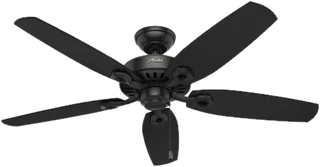
Builder Elite · Hunter Fan Company
Hunter's budget classic: a 52-inch, five-blade AC fan with pull-chain control and no light. Cheap and simple, with a lifetime motor warranty, but only three speeds and no remote in the box.
-
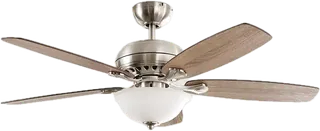
Hampton Bay Southwind II · The Home Depot
Home Depot's best-selling 52-inch traditional fan with two LED bulbs, a remote and a downrod at a low price. A basic three-speed AC fan; specs come from Home Depot's listing, not a maker spec sheet.
-
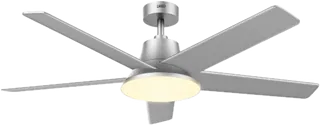
Smart Ceiling Fan 521S · Dreo
Budget smart DC fan: app, Alexa and Google control, a bright 2400-lumen light with adjustable color temperature and a remote. Dreo publishes few efficiency or rating details.
-
Dempsey Low Profile with Light · Hunter Fan Company
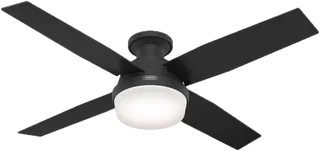
A 52-inch hugger fan for 8 ft ceilings, with an LED light and remote. Mounts flush to the ceiling, but cannot go on an angled ceiling and moves less air than downrod fans.
-
Aerodyne Smart · Hunter Fan Company
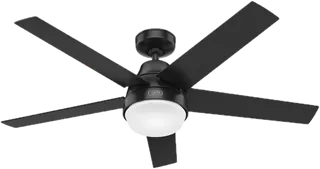
Hunter's mid-priced Wi-Fi fan: works with Alexa, Google and Apple HomeKit and comes with a remote and LED light. Uses an AC motor, so it draws more power than DC smart fans.
-
Comet · Westinghouse Lighting
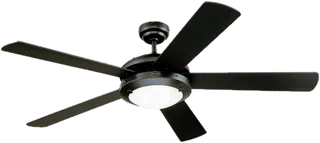
A 52-inch indoor fan with a dimmable LED light, pull chains and a combination mount for flush or downrod installs. Inexpensive, but less airflow and efficiency than most fans here.
-
Light Wave · Minka-Aire
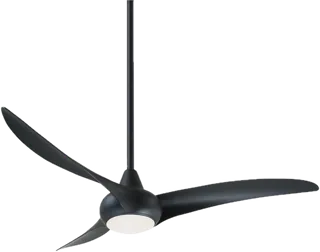
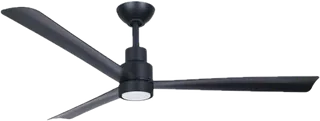
A sleek three-blade 52-inch fan with a bright 1600-lumen LED and remote. Stylish, but it uses an AC motor with only three speeds and is indoor only.
-
Simple · Minka-Aire
A wet-rated 52-inch DC fan with LED and remote, for indoors or an open patio. Very efficient, with six speeds; no app or voice control.
-
Wynd · Modern Forms
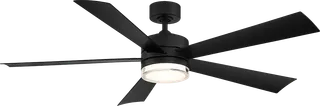
A wet-rated smart DC fan with app, Alexa and Google control and a Bluetooth remote. Works indoors or outdoors, with a marine-grade stainless option for coastal homes.
-
Stealth DC · Casablanca
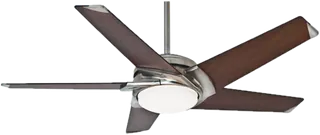
A premium 54-inch DC fan with six speeds, a 1300-lumen LED and remote. Very efficient and quiet, but expensive and has no app control.
-
Haiku · Big Ass Fans
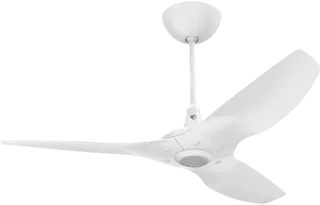
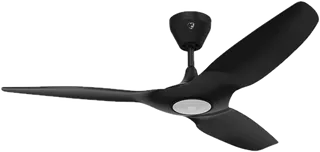
A premium smart DC fan with built-in sensors, app, Alexa and Google control and seven speeds. Among the most efficient fans, but costly, and the light kit is an extra-cost add-on.
-
i6 · Big Ass Fans
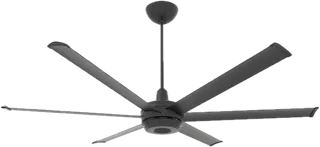
A 60-inch and larger smart DC fan for great rooms, garages and open spaces, with app control and seven speeds. Very high airflow, but expensive and no light in the base model.
-
Haiku L · Big Ass Fans · Discontinued
A lower-cost Haiku with a DC motor, LED light and remote; Wi-Fi was an optional module. No longer listed on the maker's site, but still found at some retailers.
-
Mazon 44 in. Flush Mount with Light · Lowe's
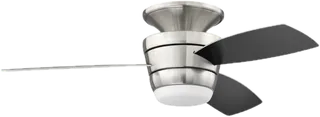
A 44-inch hugger fan for small rooms (up to 225 sq. ft.) with a dimmable LED light and remote. Lowe's exclusive and among the cheapest light-equipped fans here, but it moves far less air than 52-inch fans and cannot go on a sloped ceiling.
-
Spitfire DC · Fanimation
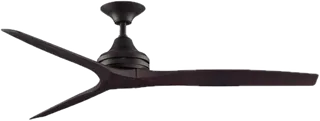
A 60-inch three-blade smart DC fan for large rooms (over 400 sq ft), damp-rated so it works on covered porches. Sold as motor, blades and optional light kit; the figures here are the fan with blades and no light. Moves a lot of air on very little power, but costs several times a basic AC fan.
-
Belmar · Honeywell
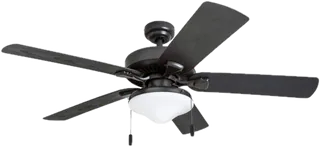
A budget 52-inch five-blade pull-chain fan with a frosted glass light, damp-rated for covered patios and bathrooms. Mounts on a downrod or flush; moves modest air and has no remote or smart features.
-
Carmel · Honeywell
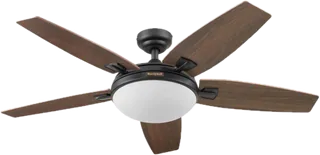
A 48-inch indoor five-blade fan with an LED light and handheld remote, for bedrooms and small to mid-size rooms. Downrod mount only, dry-rated, and no app or voice control.
Suggest a change
Related comparisons
-
 Smart bulbs
 screw into an ordinary lamp or fixture and let you dim, schedule and change the light from your phone or voice assistant. This grid compares standard A19 smart bulbs sold in the US, from budget Wi-Fi bulbs to premium Zigbee and Thread ones, by price per bulb, color, brightness, how they connect, and which smart home systems they work with.
-
 Window film
 is a thin layer you stick to glass to change what the window does: reflect heat, hide the view in, soften light, or insulate against drafts. This grid compares do-it-yourself films for home windows on price, privacy day and night, heat and UV blocked, how they attach, and whether you can take them off and reuse them.
-
 Tankless water heaters
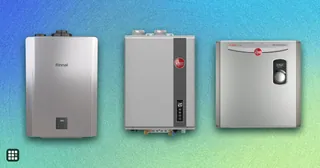
 heat water on demand instead of storing it in a tank, so they can run longer, save space and last years longer than a tank. The decision is gas or electric, how much flow you need for the taps running at once, and what it takes to install: a gas line, a vent, or a heavy electrical circuit. This grid compares whole-house gas and electric models from Rinnai, Navien, Rheem, Stiebel Eltron and EcoSmart.
-
 Smart thermostats
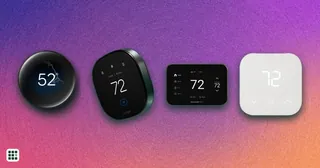
 from Google Nest, ecobee, Honeywell Home, Amazon, Sensi, and Mysa, compared on price, wiring needs, room sensors, smart-home platforms, and energy-saving features. The real choice is less about temperature control, which all of them do well, and more about whether your wiring needs a C wire, whether you want sensors to even out hot and cold rooms, and which smart-home system you use.
-
 Tower fans
 stand tall on a small footprint and spread a breeze across a bedroom, office, or living room. They range from basic $40 models with a few speeds to quiet DC-motor fans with apps, and premium bladeless towers that also purify or heat the air. The real trade-offs are quiet versus power, smart features versus price, and how easy the fan is to keep clean.
-
 Solar panels
Compare residential solar panels by rated output, efficiency, heat performance, cell design, degradation, warranty, size, and structural load ratings. The same panel can perform differently with roof orientation, shade, inverter choice, and installation, so compare complete system proposals as well as module specifications.