



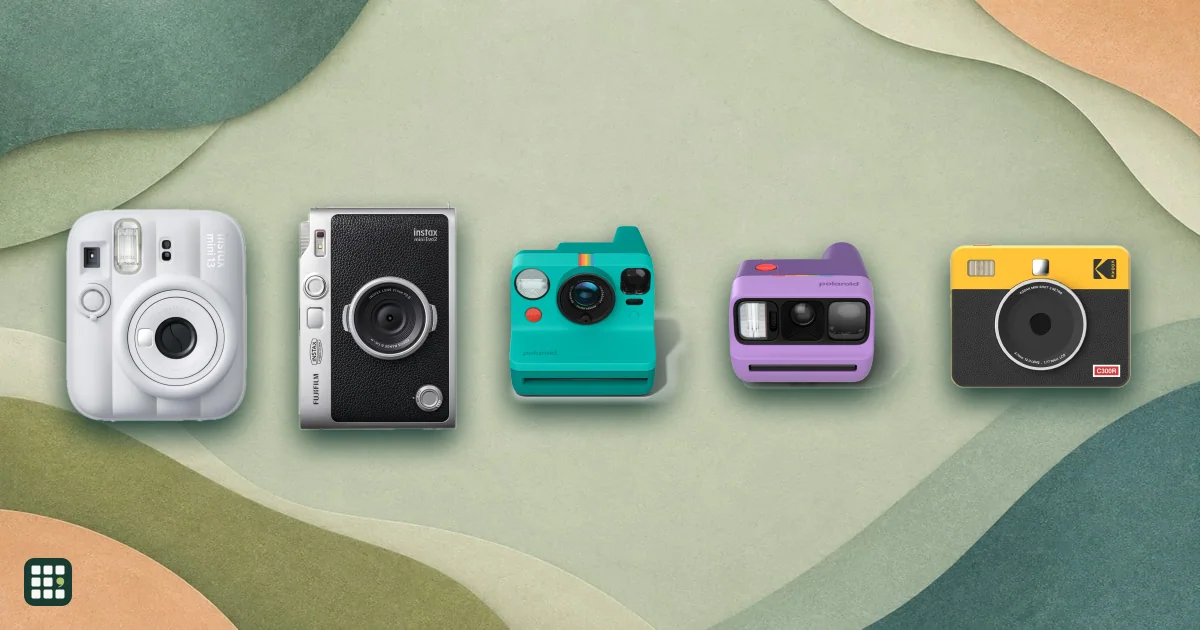
Instant cameras
Compare analog instant cameras and digital hybrids from Fujifilm instax, Polaroid and Kodak by print format (mini, square, wide, i-Type), ongoing film cost, creative controls, battery and camera price. Analog models expose a frame each time you press the shutter; hybrids let you choose which digital images to print.
Last updated
How to choose
Choose the print you want
Instax mini is credit-card sized, Instax Square and Polaroid i-Type are square (the i-Type image is larger), Instax Wide is the biggest, Polaroid Go is pocket sized, and Kodak 4PASS makes 3 x 3 inch square prints. Check the image area, not just the paper size, and note that each format needs its own film.
Plan for the cost of prints
Film cost per print is calculated from the maker's current refill price and pack count. Over a few packs it can outweigh the camera price. It is a baseline before tax and shipping; missed shots, promotional pricing, and special frames change what you actually spend.
Decide whether to print every shot
Analog cameras expose film when you press the shutter, so every miss costs a print. Digital hybrids preview or store shots so you pick which to print; they cost more and need charging.
Match controls to your style
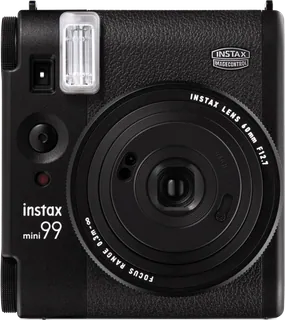
Most analog cameras are point-and-shoot with automatic flash and exposure. Choose one with manual exposure controls (Polaroid I-2, Now+ via the app, instax mini 99) only if you want to control night shots or double exposures. A self-timer matters for group shots, and a close-up or selfie mode for portraits.
Check the power
AA cameras are easy to swap batteries in the field; rechargeable ones need charging before an event but cost nothing to run.
Answer
Browse the table. Filter to what matters.
Use the filters below, then sign in if you want to shortlist and decide with friends.
Sign in to vote, hide products and features, and reorder.
Verified: hover a cell and click its green dot for the source Estimate: no cited source
| Feature | ⠿ | ⠿ | ⠿ | ⠿ | ⠿ | ⠿ | ⠿ | ⠿ | ⠿ | ⠿ | ⠿ | ⠿ | ⠿ | ⠿ | ⠿ |
|---|---|---|---|---|---|---|---|---|---|---|---|---|---|---|---|
|
⠿
Film cost per print
|
$1.2995/print
|
$1.2995/print
|
$2.37375/print
|
$1.374375/print
|
$0.4165/print
|
$1.2995/print
|
$1.2995/print
|
$1.2995/print
|
$1.5995/print
|
$1.5995/print
|
$1.8995/print
|
$1.8995/print
|
$2.37375/print
|
$2.37375/print
|
$2.37375/print
|
|
⠿
Film image area
|
Instax Square, 62 × 62 mm
|
||||||||||||||
|
⠿
Digital workflow
|
|||||||||||||||
|
⠿
Lens
|
|||||||||||||||
|
⠿
Flash
|
|||||||||||||||
|
⠿
Battery
|
|||||||||||||||
|
⠿
Camera price
|
|||||||||||||||
|
⠿
Self timer
|
|
|
|
|
|
|
|||||||||
|
⠿
Rechargeable battery
|
|||||||||||||||
|
⠿
Manual exposure controls
|
|
|
|
|
|
Why these features matter
-
Film cost per print ($/print)
Refill cost can outweigh the camera price over time, especially when every shutter press uses film.
-
Film image area
The image area determines how large the photo feels and whether formats are interchangeable.
- Instax mini
- : Credit-card-sized prints (62 × 46 mm image) and the cheapest film per shot among the Instax formats. Good for pockets and sharing; small for framing.
- Instax Square
- : Square 62 × 62 mm images, bigger than mini and roughly 25% more film cost per print. Suits portraits and a retro look.
- Instax Wide
- : The largest Instax prints (62 × 99 mm image), good for groups and landscapes. Cameras are bulkier and film costs the most per print.
- Polaroid i-Type
- : Classic square Polaroid frame with a 79 × 79 mm image, the largest square here. Film costs more per shot than Instax.
- Polaroid Go
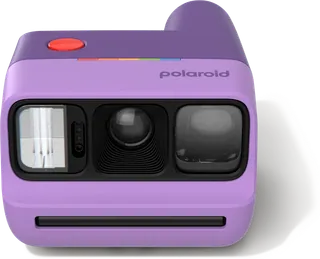
- : Very small Polaroid frames (47 × 46 mm image) for the smallest camera. Film is cheaper than i-Type.
- Kodak 4PASS
- : 3 × 3 inch dye-sublimation prints made by a built-in printer, not chemical film. Cheapest per print, but prints come from a digital image.
-
Digital workflow
Choosing prints after capture can reduce wasted film; direct analog cameras are simpler and do not require charging for digital capture.
- Analog
- : Every press of the shutter exposes and ejects a print, with no preview. Simple, but misses cost film.
- Hybrid
- : Stores digital shots so you choose which ones to print. Costs more up front but wastes less film.
-
Lens
Lens and focus design affect framing and how close you can shoot.
- Close-up or selfie mode
- : A switch or lens twist that lets you shoot subjects closer than the normal minimum distance, usually selfies.
-
Flash
Flash behavior matters indoors and for close subjects, where instant film often needs added light.
- Always fires
- : The flash fires on every shot and adjusts its power. Reliable indoors but can look harsh in daylight and cannot be turned off.
- Selectable flash
- : You can choose automatic, forced or off. Useful for dim rooms where flash would spoil the mood.
-
Battery
Battery type affects whether you carry replacements or recharge between outings.
-
Camera price ($)
The camera is only the initial cost; compare it with the refill cost per print.
-
Self timer
Needed for group shots and tripod photos with yourself in the frame.
-
Rechargeable battery
Rechargeable cameras cost nothing to run between film packs but need a charge before an event; AA cameras can be swapped in the field.
-
Manual exposure controls
Manual control matters for night shots, double exposures and deliberate looks; most buyers are happy with automatic.
About the products
-
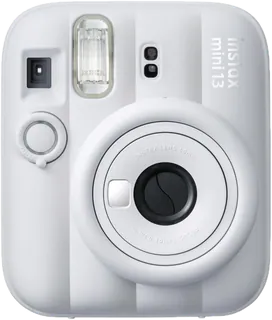
instax mini 13 · Fujifilm
A current entry-level analog camera with close-up correction and a self-timer.
-
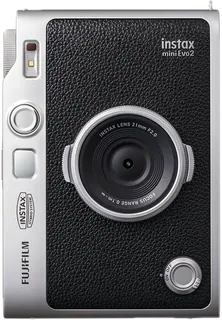
instax mini Evo 2 · Fujifilm
A hybrid camera and printer that stores digital shots and lets you choose what to print.
-
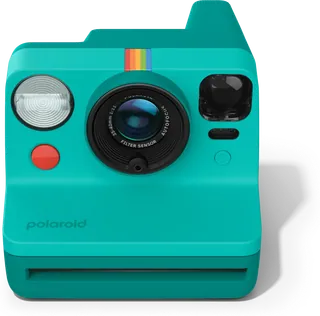
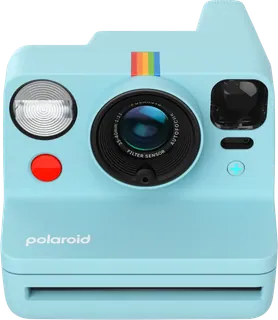
Polaroid Now Gen 3 · Polaroid
A full-size analog Polaroid camera with two-zone autofocus and USB-C charging.
-
Polaroid Go Gen 3 · Polaroid
A pocketable analog camera using Polaroid's smaller Go film.
-
KODAK Mini Shot 3 Retro · Kodak Photo Printer
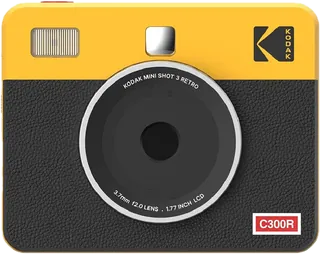
A rechargeable 4PASS camera and Bluetooth printer for square paper prints.
-
instax mini 12 · Fujifilm · Superseded Jan 2025
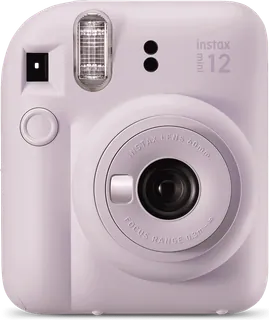
An entry-level mini-format analog camera with a selfie mirror and automatic flash and exposure. Its successor, the mini 13, is the same idea with a self-timer.
-
instax mini 41 · Fujifilm
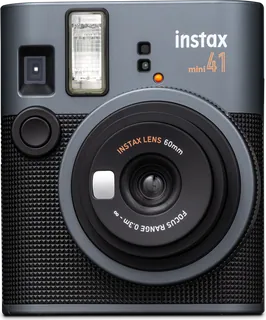
A black, retro-styled mini camera with automatic exposure, a twist-lens close-up mode and automatic flash for selfies. No self-timer or manual controls.
-
instax mini 99 · Fujifilm
The most hands-on mini analog camera: color effects, indoor, sports, double-exposure and bulb modes, a self-timer, and a rechargeable battery.
-
instax SQUARE 2 · Fujifilm
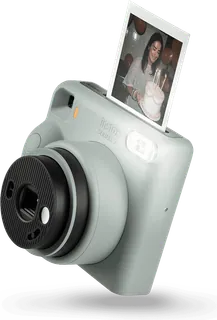
A larger, square-format analog camera with automatic exposure, close-up and landscape modes, and four AA batteries.
-
instax SQUARE SQ40 · Fujifilm
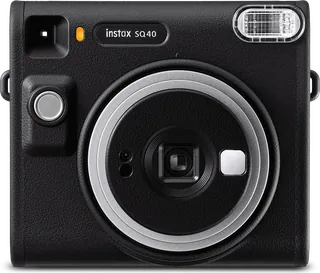
A simple square-format analog camera with a selfie mode and automatic exposure; uses two CR2 lithium batteries.
-
instax WIDE 400 · Fujifilm
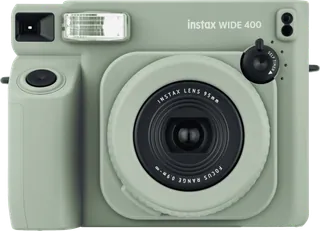
A big, simple analog camera for wide prints, with a self-timer lever and a close-up lens in the box. The widest prints here, and also the heaviest film bill.
-
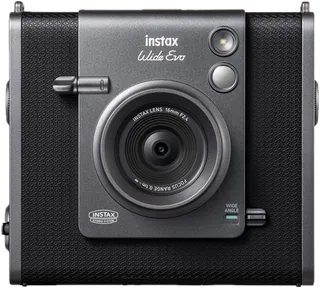
instax WIDE Evo · Fujifilm
A hybrid camera with a 3.5-inch screen, microSD storage and app control that prints wide-format instax film. The priciest camera in this grid.
-
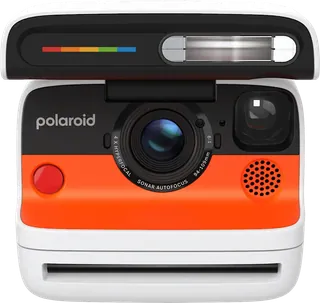
Polaroid Flip · Polaroid
An analog i-Type and 600 camera with sonar autofocus, a hyperfocal four-zone lens and scene analysis. App-connected remote control; no manual exposure.
-
Polaroid Now+ Gen 3 · Polaroid
The Now with app connectivity: aperture priority, manual mode, remote shutter, double exposure and self-timer through the Polaroid app.
-
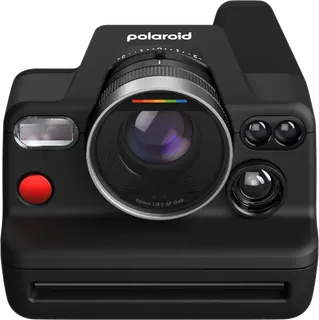
Polaroid I-2 · Polaroid
The enthusiast Polaroid: manual aperture and shutter controls, continuous autofocus, a 98 mm lens, and it shoots SX-70, 600 and i-Type film.
Suggest a change
Related comparisons
-
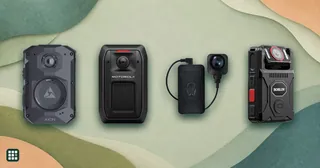 Body cameras
 are wearable video recorders used by security guards, retail and healthcare staff, and police. The real decision is between a cheap camera you buy outright and an agency system that adds cloud storage, evidence software and a contract. This grid compares video quality, battery, storage, GPS, live streaming, durability and cost.
-
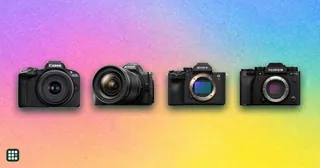 Mirrorless cameras
Compare current mirrorless cameras side by side: sensor size, megapixels, stabilization, video, burst speed, battery life, weight and price. The big choices are sensor format (full frame, APS-C or Micro Four Thirds), the lens system you are buying into, and whether you lean toward stills, video or both.
-
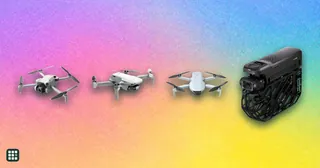 Sub-250g camera drones
Camera drones under 250 grams are the easiest way for a hobbyist to start flying. In the US, a drone under 250 g flown for fun needs no FAA registration, and most fold small enough for a jacket pocket. This grid compares 17 of them, from DJI Mini, Flip and Neo to Potensic ATOM, Holy Stone, HOVERAir self-flying cameras, the Antigravity A1 360 drone and the retired Autel EVO Nano+, on camera quality, flight time, obstacle sensing, range, how you control them and, since the FCC's December 2025 Covered List change, whether you can still buy them new in the US. The trade-off is simple: the lightest drones fly shorter and handle wind worse, and the best cameras are the hardest to buy.
-
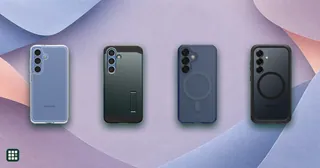 Galaxy S25 cases
Cases made for the standard Galaxy S25 range from slim and clear covers to rugged designs with built-in magnets. Check exact phone fit, charging and accessory compatibility, camera and button access, and the limits of each maker’s drop claim.
-
 Galaxy S26+ cases
Compare Galaxy S26+ phone cases by style, fit, magnets, wireless charging, and the protection claims each maker publishes.
-
 iPhone 17 Pro Max cases
 range from clear, slim shells to rugged and leather designs. Compare exact device fit, charging and magnetic support, camera and button access, and each maker’s impact claim; drop ratings use different methods.