



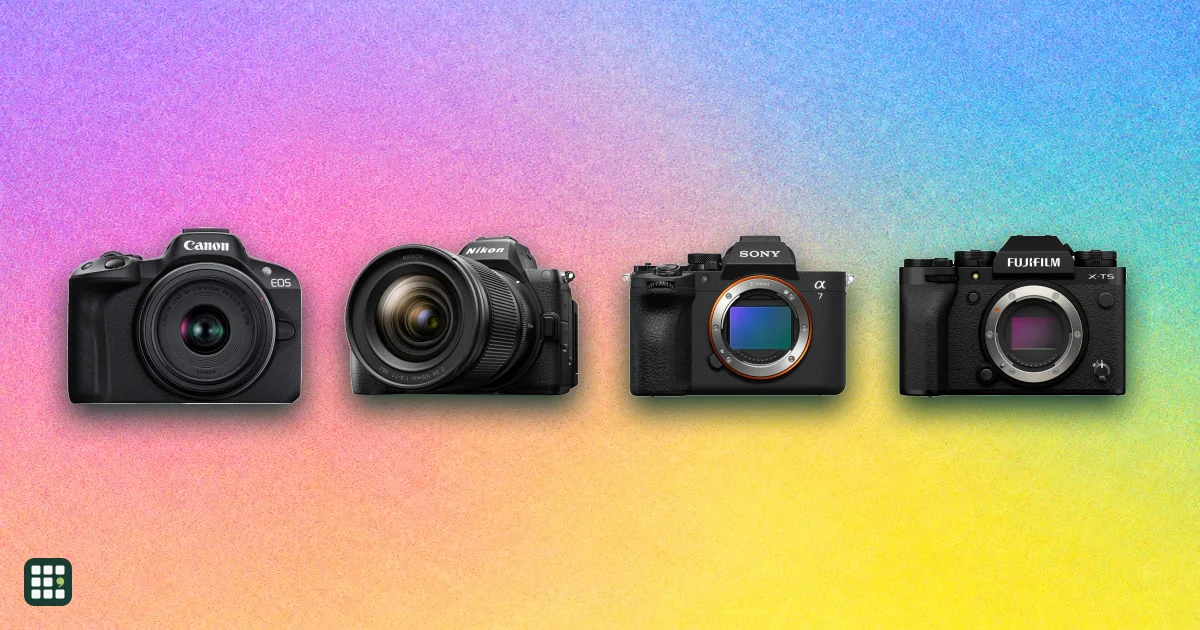
Mirrorless cameras
Compare current mirrorless cameras side by side: sensor size, megapixels, stabilization, video, burst speed, battery life, weight and price. The big choices are sensor format (full frame, APS-C or Micro Four Thirds), the lens system you are buying into, and whether you lean toward stills, video or both.
Last updated
How to choose
Start with what you shoot
Travel and everyday photos favor a small, light body. Sports, kids and wildlife need fast autofocus and high burst rates. Vlogging needs a flip-out screen, a mic input and ideally a headphone jack. Landscapes and studio work reward high resolution.
Pick a sensor size, then a lens system
- Full frame gives the best low-light quality and background blur, but bodies and especially lenses are bigger and costlier.
- APS-C is the sweet spot for most people: smaller lenses, lower prices, and extra reach for telephoto.
- Micro Four Thirds makes the smallest long lenses, ideal for hiking and birding, with more noise in dim light.
The lens mount is the long-term commitment. Check that the lenses you want exist at prices you can pay. Sony E, L-Mount and Micro Four Thirds have the most third-party lenses.
Rule out deal-breakers
- No viewfinder (ZV-E10 II, X-M5, Lumix S9, EOS R6 V) is hard in bright sun.
- No in-body stabilization means you rely on stabilized lenses.
- Only one card slot is risky for paid events like weddings.
- Electronic-only shutters can warp fast motion and band under LED lights.
Read the specs carefully
- Headline burst rates often use the electronic shutter, JPEG only, or fixed focus; check the qualifier.
- 4K at 60p or 120p is often cropped, which narrows your lens.
- CIPA battery ratings are conservative; still, under about 350 shots means carrying a spare.
Count the full cost
Budget for at least one good lens, a spare battery and a fast card. A kit lens is a cheap start; a cheaper body with a better lens usually beats an expensive body with a kit lens. Older models still sold new (a6400, a7 IV, EOS R8) can be good value, but check what you give up.
Before you buy
Hold the camera if you can: grip size and button layout matter more than a spec or two. Check the retailer's return window, and watch for seasonal sales, which are common on cameras.
Answer
Browse the table. Filter to what matters.
Use the filters below, then sign in if you want to shortlist and decide with friends.
Sign in to vote, hide products and features, and reorder.
Verified: hover a cell and click its green dot for the source Estimate: no cited source
| Feature | ⠿ | ⠿ | ⠿ | ⠿ | ⠿ | ⠿ | ⠿ | ⠿ | ⠿ | ⠿ | ⠿ | ⠿ | ⠿ | ⠿ | ⠿ | ⠿ | ⠿ | ⠿ | ⠿ | ⠿ | ⠿ | ⠿ | ⠿ | ⠿ | ⠿ | ⠿ | ⠿ | ⠿ | ⠿ | ⠿ |
|---|---|---|---|---|---|---|---|---|---|---|---|---|---|---|---|---|---|---|---|---|---|---|---|---|---|---|---|---|---|---|
|
⠿
Body price
|
$679
|
$979
|
$999.99
|
$799
|
$999
|
$1,299
|
$1,199.99
|
|||||||||||||||||||||||
|
⠿
Kit price
|
Doesn't apply
|
|||||||||||||||||||||||||||||
|
⠿
Sensor size
|
||||||||||||||||||||||||||||||
|
⠿
Lens mount
|
||||||||||||||||||||||||||||||
|
⠿
Megapixels
|
||||||||||||||||||||||||||||||
|
⠿
In body stabilization
|
||||||||||||||||||||||||||||||
|
⠿
Stabilization rating
|
Doesn't apply
|
Doesn't apply
|
Doesn't apply
|
Doesn't apply
|
Doesn't apply
|
Doesn't apply
|
Doesn't apply
|
Doesn't apply
|
Doesn't apply
|
Doesn't apply
|
||||||||||||||||||||
|
⠿
Max video resolution
|
4K 60p
|
8K 60p
|
7K 60p
|
6K 30p
|
||||||||||||||||||||||||||
|
⠿
Top 4K frame rate
|
60 fps, cropped
|
120 fps
|
120 fps
|
60 fps, cropped
|
60 fps, cropped
|
60 fps, cropped
|
||||||||||||||||||||||||
|
⠿
Max burst rate
|
60 fps, electronic, JPEG only
|
30 fps, electronic, JPEG only
|
||||||||||||||||||||||||||||
|
⠿
Mechanical shutter
|
|
|
|
|
|
|
|
|
|
|
|
|
||||||||||||||||||
|
⠿
Viewfinder
|
||||||||||||||||||||||||||||||
|
⠿
Viewfinder resolution
|
Doesn't apply
|
Doesn't apply
|
Doesn't apply
|
Doesn't apply
|
||||||||||||||||||||||||||
|
⠿
Rear screen
|
||||||||||||||||||||||||||||||
|
⠿
Battery life
|
||||||||||||||||||||||||||||||
|
⠿
Weight
|
||||||||||||||||||||||||||||||
|
⠿
Weather sealed
|
|
|
|
|
||||||||||||||||||||||||||
|
⠿
Card slots
|
1 slots
|
2 slots
|
2 slots
|
1 slots
|
||||||||||||||||||||||||||
|
⠿
Headphone jack
|
||||||||||||||||||||||||||||||
|
⠿
USB charging
|
Why these features matter
-
Body price ($)
Bodies run from about $550 to $4,500. Budget for lenses too: a good lens often costs as much as an entry body, and lenses outlive bodies.
-
Kit price ($)
A kit lens is the cheapest way to start, but kit lenses differ a lot: a compact 16-50mm suits travel, while a 24-105mm covers far more. Compare the lens, not just the price.
-
Sensor size
Bigger sensors gather more light, so they handle low light and blur backgrounds better. Smaller formats make the camera and especially the lenses smaller, lighter and cheaper, and give extra telephoto reach for wildlife and sports.
-
Lens mount
The mount decides which lenses you can buy, now and for years. Sony E, L-Mount and Micro Four Thirds have the widest choice of third-party lenses; Canon RF has had the fewest.
-
Megapixels (MP)
24 MP is plenty for prints and social media. 40 MP and up lets you crop in hard and print big, but makes larger files that fill cards and slow editing.
-
In body stabilization
IBIS steadies every lens, including old and fast primes, so you can shoot slower shutter speeds handheld and get smoother video. Without it, you rely on stabilized lenses.
-
Stabilization rating (stops)
Each stop lets you hand-hold a shutter speed twice as slow. Ratings of 7 to 8.5 stops matter most for low light and long lenses.
-
Max video resolution
Above-4K video lets you crop, reframe or stabilize in editing and still deliver 4K. Most people only ever deliver 1080p or 4K.
-
Top 4K frame rate (fps)
60p gives smooth motion and 2.5x slow motion; 120p gives 5x slow motion for sports and action. A crop narrows your lens's view at that rate.
-
Max burst rate (fps)
Fast bursts catch the decisive moment in sports, wildlife and kids. Above about 10 fps usually needs the electronic shutter, which can distort fast motion on slower-reading sensors.
-
Mechanical shutter
A mechanical shutter avoids rolling-shutter distortion and banding under LED or fluorescent lights. Electronic-only bodies are lighter and silent but can warp fast motion.
-
Viewfinder
An eye-level viewfinder is easier to use in bright sun and steadier with long lenses. Vlog-style bodies drop it to be smaller and cheaper.
-
Viewfinder resolution (million dots)
Sharper viewfinders make manual focus and judging detail easier. 2.36 million dots is basic; 3.69 million and up looks much clearer.
-
Rear screen
A fully articulated screen faces you for vlogging and selfies. A tilting screen stays in line with the lens, which many photographers prefer for waist-level shooting.
-
Battery life (shots)
Ratings are conservative; real-world shooting often gets more. Under about 350 shots, plan on a spare battery for a full day out. USB-C charging helps on trips.
-
Weight (g)
A lighter body is more likely to come along every day. Full-frame lenses add far more weight than the body differences here.
-
Weather sealed
Sealing helps in rain, spray and dust for outdoor, travel and event work. It works only with a sealed lens too.
-
Card slots (slots)
Two slots let you record a backup copy at the same time, which matters for weddings and paid work where a failed card means lost photos.
-
Headphone jack
Monitoring audio while recording catches noise and dropouts before they ruin a take. It matters for video work, not for stills.
-
USB charging
USB charging lets you top up from a laptop, power bank or phone charger, so you can leave the separate charger at home.
About the products
-
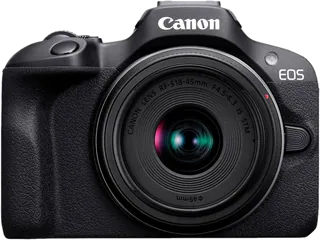
EOS R100 · Canon
Canon's cheapest mirrorless camera: a small APS-C body with a viewfinder for first-time photographers. It has a fixed screen, no IBIS, no USB charging and only 4K at 24/25p, so it is best for stills.
-
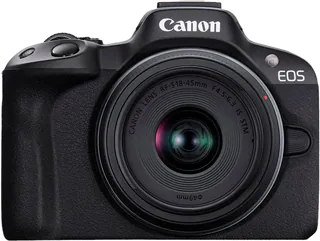
EOS R50 · Canon
A compact, beginner-friendly APS-C body with a flip-out screen, good subject-detection autofocus and uncropped 4K 30p. No IBIS and a small battery; most buyers get it as a kit.
-
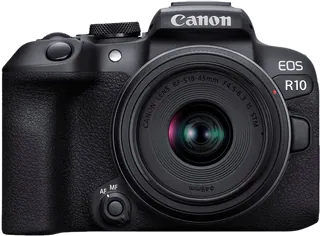
EOS R10 · Canon
An enthusiast APS-C body with twin control dials, a joystick and fast 15 fps mechanical bursts, good for sports and wildlife on a budget. No IBIS or weather sealing, and 4K 60p is cropped.
-
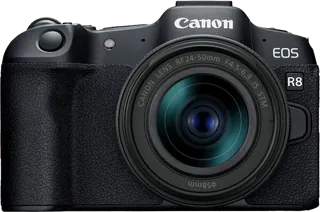
EOS R8 · Canon · Superseded
Canon's lightest full-frame body, with the sensor and autofocus of the older R6 Mark II in a small shell. No IBIS, one card slot and modest battery life. Best Buy now also sells the newer EOS R8 Mark II.
-
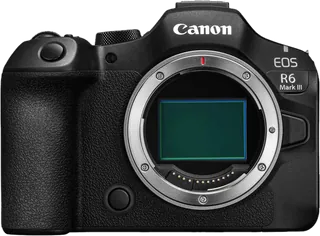
EOS R6 Mark III · Canon
Canon's all-round full-frame body for enthusiasts and pros: 32.5 MP, 8.5-stop IBIS, 40 fps bursts, 7K raw video and dual card slots in a weather-sealed body.
-
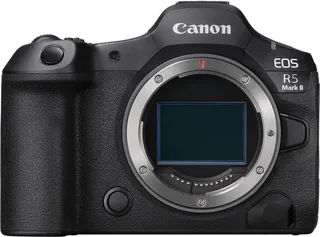
EOS R5 Mark II · Canon
A 45 MP full-frame flagship for detail and speed: 30 fps bursts, 8K video, a 5.76-million-dot viewfinder and pro sealing. Expensive, and long 8K takes can heat up the body.
-
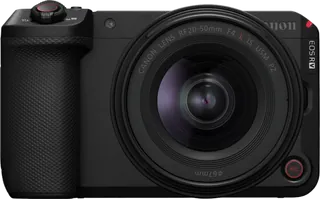
EOS R6 V · Canon
A video-first full-frame body from 2026: R6 Mark III-class sensor, uncropped 4K 120p and 7K raw, but no viewfinder and no mechanical shutter. Best Buy showed it sold out (Oct 2026).
-
ZV-E10 II · Sony
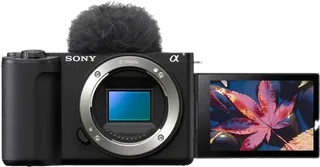
A vlogging-focused APS-C body with a forward-facing screen, headphone jack and 4K 60p. No viewfinder, no IBIS and electronic shutter only, so it is weaker for fast action stills.
-
a6400 · Sony
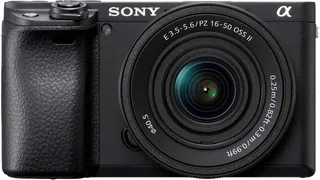
A 2019 APS-C body still sold new, with fast, reliable autofocus and a viewfinder in a small shell. Its age shows: no IBIS, no headphone jack, a tilting rather than flip-out screen, and 4K 30p only.
-
a6700 · Sony
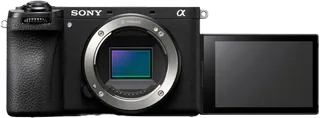
Sony's top APS-C body: IBIS, AI subject detection, a flip-out screen, 4K 120p and strong battery life. A good hybrid for travel; the viewfinder is small and low resolution.
-
a7C II · Sony
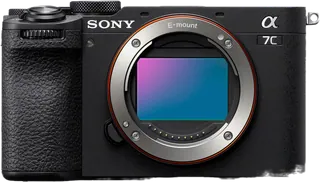
Full frame in a compact rangefinder-style body, with 7-stop IBIS and the a7 IV's 33 MP sensor. Trade-offs: a small viewfinder, one card slot and fewer controls.
-
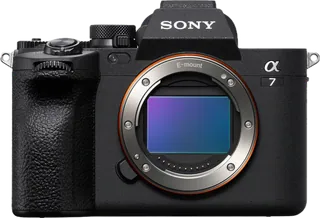
a7 IV · Sony · Superseded
The previous all-round Sony full-frame body, replaced by the a7 V but still sold new at a lower price. Solid 33 MP stills and dual card slots; bursts top out at 10 fps.
-
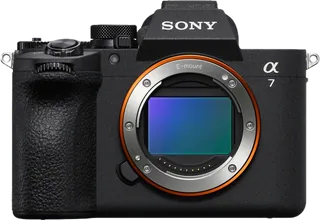
a7 V · Sony
Sony's current all-round full-frame body: 33 MP, 30 fps electronic bursts, 7.5-stop IBIS, 4K 120p and long battery life. A strong hybrid for stills and video.
-
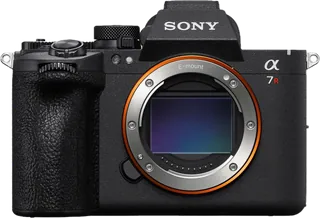
a7R VI · Sony
A 2026 high-resolution body: 66.8 MP for landscapes, studio and heavy cropping, with 8K video, 30 fps bursts and a 9.44-million-dot viewfinder. Huge files and a high price.
-
Z50II · Nikon
Nikon's mid-range APS-C body with a deep grip, flip-out screen, headphone jack and Z8-class subject detection. No IBIS and modest battery life.
-
Z fc · Nikon
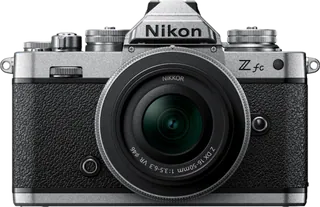
A retro APS-C body styled after Nikon's 1980s film cameras, with real dials for shutter speed, ISO and exposure compensation. Older autofocus, no IBIS and 4K 30p only.
-
Z5II · Nikon
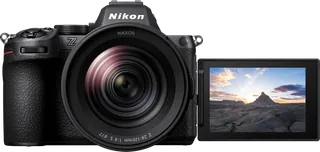
Nikon's entry full-frame body with IBIS, twin SD slots, weather sealing and current autofocus at a low full-frame price. 4K 60p is cropped.
-
Zf · Nikon
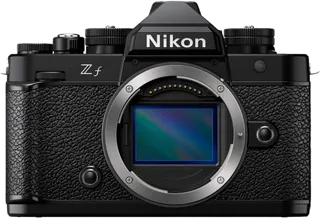
Full-frame retro design with dedicated dials, 8-stop IBIS and modern autofocus. Heavier than it looks, the grip is shallow, and the second card slot is microSD.
-
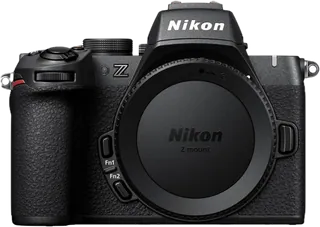
Z6III · Nikon
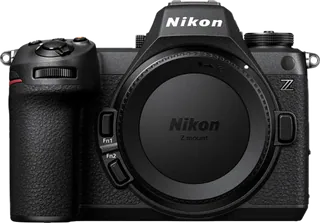
A fast all-rounder with a partly stacked 24.5 MP sensor: 20 fps raw bursts, 6K raw video, a bright 5.76-million-dot viewfinder and weather sealing.
-
Z8 · Nikon
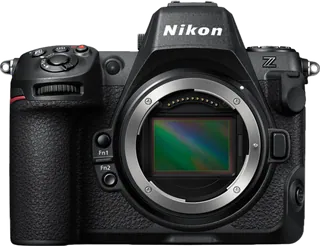
A 45.7 MP pro body with a stacked sensor, no mechanical shutter, 8K video and 20 fps raw bursts. Heavy (910 g) and its battery life is modest for the class.
-
X-M5 · Fujifilm
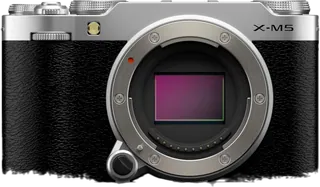
Fujifilm's smallest and cheapest X-mount body, aimed at vloggers and travelers, with film simulations and 6.2K video. No viewfinder, no IBIS and no weather sealing.
-
X-T30 III · Fujifilm
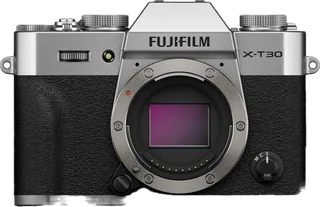
A compact dial-driven APS-C body with a viewfinder, film simulation dial and 6.2K video. No IBIS, no headphone jack and a small battery.
-
X-S20 · Fujifilm
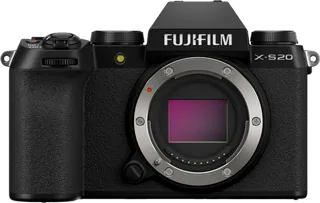
A hybrid APS-C body with a deep grip, 7-stop IBIS, a flip-out screen and the longest battery life here (750 shots). Uses a standard mode dial rather than Fujifilm's classic dials.
-
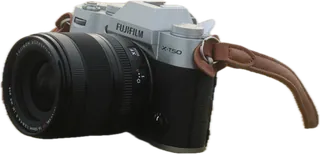
X-T50 · Fujifilm
The 40 MP X-T5 sensor and IBIS in a smaller, lighter body with a film simulation dial. Small battery, one card slot and no weather sealing.
-
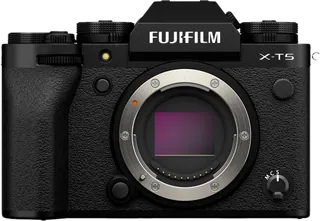
X-T5 · Fujifilm
Fujifilm's photographer-first flagship: 40 MP, classic shutter speed and ISO dials, 7-stop IBIS, dual SD slots and weather sealing. Tilting rather than flip-out screen.
-
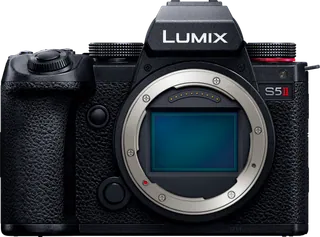
Lumix S5II · Panasonic
A video-strong full-frame L-Mount body with phase-detect autofocus, 6K video, unlimited recording and a cooling fan. Bursts are modest with the mechanical shutter.
-
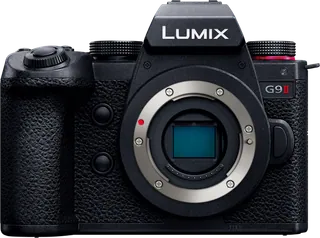
Lumix G9II · Panasonic
A Micro Four Thirds flagship for wildlife and action: 75 fps electronic bursts, 8-stop IBIS and 4K 120p, with small, light telephoto lenses. Smaller sensor means more noise in low light.
-
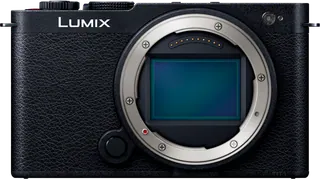
Lumix S9 · Panasonic
A tiny full-frame body for creators, with IBIS and 6K video in a rangefinder shape. No viewfinder, no mechanical shutter, one card slot and no sealing; the body-only version was out of stock at Panasonic (Oct 2026).
-
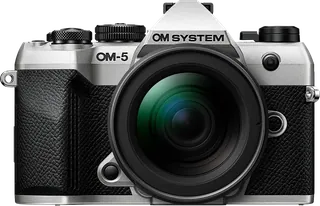
OM-5 Mark II · OM System
A small, IP53-sealed Micro Four Thirds body for hikers and travelers, with 7.5-stop IBIS and computational modes such as Live ND. Older 20 MP sensor and 4K 30p only.
-
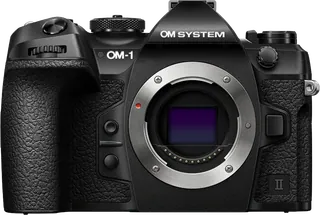
OM-1 Mark II · OM System
A Micro Four Thirds pro body built for birds and wildlife: 120 fps bursts, 8.5-stop IBIS, IP53 sealing and compact long lenses. Low-light quality trails full frame.
Suggest a change
Related comparisons
-
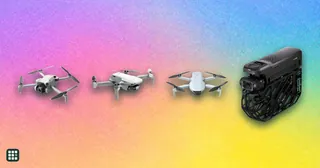 Sub-250g camera drones
Camera drones under 250 grams are the easiest way for a hobbyist to start flying. In the US, a drone under 250 g flown for fun needs no FAA registration, and most fold small enough for a jacket pocket. This grid compares 17 of them, from DJI Mini, Flip and Neo to Potensic ATOM, Holy Stone, HOVERAir self-flying cameras, the Antigravity A1 360 drone and the retired Autel EVO Nano+, on camera quality, flight time, obstacle sensing, range, how you control them and, since the FCC's December 2025 Covered List change, whether you can still buy them new in the US. The trade-off is simple: the lightest drones fly shorter and handle wind worse, and the best cameras are the hardest to buy.
-
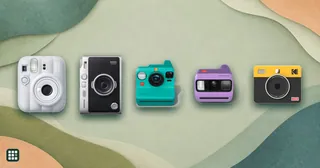 Instant cameras
Compare analog instant cameras and digital hybrids from Fujifilm instax, Polaroid and Kodak by print format (mini, square, wide, i-Type), ongoing film cost, creative controls, battery and camera price. Analog models expose a frame each time you press the shutter; hybrids let you choose which digital images to print.
-
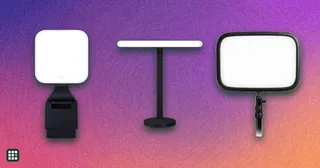 Video-call lights
Compare lights for video calls and desk streaming, from compact laptop clips and monitor light bars to desk-clamp key lights and small ring lights. The grid focuses on the light quality, mounting, power, and controls that affect a real webcam setup.
-
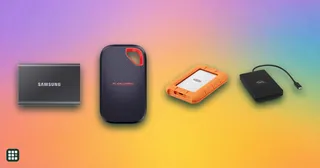 External SSDs
Portable external SSDs compared at 2 TB: Samsung T7 and T9, SanDisk Extreme, WD, Crucial, Kingston, LaCie, Seagate, Lexar, Sabrent and Thunderbolt/USB4 drives. Headline speeds depend on your port, so the real differences are sustained write speed on big copies, ruggedness, hardware encryption, and how long the warranty lasts.
-
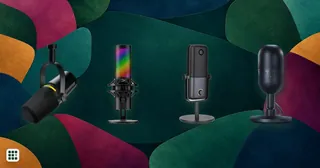 USB microphones
 compared for calls, streaming, podcasting and voiceover: Shure, RØDE, Audio-Technica, Logitech G (Yeti), HyperX, Elgato, Razer and budget picks, including hybrid USB and XLR models. The choice comes down to dynamic or condenser for your room, the pickup patterns you need, monitoring and on-mic controls, and whether you want an XLR output to grow into later.
-
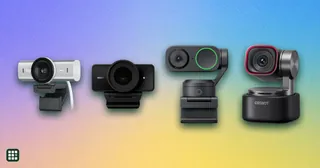 Webcams
A webcam is the camera on your calls and streams. The choice is how sharp the picture stays in ordinary room light, whether it follows you, and whether the built-in microphones are enough.