



Migraine treatments
Compare migraine treatments sold in the US: over-the-counter pain relievers, triptans, newer gepants, CGRP antibody injections, Botox, older preventive pills, and FDA-cleared nerve-stimulation devices. The main choices are whether you need to stop attacks, prevent them, or both; how you can take the treatment; what your heart health and other conditions allow; and what it will cost with your coverage.
Last updated
How to choose
This grid summarizes FDA labels and makers' information. It is not medical advice: a clinician should confirm the diagnosis and help choose, especially for frequent, changing, or unusual headaches.
1. Decide whether you need acute treatment, prevention, or both
- Acute treatments are taken when an attack starts. Most work best taken early, while pain is still mild.
- Preventive treatments are taken on a schedule to cut the number of attacks. Guidelines generally suggest considering prevention when attacks are frequent or disabling, or when acute medicines are needed on many days a month.
- Some newer options, such as Nurtec ODT, are approved for both.
2. Rule out what your health does not allow
- Triptans, ergots like DHE, and Symbravo are not for people with heart disease, past stroke, or uncontrolled high blood pressure. Gepants, CGRP antibodies, and devices are the usual alternatives.
- Check the pregnancy warnings if you are pregnant or could become pregnant. Topiramate, for example, carries a birth-defect warning.
- Tell your clinician about every other medicine you take, since several of these interact with common drugs.
3. Match the form to your attacks
If nausea or vomiting makes pills hard to keep down, look at nasal sprays, orally disintegrating tablets, injections, or devices. Preventives range from a daily pill to a monthly self-injection, a quarterly infusion, or injections at a clinic every 12 weeks.
4. Read trial results carefully
The trial result column shows how each treatment did against placebo in its own main study. Trials enrolled different people with different endpoints, so use it as a rough guide, not a ranking. Many people need to try more than one treatment, and a preventive usually needs two to three months to judge.
5. Work out the real cost
- Generics such as sumatriptan, rizatriptan, topiramate, and propranolol usually cost little, and insurers often require you to try them first.
- Brand-name drugs often need prior authorization. Makers' savings programs can lower the copay for people with commercial insurance, but usually not for Medicare or Medicaid.
- Devices may be bought outright or prescribed; check whether yours needs a prescription and what refills or subscriptions cost.
6. Avoid medication overuse
Taking acute pain medicines on too many days a month can make headaches more frequent. If you are reaching for them often, ask about prevention.
Answer
Browse the table. Filter to what matters.
Use the filters below, then sign in if you want to shortlist and decide with friends.
Sign in to vote, hide products and features, and reorder.
Verified: hover a cell and click its green dot for the source Estimate: no cited source Not stated: the maker doesn't publish it
| Feature | ⠿ | ⠿ | ⠿ | ⠿ | ⠿ | ⠿ | ⠿ | ⠿ | ⠿ | ⠿ | ⠿ | ⠿ | ⠿ | ⠿ | ⠿ | ⠿ | ⠿ | ⠿ | ⠿ | ⠿ | ⠿ | ⠿ |
|---|---|---|---|---|---|---|---|---|---|---|---|---|---|---|---|---|---|---|---|---|---|---|
|
⠿
Price
|
$1,075.29
|
$1,189.65
|
$741.69
|
|||||||||||||||||||
|
⠿
Package size
|
24 caplets
|
80 capsules
|
30 x 50 mg tablets
|
30 x 10 mg tablets
|
8 tablets
|
6 nasal sprays
|
1 prefilled pen (120 mg, one month)
|
100 mg vial (one dose every 3 months)
|
30 x 50 mg tablets
|
30 x 80 mg tablets
|
1 device
|
18-treatment refill
|
1 device
|
|||||||||
|
⠿
Use
|
||||||||||||||||||||||
|
⠿
Treatment type
|
||||||||||||||||||||||
|
⠿
Prescription required
|
||||||||||||||||||||||
|
⠿
Form
|
||||||||||||||||||||||
|
⠿
Self administered
|
|
|||||||||||||||||||||
|
⠿
Dosing schedule
|
||||||||||||||||||||||
|
⠿
Approved ages
|
||||||||||||||||||||||
|
⠿
FDA status
|
||||||||||||||||||||||
|
⠿
Generic available
|
|
|
|
|
|
|
|
|
|
|
|
|
Doesn't apply
|
Doesn't apply
|
Doesn't apply
|
Doesn't apply
|
||||||
|
⠿
Savings program
|
Pay as little as $15 with commercial insurance
|
None (generic)
|
None listed; HSA/FSA eligible
|
None listed; cash purchase option
|
||||||||||||||||||
|
⠿
Key trial result
|
28-32% pain-free at 2 h (100-200 mg) vs 15% placebo
|
-3.7 vs -1.8 monthly migraine days (placebo), episodic, 140 mg
|
-3.7 vs -2.2 monthly migraine days (placebo), episodic, monthly dose
|
-4.7 vs -2.8 monthly migraine days (placebo), episodic
|
-3.9 vs -3.2 monthly migraine days (placebo), episodic, 100 mg
|
-4.2 vs -2.5 monthly migraine days (60 mg, episodic); -6.9 vs -5.1 (chronic)
|
||||||||||||||||
|
⠿
Common side effects
|
||||||||||||||||||||||
|
⠿
Heart disease restriction
|
||||||||||||||||||||||
|
⠿
Key warning
|











Why these features matter
-
Price ($)
Without insurance, brand-name migraine drugs often cost hundreds of dollars a month, while generics can cost a few dollars. Check your plan, and the maker's savings program, before deciding.
-
Package size
Packages cover very different numbers of doses or days, so compare cost per month of treatment, not only the price.
-
Use
Acute treatments stop an attack; preventives cut how often attacks happen. Many people with frequent migraine need one of each, and some newer drugs do both.
-
Treatment type
Classes work in different ways and have different safety limits. If one triptan fails, another may work; if triptans are unsuitable, a gepant is the usual next step.
-
Prescription required
Over-the-counter products can be bought today; prescription options need a visit, and usually insurance approval, first.
-
Form
Nausea or vomiting during attacks can make pills hard to use; nasal sprays, melts, injections and devices avoid swallowing.
-
Self administered
Clinic-given treatments mean appointments every one to three months; at-home ones fit around your schedule.
-
Dosing schedule
Shows the routine you are signing up for, from a pill only when attacks hit to a shot once a month or a quarter.
-
Approved ages
Many newer migraine medicines are approved only for adults; teenagers and children have fewer labeled choices.
-
FDA status
Approval means the FDA reviewed evidence for migraine; off-label generics can still be guideline-recommended and much cheaper. Device clearance is a lighter review than drug approval.
-
Generic available
Generics usually cost a fraction of the brand price and are easier to get covered.
-
Savings program
Copay cards can cut brand-name costs sharply for people with commercial insurance; they usually exclude Medicare and Medicaid.
-
Key trial result
Gives a sense of how often the treatment works compared with placebo in its main study. Different trials enrolled different people, so treat cross-option comparisons as rough.
-
Common side effects
Side effects are a common reason people stop a treatment; check which ones you could live with.
-
Heart disease restriction
Triptans and ergots narrow blood vessels, so they are off-limits for people with heart disease or a history of stroke; gepants, CGRP antibodies and most devices are options for them. Check every label for other heart-rhythm cautions.
-
Key warning
Some warnings rule a treatment out for you, such as needing to drive soon after a dose or planning a pregnancy.
About the products
-
Excedrin Migraine · Haleon
Over-the-counter caplet combining acetaminophen, aspirin and caffeine for adults with diagnosed migraine who want a cheap first option without a prescription. Limited to 2 caplets a day; the aspirin brings stomach-bleeding risk, and it is not for people under 18 without a doctor's advice.
-
Advil Migraine · Haleon
Over-the-counter solubilized ibuprofen 200 mg liquid-filled capsule for adults with diagnosed migraine; no caffeine or acetaminophen. Limited to 2 capsules a day, and like other NSAIDs it carries stomach-bleeding and heart attack/stroke warnings.
-
Sumatriptan (Imitrex) · GSK
The original triptan, prescription-only, and widely available as a cheap generic in tablets, nasal spray and self-injection. Suits adults with migraine who have no heart or stroke history; not for people with coronary disease, past stroke, or uncontrolled high blood pressure.
-
Rizatriptan (Maxalt) · Organon
A fast-acting prescription triptan available as a regular or dissolve-on-tongue tablet, with cheap generics; one of the few triptans approved for children 6 and up. Not for people with heart disease or past stroke, and people taking propranolol need the lower 5 mg dose.
-
Symbravo · Axsome Therapeutics
Prescription tablet that combines the NSAID meloxicam with the triptan rizatriptan to treat a migraine attack in adults, and can be taken when pain is still mild or later in an attack. It carries NSAID boxed warnings for heart attack, stroke and stomach bleeding, and is not for people with heart disease, past stroke or uncontrolled blood pressure. Limited to one tablet in 24 hours.
-
Nurtec ODT · Pfizer
Rimegepant tablet that dissolves on or under the tongue, approved both to treat attacks as needed and, taken every other day, to prevent episodic migraine. Unlike triptans it is not restricted for people with heart disease, though it can raise blood pressure. Limited to one tablet in 24 hours.
-
Ubrelvy · AbbVie
Ubrogepant swallowed tablet for treating migraine attacks in adults, with a second dose allowed after 2 hours if needed. It is not restricted for heart disease like triptans, but it interacts with many drugs that affect the CYP3A4 liver enzyme and is not for prevention.
-
Zavzpret · Pfizer
Zavegepant nasal spray for treating migraine attacks in adults, an option when nausea makes swallowing pills hard. One spray per day at most; an altered or bad taste is the most common side effect, and it is not for prevention.
-
Reyvow · Eli Lilly · No longer sold Aug 2026
Lasmiditan tablet for treating a migraine attack. It does not narrow blood vessels, so it was an option for people who cannot take triptans, but you could not drive for at least 8 hours after a dose. Lilly stopped selling it and the FDA withdrew its approval in August 2026, so it is no longer available in the US.
-
Trudhesa · Impel Pharmaceuticals
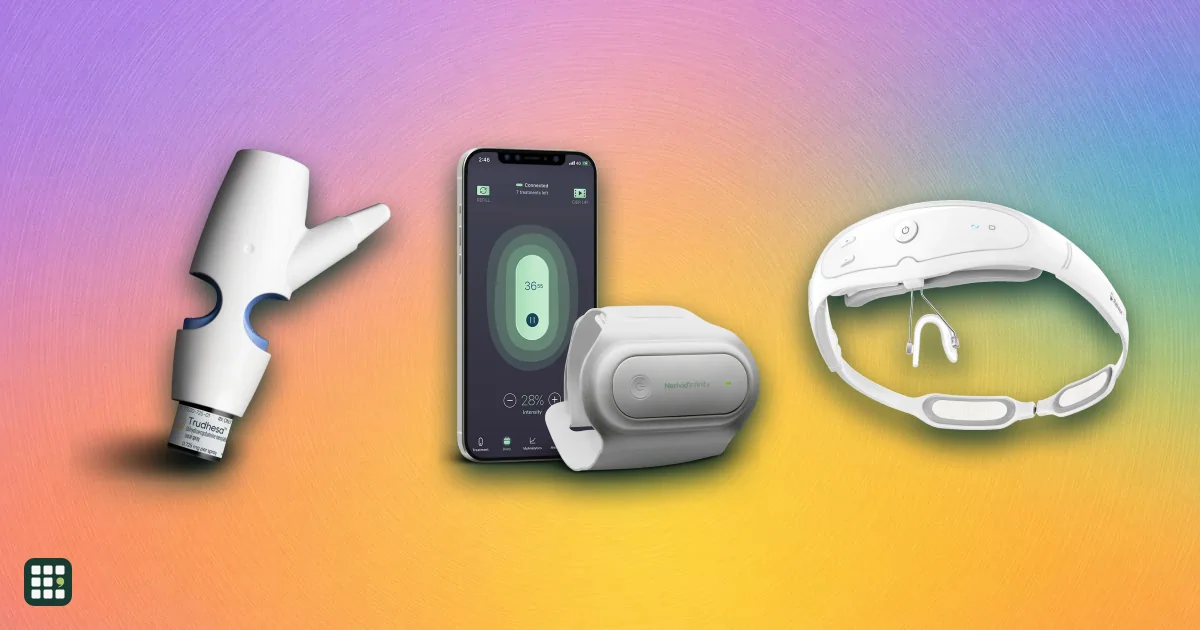
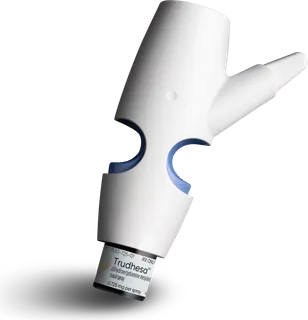
Dihydroergotamine (DHE) nasal spray that uses a single-use device to spray the dose high in the nose, for treating an attack, including later in an attack. Not for people with heart or blood-vessel disease, and dangerous with some antibiotics, antifungals, and HIV drugs. Sold only by mail through the Trudhesa Direct pharmacies, not at retail pharmacies.
-
Aimovig · Amgen
A once-monthly self-injected preventive for adults with episodic or chronic migraine. Unlike the other CGRP antibodies it blocks the CGRP receptor rather than the CGRP molecule. The label warns of serious constipation and new or worsening high blood pressure.
-
Ajovy · Teva Pharmaceuticals
A self-injected preventive that can be taken monthly or as three injections every 3 months. It is the only CGRP antibody here also approved for children 6 to 17 with episodic migraine who weigh at least 45 kg. The label warns of serious constipation and high blood pressure.
-
Emgality · Eli Lilly
A once-monthly self-injected preventive for adults that starts with a double loading dose. It is the only one of these antibodies also approved for episodic cluster headache. The label warns of serious constipation and high blood pressure.
-
Vyepti · Lundbeck
A preventive given as a 30-minute IV infusion every 3 months at an infusion center, doctor's office or sometimes at home, so there are no self-injections. It suits adults who prefer four treatments a year, but infusion visits and fees add to the cost.
-
Qulipta · AbbVie
Once-daily tablet (atogepant) to prevent migraine in adults with episodic or chronic migraine. It is an oral option for people who would rather not inject a CGRP antibody. Common side effects are nausea and constipation, it can raise blood pressure, and the dose must be adjusted with many interacting drugs and in severe kidney disease.
-
Botox for chronic migraine · AbbVie
A doctor gives 31 small injections around the head and neck every 12 weeks to prevent headaches in adults with chronic migraine (15 or more headache days a month). It is not approved for episodic migraine. Full effect can take up to 24 weeks, and the list price covers only the drug, not the office visit.
-
Topiramate (Topamax) · Janssen Pharmaceuticals
A daily anticonvulsant pill taken to prevent migraine attacks, FDA-approved for ages 12 and up and sold as a cheap generic. It is started low and raised over about four weeks. Tingling, appetite and weight loss, and memory or word-finding problems are common, and it can cause birth defects, so people who could become pregnant need to discuss contraception.
-
Propranolol · Par Health
An inexpensive generic beta blocker taken daily to prevent migraines; tablets and long-acting capsules (Inderal LA and generics) carry an FDA migraine-prevention indication. It does not treat an attack once started. It is not for people with asthma, a slow heart rate, or heart block, can cause tiredness and vivid dreams, and must be tapered rather than stopped suddenly.
-
Cefaly · CEFALY Technology
Over-the-counter forehead device that stimulates the trigeminal nerve, with a 60-minute mode for attacks and a 20-minute daily mode for prevention. Suits adults who want a drug-free option without a prescription. It costs $509 up front, plus replacement electrodes, and it is not covered by commercial insurance. You must lie still during sessions and should not drive for an hour afterwards.
-
Nerivio · Theranica
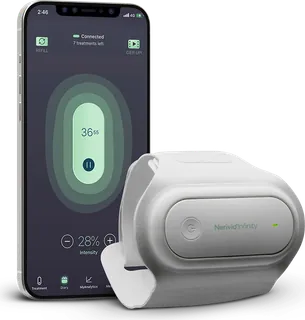
Prescription armband worn on the upper arm and controlled by a phone app. It is used for 45 minutes at the start of an attack, or every other day for prevention. It is cleared from age 8, the youngest of any device here. Each unit or refill gives 18 treatments, and it has not been evaluated in people with heart failure or severe cardiac disease.
-
gammaCore · electroCore
Prescription handheld vagus-nerve stimulator held against the side of the neck for 2-minute stimulations. It is used at the start of an attack, or twice daily for prevention. It is cleared from age 12 and also covers cluster headache. It has not been evaluated in people with uncontrolled blood pressure, heart rhythm problems, or carotid artery disease. It is ordered through electroCore with a prescription form, and no cash price is published.
-
Relivion MG · Neurolief
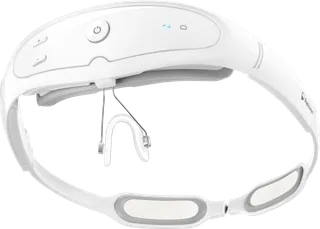
Prescription headset that stimulates the occipital and trigeminal nerves together during an attack. It is cleared for acute use only, in adults. Sessions run 20 to 60 minutes and need the phone app. It starts with a $200 60-day therapy program, then purchase from $900 cash. Insurance coverage is limited, mainly the VA.
Suggest a change
Related comparisons
-
 Pain relievers
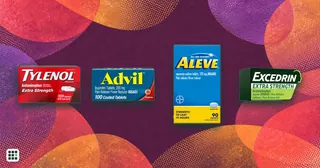
Compare common OTC pain relievers, from acetaminophen (Tylenol), ibuprofen (Advil, Motrin), naproxen (Aleve) and aspirin (Bayer) to the Excedrin combination, diclofenac gel and a lidocaine patch. See onset, dosing interval, daily maximum, age limits and who should avoid each one (stomach, liver, kidney, blood thinners, pregnancy). Acetaminophen is not an anti-inflammatory; the NSAIDs are.
-
 Smoking cessation aids
Compare three nicotine replacement forms and two prescription medicines by label directions, treatment length, and selected cautions. The right strength and plan depend on smoking history and health conditions; use the exact package directions or prescriber instructions.
-
 Dry mouth products (xylitol lozenges, sprays, rinses)
Dry mouth (xerostomia) can come from medications, medical conditions, aging or sleeping with your mouth open, and it makes the mouth sticky, uncomfortable and more prone to cavities and bad breath. This grid compares 14 over-the-counter dry mouth products you can buy in the US: rinses, sprays, gels, xylitol lozenges and mints, gum and adhering discs. The real choice is how you want to use it (at home, on the go, or overnight), how long it lasts, whether it has fluoride or xylitol, and what it costs per package.
-
 Acid reflux treatments
Compare common OTC options for heartburn by cost per tablet, label use, daily routine, course limits, and selected warnings. Calcium carbonate is an antacid used as symptoms occur; famotidine is an H2 acid reducer; OTC proton pump inhibitors are labeled for frequent heartburn and may take 1 to 4 days for full effect. These labels do not replace a clinician's assessment of persistent or severe symptoms.
-
 Topical minoxidil products
Compare OTC topical minoxidil foams, liquids, and Sons UK spray: strength, dose, propylene glycol, and per-container and per-100 mL pricing in USD or GBP.
-
 Heating pads
Electric heating pads from Sunbeam, Pure Enrichment, Thermophore, Comfytemp, RENPHO and Sharper Image, compared on size and shape, how hot they get, the shutoff timer, moist heat, weight, cordless running, washing, warranty and price. The choice runs from $26 basic pads to weighted, massaging, far-infrared and automatic moist-heat models.