



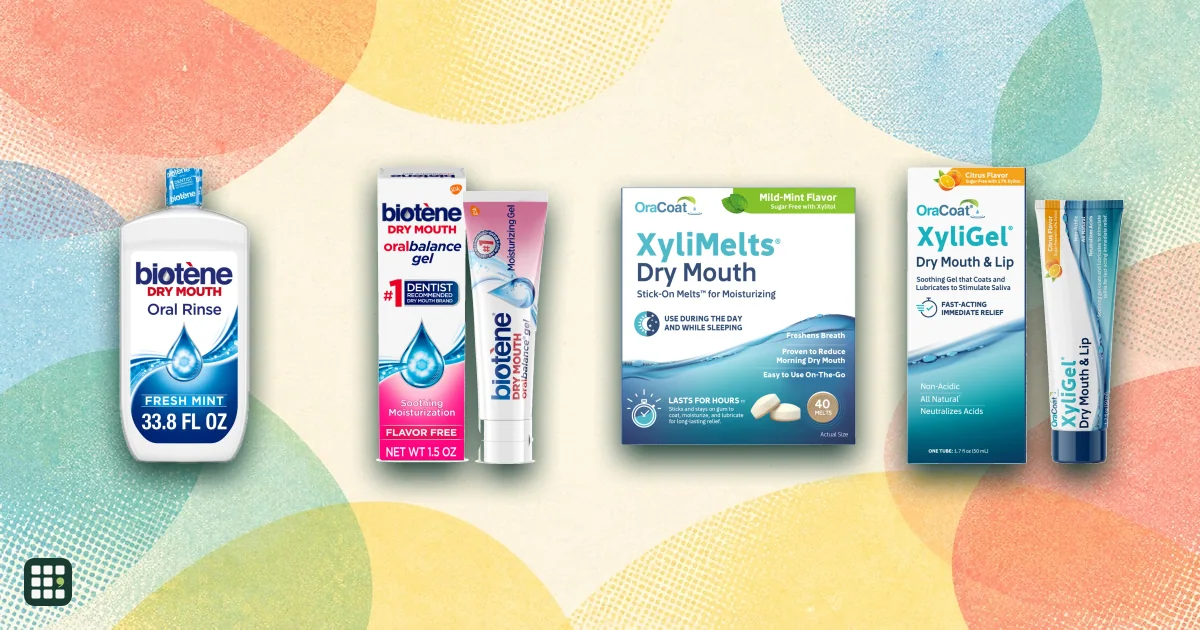
Dry mouth products (xylitol lozenges, sprays, rinses)
Dry mouth (xerostomia) can come from medications, medical conditions, aging or sleeping with your mouth open, and it makes the mouth sticky, uncomfortable and more prone to cavities and bad breath. This grid compares 14 over-the-counter dry mouth products you can buy in the US: rinses, sprays, gels, xylitol lozenges and mints, gum and adhering discs. The real choice is how you want to use it (at home, on the go, or overnight), how long it lasts, whether it has fluoride or xylitol, and what it costs per package.
Last updated
How to choose
Start with when your mouth feels driest. Dry mouth products fall into a few jobs, and many people combine two.
Match the form to the moment
- Rinses (Biotène, ACT, TheraBreath, SmartMouth) fit a morning and evening routine at home. They are spat out, so relief does not last as long as a gel or disc.
- Sprays, lozenges, mints and gum are the on-the-go options. They are quick to use at a desk or in the car; lozenges and gum with xylitol also stimulate saliva, which a rinse or gel does not do.
- Gels and adhering discs (Biotène Oralbalance, XyliGel, XyliMelts) stay in the mouth longer, and their makers say they can be used while sleeping. Do not assume a lozenge or a piece of gum is meant to be left in the mouth overnight.
Check the ingredients that matter to you
- Fluoride: with less saliva your cavity risk goes up, but only ACT Dry Mouth Mouthwash here contains fluoride. Keep brushing with a fluoride toothpaste either way.
- Xylitol: most products here contain it; SmartMouth Dry Mouth Activated Mouthwash does not. Xylitol is poisonous to dogs, so keep these products away from pets.
- Artificial sweeteners: sucralose, saccharin, aspartame and acesulfame show up in several lozenges, mints, sprays and the ACT gum; Biotène rinse and gel, TheraBreath, and the OraCoat products list none.
- Alcohol: every product here is alcohol-free or lists none, which matters because alcohol can sting a dry mouth.
Compare real cost
Prices are for different sizes. A 33.8 fl oz rinse and a 36-count box of lozenges are used up at different speeds, so look at the package size and how often you will need it. Prices change, so confirm at the store.
Know the limits
These products relieve the feeling of dryness; they do not treat what causes it. Durations here are maker claims. If dryness is constant, wakes you at night, causes sores or trouble swallowing, or began with a new medication, talk to your dentist or doctor. Read the label for age limits; most products say to ask a professional before giving them to young children.
Answer
Browse the table. Filter to what matters.
Use the filters below, then sign in if you want to shortlist and decide with friends.
Sign in to vote, hide products and features, and reorder.
Verified: hover a cell and click its green dot for the source Estimate: no cited source Not stated: the maker doesn't publish it
| Feature | ⠿ | ⠿ | ⠿ | ⠿ | ⠿ | ⠿ | ⠿ | ⠿ | ⠿ | ⠿ | ⠿ | ⠿ | ⠿ | ⠿ |
|---|---|---|---|---|---|---|---|---|---|---|---|---|---|---|
|
⠿
Price
|
||||||||||||||
|
⠿
Package size
|
||||||||||||||
|
⠿
Form
|
||||||||||||||
|
⠿
Relief duration
|
||||||||||||||
|
⠿
Safe for sleeping
|
|
|
|
|
||||||||||
|
⠿
Xylitol
|
||||||||||||||
|
⠿
Sugar free
|
|
|
|
|
||||||||||
|
⠿
Alcohol free
|
|
|
|
|
|
|||||||||
|
⠿
Fluoride
|
||||||||||||||
|
⠿
Artificial sweeteners
|
||||||||||||||
|
⠿
ADA Seal
|
|
|
|
|
|
|
|
|
|
|
|
|
|
|
|
⠿
Key ingredients
|
||||||||||||||
|
⠿
Flavor
|
||||||||||||||
|
⠿
Minimum age
|
||||||||||||||
|
⠿
How to use
|
Why these features matter
-
Price ($)
Dry mouth products are used all day, so cost adds up; but a rinse bottle, a gel tube and a box of lozenges last very different lengths of time, so check the package size before calling one cheaper.
-
Package size
Tells you how long a purchase lasts and how portable it is: a 33.8 fl oz rinse lasts weeks at home, a 1.5 fl oz spray fits a pocket.
-
Form
The form decides when and where you can use it: rinses suit a home routine, sprays and lozenges work on the go, and gels and adhering discs stay in the mouth longer.
-
Relief duration (hr)
A longer-lasting product means fewer reapplications, which matters most at night and when you cannot stop to rinse or spray. These are maker claims, not independent tests.
-
Safe for sleeping
Saliva flow is lowest at night, so many people wake up with a very dry mouth. Only some products are made to stay in the mouth overnight; do not assume a lozenge or gum is meant for sleep.
-
Xylitol
Xylitol is a sweetener that makers use to stimulate saliva and that does not feed cavity-causing bacteria. It is toxic to dogs, so keep products away from pets.
-
Sugar free
Dry mouth raises cavity risk, so a product that you keep in your mouth for a long time should not feed decay-causing bacteria with sugar.
-
Alcohol free
Alcohol can sting and dry the mouth further, so most dry mouth products avoid it.
-
Fluoride
Less saliva means a higher cavity risk, so fluoride matters. Most dry mouth products contain none, so you may still need a fluoride toothpaste or rinse.
-
Artificial sweeteners
Some buyers avoid sucralose, saccharin or aspartame; it also affects taste, since these products are sweetened to be tolerable.
-
ADA Seal
The ADA Seal means the ADA reviewed the product for safety and the benefit it claims. Few dry mouth products have been submitted.
-
Key ingredients
Ingredients tell you the approach: glycerin and gums coat and lubricate, xylitol and enzymes target saliva, zinc targets breath. Check them for anything you avoid.
-
Flavor
Taste decides whether you actually keep using it; unflavored gel suits people sensitive to mint.
-
Minimum age (years)
Matters for a child with dry mouth, or when you share products with family; most labels say to ask a healthcare professional for younger children.
-
How to use
Shows how much effort the routine takes and how often you must reapply.
About the products
-
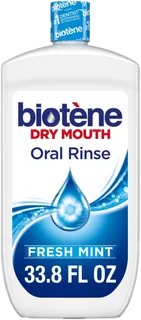
Biotène Dry Mouth Oral Rinse · Biotène
Alcohol-free, sugar-free rinse with the ADA Seal of Acceptance; the best-known drugstore dry mouth rinse. Contains no fluoride, so it does not replace an anticavity rinse.
-
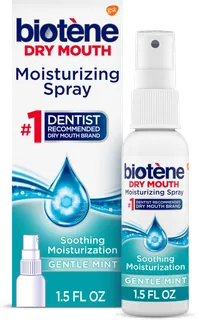
Biotène Moisturizing Spray · Biotène
Pocket-size 1.5 fl oz mouth spray for quick relief during the day; alcohol-free and sugar-free, with xylitol and a mild mint flavor.
-
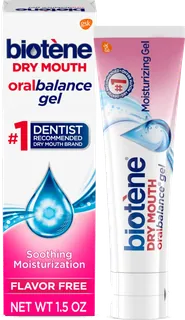
Biotène Oralbalance Moisturizing Gel · Biotène
Flavor-free gel that Biotène describes as its most concentrated formula; the maker says it is suitable for overnight use.
-
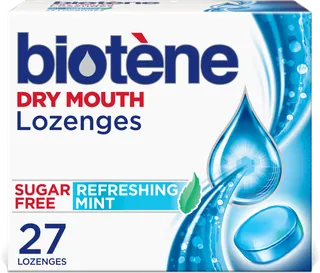
Biotène Dry Mouth Lozenges · Biotène
Xylitol-sweetened mint lozenges for on-the-go use; sugar-free and alcohol-free.
-
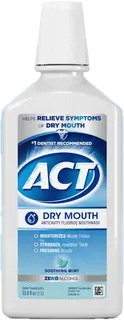
ACT Dry Mouth Mouthwash · ACT
The only rinse here that adds sodium fluoride for cavity protection to its dry mouth moisturizers; alcohol-free, in a large 33.8 fl oz bottle.
-
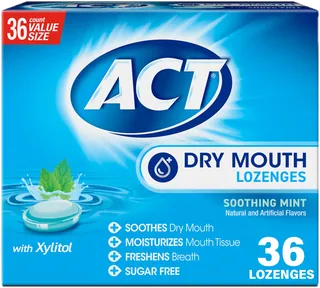
ACT Dry Mouth Lozenges · ACT
Sugar-free, alcohol-free lozenges with xylitol; sold in honey-lemon and soothing mint.
-
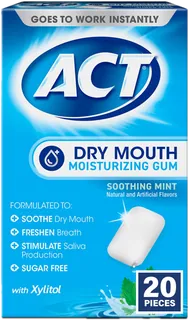
ACT Dry Mouth Gum · ACT
Xylitol chewing gum for people who want to stimulate saliva by chewing; sugar-free, but sweetened partly with aspartame and other sweeteners.
-
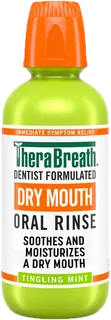
TheraBreath Dry Mouth Oral Rinse · TheraBreath
Alcohol-free rinse made with salivary enzymes and a jambu extract that gives a tingling feel; 30-day money-back guarantee from the maker.
-
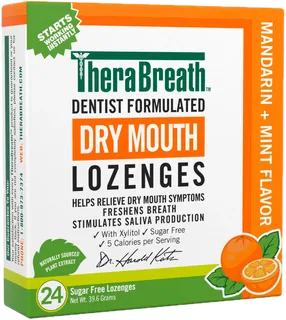
TheraBreath Dry Mouth Lozenges · TheraBreath
Individually wrapped sugar-free lozenges with xylitol and zinc gluconate in mandarin mint or tart berry.
-
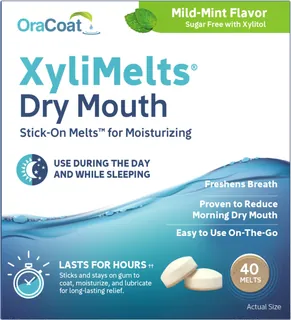
XyliMelts Dry Mouth Stick-On Melts · OraCoat
Adhering discs that stick to a molar or gum and slowly release 550 mg of xylitol; made for use during the day or while sleeping.
-
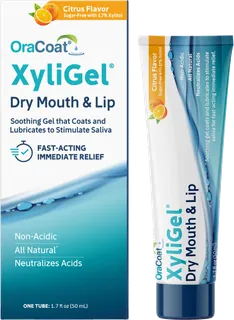
XyliGel Dry Mouth and Lip Soothing Gel · OraCoat
Xylitol gel in a vegetable-oil base, citrus flavored; the maker says to use it while sleeping and in the daytime, and on the lips.
-
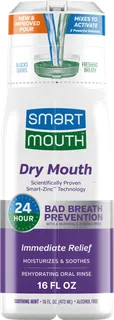
SmartMouth Dry Mouth Activated Mouthwash · SmartMouth
Two-solution rinse that pairs moisturizing gums and glycerin with zinc for breath; unlike most products here it has no xylitol.
-
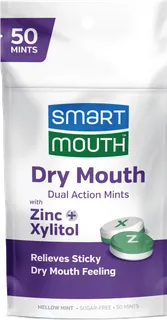
SmartMouth Dry Mouth Dual-Action Mints · SmartMouth
Sugar-free spearmint mints with xylitol and zinc gluconate, a low-cost way to relieve dryness between rinses.
-
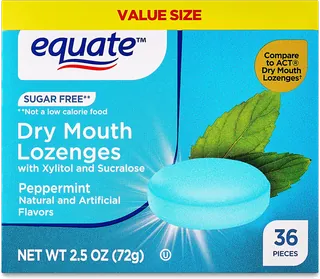
Equate Sugar-Free Dry Mouth Relief Lozenges · Equate
Walmart's store-brand lozenges with xylitol and sucralose; the lowest-priced lozenge here.
Suggest a change
Related comparisons
-
 Topical minoxidil products
Compare OTC topical minoxidil foams, liquids, and Sons UK spray: strength, dose, propylene glycol, and per-container and per-100 mL pricing in USD or GBP.
-
 Smoking cessation aids
Compare three nicotine replacement forms and two prescription medicines by label directions, treatment length, and selected cautions. The right strength and plan depend on smoking history and health conditions; use the exact package directions or prescriber instructions.
-
 Acid reflux treatments
Compare common OTC options for heartburn by cost per tablet, label use, daily routine, course limits, and selected warnings. Calcium carbonate is an antacid used as symptoms occur; famotidine is an H2 acid reducer; OTC proton pump inhibitors are labeled for frequent heartburn and may take 1 to 4 days for full effect. These labels do not replace a clinician's assessment of persistent or severe symptoms.
-
 Migraine treatments
Compare migraine treatments sold in the US: over-the-counter pain relievers, triptans, newer gepants, CGRP antibody injections, Botox, older preventive pills, and FDA-cleared nerve-stimulation devices. The main choices are whether you need to stop attacks, prevent them, or both; how you can take the treatment; what your heart health and other conditions allow; and what it will cost with your coverage.
-
 Pain relievers
Compare common OTC pain relievers, from acetaminophen (Tylenol), ibuprofen (Advil, Motrin), naproxen (Aleve) and aspirin (Bayer) to the Excedrin combination, diclofenac gel and a lidocaine patch. See onset, dosing interval, daily maximum, age limits and who should avoid each one (stomach, liver, kidney, blood thinners, pregnancy). Acetaminophen is not an anti-inflammatory; the NSAIDs are.
-
 Toothpaste tablets and zero-waste oral care
Toothpaste tablets swap the tube for a small dry tablet: you chew one, brush with a wet toothbrush, and it foams into paste. They suit travel, plastic-free routines and people who dislike tubes, but they differ on the things that matter for teeth: some contain fluoride, others use nano-hydroxyapatite; some ship in compostable pouches with a refillable jar; and monthly cost varies a lot. This grid compares the main tablets sold to US buyers with the ingredients, packaging and prices the makers publish.