



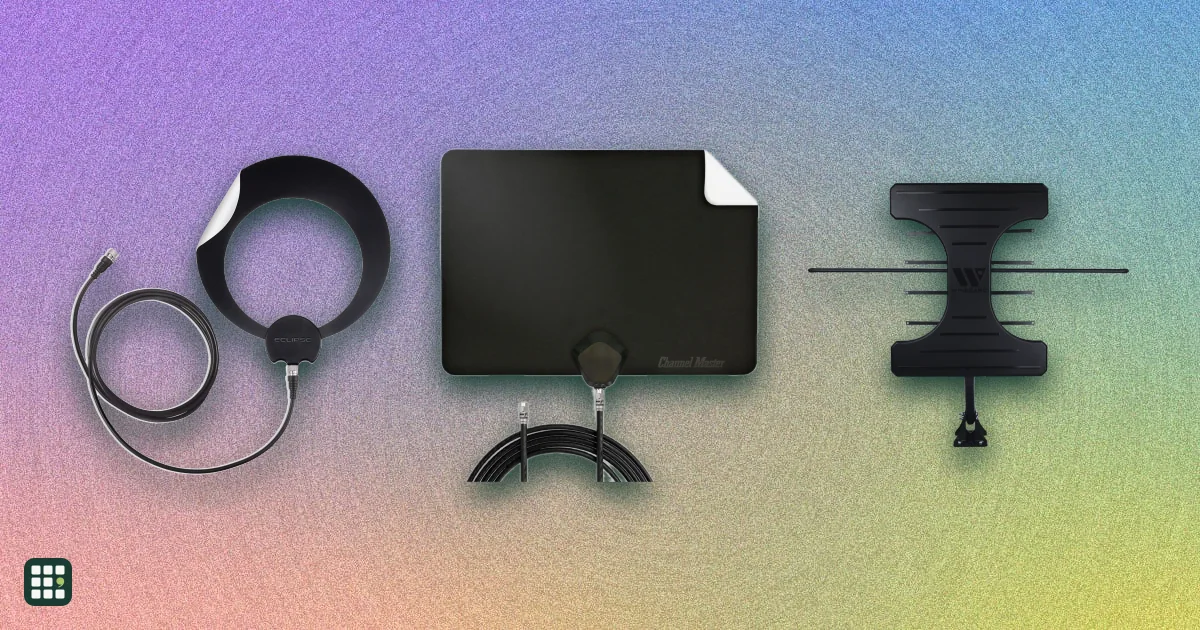
TV antennas
An over-the-air TV antenna gets local broadcast channels (ABC, CBS, NBC, Fox, PBS and more) free, with no subscription. This grid compares indoor flat and tabletop antennas with attic and rooftop models on claimed range, the bands they receive, amplification, size, and what comes in the box. The trade-off is simple: the closer you are to the towers, the smaller and cheaper the antenna can be; far from them, an outdoor directional antenna is worth the installation work.
Last updated
How to choose
1. Start with where you live
Look up your address on the FCC's DTV reception maps or a maker's transmitter locator. Note how far the towers are, which direction they lie in, and each station's real channel (not the number it displays). That tells you the range you need and which bands matter.
2. Check the bands
- UHF (real channels 14-36) carries most stations, and every antenna here receives it.
- VHF-high (channels 7-13) carries major networks in many cities. A UHF-only antenna, such as a bowtie array, will miss them.
- VHF-low (channels 2-6) is rare, and only large outdoor antennas pick it up well.
3. Match range and placement
- Under about 20 miles, towers in one area: a passive flat indoor antenna in a window is usually enough.
- 20-40 miles, or a basement or brick building: an amplified indoor model, or a compact indoor/outdoor antenna in the attic.
- Over 40 miles or behind hills: an outdoor directional antenna on the roof or a mast, aimed at the towers.
Every antenna loses signal through walls, roofs (especially metal or foil-backed insulation), and windows with low-E coatings. Height and a clear line toward the towers matter more than the antenna itself.
4. Decide on an amplifier
An amplifier makes up for cable loss and splitting to several TVs; it does not create signal that isn't there. Close to strong towers it can overload the tuner and lose channels. Models with an on/off switch let you test both ways. Check how it's powered: a TV's USB port may not stay on or supply enough current.
5. Judge the claims
"Range" in miles is a marketing estimate, not a measurement, and makers measure it differently. Compare published element gain (dBi) where it exists, and read the reception pattern: directional antennas reach farther but must be aimed; multi-directional ones are easier but shorter-ranged. "4K" and "NextGen TV ready" labels mean little, since any working antenna receives those signals. You also need a TV or tuner that decodes ATSC 3.0.
6. Count the full cost
- Outdoor antennas may need a mast, a longer coax run, a grounding block, and sometimes a preamp; check what's in the box.
- Renters and HOA members are protected by the FCC's OTARD rule for antennas on property they control, but not on shared roofs.
- Keep the box: after a rescan, if you're missing a network, try another spot before returning it.
Answer
Browse the table. Filter to what matters.
Use the filters below, then sign in if you want to shortlist and decide with friends.
Sign in to vote, hide products and features, and reorder.
Verified: hover a cell and click its green dot for the source Estimate: no cited source Not stated: the maker doesn't publish it
| Feature | ⠿ | ⠿ | ⠿ | ⠿ | ⠿ | ⠿ | ⠿ | ⠿ | ⠿ | ⠿ | ⠿ | ⠿ | ⠿ | ⠿ | ⠿ | ⠿ | ⠿ | ⠿ | ⠿ | ⠿ | ⠿ |
|---|---|---|---|---|---|---|---|---|---|---|---|---|---|---|---|---|---|---|---|---|---|
|
⠿
Price
|
|||||||||||||||||||||
|
⠿
Placement
|
|||||||||||||||||||||
|
⠿
Claimed range
|
|||||||||||||||||||||
|
⠿
Amplified
|
|
|
|||||||||||||||||||
|
⠿
Amplifier gain
|
Doesn't apply
|
Doesn't apply
|
Doesn't apply
|
Doesn't apply
|
Doesn't apply
|
Doesn't apply
|
Doesn't apply
|
Doesn't apply
|
Doesn't apply
|
Doesn't apply
|
Doesn't apply
|
Doesn't apply
|
|||||||||
|
⠿
Amplifier on off switch
|
Doesn't apply
|
Doesn't apply
|
|
|
Doesn't apply
|
Doesn't apply
|
Doesn't apply
|
Doesn't apply
|
Doesn't apply
|
Doesn't apply
|
Doesn't apply
|
Doesn't apply
|
Doesn't apply
|
Doesn't apply
|
|||||||
|
⠿
Amplifier power
|
Doesn't apply
|
Doesn't apply
|
Doesn't apply
|
Doesn't apply
|
Doesn't apply
|
Doesn't apply
|
Doesn't apply
|
Doesn't apply
|
Doesn't apply
|
Doesn't apply
|
Doesn't apply
|
Doesn't apply
|
|||||||||
|
⠿
Bands received
|
|||||||||||||||||||||
|
⠿
Reception pattern
|
Directional (aim at towers)
|
Directional (aim at towers)
|
Directional (aim at towers)
|
||||||||||||||||||
|
⠿
Design
|
Flat panel
|
Loop with VHF arms
|
Loop with VHF arms
|
||||||||||||||||||
|
⠿
Peak UHF gain
|
|||||||||||||||||||||
|
⠿
Largest dimension
|
|||||||||||||||||||||
|
⠿
Weight
|
|||||||||||||||||||||
|
⠿
Coax cable included
|
|||||||||||||||||||||
|
⠿
Mounting hardware
|
|||||||||||||||||||||
|
⠿
Cellular filter
|
|
|
|
|
|
|
|
|
|
|
|
|
|||||||||
|
⠿
Signal indicator
|
|
|
|
|
|
|
|
|
|
|
|
|
|
|
|
|
|
||||
|
⠿
Paintable
|
|
Doesn't apply
|
Doesn't apply
|
Doesn't apply
|
Doesn't apply
|
Doesn't apply
|
Doesn't apply
|
Doesn't apply
|
Doesn't apply
|
Doesn't apply
|
|||||||||||
|
⠿
NextGen TV ready
|
|
|
|||||||||||||||||||
|
⠿
Antenna warranty
|
Why these features matter
-
Price ($)
Antennas run from about $30 to over $150; the cheapest flat indoor models are fine near towers, while extra spend buys range and VHF reception for distant or weak stations.
-
Placement
Indoor antennas are easy but lose signal through walls; attic and outdoor mounts get far more range at the cost of installation work and HOA or landlord rules.
-
Claimed range (mi)
Range claims are marketing estimates under ideal conditions; use them to compare models within one brand, and check a reception map for your address before trusting any number.
-
Amplified
Amplifiers help with long cable runs, splitters to several TVs, and weak stations, but can overload a tuner when towers are close; passive antennas are often better within about 20 miles.
-
Amplifier gain (dB)
More amplifier gain isn't always better: it boosts noise too and can overload a tuner near strong towers. It matters most for long cable runs and splitting to several TVs.
-
Amplifier on off switch
Lets you try both settings and keep whichever brings in more channels; useful because amplification hurts reception near strong towers.
-
Amplifier power
USB power is tidy and can run from the TV, but a TV's USB port may switch off or supply too little; an outdoor preamp needs a power inserter indoors near an outlet.
- USB
- : Runs from the TV's USB port or a phone-style adapter. Some TV ports switch off or are too weak; a wall adapter fixes that.
- Power inserter
- : Sends power up the coax to an amplifier at the antenna, from a small box near the TV that plugs in.
-
Bands received
Most stations broadcast on UHF, but many cities have major networks on VHF-high, and a few on VHF-low; check your local station list and make sure the antenna covers every band you need.
- UHF only
- : Misses stations on VHF channels 2-13. Fine if every station you want is on UHF; check your local list first.
- Receives VHF-high
- : Picks up real channels 7-13, where major networks broadcast in many cities.
- Receives VHF-low
- : Picks up real channels 2-6, which a few stations still use. Only big outdoor antennas do this well.
-
Reception pattern
Directional antennas reach farther but must point at the towers; multi-directional or 360-degree models suit towers in several directions at the cost of range.
- Multi-directional
- : Picks up a wide arc without aiming. Easiest when towers sit in different directions, at some cost in range.
- Directional
- : Reaches farthest but must be pointed at the towers; best when they are all in one direction.
- Omnidirectional
- : Receives all around with no aiming, but has less range than a directional antenna of similar size.
-
Design
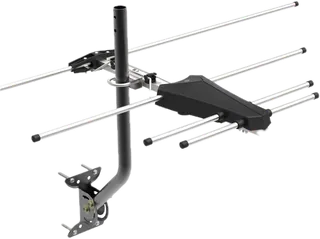
Flat panels hide on a wall or window; loops and bowtie arrays are compact UHF performers; long Yagis reach farthest but need a roof or attic and careful aiming.
- Loop
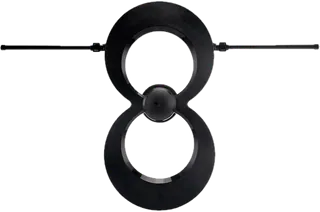
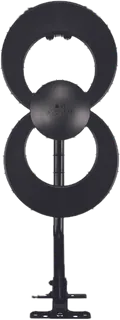
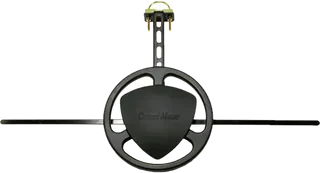
- : ClearStream's loop elements are compact and strong on UHF; models with VHF arms or elements also get channels 7-13.
- Bowtie array
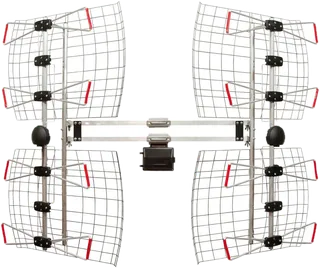
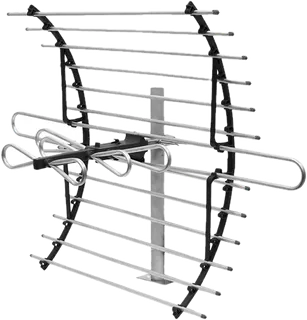
- : Rows of bowtie elements with a reflector give high UHF gain, but are larger to mount.
- Yagi or log periodic
- : Long directional antennas for distant towers; they need a roof, mast or attic and careful aiming.
-
Peak UHF gain (dBi)
Element gain is a more honest measure of reception than claimed range, but few makers publish it, so treat missing figures as unknown rather than low.
-
Largest dimension (in)
Size decides where an antenna fits: small flats sit behind a TV, while long Yagis need roof or attic space and can be awkward to aim.
-
Weight (lb)
Weight matters for wall or window mounting with adhesive and for mast and roof loads outdoors.
-
Coax cable included (ft)
A long enough included cable saves a purchase and lets you place an indoor antenna in a window away from the TV; outdoor installs nearly always need a longer run bought separately.
-
Mounting hardware
Included mounts and masts save a trip to the hardware store; outdoor antennas without a mount need a mast and clamp bought separately.
-
Cellular filter
Cell towers broadcast near the TV band; a built-in filter helps if you live near a cell site and channels break up.
-
Signal indicator
A signal meter makes placement and aiming much faster than rescanning channels on the TV after every move.
-
Paintable
Matters for indoor flat antennas hung on a wall where looks count.
-
NextGen TV ready
NextGen TV (ATSC 3.0) is broadcast on the same channels as today's signals, so any good antenna receives it; you also need a TV or tuner that supports it.
-
Antenna warranty
A lifetime warranty on a flat indoor antenna signals confidence, but amplifiers and cables usually carry much shorter coverage.
About the products
-
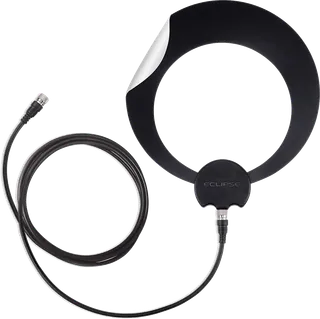
ClearStream Eclipse · Antennas Direct
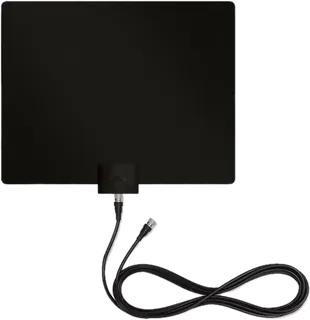
A paper-thin passive loop that sticks to a wall or window, for viewers within about 35 miles of the towers. UHF only, so it can miss networks broadcast on VHF; lifetime antenna warranty.
-
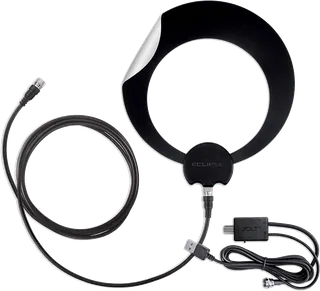
ClearStream Eclipse Amplified · Antennas Direct
The Eclipse loop with an 18 dB USB in-line amplifier you can switch off when towers are close. Still UHF only, so check your station list for VHF channels first.
-
ClearStream Flex · Antennas Direct
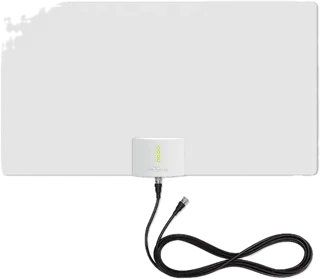
A thin, paintable flat loop with an added VHF-high element and a switchable 18 dB USB amplifier. A good indoor pick when a local network broadcasts on channels 7-13.
-
Mohu Leaf · Antennas Direct
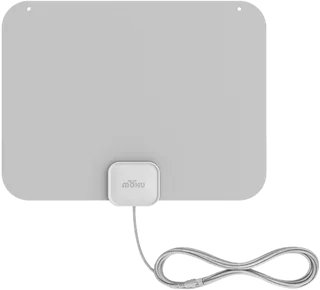
The redesigned original Leaf: a passive, very thin flat antenna for UHF and VHF-high, best near the towers. Budget price, but only a one-year antenna warranty.
-
Mohu Leaf 50 · Antennas Direct
Mohu's long-running flat indoor antenna, now with a switchable 18 dB USB amplifier and FM/cell filtering for suburban viewers. One-year antenna warranty.
-
Mohu Leaf Supreme Pro · Antennas Direct
Mohu's largest flat Leaf, with a 15 dB amplifier at the antenna and LED signal lights that help you find the best spot. Runs on USB power; no wall adapter in the box.
-
Mohu Gateway Plus · Antennas Direct
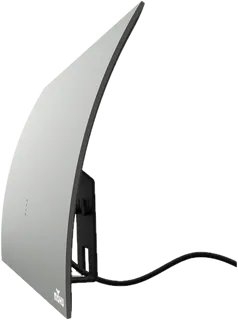
A tabletop antenna on a stand (it can also hang on a wall) for when you can't stick a flat panel to a window. Amplified, with LED signal lights; the USB wall adapter is sold separately.
-
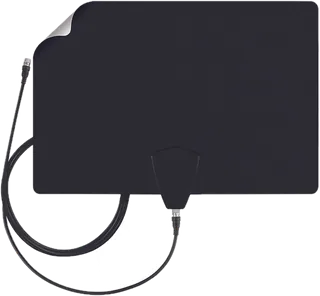
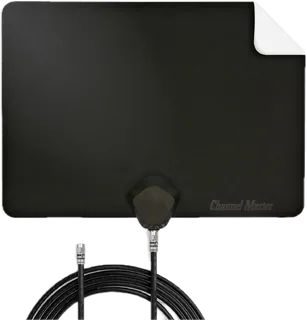
FLATenna 35 · Channel Master
A low-cost, passive two-sided flat antenna for viewers close to the towers. It comes with a 12 ft cable and adhesive strips, and has a one-year warranty.
-
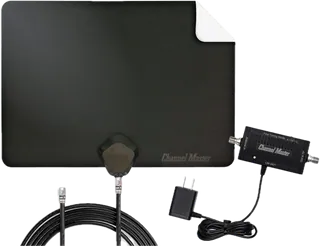
FLATenna with Booster · Channel Master
The FLATenna bundled with a powered amplifier that has LTE and FM filters, for longer cable runs or weaker signals. The amplifier runs from an AC adapter, so it needs an outlet.
-
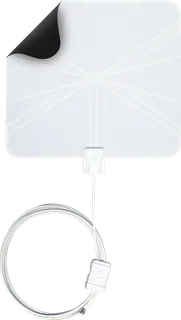
FlatWave Amped · Winegard
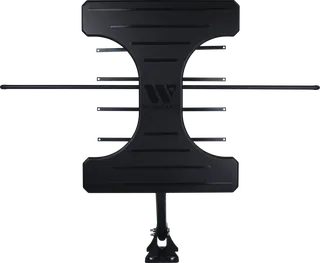
An amplified flat indoor antenna with an extra-long 18.5 ft cable, so you can put it in a distant window. Winegard publishes fewer specs than most, and it has a one-year warranty.
-
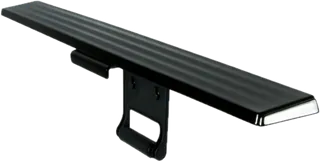
GE UltraPro Hover Bar · Jasco
An amplified bar that sits on top of the TV and swivels to aim, with an LTE/5G filter, for people who don't want an antenna on the wall. Jasco publishes few specs for it.
-
ClearStream MAX-V · Antennas Direct
A compact loop with VHF arms that can mount indoors, in the attic, or outdoors. A middle step between flat indoor antennas and full outdoor models; cable and mast are sold separately.
-
ClearStream 2V · Antennas Direct
A double-loop UHF and VHF-high antenna for roofs and masts, with a 20 in mast and clamp included, for suburban viewers 30-60 miles from towers in a wide arc. No cable included.
-
ClearStream 4MAX · Antennas Direct
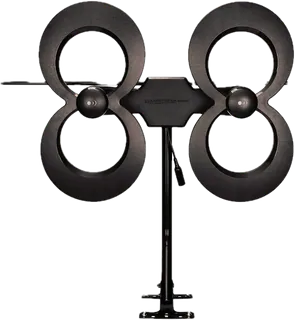
Four loops with VHF arms for strong UHF gain in an attic or on a roof, with a 20 in mast. Bigger than the 2V and pricier, for fringe areas with towers spread around.
-
DB8e · Antennas Direct
An 8-bowtie UHF array with two panels you can aim separately, for long-range UHF in attics or on roofs. It doesn't receive VHF, so pair it with a VHF antenna if a local network needs one.
-
Omni+ 50 · Channel Master
A 360-degree outdoor antenna, so you never have to aim it, with optional VHF elements for channels 2 and up. Omnidirectional designs trade away range for that convenience.
-
Advantage 100 · Channel Master
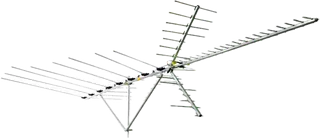
A long-range directional antenna (log periodic) for rural homes up to 100 miles from towers, covering UHF and both VHF bands. It's big (152 in long) and needs a mast and cable bought separately.
-
Elite 7550 · Winegard
A directional bowtie antenna with a built-in 20 dB preamp for outdoor installs far from the towers. Covers UHF and VHF-high; cable is not included.
-
Classic Series Yagi YA7000C · Winegard
A long Yagi with low-band VHF extensions, so it covers channels 2-6 that most antennas miss. Directional and passive; it has a short 90-day warranty.
-
GE Outdoor Yagi · Jasco
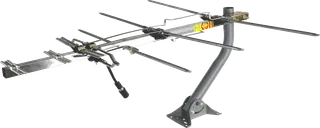
An inexpensive outdoor Yagi with a J-mount, clamp and mast in the box, for roofs or attics up to a claimed 80 miles away. Jasco publishes no dimensions or gain.
-
GE Pro Attic Mount · Jasco
Built for attic installs, with a bracket and mast in the box, for homeowners who want range without a roof antenna. Jasco publishes no size, weight or gain figures.
Suggest a change
Related comparisons
-
 Portable generators
Compare portable gas generators by usable running power, fuel choices, portability, noise and safety features. Small inverter models suit camping and electronics; larger open-frame and dual-fuel models can handle more household loads but are heavier and louder.
-
 Upright freezers
An upright freezer has shelves and a door like a refrigerator, so food is easier to find and rotate than in a chest freezer, and it fits a kitchen, garage or basement corner. The real choices are size against the floor space you have, frost-free versus manual defrost, and whether the unit can handle a garage.
-
 Chest freezers
A chest freezer stores bulk meat, garden produce, and stock-up groceries more efficiently than an upright, because cold air stays in when you open the lid. The real choice is size versus the wall space you have, and whether the unit can hold temperature in a garage.
-
 Power banks
 compared: pocket 10,000 mAh packs, magnetic Qi2 and MagSafe-style batteries, and high-wattage USB-C banks that charge laptops, from Anker, UGREEN, Belkin, Baseus, EcoFlow, INIU and others. The choice comes down to how much usable energy you need, how fast it charges your devices and itself, the ports you use, and how much weight you want to carry.
-
 Portable power stations
Compare portable power stations for camping, RV trips, and emergency backup. The grid covers compact and roughly 2 kWh models from EcoFlow, Jackery, Anker SOLIX, and BLUETTI.
-
 Solar inverters
Compare residential solar inverters by architecture, AC output, PV input, efficiency, panel optimization, battery and backup support, safety, warranty, and installation limits. Inverter sizing and compatibility must be confirmed against the solar modules, service panel, local utility rules, and installer design.