



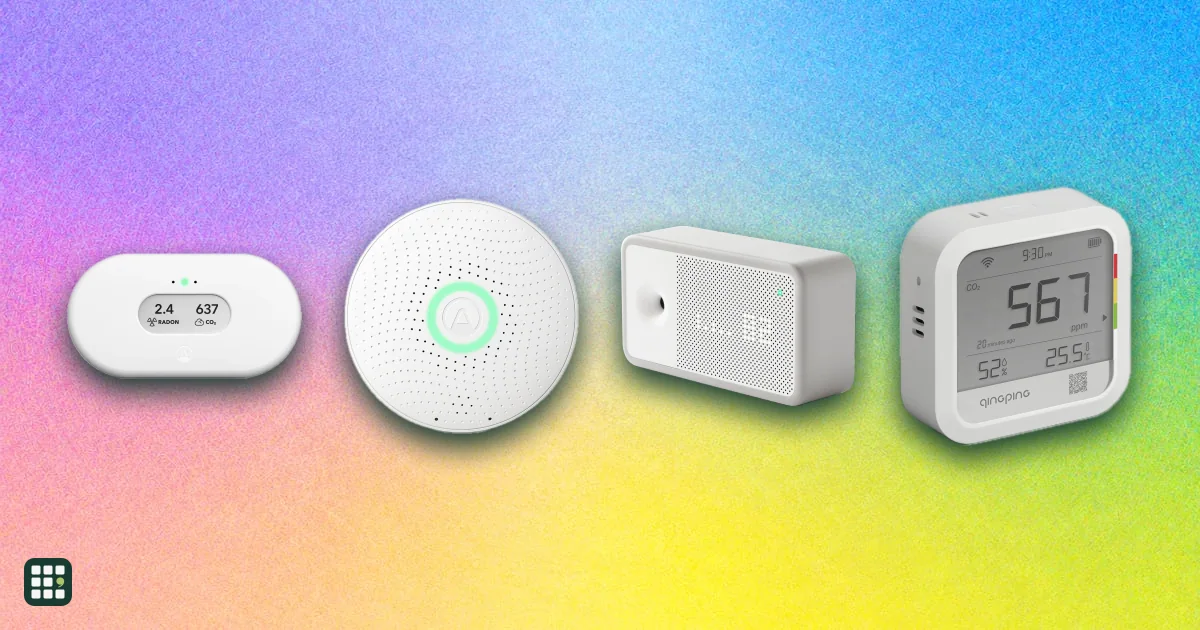
Air quality monitors
Indoor air quality monitors measure what you can't see or smell: CO2 that builds up in closed rooms, fine dust, chemical fumes and, on a few models, radon. They don't clean the air; they tell you when to open a window, run a purifier or test further. The real choice is which pollutants you need to track, and whether you want a screen, batteries, Wi-Fi, or a paid plan.
Last updated
How to choose
Start with the problem you want to catch. Stuffy bedrooms and home offices are about CO2, so a CO2 monitor with a true infrared (NDIR) sensor is the core need. Cooking, smoke and wildfire days call for a fine-dust (PM2.5) sensor. New furniture, paint or flooring point to a VOC sensor. Basements and older homes may need radon, which only a few of these monitors measure.
Rule out deal-breakers
- Radon: if you need it, only models marked yes in that row qualify; radon-only detectors are a separate category.
- Carbon monoxide: these monitors are not a replacement for a CO alarm, even where they list the gas.
- Subscriptions: check whether history, alerts or exports sit behind a paid plan.
Compare the key features
- Look at the CO2 sensor type: NDIR is the accurate kind, and some makers don't say what theirs is.
- A built-in screen is handy if you don't want to open an app; battery models can sit anywhere, plug-in models never need new batteries.
- Wi-Fi gives remote access; Bluetooth-only units need your phone nearby, and some need a hub for the internet.
- Check smart home support if you want the readings to trigger a fan or purifier.
Check the final choice
Confirm the exact model sold in the US, the price including any plan, and the warranty. Cheap monitors can read differently from lab-grade ones, so use them for trends and thresholds rather than exact numbers.
Answer
Browse the table. Filter to what matters.
Use the filters below, then sign in if you want to shortlist and decide with friends.
Sign in to vote, hide products and features, and reorder.
Verified: hover a cell and click its green dot for the source Estimate: no cited source Not stated: the maker doesn't publish it
| Feature | ⠿ | ⠿ | ⠿ | ⠿ | ⠿ | ⠿ | ⠿ | ⠿ | ⠿ | ⠿ | ⠿ |
|---|---|---|---|---|---|---|---|---|---|---|---|
|
⠿
Price
|
|||||||||||
|
⠿
Carbon dioxide
|
|||||||||||
|
⠿
CO2 sensor type
|
|||||||||||
|
⠿
Fine dust PM2 5
|
|||||||||||
|
⠿
VOCs
|
|||||||||||
|
⠿
Radon
|
|||||||||||
|
⠿
Carbon monoxide
|
|||||||||||
|
⠿
Nitrogen dioxide
|
|||||||||||
|
⠿
Ozone
|
|||||||||||
|
⠿
PM10
|
|||||||||||
|
⠿
Formaldehyde
|
|||||||||||
|
⠿
Temperature
|
|||||||||||
|
⠿
Humidity
|
|||||||||||
|
⠿
Air pressure
|
|||||||||||
|
⠿
Display on device
|
|||||||||||
|
⠿
Power source
|
|||||||||||
|
⠿
WiFi
|
|||||||||||
|
⠿
Bluetooth
|
|||||||||||
|
⠿
Subscription required
|
|||||||||||
|
⠿
Smart home integrations
|
|||||||||||
|
⠿
Data export
|
|||||||||||
|
⠿
Warranty
|


Why these features matter
-
Price ($)
The upfront cost; some models add paid plans on top.
-
Carbon dioxide
CO2 is the best sign a room needs fresh air; it affects alertness and sleep.
-
CO2 sensor type
True infrared (NDIR) sensors are the accurate kind; cheaper units may estimate CO2 from other gases.
- NDIR
- : Reads CO2 directly with infrared light, the accurate method. Cheaper monitors may estimate CO2 from other gases, which drifts.
-
Fine dust PM2 5
Fine dust from cooking, smoke and traffic is the pollutant most linked to lung and heart health.
-
VOCs
Chemicals from cleaners, paint and furniture; worth tracking after renovations or in new homes.
-
Radon
A radioactive gas that seeps up from soil and is a leading cause of lung cancer; only a few indoor monitors measure it.
-
Carbon monoxide
Measures carbon monoxide gas, not CO2. These monitors are not a replacement for a CO alarm.
-
Nitrogen dioxide
Gas from gas stoves and traffic that irritates lungs; matters most with a gas cooker.
-
Ozone
Lung irritant from some air cleaners and printers; rare in home monitors.
-
PM10
Coarser dust and pollen; matters most for allergies and dusty homes.
-
Formaldehyde
A common chemical from new furniture and flooring; relevant for new builds.
-
Temperature
Tracks the room temperature.
-
Humidity
Too dry or too damp affects comfort, mold and sleep.
-
Air pressure
Mostly a curiosity; some people track it for weather-related headaches.
-
Display on device
A screen lets you check the air at a glance without opening an app.
-
Power source
Batteries mean you can place it anywhere; plug-in units never need replacing batteries.
-
WiFi
Wi-Fi gives remote access and alerts when you are away.
-
Bluetooth
Bluetooth lets you read the device from a phone nearby without Wi-Fi.
-
Subscription required
A required plan adds to the real cost over several years.
-
Smart home integrations
Matters if you want air readings to trigger fans or purifiers.
-
Data export
Export lets you keep a history or analyze it yourself.
-
Warranty (years)
Longer cover means less risk on sensors that age.
About the products
-
View Plus · Airthings
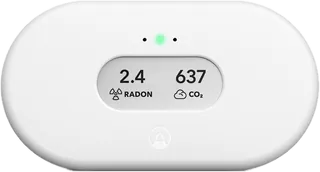
The only monitor here that measures radon, fine dust (PM2.5), CO2 and chemicals together, with an e-ink screen. Costs the most; read it as a whole-home check-up device.
-
Wave Plus · Airthings
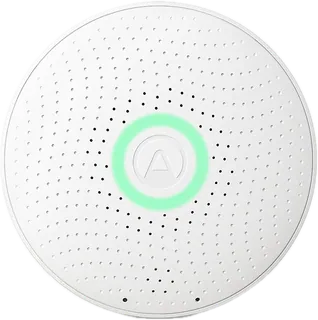
Radon, CO2 and chemicals in a screenless, battery-powered unit you check in the app. No fine-dust sensor and no Wi-Fi; it connects by Bluetooth.
-
Wave Enhance · Airthings
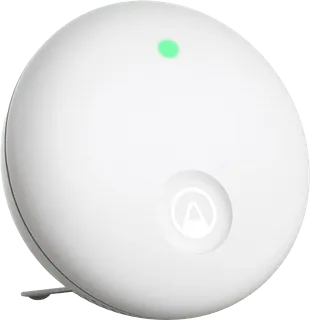
A cheaper bedroom and office unit for CO2, chemicals, temperature and humidity. It has no radon sensor, and reaches the internet only through a hub such as a View Plus.
-
Element · Awair
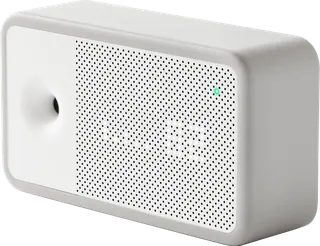
A plug-in, display-first monitor for dust, chemicals, CO2, temperature and humidity. No radon or air pressure.
-
Omni · Awair
Awair's newer unit adds more sensors and an 8-hour battery backup. Its US price isn't published on its pages; it is sold with prepaid dashboard or API access tiers.
-
Aranet4 Home · Aranet
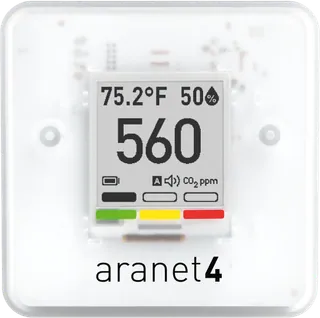
A CO2 specialist: a true infrared CO2 sensor on an e-ink screen that runs for years on AA batteries. No dust or chemical sensing.
-
Caeli · uHoo
Nine sensors, including carbon monoxide, nitrogen dioxide and ozone that others skip, and no screen. Core monitoring is free; paid plans add history and exports.
-
Air Monitor Lite · Qingping
A low-cost screen monitor for CO2, PM2.5, PM10, temperature and humidity. Its maker's shop listed it as sold out at last check.
-
CO2 and Temp and RH Monitor · Qingping
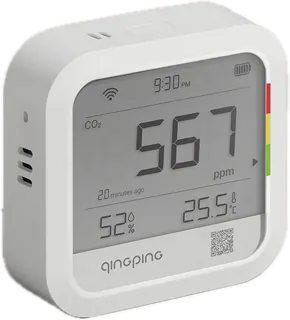
A low-cost CO2, temperature and humidity monitor with a screen. No dust or chemical sensing.
-
M10+ · Temtop
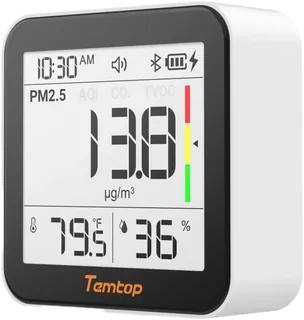
A rechargeable, screen-equipped indoor monitor for CO2, PM2.5, TVOC, temperature and humidity, with app history and calibration.
-
M100 2nd · Temtop
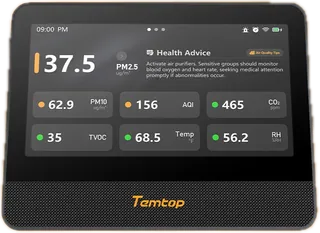
A 7-inch touchscreen monitor for CO2, PM2.5, PM10, TVOC, temperature and humidity, with Wi-Fi and optional LoRa sub-devices for multi-room monitoring.
Suggest a change
Related comparisons
-
 Radon detectors
Radon is an odorless radioactive gas that seeps up from the ground and is the leading cause of lung cancer among non-smokers. A continuous radon detector (or radon monitor) measures it day after day, so you see your real long-term average instead of one short test. The main choices: how quickly readings settle, whether there's a screen, battery or plug-in power, Wi-Fi or Bluetooth, extra air quality sensors, and whether anyone independent has checked the accuracy.
-
 Fire extinguishers
Home fire extinguishers differ mainly in their UL rating, whether they can be refilled, and whether they are meant for the kitchen, garage or whole house. This grid compares ratings, agent, weight, price and warranty across popular Kidde, First Alert and Amerex models.
-
 Dehumidifiers
Compare portable dehumidifiers by water-removal rating, maker-stated room coverage, drainage, and warranty. A built-in pump can send water up to a sink or window drain, while gravity-drain models need the outlet below the unit; the maker's square-foot estimates vary and can conflict within a product page.
-
 Air purifiers
 pull dust, pollen, pet dander, smoke and odors out of the air in one room. The choice comes down to how big the room is, how loud the fan gets while you sleep, what the replacement filters cost each year, and whether you want app control or a plain dial.
-
 Ceiling fans
Compare ceiling fans from budget pull-chain models to quiet smart DC fans and large-room fans: price, blade span, airflow, efficiency, motor type, lights, controls, smart home support and wet or damp ratings. The real trade-offs are cost against quietness and efficiency (AC versus DC motors), the size of fan your room needs, and where it can safely go (indoors, a bathroom, or an open porch).
-
 Central air conditioners
Compare current central split-system air conditioner condensers from Carrier, Trane, Lennox, Rheem, Ruud, American Standard, Bryant, Daikin, Goodman, Amana and York by matched-system efficiency, capacity, compressor type, refrigerant, sound, warranty, and controls. Ratings depend on the exact AHRI-certified indoor/outdoor match; listed maximums are not guaranteed for every match.