



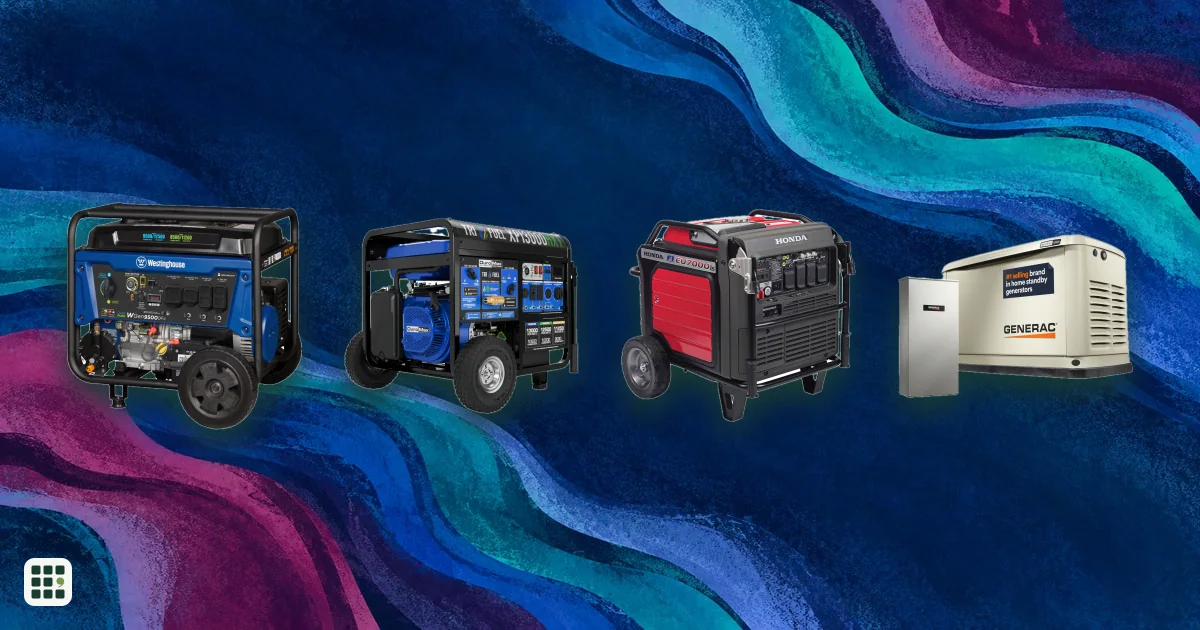
Home generators
Compare portable and permanently installed home generators by usable output, fuel options, runtime or fuel consumption, transfer setup, noise, controls, connections, warranty, and generator-only price. Portable units cost less upfront but need safe outdoor setup and a transfer switch or interlock for home circuits; standby units start automatically but require professional installation and a permanent fuel supply.
Last updated
How to choose
Start with an electrician-approved load list: include the air conditioner or heat pump, well or sump pump, refrigerator, furnace controls, and other circuits you need during an outage. Compare continuous output for the fuel you will actually use; starting watts are brief and must cover motor startup. Portable generators need to run outdoors well away from doors, windows, and vents, and must connect to home wiring through a properly installed transfer switch or interlock. Never backfeed a home through a wall outlet. Standby units switch automatically but require a suitable natural-gas or propane supply, permits, clearances, and professional electrical and gas work. Compare runtime at the same load for portable fuel tanks, or hourly gas consumption for standby units. Noise figures use different test conditions, so check the distance and operating mode. Check outlet types, included transfer equipment, CO shutoff features, maintenance needs, and warranty terms. Prices here are for the generator itself; installed cost can vary with wiring, switch, fuel line, site preparation, and local requirements.
Answer
Browse the table. Filter to what matters.
Use the filters below, then sign in if you want to shortlist and decide with friends.
Sign in to vote, hide products and features, and reorder.
Verified: hover a cell and click its green dot for the source Estimate: no cited source Not stated: the maker doesn't publish it
| Feature | ⠿ | ⠿ | ⠿ | ⠿ | ⠿ | ⠿ | ⠿ | ⠿ | ⠿ |
|---|---|---|---|---|---|---|---|---|---|
|
⠿
Price
|
|||||||||
|
⠿
Continuous Output
|
20 kW, LP; 18 kW natural gas
|
||||||||
|
⠿
Starting Output
|
|||||||||
|
⠿
Fuel Options
|
Gasoline
|
||||||||
|
⠿
Runtime or Fuel Consumption
|
|||||||||
|
⠿
Transfer Setup
|
|||||||||
|
⠿
Noise Level
|
|||||||||
|
⠿
Start and Monitoring
|
Automatic standby start; free Mobile Link Wi-Fi remote monitoring; Evolution controller
|
Automatic standby start; free Mobile Link Wi-Fi remote monitoring
|
Automatic standby start; free Mobile Link Wi-Fi remote monitoring
|
||||||
|
⠿
Output Connections
|
|||||||||
|
⠿
Weight
|
|||||||||
|
⠿
Warranty
|
Why these features matter
-
Price ($)
Standby installation can cost substantially more than the generator, so compare the product price and installation quote separately.
-
Continuous Output (kW)
Continuous output is the load the generator can sustain; ratings can drop on propane or natural gas.
-
Starting Output
Motors need a brief startup surge, but peak ratings are not continuous capacity.
-
Fuel Options
More fuel choices can help when one supply is unavailable, but each fuel may reduce output.
-
Runtime or Fuel Consumption
A portable tank must be refilled; a standby unit can run from a gas line but uses fuel continuously.
-
Transfer Setup
A correctly installed transfer switch prevents dangerous backfeed and determines which circuits can run.
-
Noise Level (dBA)
Noise ratings use different test conditions; compare the distance and operating mode before treating figures as equivalent.
-
Start and Monitoring
Electric and automatic starts reduce effort; monitoring can surface status and maintenance alerts.
-
Output Connections
Connection type determines whether the unit can power individual appliances, a transfer panel, or a home service.
-
Weight (lb)
Portable generators may need two people or a cart; standby units are handled during installation.
-
Warranty
Coverage length and residential-use conditions vary across portable and standby products.
About the products
-
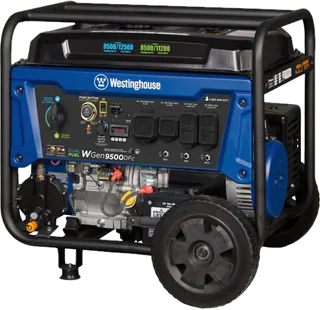
WGen9500DFc · Westinghouse
Dual-fuel portable generator with 9,500 rated gasoline watts and transfer-switch-ready 120/240 V outlets.
-
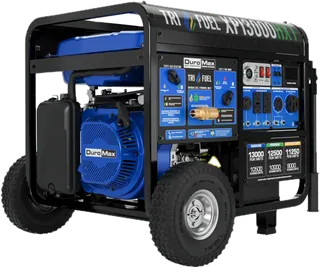
XP13000HXT · DuroMax
Tri-fuel portable model rated up to 10,500 W on gasoline, 9,500 W on propane, or 8,500 W on natural gas.
-
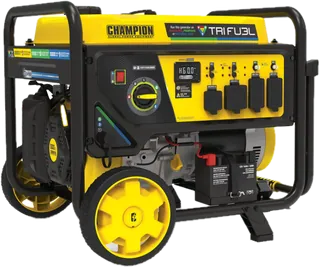
Champion 201438 Tri-Fuel · Champion
Portable 10,000 W tri-fuel generator with electric start and CO Shield.
-
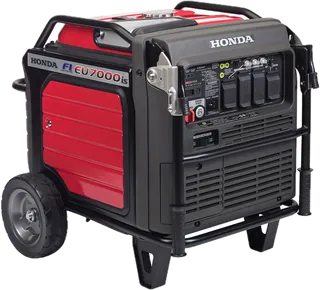
EU7000iS · Honda
Quiet 5,500 W rated inverter generator with electric start and app monitoring.
-
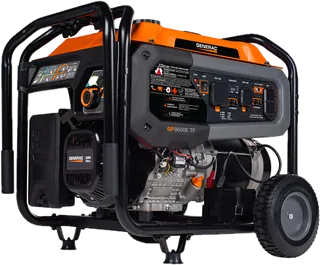
GP9500E Tri-Fuel · Generac
Portable tri-fuel generator with up to 9,500 running watts and 120/240 V output.
-
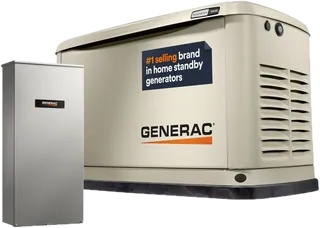
Guardian 18 kW (7228) · Generac
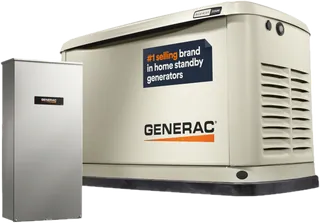
Permanently installed LP/NG standby unit sold with a whole-house load-shedding switch package.
-
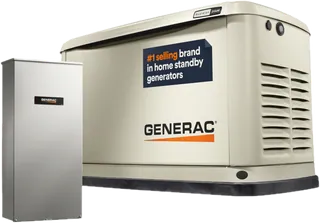
Guardian 24 kW (7210) · Generac
Permanently installed LP/NG standby package with whole-house switch and Wi-Fi monitoring.
-
Guardian 22 kW (7043) · Generac
Permanently installed LP/NG standby generator bundled with a 200 A service-rated transfer switch and Wi-Fi monitoring.
-
Kohler 20RCA · Kohler
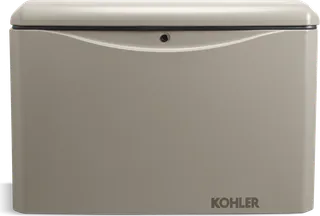
Permanently installed 20 kW LP / 18 kW natural-gas standby generator; transfer switch is sold separately.
Suggest a change
Related comparisons
-
 Portable power stations
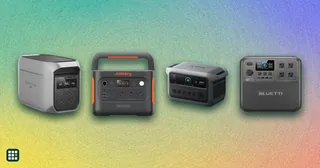
Compare portable power stations for camping, RV trips, and emergency backup. The grid covers compact and roughly 2 kWh models from EcoFlow, Jackery, Anker SOLIX, and BLUETTI.
-
 Solar inverters
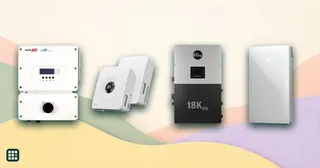
Compare residential solar inverters by architecture, AC output, PV input, efficiency, panel optimization, battery and backup support, safety, warranty, and installation limits. Inverter sizing and compatibility must be confirmed against the solar modules, service panel, local utility rules, and installer design.
-
 Heat pumps
Compare leading U.S. ducted air-source heat pump systems by efficiency, low-temperature heating, modulation, sound, refrigerant, and warranty. Published maximum ratings are achieved only with eligible matched components; ask a licensed HVAC contractor for a load calculation and AHRI-rated match for your home.
-
 Home EV chargers
Compare Level 2 home chargers by equipment price, maximum charging current, connector, cable length, and warranty. Price is the manufacturer-listed price for the specified U.S. configuration on October 21, 2026; electrical work, permits, and taxes are extra. Installation and circuit requirements vary. Tesla currently requires a Tesla vehicle owner account to purchase its Universal Wall Connector, and its shop page showed it out of stock when checked.
-
 Solar panels
Compare residential solar panels by rated output, efficiency, heat performance, cell design, degradation, warranty, size, and structural load ratings. The same panel can perform differently with roof orientation, shade, inverter choice, and installation, so compare complete system proposals as well as module specifications.
-
 Home batteries
Compare home batteries by usable energy, continuous and peak output, efficiency, chemistry, solar compatibility, scalability, backup operation, warranty, and installation environment. Battery-only products need a compatible inverter and controls; complete system proposals also depend on home loads, solar equipment, local rules, and installer design.