



Wi-Fi routers
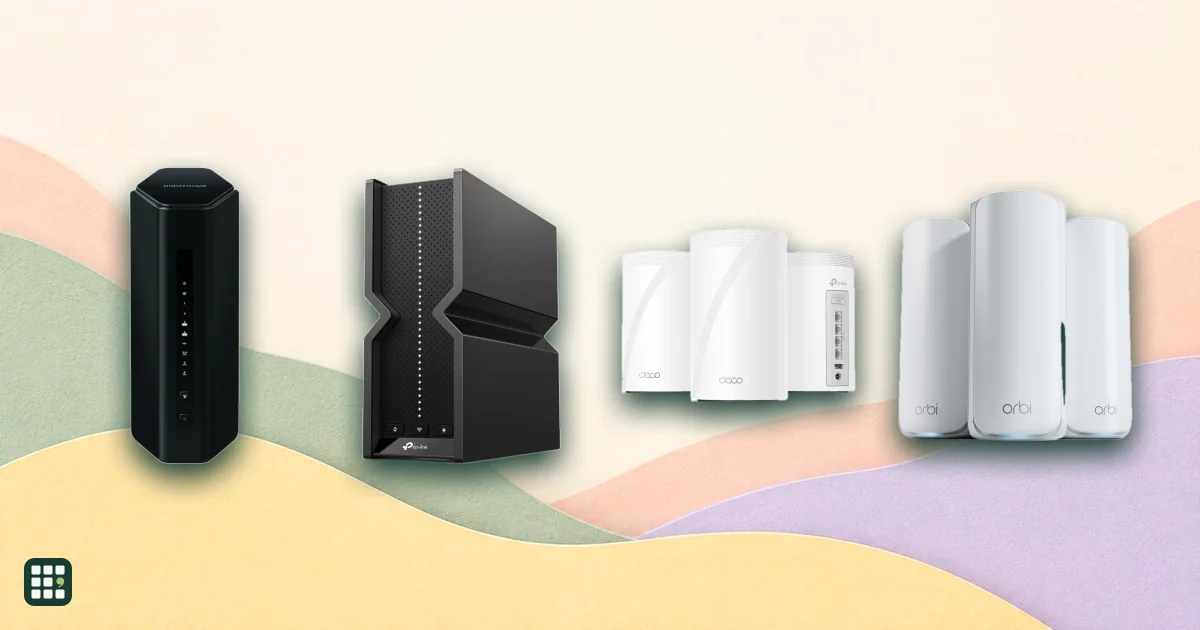
Compare Wi-Fi routers and mesh Wi-Fi systems sold in the US, from budget Wi-Fi 6 routers to Wi-Fi 7 mesh and gaming routers from eero, Google, Netgear, TP-Link, ASUS, Linksys, Ubiquiti and others. The main choices are a single router or mesh, which Wi-Fi generation your devices can use, coverage for your home, wired ports for fast internet plans, and whether useful features need a subscription.
Last updated
How to choose
Speeds and coverage here are makers' claims. Headline speeds add up every band and are never reached by a single device, and walls, floors and neighbors' networks cut real coverage.
1. Router or mesh?
- A single router is enough for most apartments and small, open homes.
- A mesh system with two or three units covers larger or multi-story homes and removes dead zones. Wire the units together with Ethernet if you can.
2. Pick the Wi-Fi generation
Wi-Fi 6 is plenty for most homes and costs least. Wi-Fi 6E and Wi-Fi 7 add the uncrowded 6 GHz band and higher speeds, but only phones, laptops and consoles that support them benefit.
3. Match the ports to your internet plan
If your plan is faster than 1 Gbps, look for a 2.5 Gbps or 10 Gbps WAN port, plus multi-gig LAN ports for wired computers. Count the Ethernet ports you need for a TV, console or desktop.
4. Check features and subscriptions
Many routers include free parental controls and app-based setup, but some brands charge yearly for security scanning or advanced controls. Add any subscription to the cost.
5. Keep it updated
Choose a maker that ships regular firmware updates and turn on automatic updates. Replace routers that no longer get security fixes.
Answer
Browse the table. Filter to what matters.
Use the filters below, then sign in if you want to shortlist and decide with friends.
Sign in to vote, hide products and features, and reorder.
Verified: hover a cell and click its green dot for the source Estimate: no cited source Not stated: the maker doesn't publish it
| Feature | ⠿ | ⠿ | ⠿ | ⠿ | ⠿ | ⠿ | ⠿ | ⠿ | ⠿ | ⠿ | ⠿ | ⠿ | ⠿ | ⠿ | ⠿ | ⠿ | ⠿ |
|---|---|---|---|---|---|---|---|---|---|---|---|---|---|---|---|---|---|
|
⠿
Price
|
$249.99
|
$349.99
|
$219.99
|
$199.99
|
|||||||||||||
|
⠿
Pack size
|
3 units
|
1 units
|
1 units
|
1 units
|
1 units
|
2 units
|
1 units
|
1 units
|
1 units
|
||||||||
|
⠿
Type
|
|||||||||||||||||
|
⠿
Wireless standard
|
|||||||||||||||||
|
⠿
Bands
|
Tri-band (2.4/5/6 GHz)
|
||||||||||||||||
|
⠿
Max combined speed
|
20,800 Mbps
|
10,800 Mbps
|
3,000 Mbps
|
10,688 Mbps
|
|||||||||||||
|
⠿
Coverage
|
|||||||||||||||||
|
⠿
Fastest wired port
|
|||||||||||||||||
|
⠿
Ethernet ports
|
4 ports
|
2 ports
|
2 ports
|
2 ports
|
4 ports
|
5 ports
|
5 ports
|
10 ports
|
4 ports
|
5 ports
|
5 ports
|
5 ports
|
2 ports
|
||||
|
⠿
USB port
|
|
|
|
|
|
|
|
|
|||||||||
|
⠿
Subscription
|
None
|
None
|
None
|
None
|
None
|
||||||||||||
|
⠿
App setup
|
|||||||||||||||||
|
⠿
Parental controls
|
|||||||||||||||||
|
⠿
Warranty
|
1 year limited
|
3 years limited
|
Why these features matter
-
Price ($)
Routers range from about $60 for a basic Wi-Fi 6 model to over $1,000 for a large Wi-Fi 7 mesh system.
-
Pack size (units)
Mesh systems are sold in packs; more units cover more space but cost more, so compare price with pack size and coverage.
-
Type
A single router suits apartments and small homes; mesh systems spread strong Wi-Fi through larger or multi-story homes.
-
Wireless standard
Newer standards bring faster speeds and less congestion, but only with devices that support them; Wi-Fi 6 is still fine for most homes.
-
Bands
The 6 GHz band in Wi-Fi 6E and 7 is fast and uncrowded but shorter range; extra bands help mesh systems keep speed between nodes.
-
Max combined speed (Mbps)
Headline speeds add up all bands and are never reached by one device; compare them as a rough class, not real-world speed.
-
Coverage (sq ft)
Coverage claims are best cases; walls, floors and neighbors' networks cut real range.
-
Fastest wired port
Multi-gig ports matter if your internet plan is faster than 1 Gbps or you move big files around the home network.
-
Ethernet ports (ports)
More ports let you wire a TV, console, or desktop directly for the most reliable connection.
-
USB port
A USB port lets you share a drive on the network or add a cellular backup.
-
Subscription
Some brands lock security scanning or parental controls behind a subscription.
-
App setup
App setup is easier for most people than a web dashboard, though power users may want both.
-
Parental controls
Free parental controls let families set bedtimes and block content without paying extra.
-
Warranty
Routers run 24/7; longer warranties reflect confidence and cover early failures.
About the products
-
eero Max 7 · eero
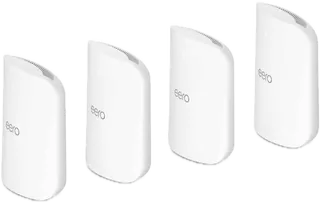
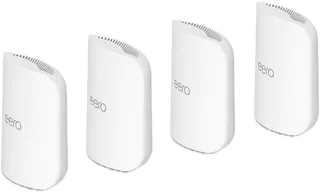
eero's top Wi-Fi 7 mesh unit for multi-gig plans and busy smart homes: two 10 GbE and two 2.5 GbE ports and a Thread/Zigbee/Matter hub built in. Expensive per node ($599.99 each; 3-pack $1,699.99), and content filtering, ad blocking and VPN need the paid eero Plus subscription.
-
eero Pro 7 · eero
Mid-range tri-band Wi-Fi 7 mesh from eero for homes with up to 5 Gbps internet, with two 5 GbE ports per unit. Fewer and slower wired ports than the Max 7, and advanced parental controls and security need eero Plus.
-
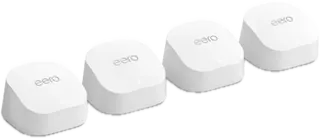
eero 6+ · eero
eero's cheapest gigabit mesh router: dual-band Wi-Fi 6 with two 1 GbE ports, aimed at internet plans up to 1 Gbps. No 6 GHz band or multi-gig ports, and only a 1-year warranty (eero's Wi-Fi 7 models get 3 years).
-
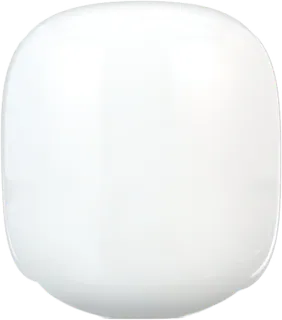
Nest Wifi Pro · Google
Simple Wi-Fi 6E mesh managed in the Google Home app, with a built-in Thread border router and Matter support and free parental controls. Only two 1 Gbps Ethernet ports per router, so it can't take advantage of multi-gig internet, and it can't mesh with older Google Wifi or Nest Wifi units.
-
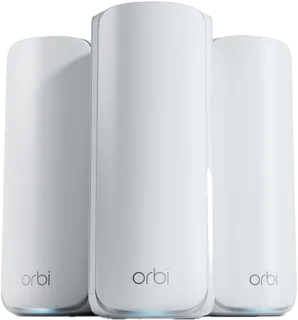
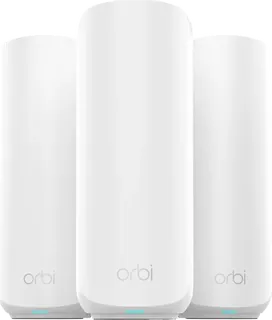
Orbi 770 (RBE773) · NETGEAR
Tri-band Wi-Fi 7 mesh system (router + 2 satellites) for larger homes, with 2.5 Gig Ethernet on the router and every satellite. No 10 Gig ports and no dedicated wireless backhaul band (that is reserved for the Orbi 970); NETGEAR Armor security costs extra after the trial. NETGEAR listed it at $599.99, reduced from $699.99, in November 2026.
-
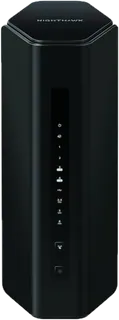
Nighthawk RS300 · NETGEAR
Single tri-band Wi-Fi 7 router (BE9300) for homes up to about 2,500 sq ft, with a 2.5 Gig internet port, two 2.5 Gig and two Gigabit LAN ports, and a USB 3.0 port. Not a mesh kit, and NETGEAR Armor security is a paid subscription after the trial. NETGEAR listed it at $269.99, reduced from $299.99, in November 2026.
-
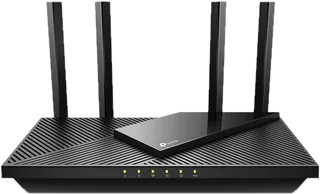
Archer AX55 · TP-Link
A budget dual-band AX3000 Wi-Fi 6 router for apartments and smaller homes, with four gigabit LAN ports and a USB 3.0 port. It has no 6 GHz band and no multi-gig ports, and TP-Link gives a "3 bedroom houses" range rather than a square-foot figure.
-
Archer BE550 · TP-Link
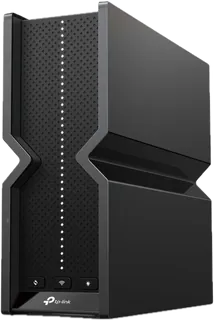
A tri-band BE9300 Wi-Fi 7 router with 6 GHz and five 2.5 Gbps ports (one WAN, four LAN), suited to multi-gig internet plans in medium-to-large homes. It has no 10 Gbps port; the newer Archer BE550 Pro adds one.
-
Deco XE75 · TP-Link
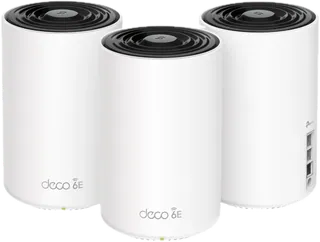
A tri-band Wi-Fi 6E (AXE5400) mesh system with 6 GHz backhaul, claimed to cover up to 7,200 sq ft as a 3-pack. Each unit has only three gigabit ports and no USB port. It was on sale at TP-Link's US store for $229.99 (regular $349.99).
-
Deco 7 Pro BE63 · TP-Link
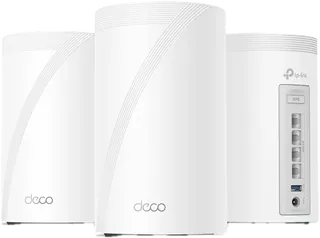
A tri-band BE10000 Wi-Fi 7 mesh system with four 2.5 Gbps ports per unit and a USB port, claimed to cover up to 7,600 sq ft as a 3-pack. It has no 10 Gbps ports. It was on sale at TP-Link's US store for $396.99 (regular $599.99).
-
RT-BE88U · ASUS
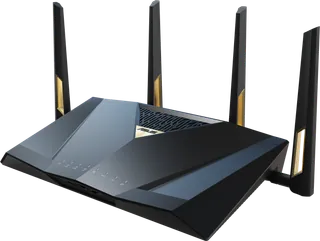
A dual-band BE7200 Wi-Fi 7 router for wired-heavy homes and enthusiasts, with a 10G Ethernet port, a 10G SFP+ port, four 2.5G and four 1G ports, plus subscription-free AiProtection Pro security. It has no 6 GHz band, so it skips Wi-Fi 7's 320 MHz 6 GHz channels.
-
ZenWiFi BT8 · ASUS
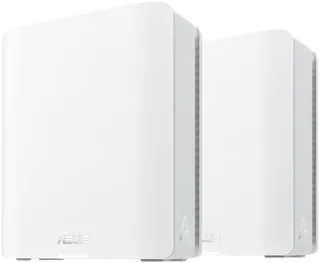
A tri-band BE14000 Wi-Fi 7 mesh system claimed to cover up to 5,900 sq ft as a 2-pack. Each node has one 2.5G WAN, one 2.5G LAN, two 1G LAN ports and a USB 3.0 port. Security and parental controls need no subscription.
-
Velop Pro 7 · Linksys
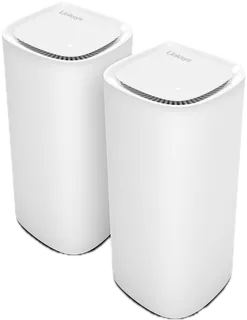
Tri-band Wi-Fi 7 mesh node (2.4/5/6 GHz, BE11000) with a 2.5 Gbps internet port, four gigabit LAN ports, and free schedules and safe-browsing blocks. Suits larger homes that want 6 GHz and 320 MHz channels; add nodes for more coverage. Linksys no longer sells direct on its own site in the US, so you buy it from retailers.
-
UniFi Dream Router 7 · Ubiquiti
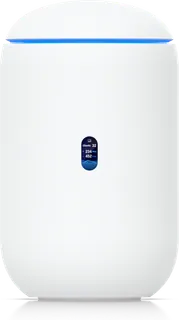
Tri-band Wi-Fi 7 router and UniFi gateway with a 10G SFP+ port, four 2.5GbE ports (one PoE), and a microSD slot for UniFi Protect camera recording. Suits tech-minded households that want prosumer firewall, VPN, and content-filtering features without a subscription. Covers about 1,750 sq ft on its own; add UniFi access points for more. The US store adds a surcharge at checkout ($307.00 with surcharge).
-
Synology WRX560 · Synology
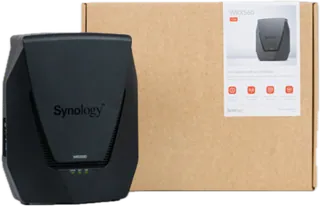
Dual-band Wi-Fi 6 (AX3000) router with a 2.5GbE WAN/LAN port, a USB port, and Synology Router Manager parental controls, web filtering, and VPN tools with no subscription. Suits households that want detailed controls and can mesh it with other Synology routers. It is an older 2022 design with no 6 GHz band, and Synology has not released a Wi-Fi 7 successor.
-
Orbi 370 (RBE373) · NETGEAR
Budget dual-band Wi-Fi 7 (BE5000) mesh: one router and two satellites cover up to 6,000 sq ft and up to 70 devices. Each unit has 2.5 Gig ports, but there are no 6 GHz band and only two ports on the router. NETGEAR Armor security is an optional paid subscription after a free trial. On sale at netgear.com for $299.99 (regularly $349.99).
-
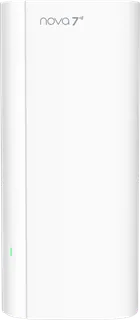
Nova ME3 Pro · Tenda
Low-cost dual-band Wi-Fi 7 (BE3600) mesh kit of three identical nodes, each with three gigabit Ethernet ports. Includes app management, parental time limits, and URL filtering. Suits apartments and average homes on sub-gigabit internet. It has no 6 GHz band and no multi-gig port, and Tenda gives no coverage figure. Tenda sells it through Amazon rather than its own store. Amazon US listed it at $199.99 in November 2026.
Suggest a change
Related comparisons
-
 Gaming routers
 add game-traffic priority, multi-gig ports, and often a 6 GHz band to ordinary Wi-Fi. This grid compares ASUS ROG and TUF and TP-Link Archer models on price, Wi-Fi generation, ports, gaming features, and mesh and security terms, so you can see what the extra money actually buys.
-
 Mesh Wi-Fi systems
 spread one network across your home with two or more units, so far rooms and upper floors get a strong signal. This grid compares current kits from eero, NETGEAR Orbi, TP-Link Deco, ASUS ZenWiFi, Google Nest, Linksys and Tenda on price, Wi-Fi standard, coverage, bands, wired ports and subscriptions. The main trade-offs are cost against speed and range, and simple app-only systems against ones with more ports and settings.
-
 Smart home hubs
A smart home hub is the box that talks to your sensors, lights and locks, runs your automations and links them to your phone and voice assistant. This grid compares the dedicated hubs hobbyists and families use with the brand hubs for Philips Hue and Aqara and the Apple TV and HomePod mini that act as Apple Home hubs. The real choices are which radios you need (Zigbee, Z-Wave, Thread, Matter), whether you want everything to run locally, and how much tinkering you will tolerate.
-
 5G home internet
Compare 5G home internet plans from T-Mobile, Verizon, AT&T and Cricket: wireless broadband that uses a carrier gateway instead of a cable or fiber line. Prices, typical speeds, price guarantees and phone-bundle discounts differ more than the marketing suggests, and speeds depend heavily on your address.
-
 Travel routers
A travel router turns a hotel Ethernet jack, public Wi-Fi or a phone's tethering into your own private network for all your devices. The decision is between cheap and tiny, fast Wi-Fi 7 with a fast VPN, or a model with its own 5G modem.
-
 Smart TVs
Compare current smart TVs by picture technology, HDR, brightness, reflections, motion, gaming, streaming platform, ports, audio, connectivity, power, warranty, and price. Panel technology and processing affect picture quality, while room lighting, viewing angle, gaming inputs, and built-in apps can matter just as much.