



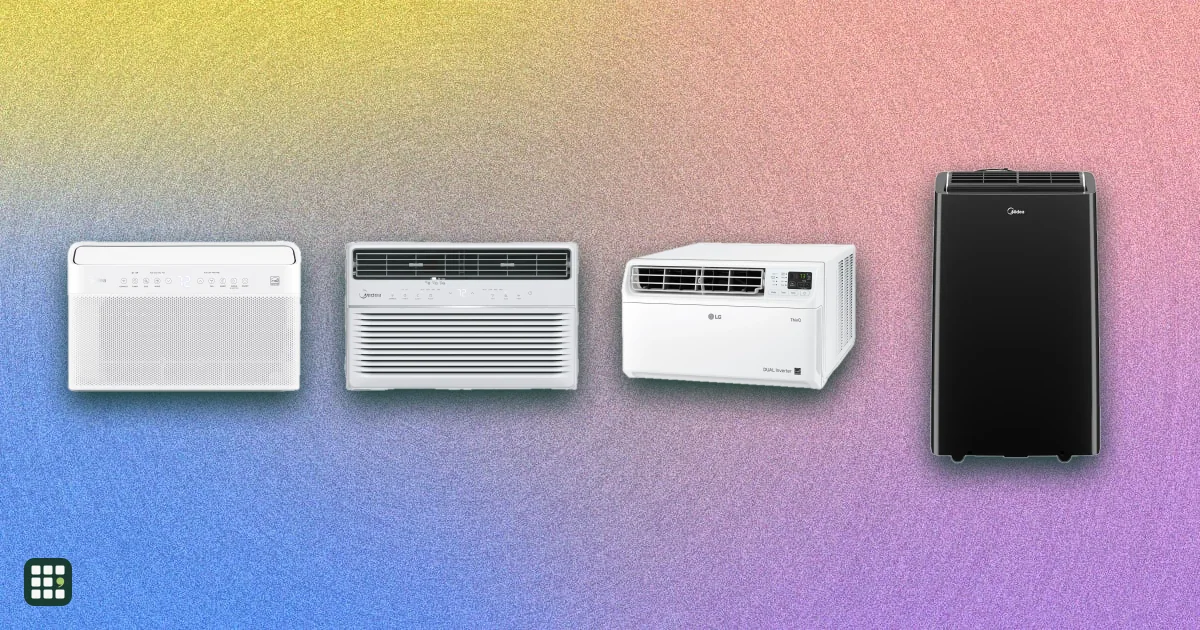
Air conditioners
Compare window and portable room air conditioners by cooling capacity, the area makers say they cover, low-speed noise, and smart controls. Portable units have lower DOE/SACC ratings than their older ASHRAE figures, so compare ratings on the same basis and treat room-size claims as starting points rather than guarantees.
Last updated
How to choose
First check what your room can accommodate. A window unit needs a compatible window, clearance, and a safe way to support its weight; a portable unit still needs an exhaust hose through a window and takes up floor space. The window units here include U-shaped designs that let more of the window close around the chassis.
Size the unit for the room and conditions. The listed square footage is each maker's estimate; sun exposure, ceiling height, insulation, climate, and open floor plans affect actual cooling. Portable AC ratings use DOE/SACC or ASHRAE test methods, and the values differ substantially, so compare portable models using the DOE/SACC rating shown here rather than mixing methods.
If the AC will run in a bedroom or office, compare its quoted low-speed noise level and remember manufacturers may test noise under different conditions. App or voice control helps with schedules and remote adjustments, but check Wi-Fi requirements and whether the AC's controls still work without the app. Compare the current installed price, energy label, warranty, window dimensions, and electrical requirements before buying.
Answer
Browse the table. Filter to what matters.
Use the filters below, then sign in if you want to shortlist and decide with friends.
Sign in to vote, hide products and features, and reorder.
Verified: hover a cell and click its green dot for the source Estimate: no cited source Not stated: the maker doesn't publish it
| Feature | ⠿ | ⠿ | ⠿ |
⠿
Discontinued Dec 2023
|
⠿ | ⠿ | ⠿ |
|---|---|---|---|---|---|---|---|
|
⠿
Price
|
$469.99
|
||||||
|
⠿
Installation type
|
|||||||
|
⠿
Rated cooling capacity
|
|||||||
|
⠿
Maker rated room area
|
|||||||
|
⠿
Lowest quoted operating noise
|
|||||||
|
⠿
App or Wi Fi control
|
Why these features matter
-
Price ($)
Window units usually cost less than portable units of similar rated capacity; inverter models cost more up front but use less power. Compare running costs as well as the sticker price.
-
Installation type
Window units free up floor space but need a suitable opening and secure support. Portable units work where window mounting is impractical, but need hose access and floor space.
-
Rated cooling capacity (BTU/h)
Capacity helps narrow the options, but ratings from different test methods are not directly comparable. Match the room and climate rather than choosing the biggest number.
-
Maker rated room area (sq ft)
The suggested area is a useful first sizing check; sun, humidity, insulation, ceiling height, and room layout can change the needed capacity.
-
Lowest quoted operating noise (dBA)
Noise matters most in bedrooms and workspaces. Test conditions and settings differ, so use this as a model-specific reference, not a lab comparison.
-
App or Wi Fi control
Remote changes and schedules can be convenient, but may require Wi-Fi and an account. Basic controls remain important if the app is unavailable.
About the products
-
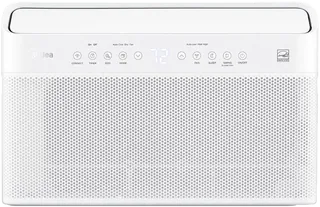
8,000 BTU U-Shaped Window AC MAW08V1QWT · Midea
An inverter window unit with a U-shaped chassis that lets the window close more fully and is rated for rooms up to 350 square feet.
-
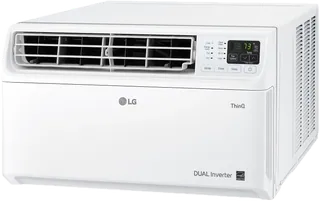
10,000 BTU Dual Inverter Window AC LW1022FVSM · LG
A conventional window-mounted inverter AC for rooms up to 450 square feet, with ThinQ app control and a quoted 44 dB noise level.
-
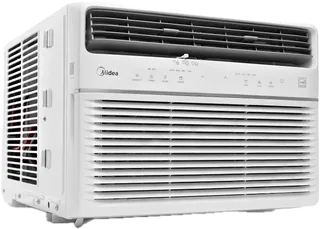
10,000 BTU SmartCool Window AC MAW10S1YWT · Midea
A conventional 10,000 BTU DOE window AC for rooms up to 450 square feet, with SmartHome app, Apple Watch, and voice-assistant control.
-
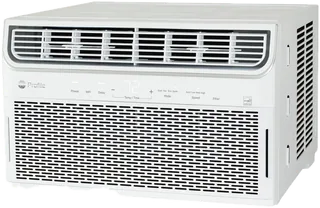
GE Profile 10,100 BTU Inverter Window AC AHTR10AC · GE Appliances · Discontinued Dec 2023
A quiet inverter window unit that GE still lists for clearance, although the maker says it is no longer manufactured. Consider it only if remaining new-stock availability suits you.
-
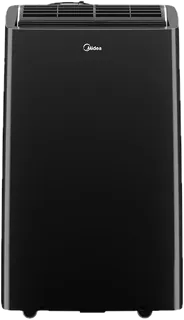
Duo 10,000 BTU Portable AC MAP12S1TBL · Midea
A dual-hose inverter portable AC with a hose-in-hose design, app and voice control, and a maker-rated coverage area of up to 450 square feet.
-
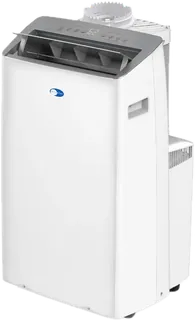
NEX 12,000 SACC Portable AC ARC-1230WN · Whynter
A dual-hose inverter portable AC with Wi-Fi, a 12,000 BTU SACC rating, and maker-rated coverage up to 600 square feet.
-
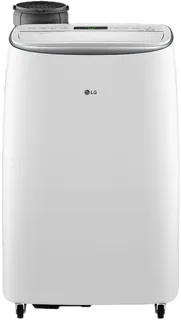
10,000 BTU Dual Inverter Portable AC LP1419IVSM · LG
A single-hose portable inverter unit rated at 10,000 BTU SACC for up to 450 square feet, with ThinQ Wi-Fi control.
Suggest a change
Related comparisons
-
 Dehumidifiers
Compare portable dehumidifiers by water-removal rating, maker-stated room coverage, drainage, and warranty. A built-in pump can send water up to a sink or window drain, while gravity-drain models need the outlet below the unit; the maker's square-foot estimates vary and can conflict within a product page.
-
 Central air conditioners
Compare current central split-system air conditioner condensers from Carrier, Trane, Lennox, Rheem, Ruud, American Standard, Bryant, Daikin, Goodman, Amana and York by matched-system efficiency, capacity, compressor type, refrigerant, sound, warranty, and controls. Ratings depend on the exact AHRI-certified indoor/outdoor match; listed maximums are not guaranteed for every match.
-
 Air purifiers
 pull dust, pollen, pet dander, smoke and odors out of the air in one room. The choice comes down to how big the room is, how loud the fan gets while you sleep, what the replacement filters cost each year, and whether you want app control or a plain dial.
-
 Radon detectors
Radon is an odorless radioactive gas that seeps up from the ground and is the leading cause of lung cancer among non-smokers. A continuous radon detector (or radon monitor) measures it day after day, so you see your real long-term average instead of one short test. The main choices: how quickly readings settle, whether there's a screen, battery or plug-in power, Wi-Fi or Bluetooth, extra air quality sensors, and whether anyone independent has checked the accuracy.
-
 Air quality monitors
Indoor air quality monitors measure what you can't see or smell: CO2 that builds up in closed rooms, fine dust, chemical fumes and, on a few models, radon. They don't clean the air; they tell you when to open a window, run a purifier or test further. The real choice is which pollutants you need to track, and whether you want a screen, batteries, Wi-Fi, or a paid plan.
-
 Ceiling fans
Compare ceiling fans from budget pull-chain models to quiet smart DC fans and large-room fans: price, blade span, airflow, efficiency, motor type, lights, controls, smart home support and wet or damp ratings. The real trade-offs are cost against quietness and efficiency (AC versus DC motors), the size of fan your room needs, and where it can safely go (indoors, a bathroom, or an open porch).