



Contact lenses for dry eyes
Dryness is the most common reason people give up contact lenses. Makers answer it in different ways: fresh daily lenses, silicone hydrogels that pass more oxygen, wetting agents and water-loving surfaces, and a few lenses cleared to claim better comfort for mildly dry eyes. This grid compares the spherical soft lenses the four big makers sell in the US with that pitch, daily and reusable, by yearly cost, material, oxygen, moisture technology and fit, so you can pick a few to try with your eye doctor.
Last updated
How to choose
1. Get the dryness checked first
Dry, gritty or tired eyes in lenses can come from dry eye disease, eyelid problems (such as blocked oil glands), allergies, an old or poorly fitting lens, or your cleaning solution. An eye exam finds the cause; a new lens fixes only some of these. Treating the eye itself (warm compresses, lid care, prescribed drops) often helps more than any lens.
2. Consider daily lenses
A fresh lens every day avoids protein and lipid deposits that build up on reusable lenses and the preservatives in some solutions, both common causes of irritation. Dailies cost more per year (see Yearly cost), but many dry-eye wearers find the trade worth it. If you stay with two-week or monthly lenses, replace them on schedule and ask about a preservative-free hydrogen peroxide cleaning system.
3. Compare material and moisture technology
- Silicone hydrogel lenses pass far more oxygen (Oxygen transmissibility), which helps on long days. Many newer ones add a very wet surface or wetting agents.
- Conventional hydrogel lenses hold more water and can feel softer at first, but high-water lenses can dry out in air-conditioning or wind.
- Moisture technology differs by maker: water-gradient surfaces, agents released as you blink, or materials that bind water. There's no single best one; try two or three different approaches.
4. Look for a dryness claim
Lenses made from omafilcon A (the Proclear family) are cleared by the FDA to say they may improve comfort for wearers with mild discomfort or symptoms of dryness. Other lenses can be just as comfortable for you, but they don't carry this claim.
5. Check fit and prescription
Make sure your power is in the Sphere power range, and if you have astigmatism or need reading help, check that the family has a Toric version or Multifocal version so you can keep the material you like. A lens that fits poorly can feel dry even if the material is excellent.
6. Try before you stock up, and wear them well
Ask for trial lenses and judge them at the end of a long day, not just in the exam room. Blink fully during screen work, take breaks, use rewetting drops approved for contact lenses, and never sleep in lenses unless they're approved for it and your eye doctor agrees.
Answer
Browse the table. Filter to what matters.
Use the filters below, then sign in if you want to shortlist and decide with friends.
Sign in to vote, hide products and features, and reorder.
Verified: hover a cell and click its green dot for the source Estimate: no cited source Not stated: the maker doesn't publish it
| Feature | ⠿ | ⠿ | ⠿ | ⠿ | ⠿ | ⠿ | ⠿ | ⠿ | ⠿ | ⠿ | ⠿ | ⠿ | ⠿ | ⠿ | ⠿ | ⠿ | ⠿ | ⠿ |
|---|---|---|---|---|---|---|---|---|---|---|---|---|---|---|---|---|---|---|
|
⠿
Yearly cost
|
$1,095
|
$695
|
$795
|
$1,110
|
$935
|
$991
|
$991
|
$698
|
$799
|
$655
|
$844
|
$457
|
$286
|
$319
|
$307
|
$252
|
$320
|
$296
|
|
⠿
Price
|
||||||||||||||||||
|
⠿
Replacement schedule
|
||||||||||||||||||
|
⠿
Material type
|
||||||||||||||||||
|
⠿
Oxygen transmissibility
|
||||||||||||||||||
|
⠿
Water content
|
||||||||||||||||||
|
⠿
Moisture technology
|
||||||||||||||||||
|
⠿
Dryness claim
|
||||||||||||||||||
|
⠿
Lens material
|
||||||||||||||||||
|
⠿
UV blocking
|
Class 2
|
|||||||||||||||||
|
⠿
Blue light filtering
|
|
|
|
|
|
|
|
|
|
|
|
|
|
|
|
|
||
|
⠿
Sphere power range
|
||||||||||||||||||
|
⠿
Base curve
|
||||||||||||||||||
|
⠿
Diameter
|
||||||||||||||||||
|
⠿
Toric version
|
||||||||||||||||||
|
⠿
Multifocal version
|
|
|
|
|||||||||||||||
|
⠿
Extended wear
|
|
|
|
|
|
|
||||||||||||
|
⠿
Pack sizes
|
90
|
30, 90
|
90, 180
|
6, 12
|
6
|
6
|
Why these features matter
-
Yearly cost ($)
Puts dailies and reusable lenses on the same footing. Dailies cost more but need no solution, which some dry-eye wearers find gentler. Rebates and insurance can cut the real price a lot.
-
Price ($)
The sticker price per box, to check against your eye doctor's or another store's quote. Compare yearly cost across replacement schedules.
-
Replacement schedule
A fresh daily lens avoids deposits and cleaning-solution sensitivity, both common causes of dryness and irritation. Two-week and monthly lenses cost less but need careful nightly cleaning.
-
Material type
Silicone hydrogel passes much more oxygen, which helps long days. Conventional hydrogels hold more water and some wearers find them softer, but they can dry out faster in low humidity.
-
Oxygen transmissibility (Dk/t)
More oxygen helps keep eyes white and healthy through long days. It matters most if you wear lenses 12+ hours; it doesn't by itself fix dryness.
-
Water content (%)
Higher water isn't automatically more comfortable for dry eyes: high-water lenses can lose water to the eye's surface. Surface technology and material often matter more.
-
Moisture technology
Each maker uses a different way to keep the lens surface wet, from wetting agents released on blinking to water-loving surfaces. If one lens feels dry by evening, a lens with a different approach may suit you better.
-
Dryness claim
Only a few lenses are cleared to make this claim, based on clinical data. Others may still be comfortable for you; the claim is a starting point, not a guarantee.
-
Lens material
Lets you and your eye doctor compare lenses that share a material across brands.
-
UV blocking
UV-blocking lenses add some protection for the area they cover; they don't replace sunglasses.
-
Blue light filtering
A differentiator for screen-heavy days; evidence of an eye-health benefit is limited.
-
Sphere power range (D)
Strong prescriptions aren't made in every lens; check your power is covered.
-
Base curve (mm)
Your eye doctor fits the base curve; a poorly fitting lens can feel dry or tight.
-
Diameter (mm)
Part of the fit your eye doctor checks.
-
Toric version
If you have astigmatism, staying in the same family keeps the material and comfort the same.
-
Multifocal version
Matters after your 40s; dryness also tends to increase with age, so a comfortable multifocal in the same family helps.
-
Extended wear
Sleeping in lenses raises infection risk and often worsens dryness; only do it if your eye doctor approves.
-
Pack sizes
Bigger boxes cost less per lens; smaller ones let you try a lens first.
About the products
-
DAILIES TOTAL1 · Alcon
A premium water-gradient silicone hydrogel daily whose surface is nearly all water, with very high oxygen flow. One of the priciest dailies here; toric and multifocal versions exist.
-
PRECISION1 · Alcon
A lower-priced Alcon silicone hydrogel daily with a moisture-holding SmartSurface and Class 1 UV blocking. One of the cheapest dailies here per year at list price.
-
DAILIES AquaComfort Plus · Alcon
A long-running hydrogel daily that releases wetting agents as you blink, with the widest minus range here (to -15.00). Low oxygen flow, so better for shorter wearing days.
-
ACUVUE OASYS MAX 1-Day · ACUVUE
ACUVUE's top daily: silicone hydrogel with TearStable technology for a stable tear film, Class 1 UV blocking and a blue-violet light filter. The priciest daily here at list price.
-
ACUVUE OASYS 1-Day · ACUVUE
A silicone hydrogel daily with HydraLuxe tear-film technology, Class 1 UV blocking and two base curves. Largely overtaken by OASYS MAX 1-Day but cheaper.
-
1-DAY ACUVUE MOIST · ACUVUE
A hydrogel daily with the LACREON wetting agent built into the lens and Class 2 UV blocking. Gentle for many sensitive eyes, but with low oxygen flow.
-
INFUSE One-Day · Bausch + Lomb
Bausch + Lomb's silicone hydrogel daily with ProBalance Technology, which releases moisture and electrolytes through the day. Toric and multifocal versions exist.
-
Biotrue ONEday · Bausch + Lomb
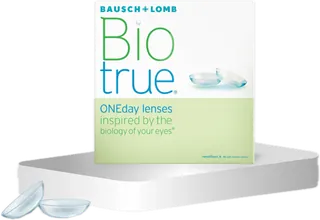
A high-water (78%) hydrogel daily with a dehydration barrier meant to slow drying, at a low price for a daily. Lower oxygen flow than silicone hydrogels.
-
MyDay · CooperVision
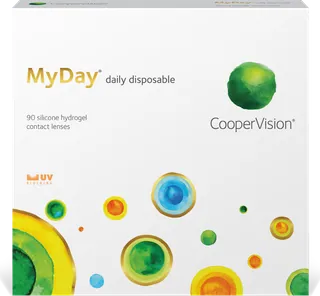
CooperVision's silicone hydrogel daily with Aquaform Technology, which binds water in the lens. Also sold in 180-lens boxes for a lower per-lens price.
-
clariti 1 day · CooperVision
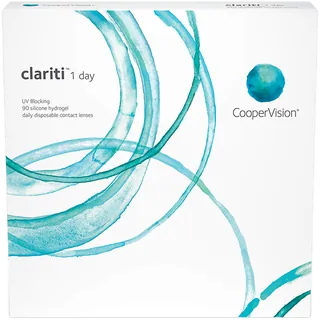
The cheapest daily here per year at list price: a silicone hydrogel lens with WetLoc Technology. Its minus range stops at -10.00.
-
Proclear 1 day · CooperVision
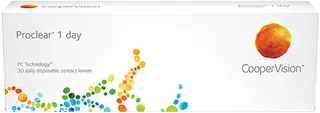
A hydrogel daily made of omafilcon A, a material that attracts and holds water, with a stated benefit for wearers whose eyes feel dry or irritated. Low oxygen flow.
-
ACUVUE OASYS (2-week) · ACUVUE
The classic two-week silicone hydrogel lens with HydraClear Plus wetting agent and Class 1 UV blocking. Cheaper than dailies; needs nightly cleaning.
-
ACUVUE VITA · ACUVUE
ACUVUE's monthly silicone hydrogel lens with HydraMax moisture technology and Class 1 UV blocking, at one of the lowest yearly costs here. Daily wear only.
-
TOTAL30 · Alcon
A water-gradient monthly silicone hydrogel lens with a very wet surface, Class 1 UV blocking and blue-light filtering. Daily wear only.
-
AIR OPTIX plus HydraGlyde · Alcon
A monthly silicone hydrogel lens with a HydraGlyde moisture matrix, approved for up to 6 nights of extended wear. No UV blocking.
-
Biofinity · CooperVision
The cheapest lens here per year at list price, with the highest oxygen flow: a monthly silicone hydrogel with Aquaform Technology, approved for up to 6 nights of extended wear.
-
Proclear · CooperVision
A monthly omafilcon B hydrogel lens from the Proclear family, with a stated comfort benefit for wearers whose eyes feel dry. CooperVision lists last revenue pack orders through November 1, 2027.
-
ULTRA · Bausch + Lomb
A monthly silicone hydrogel lens with MoistureSeal technology and high oxygen flow, approved for extended wear. Toric and multifocal versions exist.
Suggest a change
Related comparisons
-
 Daily contact lenses
Compare daily disposable contact lenses from Alcon, ACUVUE, Bausch + Lomb and CooperVision. Daily lenses are thrown away every night, so there's no cleaning, but they cost more per year. The real differences are material (silicone hydrogel or hydrogel), oxygen flow, power range, whether a toric or multifocal version exists, and price.
-
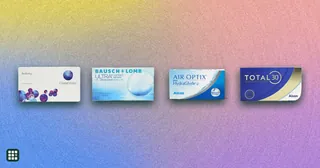 Monthly contact lenses
 are worn every day, cleaned and stored each night, and thrown away after a month. They cost less per year than daily disposables but need a cleaning routine. This grid compares the main US monthly lenses on yearly cost, lens material and oxygen, overnight wear approval, prescription range, and whether there's a version for astigmatism or reading.
-
 Eyeliners
Compare liquid, felt-tip, and pencil eyeliners by price, formula format, water resistance, shade selection, and applicator design.
-
 Lash serums
 promise longer, fuller-looking lashes. Some contain a prostaglandin analog (the same family as the prescription drug Latisse), others rely on peptides and plant extracts. This comparison spans lower-cost drugstore formulas through prestige serums and a prescription treatment; the choice comes down to ingredients, risk, wait time, and ongoing cost.
-
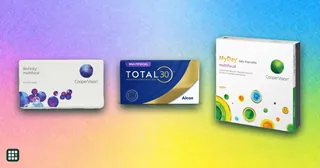 Multifocal contact lenses
 let people over 40 see near and far without reading glasses. Designs, add powers and materials differ, and the right one is often found by trying a few. This grid compares the main US multifocal lenses on yearly cost, replacement schedule, optical design, add powers, prescription range, astigmatism correction and lens material.
-
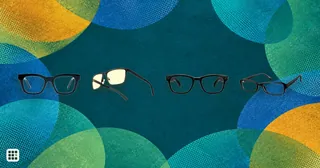 Blue-light glasses
 filter part of the blue light from screens, either with a nearly clear coating or a yellow or amber tint. They range from $20 drugstore readers to $100+ designer frames and add-ons at online glasses stores. This grid compares specialist brands, online stores' blue-light lenses and blue-light readers by price with and without a prescription, how much they say they filter, lens tint, returns and insurance. Eye doctors' groups say screens' blue light doesn't damage eyes and there's little evidence these glasses prevent eye strain, so treat them as a comfort and sleep-habit choice, not a medical one.