



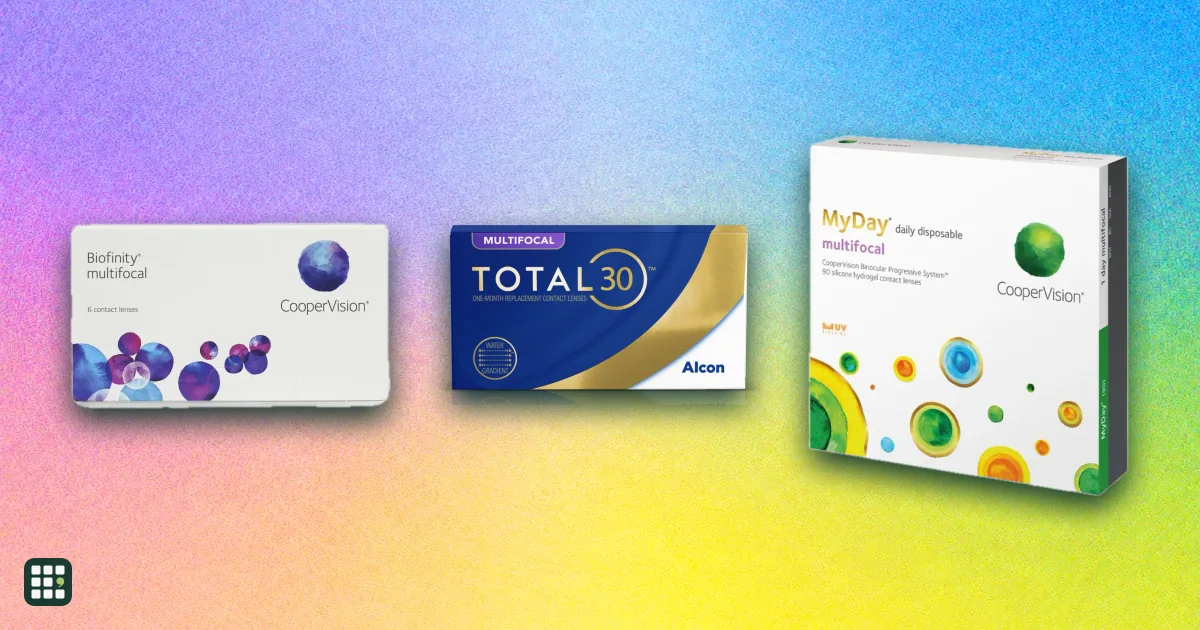
Multifocal contact lenses
Multifocal contact lenses let people over 40 see near and far without reading glasses. Designs, add powers and materials differ, and the right one is often found by trying a few. This grid compares the main US multifocal lenses on yearly cost, replacement schedule, optical design, add powers, prescription range, astigmatism correction and lens material.
Last updated
How to choose
Fitting comes first
- Multifocals need a fitting with your eye doctor, who picks the design and add power (ADD) for each eye. Expect to try a pair or two before the vision feels right.
- Most designs trade a little sharpness at distance or near for not needing readers. If you need crisp distance (night driving), say so: your doctor may fit the eyes differently.
- If you also have astigmatism, ask whether you need a toric multifocal; few lenses come that way.
Daily or reusable?
- Daily multifocals cost much more per year but need no cleaning and suit part-time wearers.
- Monthly multifocals cost less per year; add the cost of solution and keep up the nightly cleaning.
Compare the lens
- Silicone hydrogel lenses pass far more oxygen (Dk/t) than hydrogels, which matters for long days.
- Check your sphere power and ADD fall inside the lens's range, especially for strong prescriptions.
- Only sleep in lenses approved for overnight wear, and only with your eye doctor's OK.
Count the full cost
- Multifocals usually cost more than single-vision lenses from the same family. Check maker rebates on annual supplies, and use vision insurance or FSA and HSA money.
Alternatives
- Monovision (one eye for distance, one for near) with ordinary lenses, or single-vision contacts plus readers, can work too. Ask your eye doctor.
Answer
Browse the table. Filter to what matters.
Use the filters below, then sign in if you want to shortlist and decide with friends.
Sign in to vote, hide products and features, and reorder.
Verified: hover a cell and click its green dot for the source Estimate: no cited source Not stated: the maker doesn't publish it
| Feature | ⠿ | ⠿ | ⠿ | ⠿ | ⠿ | ⠿ | ⠿ | ⠿ | ⠿ | ⠿ | ⠿ | ⠿ | ⠿ | ⠿ | ⠿ | ⠿ | ⠿ | ⠿ | ⠿ |
|---|---|---|---|---|---|---|---|---|---|---|---|---|---|---|---|---|---|---|---|
|
⠿
Price
|
|||||||||||||||||||
|
⠿
Yearly cost
|
$1,346
|
$500
|
$492
|
$1,452
|
$588
|
$1,290
|
$876
|
$1,011
|
$400
|
$732
|
$560
|
$1,411
|
$990
|
$428
|
$656
|
||||
|
⠿
Replacement schedule
|
|||||||||||||||||||
|
⠿
Astigmatism correction
|
|
|
|
|
|
|
|
|
|
|
|
|
|
|
|
|
|||
|
⠿
Optical design
|
Aspheric center-near design that keeps distance vision
|
Balanced Progressive: D and N lenses with several zones
|
|||||||||||||||||
|
⠿
Add powers
|
One add design (no ADD steps)
|
||||||||||||||||||
|
⠿
Sphere power range
|
|||||||||||||||||||
|
⠿
Material type
|
Conventional hydrogel
|
Silicone hydrogel
|
Silicone hydrogel
|
Conventional hydrogel
|
Silicone hydrogel
|
Conventional hydrogel
|
Conventional hydrogel
|
Conventional hydrogel
|
Silicone hydrogel
|
Silicone hydrogel
|
|||||||||
|
⠿
Oxygen transmissibility
|
26 Dk/t
|
138 Dk/t
|
|||||||||||||||||
|
⠿
Overnight wear
|
0 nights
|
0 nights
|
0 nights
|
0 nights
|
|||||||||||||||
|
⠿
Water content
|
|||||||||||||||||||
|
⠿
Base curve
|
|||||||||||||||||||
|
⠿
Diameter
|
|||||||||||||||||||
|
⠿
Comfort technology
|
Aquaform: locks moisture in the lens
|
PC Technology: binds water throughout the lens
|
PC Technology: binds water throughout the lens
|
||||||||||||||||
|
⠿
UV blocking
|
None
|
None
|
None
|
None
|
None
|
||||||||||||||
|
⠿
Handling tint
|
|||||||||||||||||||
|
⠿
Lens material
|
|||||||||||||||||||
|
⠿
Pack sizes
|
30-pack, 90-pack
|
30-pack, 90-pack
|
6-pack
|
6-pack
|
Why these features matter
-
Price ($)
Prices vary by store, so this grid prices every lens at one store to compare fairly. Multifocals usually cost more than single-vision lenses; check rebates before you buy.
-
Yearly cost ($)
Daily lenses cost more than two-week or monthly lenses but need no cleaning solution or case. Compare a full year, not one box.
-
Replacement schedule
Daily lenses skip cleaning and suit occasional wear; reusable lenses cost less per year but need nightly care.
-
Astigmatism correction
With meaningful astigmatism you may need a toric multifocal; ordinary multifocals don't correct it.
-
Optical design
Designs split near and far vision differently. If one design doesn't work for you, a different design may, so it's worth trying more than one.
-
Add powers
Your eye doctor picks an ADD for your reading need. More ADD steps can mean a finer fit, especially as presbyopia progresses.
-
Sphere power range
Strong prescriptions aren't available in every lens; check your power is covered.
-
Material type
Silicone hydrogel lets far more oxygen through to the eye, which helps long wearing days. Some people still find a hydrogel lens softer or more comfortable.
-
Oxygen transmissibility (Dk/t)
Higher Dk/t means more oxygen reaches the cornea. It matters most if you wear lenses 12+ hours a day.
-
Overnight wear (nights)
Sleeping in lenses raises infection risk, so do it only with a lens approved for it and your eye doctor's OK. Useful for shift workers and anyone who wants to keep lenses in for days.
-
Water content (%)
Higher water content isn't automatically more comfortable; silicone hydrogels hold less water but pass more oxygen.
-
Base curve (mm)
Your eye doctor fits the base curve; lenses with one base curve fit most but not all eyes.
-
Diameter (mm)
Part of the fit your eye doctor checks; small differences change how the lens sits.
-
Comfort technology
Makers design lens surfaces to stay wet through the day. It may help if your eyes feel dry by evening, but comfort varies from person to person.
-
UV blocking
UV-blocking lenses add some protection for the area they cover; they don't replace sunglasses.
-
Handling tint
A faint tint makes a lens easier to see when you drop it or put it in.
-
Lens material
Lets you and your eye doctor compare lenses that share a material across brands.
-
Pack sizes
90-packs usually cost less per lens; 30-packs suit part-time wearers or trying a new lens.
About the products
-
DAILIES TOTAL1 Multifocal · Alcon
Alcon's premium daily multifocal with a water-gradient surface and high oxygen. Three ADDs; no UV blocker stated.
-
DAILIES AquaComfort Plus Multifocal · Alcon
A lower-cost Alcon daily hydrogel multifocal that releases moisture as you blink. Much less oxygen than silicone hydrogels.
-
AIR OPTIX plus HydraGlyde Multifocal · Alcon
Alcon's mainstream monthly multifocal: silicone hydrogel, approved for up to 6 nights, three ADDs.
-
TOTAL30 Multifocal · Alcon
Alcon's premium monthly multifocal with a water-gradient surface and Class 1 UV blocking. Daily wear only.
-
ACUVUE OASYS MAX 1-Day MULTIFOCAL · ACUVUE
J&J's newest daily multifocal, with a pupil-size-optimized design and TearStable technology for less tear evaporation. Three ADDs; Class 1 UV.
-
ACUVUE OASYS MAX 1-Day MULTIFOCAL for ASTIGMATISM · ACUVUE
One of the few daily multifocals that also corrects astigmatism (one cylinder power). Sold in 30-packs.
-
1-DAY ACUVUE MOIST MULTIFOCAL · ACUVUE
An older hydrogel daily multifocal with the same pupil-optimized design as the OASYS lenses. Low oxygen; Class 2 UV.
-
ACUVUE OASYS MULTIFOCAL · ACUVUE
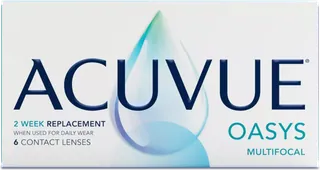
The only two-week multifocal here: silicone hydrogel, pupil-optimized design, Class 1 UV, 6 lenses per box.
-
MyDay multifocal · CooperVision
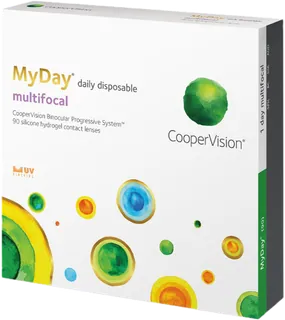
CooperVision's premium daily silicone hydrogel multifocal with three ADDs and a wide power range down to -12.00.
-
clariti 1 day multifocal 3 Add · CooperVision
A value daily silicone hydrogel multifocal with three ADDs and powers from +8.00 to -12.00.
-
clariti 1 day multifocal (original) · CooperVision · Discontinued Oct 2026
Original daily silicone hydrogel multifocal with two ADD options and a narrower power range than the 3 Add successor; discontinued by CooperVision.
-
Proclear 1 day multifocal · CooperVision
A hydrogel daily multifocal aimed at dry-feeling eyes, with a single add design that keeps distance vision. Low oxygen.
-
Biofinity multifocal · CooperVision
The lowest-priced monthly multifocal here: silicone hydrogel, up to 6 nights' wear, with D and N lenses and four ADDs so each eye can be fit separately.
-
Biofinity toric multifocal · CooperVision
A made-to-order monthly lens that corrects astigmatism and presbyopia together, with an unusually wide range of powers. Costs much more than plain Biofinity multifocal.
-
Proclear multifocal · CooperVision
An older hydrogel monthly multifocal with D and N lenses and four ADDs. Very low oxygen; daily wear only.
-
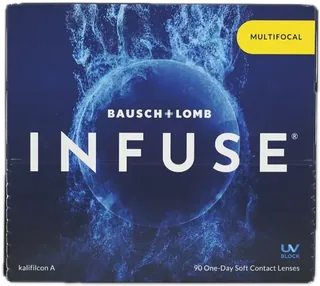
INFUSE Multifocal · Bausch + Lomb
Bausch + Lomb's newest daily multifocal, with a silicone hydrogel lens that releases moisturizing ingredients through the day. Two ADDs.
-
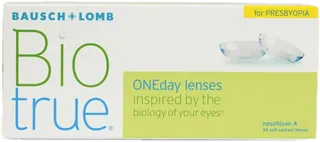
Biotrue ONEday for Presbyopia · Bausch + Lomb
A high-water hydrogel daily multifocal with Bausch's 3-zone design. Lower oxygen than silicone hydrogel lenses; two ADDs.
-
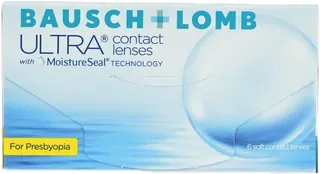
ULTRA for Presbyopia · Bausch + Lomb
A monthly silicone hydrogel multifocal with MoistureSeal and a 3-zone design, approved for up to 6 nights. Two ADDs.
-
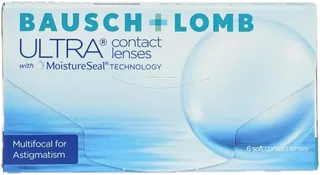
ULTRA Multifocal for Astigmatism · Bausch + Lomb
A monthly toric multifocal for astigmatism plus presbyopia, with a narrower power range (+4.00 to -6.00).
Suggest a change
Related comparisons
-
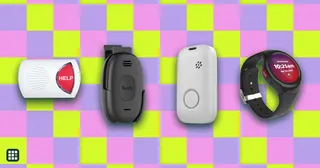 Personal emergency response systems
, or medical alert devices, let an older adult or someone living alone press a button (or have a fall detected) to reach a 24/7 monitoring center that sends help. The choices are in-home versus mobile, whether fall detection is included, what network it uses, and what it costs each month. This grid compares current devices from the major US providers.
-
 High-yield savings accounts
A high-yield savings account pays several times the interest of a typical bank savings account, and most are FDIC insured. Rates are variable, so the details matter: whether the advertised rate applies to everyone or needs deposits, which fees or minimums apply, how quickly you can move money, and who actually holds your money. This grid compares popular online savings accounts side by side. The real trade-offs are a few tenths of a percent of rate against convenience, bonuses that need big deposits, and fintech programs that spread money across partner banks.
-
 Digital photo frames
 compared: Aura, Skylight, Nixplay and Pix-Star Wi-Fi frames, budget Frameo-based frames, and simple memory-card frames. The real differences are what keeps working without a subscription, how easily the whole family can send photos and videos, how much storage you get, whether it works without Wi-Fi, and how each maker protects your family photos.
-
 Brokerage accounts
A brokerage account lets you buy stocks, ETFs and other investments on your own. Most US brokers now charge nothing to trade stocks and ETFs, so the choice depends on the details: cash interest, margin rates, fractional shares, retirement accounts, research tools, extended-hours trading, and what it costs to leave. This grid compares popular US online brokers side by side on those points. The real trade-offs are low cost against tools and service, and a simple app against depth for active traders.
-
 Countries to live in
Thirty-four popular countries compared for Americans who want to live abroad: how long you can stay without a visa, the easiest route to a long stay, the path to permanent residence and citizenship, what rent and daily life cost, and how safe, healthy and easy to live in each place is. Rules and thresholds change, so confirm the details with the country's government before you commit.
-
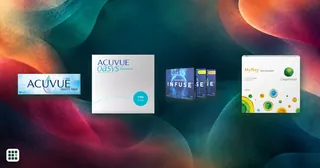 Contact lenses for dry eyes
Dryness is the most common reason people give up contact lenses. Makers answer it in different ways: fresh daily lenses, silicone hydrogels that pass more oxygen, wetting agents and water-loving surfaces, and a few lenses cleared to claim better comfort for mildly dry eyes. This grid compares the spherical soft lenses the four big makers sell in the US with that pitch, daily and reusable, by yearly cost, material, oxygen, moisture technology and fit, so you can pick a few to try with your eye doctor.