



Daily contact lenses
Compare daily disposable contact lenses from Alcon, ACUVUE, Bausch + Lomb and CooperVision. Daily lenses are thrown away every night, so there's no cleaning, but they cost more per year. The real differences are material (silicone hydrogel or hydrogel), oxygen flow, power range, whether a toric or multifocal version exists, and price.
Last updated
How to choose
1. Start with an eye exam and fitting
In the US, contact lenses are medical devices sold only with a valid prescription that names the brand. Your eye care professional fits the lens to your eye; this grid helps you discuss options, not pick a lens on your own. If you want to try a different brand, ask for a trial pair.
2. Check your prescription is covered
Make sure your sphere power is inside the lens's power range. If you have astigmatism, look for a toric version; if you need help with reading vision, a multifocal version.
3. Weigh material and comfort
Silicone hydrogel lenses pass much more oxygen (higher Dk/t), which helps on long days. Some people find hydrogel lenses comfortable and cheaper. Comfort is personal; dryness and screen use matter more than any one number.
4. Compare the full yearly cost
A daily wearer uses about 730 lenses a year (two eyes), about eight 90-packs. Look at yearly cost, then check maker rebates on annual supplies and vision insurance allowances, which can cut the price substantially. Prices differ between retailers and eye doctors.
5. Extras
UV blocking and blue-light filtering are nice to have but don't replace sunglasses. A handling tint makes lenses easier to find and handle.
Safety
- Never sleep in daily lenses or reuse them; throw them out after one wear.
- Keep lenses away from water (showering, swimming) because of infection risk.
- Remove lenses and see an eye doctor if you have pain, redness or blurry vision.
- Buy from sellers that ask for and verify your prescription.
Answer
Browse the table. Filter to what matters.
Use the filters below, then sign in if you want to shortlist and decide with friends.
Sign in to vote, hide products and features, and reorder.
Verified: hover a cell and click its green dot for the source Estimate: no cited source Not stated: the maker doesn't publish it
| Feature | ⠿ | ⠿ | ⠿ | ⠿ | ⠿ | ⠿ | ⠿ | ⠿ | ⠿ | ⠿ | ⠿ | ⠿ |
|---|---|---|---|---|---|---|---|---|---|---|---|---|
|
⠿
Price
|
$134.95
|
$85.70
|
$136.90
|
$115.25
|
$122.15
|
|||||||
|
⠿
Yearly cost
|
$1,095
|
$695
|
$795
|
$1,110
|
$935
|
$991
|
$991
|
$698
|
$799
|
$655
|
$844
|
|
|
⠿
Material type
|
Silicone hydrogel
|
Silicone hydrogel
|
Hydrogel
|
Silicone hydrogel
|
Silicone hydrogel
|
Hydrogel
|
Hydrogel
|
Silicone hydrogel
|
Silicone hydrogel
|
Hydrogel
|
||
|
⠿
Oxygen transmissibility
|
121 Dk/t
|
121 Dk/t
|
25.5 Dk/t
|
25.5 Dk/t
|
100 Dk/t
|
|||||||
|
⠿
Water content
|
38%
|
38%
|
54%
|
60%
|
||||||||
|
⠿
Lens material
|
verofilcon A
|
senofilcon A
|
nesofilcon A
|
stenfilcon A
|
somofilcon A
|
omafilcon A
|
||||||
|
⠿
UV blocking
|
None
|
None
|
Class 2
|
Class 2
|
||||||||
|
⠿
Blue light filtering
|
|
|
|
|
|
|
|
|
|
|
|
|
|
⠿
Toric version
|
|
|
|
|
|
|
|
|||||
|
⠿
Multifocal version
|
|
|
|
|
|
|
|
|
||||
|
⠿
Sphere power range
|
-15.00 to +8.00
|
-12.00 to +8.00
|
-10.00 to +8.00
|
-12.00 to +8.00
|
||||||||
|
⠿
Base curve
|
8.4
|
8.6
|
8.7
|
|||||||||
|
⠿
Diameter
|
14.3 mm
|
14.2 mm
|
14.1 mm
|
14.2 mm
|
||||||||
|
⠿
Handling tint
|
|
|
|
|
||||||||
|
⠿
Pack sizes
|
90
|
30, 90
|
30, 90, 180
|
90
|
Why these features matter
-
Price ($)
You need two boxes per eye prescription every three months, so small per-box differences add up. Manufacturer rebates on annual supplies can cut the real cost a lot.
-
Yearly cost ($)
Daily lenses cost more than two-week or monthly lenses but need no cleaning solution or case. Compare a full year, not one box.
-
Material type
Silicone hydrogel lets far more oxygen through to the eye, which helps long wearing days. Some people still find a hydrogel lens softer or more comfortable.
-
Oxygen transmissibility (Dk/t)
Higher Dk/t means more oxygen reaches the cornea. It matters most if you wear lenses 12+ hours a day.
-
Water content (%)
Higher water content isn't automatically more comfortable; silicone hydrogels hold less water but pass more oxygen.
-
Lens material
Lets you and your eye doctor compare lenses that share a material across brands.
-
UV blocking
UV-blocking lenses add some protection for the area they cover; they don't replace sunglasses.
-
Blue light filtering
A marketing differentiator for screen-heavy days; evidence of eye-health benefit is limited.
-
Toric version
If you have astigmatism, staying in the same family for a toric lens keeps comfort and material the same.
-
Multifocal version
Matters after your 40s, when reading vision changes; a multifocal in the same family makes the switch easier.
-
Sphere power range
Strong prescriptions aren't available in every lens; check your power is covered.
-
Base curve (mm)
Your eye doctor fits the base curve; lenses with one base curve fit most but not all eyes.
-
Diameter (mm)
Part of the fit your eye doctor checks; small differences change how the lens sits.
-
Handling tint
A faint tint makes a lens easier to see when you drop it or put it in.
-
Pack sizes
90-packs usually cost less per lens; 30-packs suit part-time wearers or trying a new lens.
About the products
-
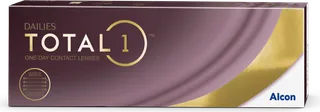
DAILIES TOTAL1 · Alcon
Alcon's premium water-gradient silicone hydrogel daily: the highest oxygen transmissibility here and a very wet surface. Toric and multifocal versions exist. Among the priciest dailies.
-
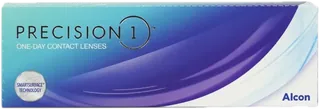
PRECISION1 · Alcon
A newer, lower-priced Alcon silicone hydrogel daily with Class 1 UV blocking and a wide power range, aimed at first-time wearers. A toric version exists.
-
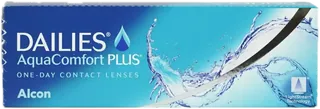
DAILIES AquaComfort Plus · Alcon
A long-running, budget-friendly hydrogel daily with moisture agents released on blinking. The widest minus range here (to -15.00), but low oxygen flow; toric and multifocal versions exist.
-
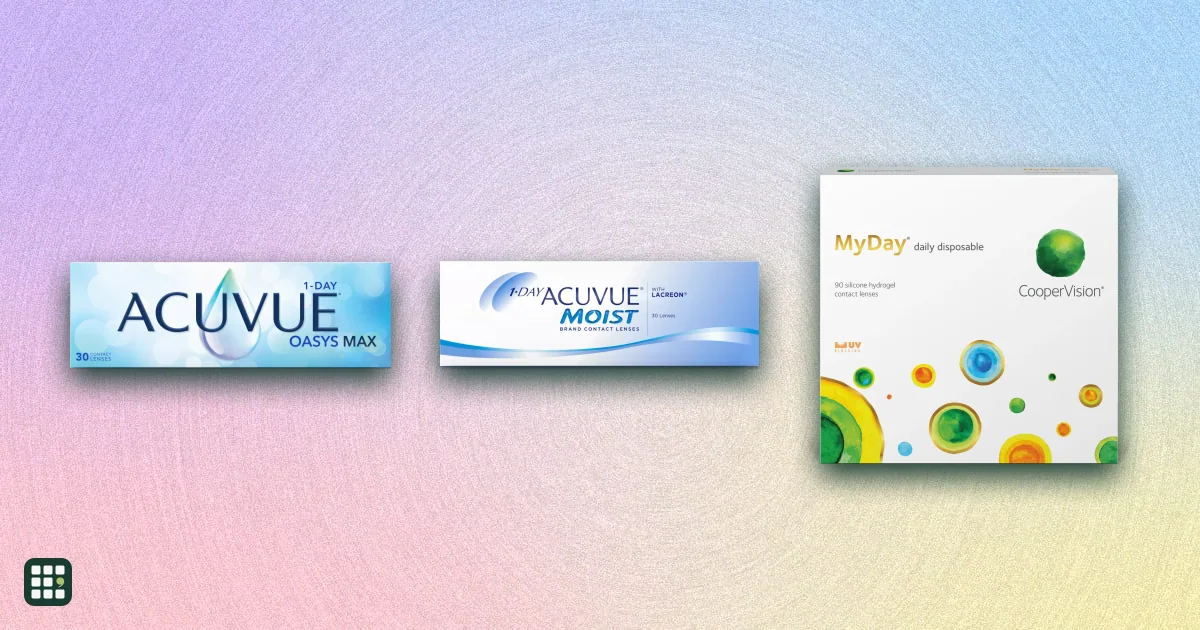
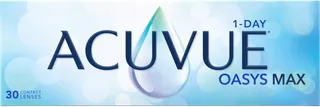
ACUVUE OASYS MAX 1-Day · ACUVUE
ACUVUE's top daily: silicone hydrogel with Class 1 UV blocking and a filter for about 60% of blue-violet light, two base curves, and toric and multifocal versions.
-
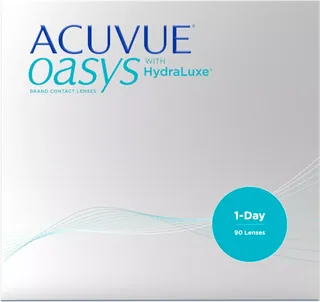
ACUVUE OASYS 1-Day · ACUVUE
Silicone hydrogel daily with HydraLuxe technology, Class 1 UV blocking and two base curves; also made for astigmatism. Largely superseded by OASYS MAX 1-Day but still sold.
-
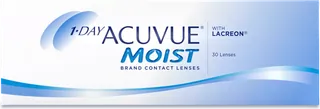
1-DAY ACUVUE MOIST · ACUVUE
A popular hydrogel daily with Class 2 UV blocking, two base curves, and toric and multifocal versions. Lower oxygen flow than silicone hydrogels.
-
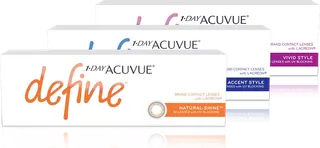
1-DAY ACUVUE DEFINE · ACUVUE
A cosmetic hydrogel daily that enhances the look of the iris (three effects), with or without vision correction. Narrower power range than regular lenses.
-
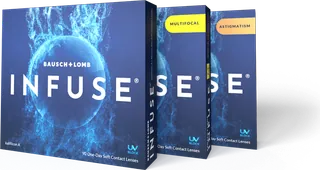
INFUSE One-Day · Bausch + Lomb
Bausch + Lomb's silicone hydrogel daily with high oxygen transmissibility and moisture ingredients; toric and multifocal versions exist.
-
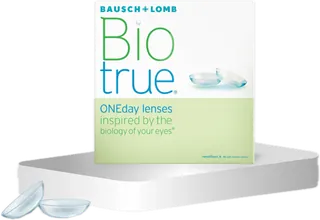
Biotrue ONEday · Bausch + Lomb
A high-water (78%) hydrogel daily designed to match the eye's water content; toric and presbyopia versions exist. Lower oxygen flow than silicone hydrogels.
-
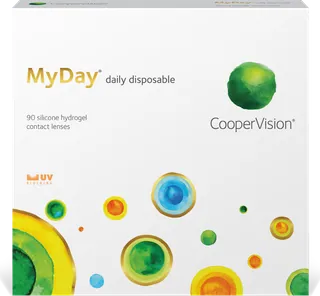
MyDay · CooperVision
CooperVision's soft silicone hydrogel daily with a wide power range (+8.00 to -12.00), sold in 90- and 180-packs; toric and multifocal versions exist.
-
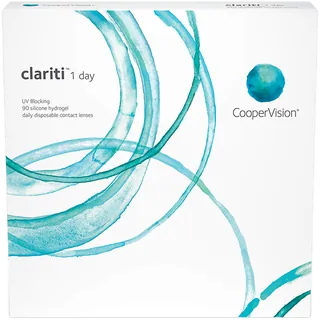
clariti 1 day · CooperVision
A value-priced silicone hydrogel daily from CooperVision with UV blocking, sold in 30-, 90- and 180-packs; toric and multifocal versions exist. Plus powers come in 0.50 steps only.
-
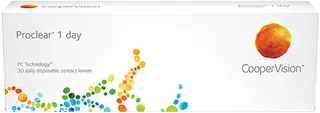
Proclear 1 day · CooperVision
A hydrogel daily using CooperVision's moisture-retaining PC Technology, often suggested for dry eyes; a multifocal version exists. Low oxygen flow.
Suggest a change
Related comparisons
-
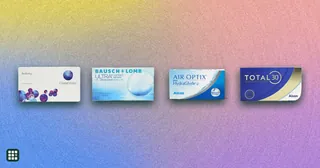 Monthly contact lenses
 are worn every day, cleaned and stored each night, and thrown away after a month. They cost less per year than daily disposables but need a cleaning routine. This grid compares the main US monthly lenses on yearly cost, lens material and oxygen, overnight wear approval, prescription range, and whether there's a version for astigmatism or reading.
-
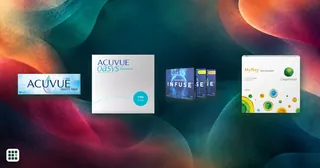 Contact lenses for dry eyes
Dryness is the most common reason people give up contact lenses. Makers answer it in different ways: fresh daily lenses, silicone hydrogels that pass more oxygen, wetting agents and water-loving surfaces, and a few lenses cleared to claim better comfort for mildly dry eyes. This grid compares the spherical soft lenses the four big makers sell in the US with that pitch, daily and reusable, by yearly cost, material, oxygen, moisture technology and fit, so you can pick a few to try with your eye doctor.
-
 Eyeliners
Compare liquid, felt-tip, and pencil eyeliners by price, formula format, water resistance, shade selection, and applicator design.
-
 Lash serums
 promise longer, fuller-looking lashes. Some contain a prostaglandin analog (the same family as the prescription drug Latisse), others rely on peptides and plant extracts. This comparison spans lower-cost drugstore formulas through prestige serums and a prescription treatment; the choice comes down to ingredients, risk, wait time, and ongoing cost.
-
 Multifocal contact lenses
 let people over 40 see near and far without reading glasses. Designs, add powers and materials differ, and the right one is often found by trying a few. This grid compares the main US multifocal lenses on yearly cost, replacement schedule, optical design, add powers, prescription range, astigmatism correction and lens material.
-
 Blue-light glasses
 filter part of the blue light from screens, either with a nearly clear coating or a yellow or amber tint. They range from $20 drugstore readers to $100+ designer frames and add-ons at online glasses stores. This grid compares specialist brands, online stores' blue-light lenses and blue-light readers by price with and without a prescription, how much they say they filter, lens tint, returns and insurance. Eye doctors' groups say screens' blue light doesn't damage eyes and there's little evidence these glasses prevent eye strain, so treat them as a comfort and sleep-habit choice, not a medical one.