



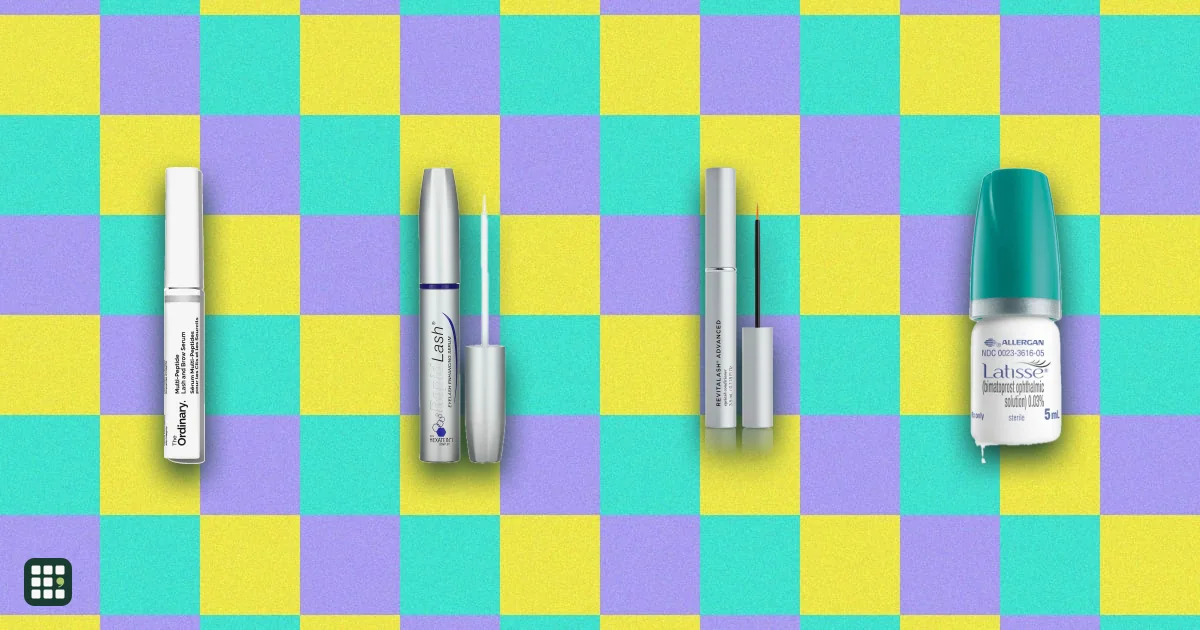
Lash serums
Lash serums promise longer, fuller-looking lashes. Some contain a prostaglandin analog (the same family as the prescription drug Latisse), others rely on peptides and plant extracts. This comparison spans lower-cost drugstore formulas through prestige serums and a prescription treatment; the choice comes down to ingredients, risk, wait time, and ongoing cost.
Last updated
How to choose
Start with the active ingredient, because it drives both results and side effects.
Decide on prostaglandin analogs
- Prescription bimatoprost (Latisse) is the only option here that is FDA-approved to grow lashes, and it carries the most documented risks, such as iris darkening and eyelid skin darkening.
- Several cosmetic serums contain a prostaglandin analog (isopropyl cloprostenate, ethylcloprostenolamide or dehydrolatanoprost). Their maker labels and safety pages warn about effects ranging from mild tingling to redness, irritation and dry eyes.
- Peptide and plant-based serums avoid prostaglandins, but makers' claims for them are mostly their own consumer studies.
Check the practical details
- Time to results: most makers say 4 to 12 weeks, and Latisse says 16 weeks for full results. Lashes return to normal after you stop.
- Cost per month: divide the price by the months one bottle lasts, then compare.
- Application: upper lash line only, on clean dry skin, usually nightly.
Know when to skip
Talk to an eye doctor first if you have glaucoma, dry eyes, eye infections or styes, or if you are pregnant or nursing. Stop use if you get persistent redness or irritation.
Answer
Browse the table. Filter to what matters.
Use the filters below, then sign in if you want to shortlist and decide with friends.
Sign in to vote, hide products and features, and reorder.
Verified: hover a cell and click its green dot for the source Estimate: no cited source Not stated: the maker doesn't publish it
| Feature | ⠿ | ⠿ | ⠿ | ⠿ | ⠿ | ⠿ | ⠿ | ⠿ | ⠿ | ⠿ | ⠿ |
|---|---|---|---|---|---|---|---|---|---|---|---|
|
⠿
Price
|
$189.99
|
||||||||||
|
⠿
Supply duration
|
|||||||||||
|
⠿
Size
|
|||||||||||
|
⠿
Prostaglandin analog
|
|||||||||||
|
⠿
Prescription required
|
|
|
|
|
|
|
|
|
|
||
|
⠿
Time to results
|
|||||||||||
|
⠿
Key active ingredients
|
|||||||||||
|
⠿
Side effect warnings
|
|||||||||||
|
⠿
Application
|





Why these features matter
-
Price ($)
Lash serums are an ongoing cost, so compare this with how long a bottle lasts.
-
Supply duration (months)
Divides the price into a monthly cost.
-
Size (mL)
Bigger is not always better since serums expire about a year after opening.
-
Prostaglandin analog
This ingredient is behind most lash growth claims and most irritation and darkening warnings. Some buyers want it, others avoid it.
-
Prescription required
A prescription means a doctor reviews your eye health first.
-
Time to results
Lashes need a full growth cycle, so expect weeks, not days.
-
Key active ingredients
Shows whether a serum relies on a drug-like analog or on peptides and plant extracts.
-
Side effect warnings
Products used near the eye can irritate it; know what to watch for.
-
Application
Nightly daily use versus a few times a week changes effort and how fast a bottle runs out.
About the products
-
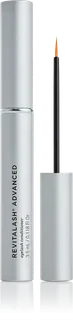
RevitaLash Advanced · RevitaLash
Physician-developed cosmetic serum with peptides and biotin plus a prostaglandin analog. The priciest cosmetic option here, with a six-month bottle.
-
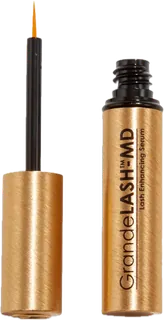
GrandeLASH-MD · Grande Cosmetics
Cosmetic serum with a prostaglandin analog and hyaluronic acid. Its 2 mL bottle showed sold out on the maker's page when checked.
-
Essential Lash Serum · Babe Original
Lowest-priced serum here. Marketed around biotin and amino acids, but its label also lists a prostaglandin analog.
-
Lilash Purified Eyelash Serum · Lilash
Physician-formulated cosmetic serum built on a prostaglandin analog, with hydrolyzed lupine protein and panthenol.
-
NeuLash · NeuLash
Cosmetic serum with a prostaglandin analog plus peptides and hyaluronate. Its page showed out of stock when checked.
-
GRO Lash Serum · Vegamour
Plant and peptide serum that the maker says is free of prostaglandins. A choice for buyers who want to avoid that ingredient.
-
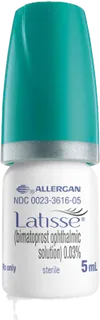
Latisse · AbbVie
FDA-approved prescription bimatoprost 0.03% treatment for growing lashes. Needs a prescription and has the most documented side effects.
-
LASHBOND Building Serum · OLAPLEX
Prostaglandin-free lash serum with OLAPLEX peptide complex and Bond Building Technology.
-
Multi-Peptide Lash and Brow Serum · The Ordinary
Lower-priced peptide and plant-extract serum for lashes and brows; the maker says it contains no prostaglandins.
-
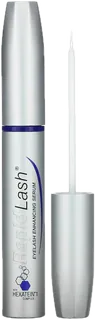
RapidLash Eyelash Enhancing Serum · RapidLash
Drugstore-priced daily serum containing a prostaglandin analog and the maker’s Hexatein 1 complex.
-
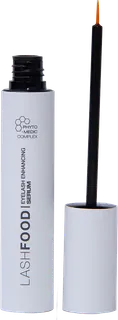
Phyto-Medic Eyelash Enhancer · LashFood
Plant-based lash enhancer with the maker’s Phyto-Medic Complex; sold as a three-month supply.
Suggest a change
Related comparisons
-
 Eyeliners
Compare liquid, felt-tip, and pencil eyeliners by price, formula format, water resistance, shade selection, and applicator design.
-
 Contact lenses for dry eyes
Dryness is the most common reason people give up contact lenses. Makers answer it in different ways: fresh daily lenses, silicone hydrogels that pass more oxygen, wetting agents and water-loving surfaces, and a few lenses cleared to claim better comfort for mildly dry eyes. This grid compares the spherical soft lenses the four big makers sell in the US with that pitch, daily and reusable, by yearly cost, material, oxygen, moisture technology and fit, so you can pick a few to try with your eye doctor.
-
 Daily contact lenses
Compare daily disposable contact lenses from Alcon, ACUVUE, Bausch + Lomb and CooperVision. Daily lenses are thrown away every night, so there's no cleaning, but they cost more per year. The real differences are material (silicone hydrogel or hydrogel), oxygen flow, power range, whether a toric or multifocal version exists, and price.
-
 Monthly contact lenses
 are worn every day, cleaned and stored each night, and thrown away after a month. They cost less per year than daily disposables but need a cleaning routine. This grid compares the main US monthly lenses on yearly cost, lens material and oxygen, overnight wear approval, prescription range, and whether there's a version for astigmatism or reading.
-
 Prescription sunglasses
Compare where to buy prescription sunglasses in the US: budget online stores, designer-frame retailers, Oakley and Ray-Ban's own Rx shops, premium polarized brands, and a lens-replacement service. Prices run from about $15 to $600 a pair, and the sellers differ on lens choices, the prescriptions they can fill, returns and warranty.
-
 Vision insurance plans
Vision insurance helps pay for eye exams, glasses and contact lenses, but most plans reimburse a fixed allowance rather than the full cost. This grid compares standalone individual and family plans from Aetna, EyeMed, Guardian and Humana on premium, copays, frame and contact lens allowances, waiting periods and networks, so you can see whether a plan is worth its price.