



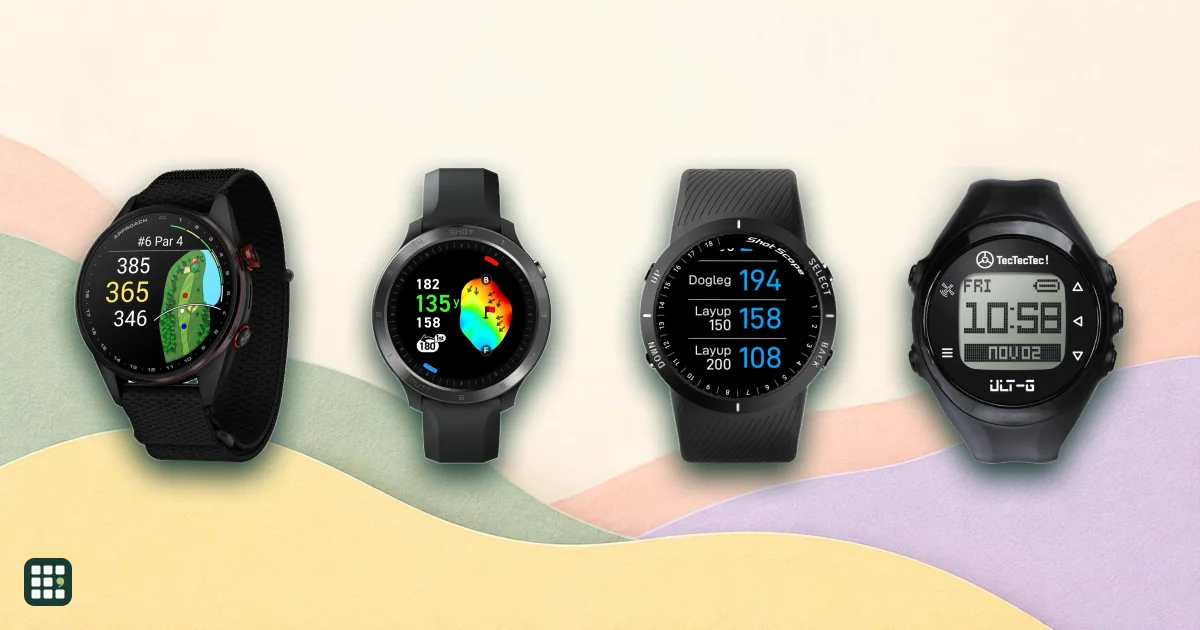
Golf GPS watches
Golf GPS watches put front, center, and back yardages on your wrist, with no aiming and no phone needed on the course. They range from simple distance-only watches around $110 to full smartwatches near $800 that add slope-adjusted distances, hole maps, automatic shot tracking, and health tracking. This grid compares the current watches from Garmin, Shot Scope, Voice Caddie, Bushnell, SkyCaddie, and TecTecTec on the things that change the choice: what you see on the course, whether anything needs a subscription, battery life, screen, and everyday smartwatch features.
Last updated
How to choose
Start with what you want to see on the course
Every watch here gives distances to the front, center, and back of the green. Decide how much more you want: hazard distances (carry a bunker, lay up short of water), a green view where you can drag the pin to today's position, or a full hole map you can touch to measure to any point. Distance-only watches are the simplest and cheapest; hole maps help most on courses you don't know.
Check what costs extra after you buy
Most watches here need no subscription for distances. But some features sit behind a paid plan: Garmin's Garmin Golf membership unlocks green contours on every model, and hole maps and PlaysLike distances on the S44; SkyCaddie's free PAR plan gives front, center, and back only, with hole maps and green shapes on paid plans. Shot Scope, Voice Caddie, Bushnell, and TecTecTec say their maps and updates are free. Add any plan you would actually want to the price.
Slope and tournament play
Slope-adjusted ("plays like") distances help on hilly courses, but they are not allowed in most competitions. If you play in club events, make sure slope can be switched off (a tournament mode). SkyCaddie leaves slope out entirely, so it is always tournament legal.
Shot tracking: tags, sensors, or nothing
Automatic shot tracking records where each shot was hit so the app can show your stats. Shot Scope's X5 and V5 include 16 club tags in the box, so the watch knows which club you used. Garmin's watches detect shots on their own and add club names with the optional CT10 or CT1 sensors, sold separately. Voice Caddie's T-series detects shots and putts without tags. If you only want yardages, skip it and save money.
Battery, screen, and wear
- Battery: look at hours in golf mode. Most last one or two rounds; Garmin's S12 lasts up to 30 hours. Some makers quote "rounds" or "holes" rather than hours, so those cells are left empty.
- Screen: AMOLED and OLED screens are bright and sharp but use more power; memory-in-pixel (MIP) screens are easy to read in sun and last longer. Touchscreens make hole maps easier to use.
- Weight and size: lighter watches (around 30 to 45 g) are easier to forget during the swing.
Do you want an everyday smartwatch too?
If you will wear it off the course, check heart rate, phone notifications, and step counting. Garmin's S50, S70, and S72 are full smartwatches; most golf-first watches only count steps, if that.
Before you buy
- Search the maker's course list for the courses you play.
- Check the return window; most makers here offer 30 days.
- Prices change often; Shot Scope, Voice Caddie, and SkyCaddie run frequent sales below the list prices shown here.
Answer
Browse the table. Filter to what matters.
Use the filters below, then sign in if you want to shortlist and decide with friends.
Sign in to vote, hide products and features, and reorder.
Verified: hover a cell and click its green dot for the source Estimate: no cited source Not stated: the maker doesn't publish it
| Feature | ⠿ | ⠿ | ⠿ | ⠿ | ⠿ | ⠿ | ⠿ | ⠿ | ⠿ | ⠿ | ⠿ | ⠿ | ⠿ | ⠿ | ⠿ | ⠿ | ⠿ | ⠿ |
|---|---|---|---|---|---|---|---|---|---|---|---|---|---|---|---|---|---|---|
|
⠿
Price
|
$799.99
|
$699.99
|
$399.99
|
$299.99
|
$199.99
|
$299.99
|
$249.99
|
$179.99
|
||||||||||
|
⠿
Subscription needed
|
|
|
|
|
|
|
|
|||||||||||
|
⠿
Paid extras
|
Garmin Golf, 99.99 USD/year: green contours, green reading
|
Garmin Golf, 99.99 USD/year: green contours
|
None
|
None
|
||||||||||||||
|
⠿
Preloaded courses
|
38,000+ courses
|
|||||||||||||||||
|
⠿
Golf battery life
|
||||||||||||||||||
|
⠿
Watch battery life
|
||||||||||||||||||
|
⠿
Display type
|
Color LCD
|
Backlit monochrome LCD
|
||||||||||||||||
|
⠿
Touchscreen
|
|
|
|
|
|
|||||||||||||
|
⠿
Screen size
|
1.2 in
|
1.2 in
|
||||||||||||||||
|
⠿
Hazard distances
|
|
|
||||||||||||||||
|
⠿
Green view
|
|
|||||||||||||||||
|
⠿
Hole maps
|
|
|
|
|
||||||||||||||
|
⠿
Slope distances
|
|
|
|
|
|
|
|
|
||||||||||
|
⠿
Green contours
|
|
|
|
|
|
|
|
|
||||||||||
|
⠿
Automatic shot tracking
|
|
|
|
|
|
|
|
|
||||||||||
|
⠿
Club tracking
|
None
|
None
|
None
|
None
|
None
|
None
|
None
|
None
|
None
|
None
|
None
|
|||||||
|
⠿
Digital scorecard
|
|
|||||||||||||||||
|
⠿
Club recommendations
|
|
|
|
|
|
|
|
|
|
|
|
|
|
|
|
|||
|
⠿
Tournament mode
|
|
|
|
|||||||||||||||
|
⠿
Heart rate
|
|
|
|
|
|
|
|
|
|
|
|
|
|
|||||
|
⠿
Smart notifications
|
|
|
|
|
|
|
||||||||||||
|
⠿
Step counting
|
|
|
||||||||||||||||
|
⠿
Water rating
|
Water resistant (no rating given)
|
|||||||||||||||||
|
⠿
Weight
|
48 g
|
48 g
|
48 g
|
56 g
|
Why these features matter
-
Price ($)
What you pay up front. Extra money mostly buys a brighter screen, hole maps, slope, shot tracking, and smartwatch features; basic yardage watches cost a fraction of flagships.
-
Subscription needed
A watch that needs a plan to work keeps costing money; one that does not can be bought and forgotten.
-
Paid extras
Some features advertised for a watch only work with a membership. Add the plan to the price if you want those features.
-
Preloaded courses (courses)
Matters most if you travel. All of these cover the vast majority of US courses; check the maker's course search for the ones you play.
-
Golf battery life (hr)
One round takes 4 to 5 hours. Longer life means fewer charges and less worry on a 36-hole day.
-
Watch battery life (days)
Matters if you wear it every day; short watch-mode life means charging it before each round.
-
Display type
AMOLED and OLED screens are bright and sharp but use more battery; memory-in-pixel (MIP) and transflective LCD screens are easy to read in full sun and last longer.
-
Touchscreen
Touch makes moving the pin, panning a hole map, and measuring to a point much quicker. Buttons are easier with gloves or wet hands.
-
Screen size (in)
A bigger screen shows maps and numbers more clearly but means a bigger watch.
-
Hazard distances
Lets you lay up short of trouble or know the carry over it, which matters more than the pin on many tee shots.
-
Green view
Distance to the actual pin beats the center of the green, especially on deep greens.
-
Hole maps
A map shows doglegs and trouble you cannot see from the tee, and on touch models lets you measure to any point.
-
Slope distances
Uphill and downhill shots play longer or shorter than the flat yardage. Slope is not allowed in most competitions, so see Tournament mode.
-
Green contours
Helps you see where to leave approach shots and how putts will break.
-
Automatic shot tracking
Gives you stats on how far and how well you hit each club without slowing play.
-
Club tracking
Club-level stats show your real distances with each club; tags in the box save the cost of buying sensors later.
-
Digital scorecard
Saves carrying a card and feeds your scores to the app.
-
Club recommendations
Useful for newer players and on unfamiliar courses; experienced players may ignore it.
-
Tournament mode
Needed if you play in club competitions or events that allow distance devices but not slope.
-
Heart rate
Needed for health and fitness tracking off the course. Golf-only buyers can skip it.
-
Smart notifications
Turns the golf watch into an everyday smartwatch; some golfers prefer to switch these off during a round anyway.
-
Step counting
A simple activity measure if you walk the course or wear the watch every day.
-
Water rating
Every watch here handles rain and sweat; 5 ATM watches can also be worn swimming.
-
Weight (g)
Lighter watches are easier to forget during the swing.
About the products
-
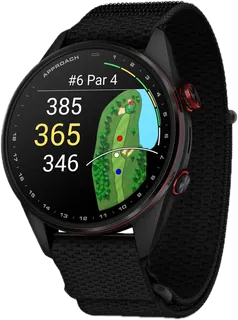
Approach S72 · Garmin
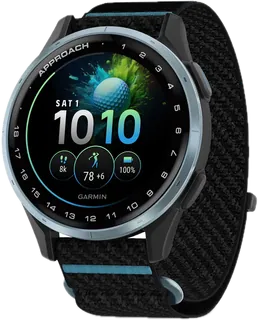
Garmin's flagship golf smartwatch, launched October 2026: a 1.4-inch AMOLED touchscreen, full hole maps, PlaysLike distances, automatic shot detection, a virtual caddie, phone calls, and a built-in LED flashlight. Figures are for the 47 mm size; the 43 mm costs the same with a smaller screen and up to 15 hours in golf mode. Green contours still need a Garmin Golf membership.
-
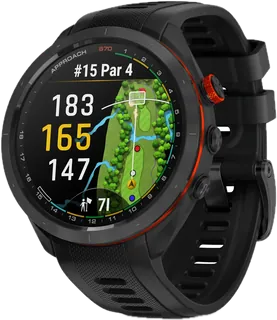
Approach S70 · Garmin · Superseded Oct 2026
The S72's predecessor, still sold by Garmin as a previous model for $100 less. It has nearly all the same golf features (hole maps, PlaysLike, AutoShot, virtual caddie) on the same size AMOLED screen, but no flashlight, calls, or green reading. Figures are for the 47 mm size; a 42 mm version is also sold.
-
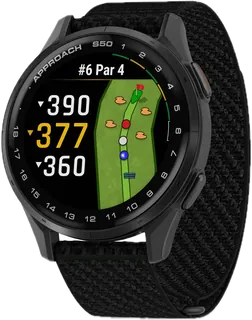
Approach S50 · Garmin
A light (29 g) AMOLED touchscreen golf watch with PlaysLike distances, AutoShot, and Garmin's 24/7 health tracking and sport profiles. Full hole maps and green contours need a Garmin Golf membership. A good middle ground if you want a daily smartwatch without flagship pricing.
-
Approach S44 · Garmin
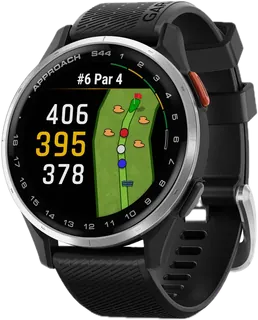
Garmin's golf-only AMOLED touchscreen watch: green view, hazards, AutoShot, and notifications, but no heart rate. Hole maps, PlaysLike distances, and green contours all need a Garmin Golf membership, so budget for one if you want them.
-
Approach S12 · Garmin
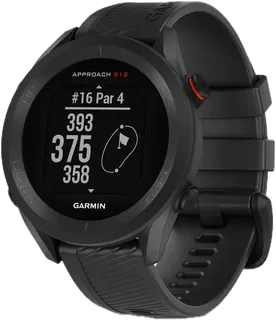
Garmin's simple, button-operated golf watch with a sunlight-readable memory-in-pixel screen, green view, and hazard distances. Its standout is battery life: up to 30 hours of golf. No touchscreen, hole maps, slope, or shot detection.
-
Approach J1 · Garmin
Garmin's watch made for junior golfers: an AMOLED touchscreen, green view, hazard distances, automatic shot detection, and a scorecard, in a light 29 g case that fits wrists from 115 mm. No slope, hole maps, or phone notifications, and priced like the adult S44.
-
Shot Scope X5 · Shot Scope
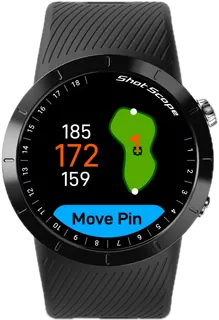
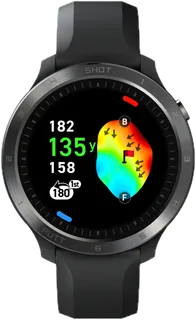
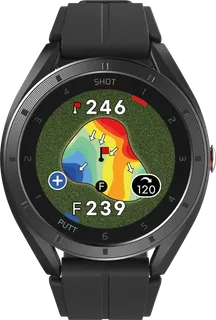
Shot Scope's top watch: a color touchscreen with a ceramic bezel, personalized hole maps, and 16 club tags in the box for automatic shot tracking and over 100 stats in a free app. No subscriptions. Its screen is memory-in-pixel rather than AMOLED. It was out of stock on Shot Scope's US store in late October 2026.
-
Shot Scope V5 · Shot Scope
The button-operated version of the X5: the same automatic shot tracking with 16 included club tags, full hole maps, green view, and free stats, for $50 less. Choose it if you want tracking and don't need a touchscreen.
-
Shot Scope G6 · Shot Scope
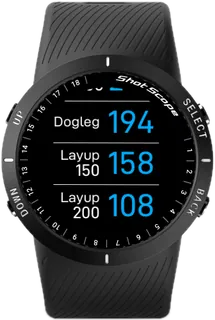
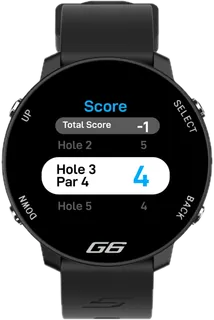
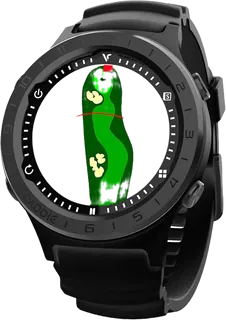
A simple, light (42 g) GPS watch with full hole maps, hazard and layup distances, a large-number mode, and a scorecard. No shot tracking or slope, and no subscriptions.
-
Shot Scope G5 · Shot Scope
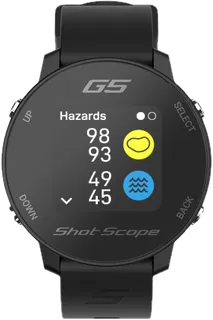
Shot Scope's most basic watch: front, middle, and back distances plus hazards, layups, and doglegs, a scorecard, and two straps, in a 42 g case. No hole maps or shot tracking. Often on sale well below its $149.99 list price (at $109.99 in October 2026).
-
Voice Caddie T11 Pro · Voice Caddie
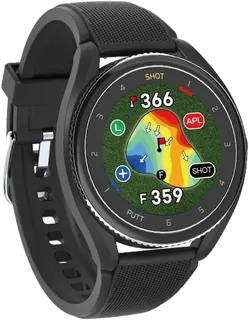
Voice Caddie's top watch, with a bright OLED touchscreen, slope, green undulation maps, automatic shot and putt tracking, club recommendations, and wind data, all with no fees. No fitness tracking.
-
Voice Caddie T11 LT · Voice Caddie
A cheaper T11 with a color LCD instead of OLED: slope, green undulation, shot and putt tracking, and left-handed support, without the Pro's club recommendations or wind data. Adds step tracking through Apple Health and Android Health Connect. Battery is rated for 27 holes of golf.
-
Voice Caddie T9 · Voice Caddie
A color LCD touchscreen watch with slope, green undulation, shot and putt tracking, and a tournament mode, with no fees. Battery is rated for 27 holes. Voice Caddie's own compare chart lists it at $249.99, below the $299.99 on its product page.
-
Voice Caddie A3 · Voice Caddie
A budget touchscreen watch with slope, green undulation, hazard distances, and movable pins, plus walking, running, and cycling modes. It has no Bluetooth, so no app sync, notifications, or shot tracking; course updates go through a computer.
-
iON Elite · Bushnell Golf
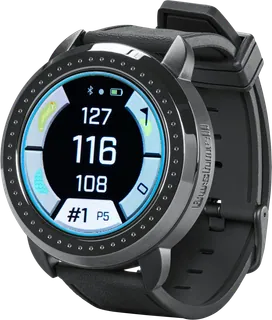
Bushnell's golf watch, with a color touchscreen, slope that can be switched off for tournaments, hole view with shot planning, and green view with a movable pin. No subscriptions. Bushnell quotes 12+ hours in its specs and 18+ hours elsewhere.
-
SkyCaddie LX5 · SkyGolf
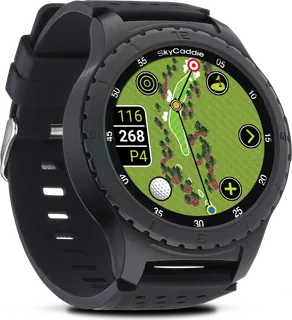
A large 1.39-inch AMOLED touchscreen with SkyCaddie's ground-verified course maps, heart rate, and step counting. The free plan gives only front, center, and back distances; hole maps (HoleVue) and green shapes (IntelliGreen) need a paid plan from $29.95 a year. Never shows slope. A ceramic-bezel LX5C costs $50 more.
-
SkyCaddie LX2 · SkyGolf
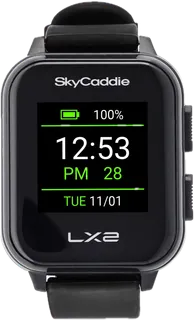
SkyCaddie's cheaper watch with a sunlight-readable color touchscreen and a clip-on cradle so it can be used as a handheld. Front, center, and back distances are free; hole maps and green shapes need a paid plan. On sale at $99.95 in October 2026 against a $149.95 regular price.
-
TecTecTec ULT-G · TecTecTec
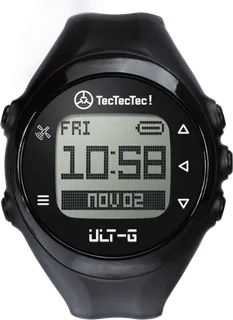
The cheapest watch here: front, center, and back distances and hazard distances on a backlit button-operated screen, with automatic course recognition and no subscription. No green view, maps, slope, or app features.
Suggest a change
Related comparisons
-
 Golf push carts
 (push trolleys) let you walk the course without carrying your bag. They differ most in how small and how easily they fold, how much they weigh to lift into a trunk, three or four wheels, whether the front wheel swivels, the brake, and which holders come included rather than sold extra.
-
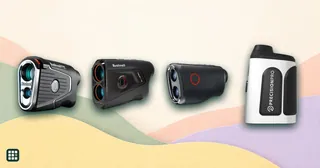 Golf rangefinders
Laser golf rangefinders compared on the things that change your yardages: slope and whether you can switch it off for tournaments, magnification and range, accuracy, pin-lock feedback, stabilization, display, battery, water resistance, weight, and price. Budget lasers now measure about as accurately as flagships; the extra money mostly buys brighter optics, steadier views, environmental slope, and GPS.
-
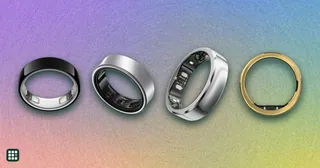 Smart rings
 track sleep, recovery, and daily health signals in a screen-free form. Compare the hardware price and any membership with battery life, phone requirements, sizing, and the health features each maker actually offers. These are wellness tools: a ring’s alert or estimate is not a diagnosis.
-
 OTC hearing aids
Over-the-counter hearing aids side by side, from earbuds with a built-in hearing aid mode to nearly invisible in-canal aids and models with remote audiologist care. Since 2022, US adults with mild to moderate hearing loss can buy hearing aids without a prescription; the choice is between price, how well the sound is fitted to your hearing, comfort and visibility, and how much help you get afterwards.
-
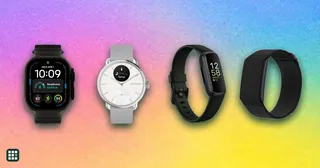 Wearable health technology
 now runs from everyday smartwatches and rings to prescription glucose sensors and medical-grade patches. This grid puts them side by side so you can see what each one actually measures, which functions are FDA cleared, what it costs up front and every month, and how long it lasts between charges or replacements. The real trade-offs: breadth versus medical depth, a screen versus discretion, and a one-off price versus memberships or disposable sensors.
-
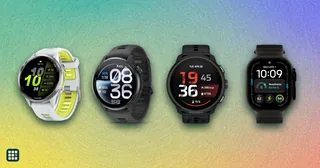 GPS running watches
 track pace, distance and heart rate without a phone, and the better ones add training guidance, maps and music. This grid compares current models from Garmin, COROS, Suunto, Polar, Apple, Samsung and Amazfit, from about $200 entry watches to $1,000+ adventure flagships. The real trade-offs are battery life against a bright AMOLED screen, accurate multi-band GPS, offline maps, and how much training analysis you will actually use.