



OTC hearing aids
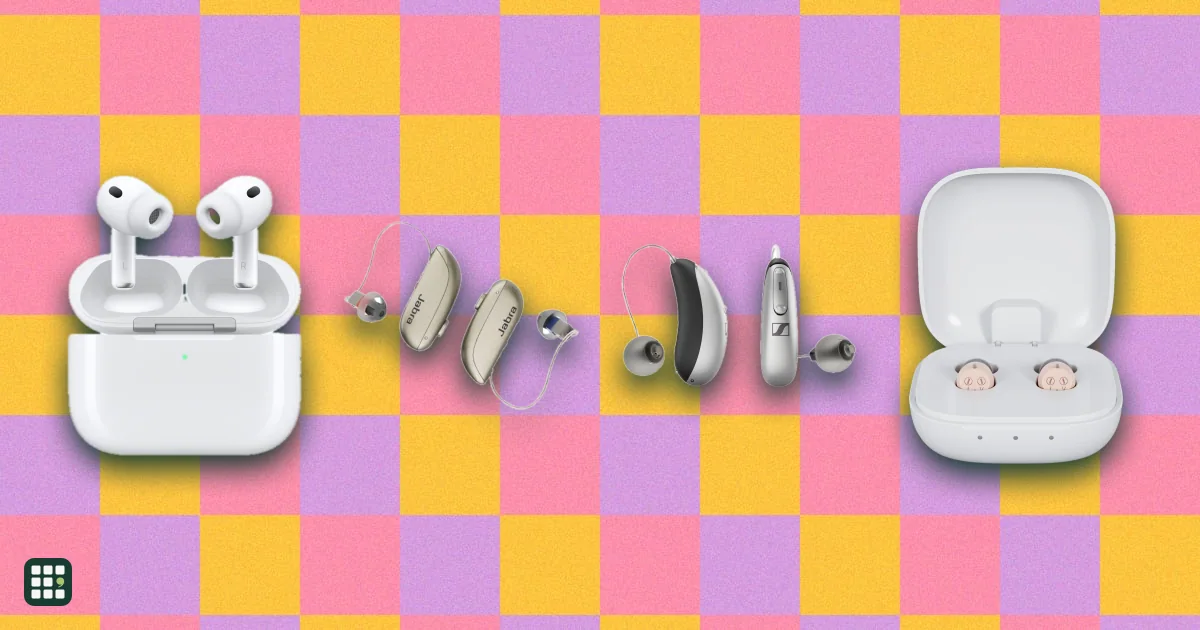
Over-the-counter hearing aids side by side, from earbuds with a built-in hearing aid mode to nearly invisible in-canal aids and models with remote audiologist care. Since 2022, US adults with mild to moderate hearing loss can buy hearing aids without a prescription; the choice is between price, how well the sound is fitted to your hearing, comfort and visibility, and how much help you get afterwards.
Last updated
How to choose
Check that OTC is right for you
OTC hearing aids are for adults 18 and older with perceived mild to moderate hearing loss: you struggle in noisy restaurants, turn the TV up, or ask people to repeat themselves, but can hear normal speech in a quiet room. See a doctor first if your hearing changed suddenly, one ear is much worse, you have ear pain, drainage or dizziness, or you can't follow conversation even in quiet. Those need a medical exam, and severe loss needs prescription aids.
Choose how it gets fitted
- Self-fitting: an in-app hearing test tunes the aids to your hearing. Good results for most mild to moderate losses, if you take the test in a quiet room.
- Professional remote care: an audiologist or hearing specialist adjusts the aids by video or app. Worth paying for if you're new to hearing aids or want help over the first weeks.
- Preset programs: you pick the setting that sounds best. Cheapest, but it may boost frequencies you don't need.
Pick a style you'll actually wear
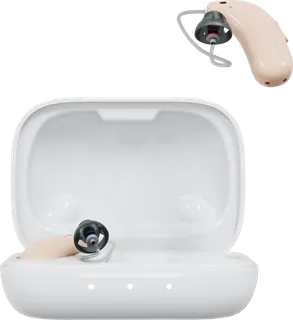
- Receiver-in-canal (behind the ear): comfortable all day, biggest batteries, most features.
- Behind-the-ear without a receiver wire: easy to handle, often with long battery life, but bulkier on the ear.
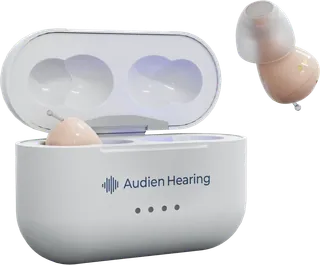
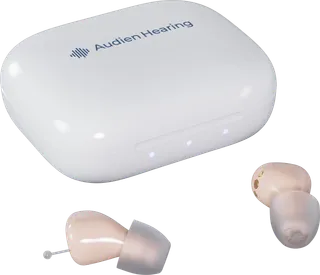
- In-canal: nearly invisible, but smaller batteries and usually no streaming.
- Earbud style: doubles as headphones with streaming and noise cancellation; obvious in the ear and best for part-time use.
Compare the everyday features
- Battery: rechargeable is easier if handling tiny batteries is hard; aim for 16 hours or more per charge.
- Phone: check that the app supports your phone. Streaming and hands-free calls are big wins if phone calls are a struggle.
- Tinnitus: a built-in sound generator helps if you also have ringing in your ears.
Use the trial period
Your brain needs a few weeks to adjust to amplified sound, so wear the aids every day and use the return window (14 to 100 days here; most give 45). Read the store's return policy, not just the product page: they don't always agree to decide. Check the warranty, especially whether it covers loss and damage, and whether your health plan or HSA/FSA reimburses OTC hearing aids.
Answer
Browse the table. Filter to what matters.
Use the filters below, then sign in if you want to shortlist and decide with friends.
Sign in to vote, hide products and features, and reorder.
Verified: hover a cell and click its green dot for the source Estimate: no cited source Not stated: the maker doesn't publish it
| Feature | ⠿ | ⠿ | ⠿ | ⠿ | ⠿ | ⠿ | ⠿ | ⠿ | ⠿ | ⠿ | ⠿ | ⠿ | ⠿ | ⠿ | ⠿ | ⠿ | ⠿ |
⠿
No longer supported Oct 2026
|
⠿ |
|---|---|---|---|---|---|---|---|---|---|---|---|---|---|---|---|---|---|---|---|
|
⠿
Price
|
$899
|
$2,950
|
|||||||||||||||||
|
⠿
Style
|
|||||||||||||||||||
|
⠿
Fitting
|
Preset programs
|
Self-fitting
|
|||||||||||||||||
|
⠿
Remote professional care
|
|
|
|||||||||||||||||
|
⠿
Hearing loss range
|
Mild to moderate
|
Mild to moderate
|
Mild to moderate
|
Mild to moderate
|
Mild to moderate
|
Mild to moderate
|
Mild to moderate
|
Mild to moderate
|
|||||||||||
|
⠿
Rechargeable
|
|
||||||||||||||||||
|
⠿
Battery life
|
|||||||||||||||||||
|
⠿
Charging case
|
|
||||||||||||||||||
|
⠿
Bluetooth streaming
|
|
|
|
|
|
||||||||||||||
|
⠿
Hands free calls
|
|
|
|
|
|
|
|||||||||||||
|
⠿
Phone compatibility
|
No app needed
|
iPhone and Android (app deactivated Oct 2026)
|
|||||||||||||||||
|
⠿
Tinnitus support
|
|||||||||||||||||||
|
⠿
Water resistance
|
IPX7
|
||||||||||||||||||
|
⠿
Return window
|
|||||||||||||||||||
|
⠿
Warranty
|
|||||||||||||||||||
|
⠿
Active noise cancellation
|
|
|
|
|
|
|
|
|
|
|
|
|
|
|
Why these features matter
-
Price ($)
OTC aids cost a fraction of prescription aids, but the cheapest skip fitting, support and remote care that make a difference in noisy places.
-
Style
In-canal aids are nearly invisible but have small batteries and fewer features; behind-the-ear styles are more comfortable for all-day wear; earbud styles double as headphones but look like you are listening to music.
-
Fitting
Self-fitting and professional tuning match the sound to your specific loss; preset aids are simpler but may amplify the wrong frequencies.
-
Remote professional care
First-time wearers often need several adjustments; remote care gets close to the clinic experience without the clinic price.
-
Hearing loss range
All OTC aids are for adults 18+ with perceived mild to moderate loss; severe loss, sudden loss or ear pain need a doctor and prescription aids.
-
Rechargeable
Rechargeables avoid fiddly tiny batteries, which matters for people with limited dexterity; disposable batteries never leave you waiting for a charge.
-
Battery life (hr)
Look for 16 hours or more to cover a full waking day without a midday charge.
-
Charging case
A portable charging case lets you top up on the go and keeps the aids safe when you're not wearing them.
-
Bluetooth streaming
Streaming turns the aids into headphones and makes calls clearer, but it uses battery faster.
-
Hands free calls
Hands-free calling helps people who struggle to hear on the phone; without it you hold the phone to the aid or use speaker mode.
-
Phone compatibility
Most features live in the app; check your phone model and OS version against the maker's compatibility list before buying.
-
Tinnitus support
Many people with hearing loss also have ringing in the ears; a built-in sound generator can make it less noticeable.
-
Water resistance
Sweat and rain are the main killers of hearing aids; a higher IP rating is safer for exercise and humid climates.
-
Return window (days)
It takes weeks for the brain to adjust to aided hearing; a long trial lets you judge them in daily life before you're committed.
-
Warranty (years)
Aids are worn every day and small parts fail; a longer warranty, especially one covering loss, protects a costly purchase.
-
Active noise cancellation
Earbud-style aids with ANC double as noise-cancelling headphones for travel and music; most dedicated aids focus on amplifying speech instead.
About the products
-
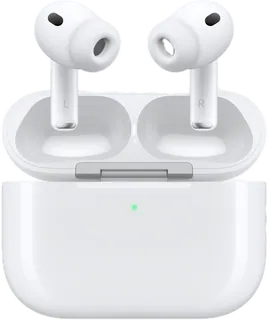
AirPods Pro 3 · Apple
Noise-cancelling earbuds with a free, FDA-authorized Hearing Aid feature set up by a 5-minute hearing test on iPhone. The cheapest way to try aided hearing if you have an iPhone, but only 10 hours per charge as an aid, obvious in the ear, and no Android support or professional care.
-
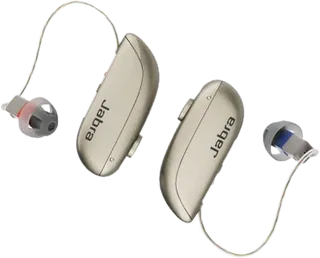
Jabra Enhance Select M3 · Jabra Enhance
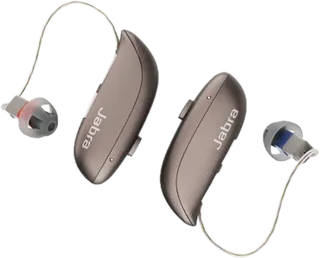
Jabra Enhance's top OTC aid: a tiny receiver-in-ear design professionally programmed from your app hearing test or audiogram, with 3 years of remote audiologist care, loss and damage cover, and a 100-day trial. The most complete package here, at the highest price.
-
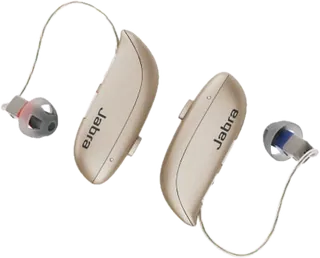
Jabra Enhance Select M2 · Jabra Enhance
The middle Select model: the same remote audiology care, 3-year warranty with loss and damage cover and 100-day trial as the M3, with Bluetooth calls and streaming, for $300 less.
-
Jabra Enhance Select M1 · Jabra Enhance
The entry Select model: professionally programmed rechargeable aids with remote audiologist care, Bluetooth calls and a 3-year warranty, charged on a desktop charger rather than a portable case.
-
All-Day Clear · Sennheiser
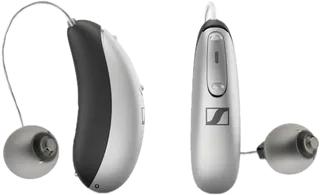
Small behind-the-ear self-fitting aids tuned by choosing between real conversations in the app, with Bluetooth streaming and hands-free calls on iPhone and Android. The product page advertises a 90-day trial, but the US store's return policy gives 45 days; only a 1-year warranty and no remote professional care.
-
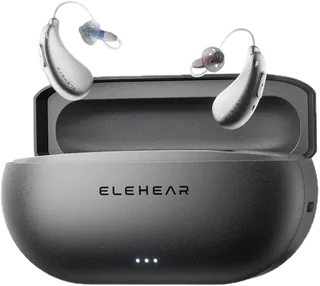
Beyond 2 Pro · ELEHEAR
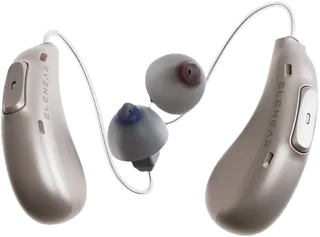
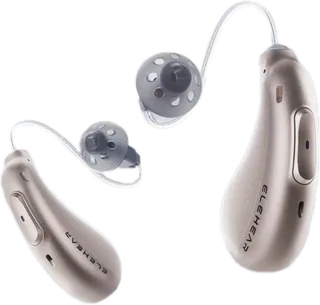
ELEHEAR's newest receiver-in-canal aid: smaller and lighter than the Beyond, IP67 water resistant, with in-app bass and treble control, Bluetooth streaming and remote audiologist support. Twice the Beyond's price.
-
Beyond Pro · ELEHEAR
ELEHEAR's mid-priced behind-the-ear aid: up to 20 hours per charge, Bluetooth calls and streaming on iPhone or Android, AI noise reduction, live translation in the app and remote audiologist help. A larger body than the Beyond 2 Pro and a sweat-resistant coating rather than an IP rating.
-
Beyond · ELEHEAR
Light behind-the-ear aids with always-on Bluetooth for calls and streaming on iPhone or Android, AI noise reduction and remote fine-tuning from ELEHEAR's audiologists. A 20-hour battery and a case with 4 extra charges.
-
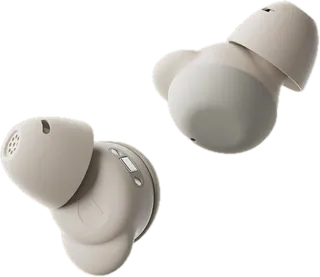
ELEHEAR Delight · ELEHEAR
Earbud-style in-ear aids from ELEHEAR with Bluetooth calls and streaming, IP67 water and dust resistance and preset modes, at a regular $369 a pair (often on sale for $299). Shorter battery than ELEHEAR's behind-the-ear models: up to 13.5 hours, with 2 extra charges in the case.
-
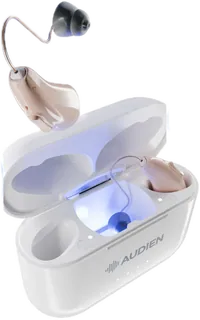
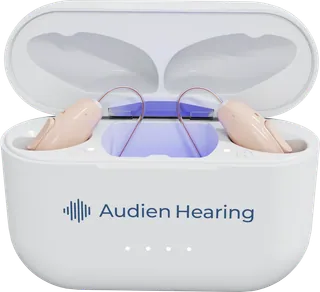
Ion IQ · Audien Hearing
Audien's newest behind-the-ear aid: six hearing profiles chosen in the iPhone or Android app, voice isolation, Bluetooth calls and music, and a UV-cleaning charging case (64 hours with case charges). Preset profiles rather than a fitting to your own hearing test.
-
Ion Pro 2 · Audien Hearing
Behind-the-ear aids with six audiologist-designed modes, app control on iPhone and Android, Bluetooth calls and streaming, and a UV charging case (48 hours with case charges). Audien's site flags it as a last-chance model next to the newer Ion IQ at the same price.
-
Ion Air · Audien Hearing
Lightweight over-the-ear aids with four preset modes set by buttons on the aid, no app and no Bluetooth streaming. 64 hours with case charges, and a video Sound Check with Audien's hearing specialists.
-
Atom X Connect · Audien Hearing
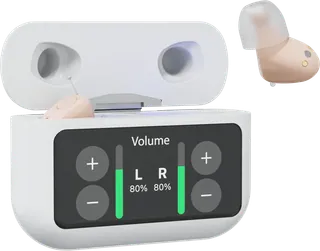
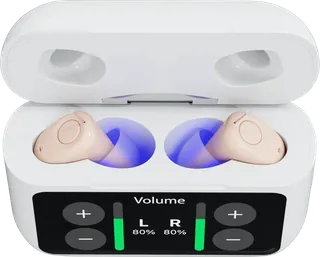
Nearly invisible in-ear aids controlled from a touchscreen on the charging case instead of an app, with Bluetooth for calls and music. Fixed sound modes rather than a fitting to your hearing.
-
Atom X (2nd Gen) · Audien Hearing
Nearly invisible in-ear aids controlled from a touchscreen on the charging case, 20% smaller than the first Atom X, with four preset modes and no app. No Bluetooth: calls and music need the Atom X Connect.
-
Atom Pro 2 · Audien Hearing
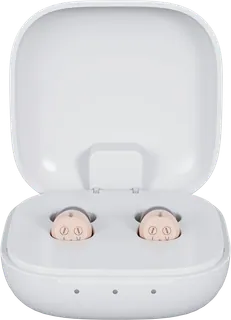
In-ear aids with a UV-cleaning charging case and four listening modes, with no app, pairing or programming. No Bluetooth streaming, and Audien gives no hours per charge.
-
Atom Air · Audien Hearing
Light in-ear aids pre-tuned by audiologists, with a 24-hour battery and no app, for $149 a pair. No Bluetooth streaming or fitting to your own hearing.
-
Atom ONE · Audien Hearing
The cheapest OTC aid here: tiny rechargeable in-ear aids at under $100 a pair, with no app, no hearing test and no streaming. Simple preset amplification for mild loss; a 45-day trial covers the risk.
-
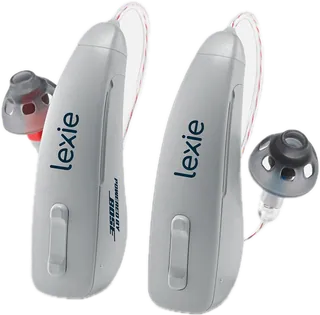
Lexie B2 Plus Powered by Bose · Lexie Hearing · No longer supported Oct 2026
Self-fitting behind-the-ear aids using Bose technology, sold with remote help from Lexie hearing experts. No longer sold or supported: maker LXE Hearing began winding down US operations in July 2026, and the Lexie app was deactivated in October 2026.
-
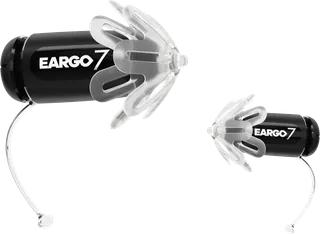
Eargo 7 · Eargo · No longer supported Oct 2026
Nearly invisible rechargeable in-canal aids that were sold with remote support from hearing professionals. No longer sold or supported: maker LXE Hearing began winding down US operations in July 2026 and ended app and customer support on October 22, 2026.
Suggest a change
Related comparisons
-
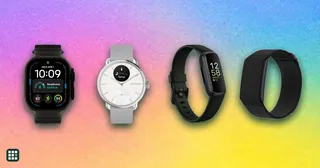 Wearable health technology
 now runs from everyday smartwatches and rings to prescription glucose sensors and medical-grade patches. This grid puts them side by side so you can see what each one actually measures, which functions are FDA cleared, what it costs up front and every month, and how long it lasts between charges or replacements. The real trade-offs: breadth versus medical depth, a screen versus discretion, and a one-off price versus memberships or disposable sensors.
-
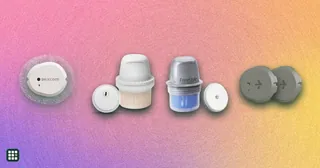 Continuous glucose monitors
 (CGMs) track glucose in fluid just under the skin and send readings to a phone, receiver, or connected insulin system. The choice depends on who the device is cleared for, how it displays and alerts, sensor wear time, pump compatibility, and recurring cost. OTC wellness sensors have narrower uses than prescription diabetes systems.
-
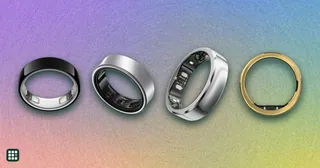 Smart rings
 track sleep, recovery, and daily health signals in a screen-free form. Compare the hardware price and any membership with battery life, phone requirements, sizing, and the health features each maker actually offers. These are wellness tools: a ring’s alert or estimate is not a diagnosis.
-
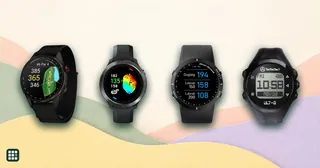 Golf GPS watches
 put front, center, and back yardages on your wrist, with no aiming and no phone needed on the course. They range from simple distance-only watches around $110 to full smartwatches near $800 that add slope-adjusted distances, hole maps, automatic shot tracking, and health tracking. This grid compares the current watches from Garmin, Shot Scope, Voice Caddie, Bushnell, SkyCaddie, and TecTecTec on the things that change the choice: what you see on the course, whether anything needs a subscription, battery life, screen, and everyday smartwatch features.
-
 GPS running watches
 track pace, distance and heart rate without a phone, and the better ones add training guidance, maps and music. This grid compares current models from Garmin, COROS, Suunto, Polar, Apple, Samsung and Amazfit, from about $200 entry watches to $1,000+ adventure flagships. The real trade-offs are battery life against a bright AMOLED screen, accurate multi-band GPS, offline maps, and how much training analysis you will actually use.
-
 Sleep trackers
 estimate when and how you sleep using motion and body signals. Form factor, overnight comfort, sensor coverage, battery life, phone compatibility, and recurring app fees can matter as much as the score shown each morning. Apnea features vary by device and region and should not be treated as a diagnosis.