



FPV
Beginner kits, video systems, radios and printable long-range frames for FPV drone pilots, compared before you commit to a system.
FPV (first-person view) flying means piloting a small drone through a live video feed from its own camera, usually in goggles. It is a hobby of mix-and-match parts, and the most important lesson for a newcomer is that the pieces have to speak the same language: the radio, the video system and the drone all need to be compatible with each other.
That compatibility drives the biggest questions across these grids. Analog or digital video? Analog is cheap, light and open to mixing brands; digital gives a sharp picture, but each system is a closed ecosystem you commit to. Ready-to-fly or build your own? A kit lets you fly the same day, while custom builds teach you more and cost less per part. Which radio link will you use? The transmitter lasts across every drone you own, so firmware and link protocol are worth choosing deliberately. And what do you want from flight: speed and tricks, or long, calm cruising? Flight time, weight and battery format pull in opposite directions.
Also check what a box leaves out. Spare batteries, a charger and radio batteries are common extras, and local rules about registration and flying near people apply wherever you fly.
Where to start
- Brand new and want to fly this week? Beginner FPV drone kits
- Choosing between analog and digital video? Digital FPV video systems
- Picking the radio you'll keep for years? FPV radio transmitters
- Chasing long flights and happy to print a frame? 3D-printable long-endurance quadcopters
-
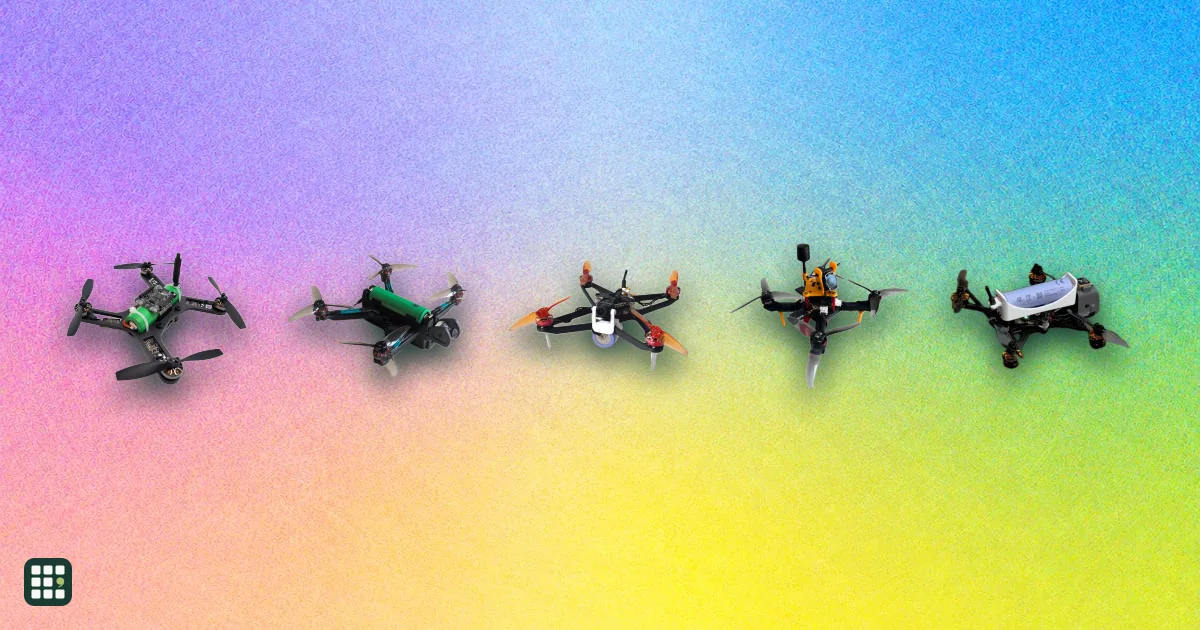 3D-printable long-endurance quadcopters (18650 and 21700)
14 products · Updated Nov 8, 2026
Printable quadcopter frames that run on single Li-ion cells fly far longer than the same size of drone on a LiPo, but the real decision is size, cell format and how many cells. This grid compares fourteen published designs and builds, from a 3 inch single 18650 to a 4S 21700 4 inch frame, with two non-printed benchmarks (a one-hour ArduPilot quad and a 34-minute single-cell quad), on flight time and how it was measured, weight, cells, print difficulty, GPS and phone-link support, and an estimated box footprint. It is honest about the gaps: almost no design documents a phone link, and most flight times are the designer's own claim.
-
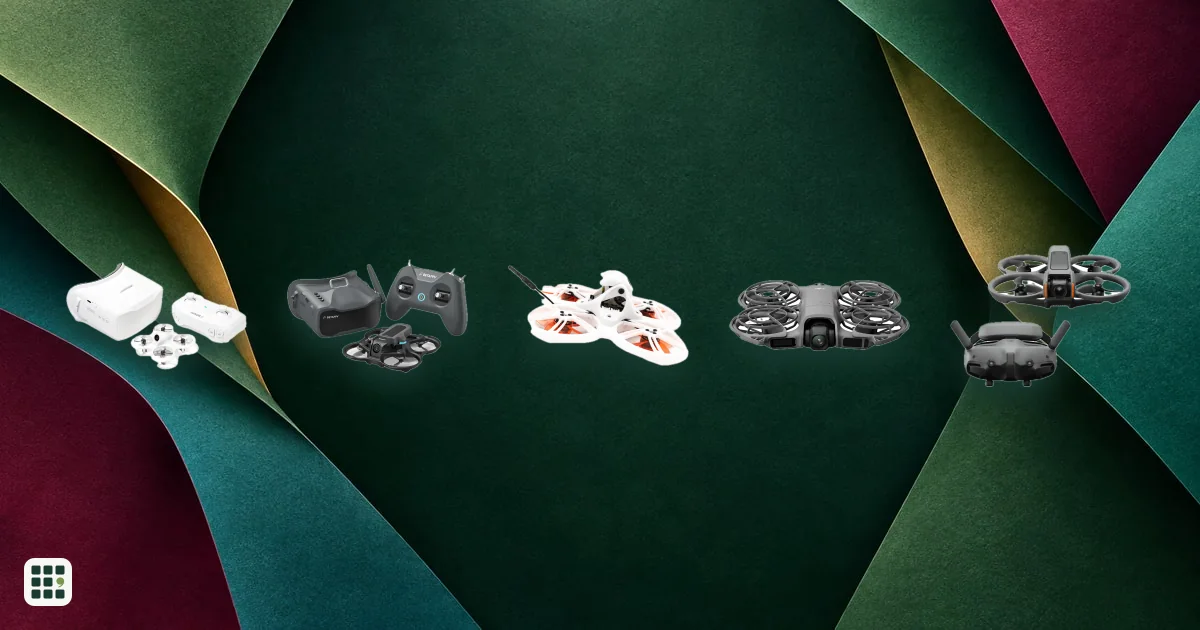 Beginner FPV drone kits
16 products · Updated Nov 9, 2026
A ready-to-fly FPV kit puts a drone, goggles and a radio in one box, so a first-time pilot can fly the same day. This grid compares beginner kits from BetaFPV, EMAX, GEPRC, HGLRC and DJI: analog whoops from about $120 to $360, an HDZero digital kit at $525, and three DJI digital combos at $599, $979 and $1,019. The real trade-offs are price against flight time, brushless power against forgiveness, open standards (ExpressLRS, Betaflight, analog goggles) against a polished closed system, and what the box leaves out, such as spare batteries, a charger or radio batteries.
-
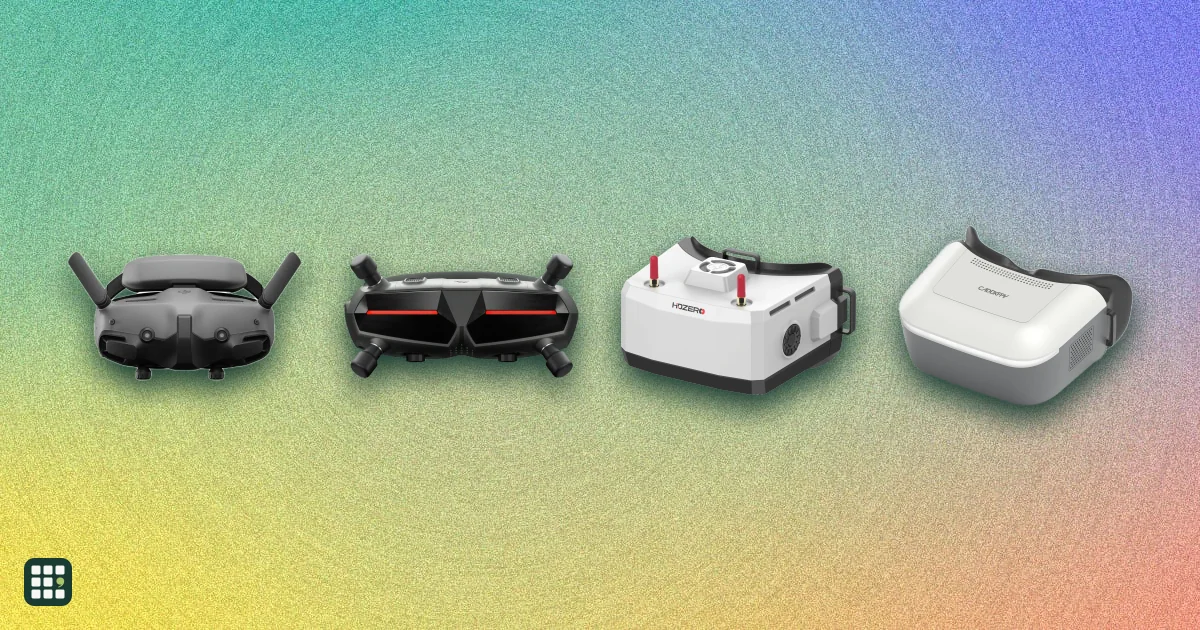 Digital FPV video systems
8 products · Updated Nov 8, 2026
Digital FPV replaced the fuzzy analog picture with HD video, but each system is its own ecosystem: goggles and air units from one brand do not work with another's. This grid compares the main systems as a pilot buys them, goggles plus air unit, from the cheap analog baseline up to DJI's flagship, so you can weigh price, latency, picture quality, weight, range and openness before committing.
-
FPV flight controller stacks
9 products · Updated Nov 13, 2026
A flight controller stack pairs the brain of a quad (the flight controller) with a 4-in-1 ESC that drives its four motors. This grid compares current stacks for 3 to 7 inch FPV builds on processor, ESC current, battery voltage, mounting size and wireless setup, so you can match a stack to your frame, motors and battery.
-
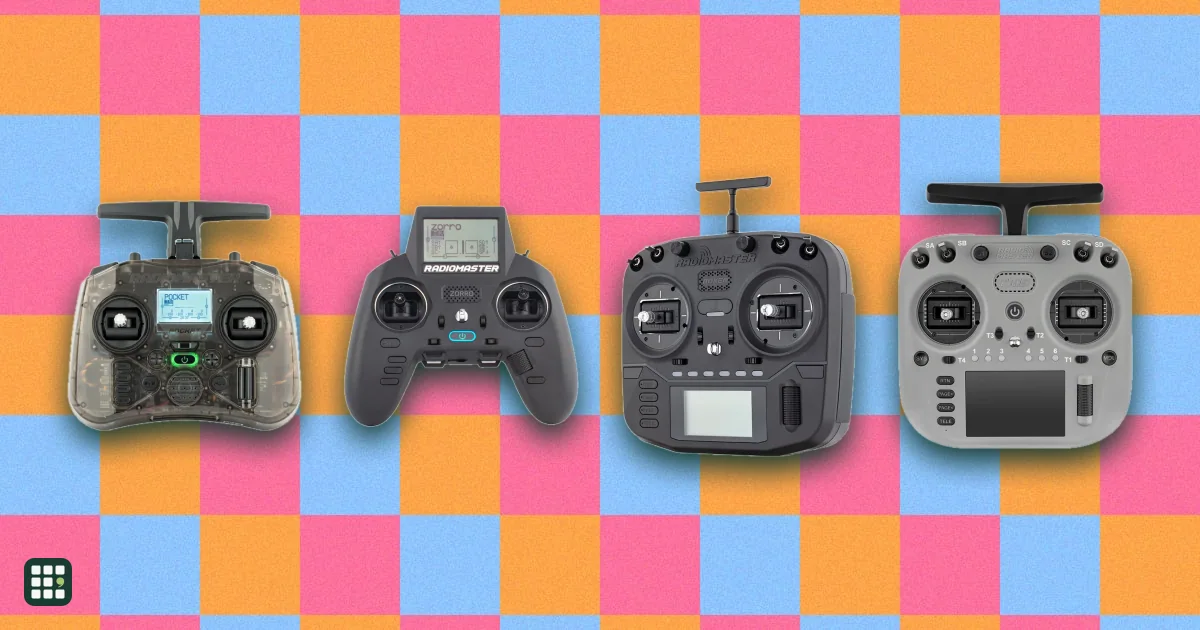 FPV radio transmitters
19 products · Updated Nov 8, 2026
The transmitter is the one piece of FPV gear you keep through every drone you own. This grid compares the radios hobbyists actually buy, from the cheapest pocket radios to full-size touchscreen radios: link (ExpressLRS, Crossfire, Tracer), firmware (EdgeTX or fixed), size and weight, gimbals, screen, batteries, module bay and simulator support. The real trade-offs are size against comfort, open EdgeTX against simple fixed firmware, and how much range you need.