



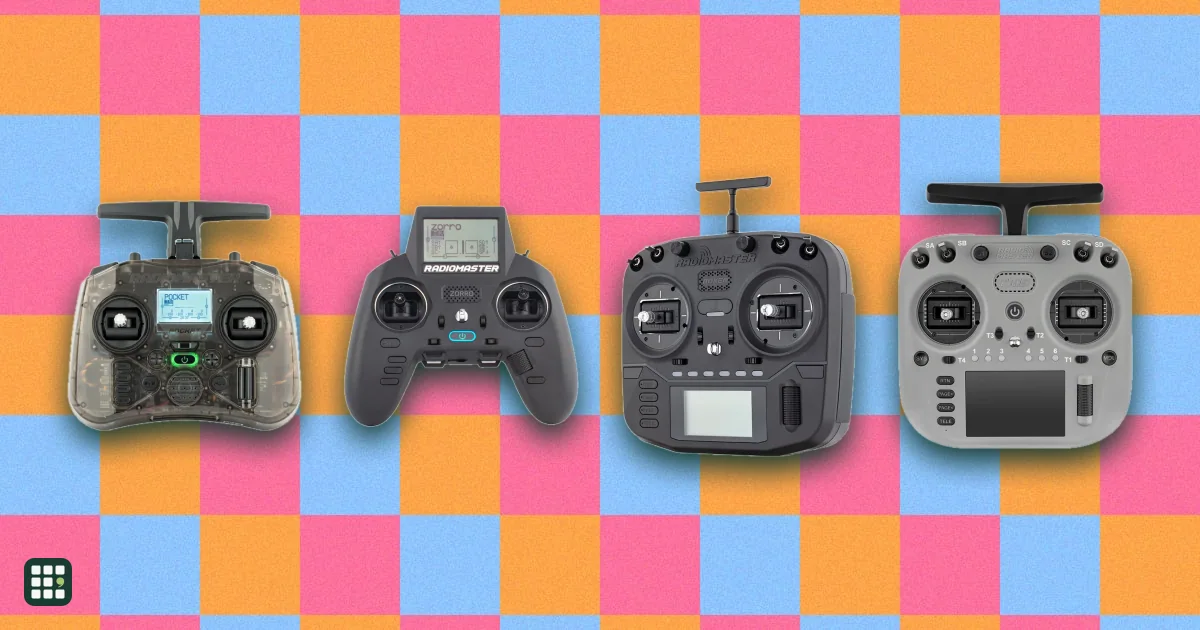
FPV radio transmitters
The transmitter is the one piece of FPV gear you keep through every drone you own. This grid compares the radios hobbyists actually buy, from the cheapest pocket radios to full-size touchscreen radios: link (ExpressLRS, Crossfire, Tracer), firmware (EdgeTX or fixed), size and weight, gimbals, screen, batteries, module bay and simulator support. The real trade-offs are size against comfort, open EdgeTX against simple fixed firmware, and how much range you need.
Last updated
How to choose
Start with what you will fly and how you will carry the radio. Then rule out radios whose link your aircraft and receivers cannot use.
1. Match the link to your aircraft
- ExpressLRS (ELRS) is the open standard for hobby FPV: cheap receivers from many brands, long range and low latency. Most radios here have it built in.
- TBS Crossfire or Tracer only works with TBS-ecosystem receivers; choose these if you already own them.
- DJI radios only work with DJI aircraft and air units. A DJI controller cannot fly an ELRS drone.
- If you own older FrSky or Futaba receivers, look at Multi protocol version.
2. Pick a size you will actually use
Gamepad radios fit in a pocket and suit tiny whoops and cinewhoops. Compact and full-size radios add switches and bigger screens, which matter more as your setup gets complicated. Check Weight and Dimensions: you will hold it for long sessions.
3. Choose firmware you can grow with
EdgeTX has the most tutorials, scripts and community help, and works across brands. Fixed firmware (the cheapest radios) is simpler but cannot be customized the same way. If you might fly planes or want custom switches, choose EdgeTX.
4. Check the parts that wear out
- Gimbals: Hall or magnetic sensors do not drift or wear like potentiometers.
- Battery: removable cells you can swap in the field, or a built-in battery you must recharge. Remember cells and a charger are extra when not included.
- Module bay: lets you add a different link or more power later; not all radios have one.
5. Practise in a simulator first
Most radios here work as a USB game controller. Flying a simulator with the radio you will use builds muscle memory before you crash a real drone.
Pitfalls
- Price here is one US retailer's regular price; makers' own stores and other shops differ, and many radios go in and out of stock. Compare a few shops.
- More power (mW) is not the same as more range: aircraft, receiver, antennas and band matter as much. Many makers do not publish power.
- Check your region: a radio sold for the US has FCC power limits that differ from the EU versions.
Answer
Browse the table. Filter to what matters.
Use the filters below, then sign in if you want to shortlist and decide with friends.
Sign in to vote, hide products and features, and reorder.
Verified: hover a cell and click its green dot for the source Estimate: no cited source Not stated: the maker doesn't publish it
| Feature | ⠿ | ⠿ | ⠿ | ⠿ | ⠿ | ⠿ | ⠿ | ⠿ | ⠿ | ⠿ | ⠿ | ⠿ | ⠿ | ⠿ | ⠿ | ⠿ | ⠿ | ⠿ | ⠿ |
|---|---|---|---|---|---|---|---|---|---|---|---|---|---|---|---|---|---|---|---|
|
⠿
Price
|
|||||||||||||||||||
|
⠿
Form factor
|
Gamepad
|
Gamepad
|
Compact
|
Compact
|
Full size
|
Full size
|
Full size
|
Compact
|
Full size
|
Gamepad
|
Compact
|
Full size
|
Gamepad
|
Gamepad
|
Compact
|
Gamepad
|
Gamepad
|
Gamepad
|
Gamepad
|
|
⠿
Weight
|
345 g
|
||||||||||||||||||
|
⠿
Dimensions
|
157x130x70 mm
|
||||||||||||||||||
|
⠿
Firmware
|
Fixed BetaFPV firmware
|
DJI proprietary
|
|||||||||||||||||
|
⠿
Built in link
|
|||||||||||||||||||
|
⠿
Frequency bands
|
|||||||||||||||||||
|
⠿
Internal RF power
|
250 mW, ELRS version
|
max 1,000 mW
|
|||||||||||||||||
|
⠿
Multi protocol version
|
|
||||||||||||||||||
|
⠿
External module bay
|
Doesn't apply
|
None
|
Doesn't apply
|
Doesn't apply
|
Doesn't apply
|
||||||||||||||
|
⠿
Gimbal sensor
|
|||||||||||||||||||
|
⠿
Display
|
None (LED indicators)
|
None
|
|||||||||||||||||
|
⠿
Battery
|
2x 18650, 21700 or 2S LiPo
|
||||||||||||||||||
|
⠿
Battery included
|
|
|
|||||||||||||||||
|
⠿
Simulator over USB
|
|
|
|
|
|
|
|
|
|
||||||||||
|
⠿
Maximum channels
|
16 channels
|
16 channels
|
16 channels
|
Doesn't apply
|
|||||||||||||||
|
⠿
Best for
|
Pocketable first EdgeTX radio on a budget
|
Freestyle on a budget in a small package
|
Compact all-rounder for freestyle and long range
|
Compact traditional radio on a budget
|
Full-size touchscreen radio for everyday flying
|
Long range and fixed wing with a big screen
|
Used or discounted full-size touchscreen radio
|
Compact radio with the strongest dual-band link
|
Full-size touchscreen with a diversity 2.4 GHz link
|
Cheapest ELRS radio for tiny whoops and simulators
|
Budget compact radio with a 1 W ELRS module
|
Budget full-size touchscreen radio
|
Pocket radio with a 1 W ELRS module
|
Crossfire pilots who want the smallest radio
|
Tracer users who want a compact full-switch radio
|
Lowest-cost start, simulators and tiny whoops
|
Cheap radio you can upgrade with a nano module
|
Beginner radio with Bluetooth for phone simulators
|
DJI Avata, Neo and O4 owners
|
Why these features matter
-
Price ($)
The radio is only part of the cost: add receivers, batteries and a charger. Retailer prices move with tariffs and stock, so treat this as a comparison across options and check a few shops before buying.
-
Form factor
Gamepad radios fit in a jacket pocket and feel familiar; full-size radios have more switches and room for big hands and long sessions. Pick on comfort and how you will carry it.
-
Weight (g)
Lighter radios are easier to hold for long sessions and to pack; heavier ones tend to feel sturdier and carry bigger batteries.
-
Dimensions
Tells you whether it fits your bag or jacket, and how big it is in your hands.
-
Firmware
EdgeTX is the open standard with the biggest community, tutorials and scripts. Fixed or proprietary firmware is simpler but cannot be customized the same way.
-
Built in link
Your receivers must speak the same link. ExpressLRS is open and cheap with many receivers; Crossfire and Tracer are TBS ecosystem links; proprietary links lock you to one brand.
-
Frequency bands
2.4 GHz suits freestyle and racing at short to medium range. 900 MHz (915 MHz in the US) penetrates obstacles and flies farther, which long-range pilots want.
-
Internal RF power (mW)
More power means more range and margin, but the aircraft and receiver matter just as much. Short-range indoor and freestyle flying needs very little.
-
Multi protocol version
Matters if you already own receivers or aircraft that use older protocols such as FrSky D16 or Futaba S-FHSS.
-
External module bay
A bay lets you add another link (ELRS, Crossfire) or a higher-power module later without replacing the radio.
-
Gimbal sensor
Hall and magnetic gimbals do not wear or drift the way potentiometers do and feel smoother; budget radios often use potentiometers, which are fine for simulators and first flights.
-
Display
A big color touchscreen makes setup and model management quicker; small monochrome screens work fine once configured and use less power.
-
Battery
Removable cells are swappable in the field; built-in batteries are simpler but you wait for a recharge.
-
Battery included
If cells are not included, budget for two good cells and a charger.
-
Simulator over USB
Practising in a simulator is the cheapest way to learn, and flying with your real radio builds the right muscle memory.
-
Maximum channels (channels)
Most quads need 6 to 8 channels; more only matters for airplanes, gimbals and complex setups.
-
Best for
A quick way to match a radio to your situation before comparing details.
About the products
-
Pocket · RadioMaster
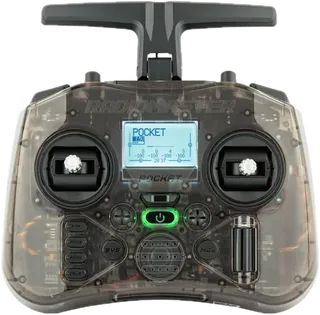
A small gamepad-style EdgeTX radio that folds flat for a pocket or jacket. The cheapest way into EdgeTX with ELRS built in, with a nano module bay and Hall gimbals. Smaller stick travel and a small screen suit tiny whoops and cinewhoops more than long freestyle sessions.
-
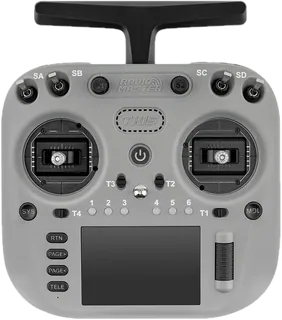
Zorro · RadioMaster
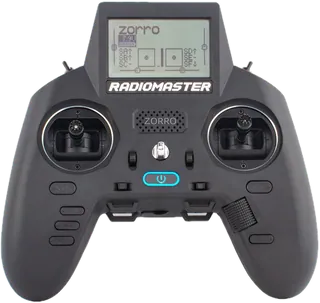
A gamepad-style EdgeTX radio with four Hall gimbal axes, a nano module bay and a built-in rechargeable battery bay for two small 18350 cells. A little bigger than the Pocket with more switches; the usual first radio for freestyle pilots on a budget.
-
Boxer · RadioMaster
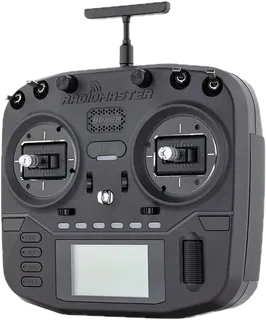
A compact full-feature EdgeTX radio with a JR module bay, AG01-class Hall gimbals and a fan-cooled internal ELRS module. The popular step up from a gamepad radio: real switches, bigger screen real estate and room for 18650 cells or a 2S LiPo.
-
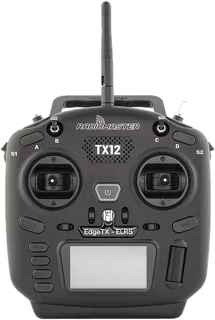
TX12 Mark II · RadioMaster
The small traditional-layout EdgeTX radio: Hall gimbals, a JR module bay and room for two 18650 or 21700 cells. A little older design than the Boxer, but a compact, well-supported radio with a Bluetooth joystick mode on the ELRS version.
-
TX15 · RadioMaster
A full-size EdgeTX radio with a 3.5 in color touchscreen, Hall gimbals, a JR module bay and a built-in ELRS module that works on both 2.4 GHz and 900 MHz. The comfortable step up for pilots who want a touchscreen without the weight of a TX16S.
-
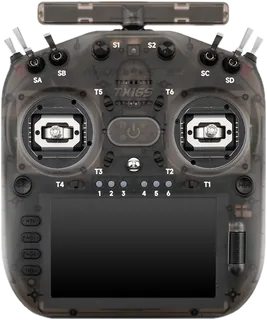
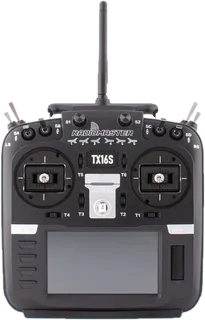
TX16S Mark III · RadioMaster
The flagship full-size EdgeTX radio: 5 in touchscreen, Gemini-X dual-band ELRS with two transceivers, V6 Hall gimbals and a JR module bay. The big, heavy, do-everything radio for pilots who also fly long range or fixed wing.
-
TX16S Mark II · RadioMaster · Superseded
The previous-generation full-size EdgeTX radio with a 4.3 in touchscreen, a JR bay and an internal ELRS or 4-in-1 module. Superseded by the TX16S Mark III, but still sold and common used.
-
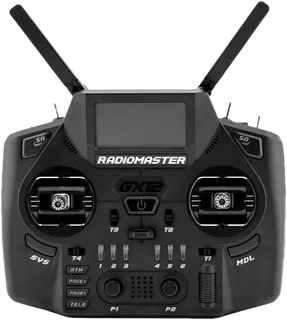
GX12 · RadioMaster
A compact radio built around ExpressLRS Gemini-XROSSBAND: two 1 W transmitters send on 2.4 GHz and 915 MHz at the same time, with folding dual-band antennas, 1000 Hz digital gimbals, a nano module bay and a fan. Premium compact radio for pilots who want the most robust link.
-
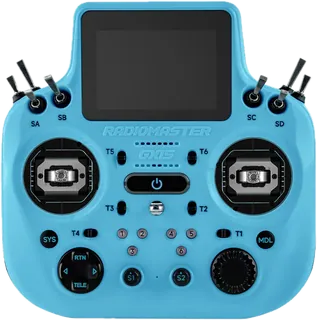
GX15 · RadioMaster
A full-size touchscreen radio with Gemini dual 2.4 GHz ExpressLRS transmitters, V6 Hall gimbals, a JR module bay, a fan and a built-in motion sensor. A bigger-screen alternative to the TX15 with a diversity link that holds up in crowded RF.
-
T8L · RadioMaster
A tiny, very cheap radio with built-in ELRS, Hall gimbals and no screen, set up from a web page over USB. Not EdgeTX: it has fixed firmware, so it suits tiny whoops, simulators and as a backup radio rather than a complex setup.
-
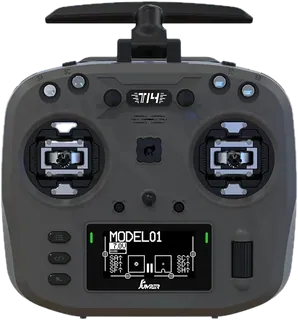
T14 · Jumper
A compact EdgeTX radio in the Boxer mold: Hall or RDC90 gimbals, a fan-cooled 1 W ELRS module, a JR bay and a 2.42 in OLED, at a lower price. Good value for pilots who want a compact radio without paying RadioMaster prices; the stock plastics and stick ends are basic.
-
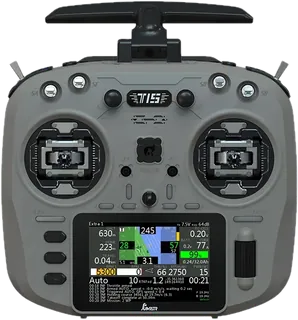
T15 · Jumper
A full-size EdgeTX radio with a 3.5 in color touchscreen, VS-M Hall gimbals and a 1 W ELRS module, for less than the RadioMaster equivalents. Customizable swappable shoulder switches; a good touchscreen radio on a tighter budget.
-
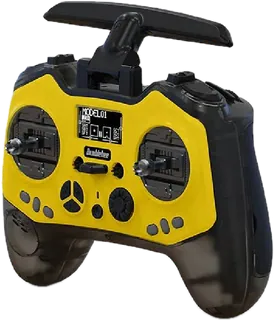
Bumblebee · Jumper
A small gamepad-style EdgeTX radio with Hall gimbals, a foldable adjustable antenna, a 1.3 in OLED and a nano module bay. The 1 W ELRS module makes it a long-range-capable pocket radio; it is light but the stock gimbals are the basic type.
-
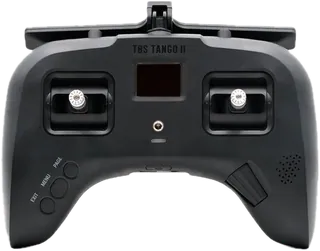
Tango 2 · TBS
A very compact radio with TBS Crossfire built in, full-size Hall gimbals, a swivel antenna and a built-in 5000 mAh battery. Made for the Crossfire ecosystem and long range at 868/915 MHz rather than for ELRS; the Pro adds foldable sticks. Often on back order.
-
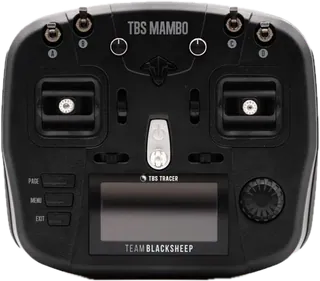
Mambo · TBS
A compact traditional-layout radio with TBS Tracer built in, a 2.4 GHz link, a JR module bay, Hall gimbals and a 3.5 in LCD, running on two removable 18650 cells. The TBS-ecosystem choice for pilots who want Tracer and a full set of switches.
-
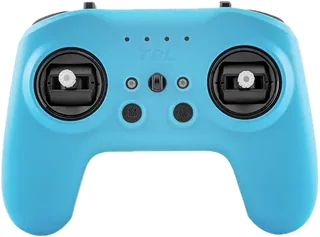
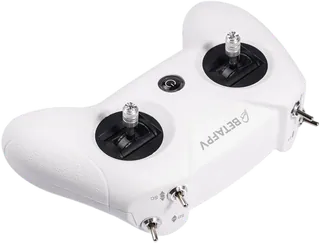
LiteRadio 2 SE · BetaFPV
A tiny game-controller-shaped radio with a built-in battery, no screen and gimbals you tune from the radio. The cheapest way to start: it works as a USB simulator controller and, with the ELRS version, flies tiny whoops. No module bay and no EdgeTX.
-
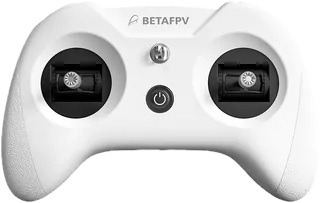
LiteRadio 3 · BetaFPV
A step up from the LiteRadio 2 SE with a 2000 mAh built-in battery, a nano module bay and the same game-controller shape. Still no screen and a fixed BetaFPV firmware, but the module bay lets you add a better link later.
-
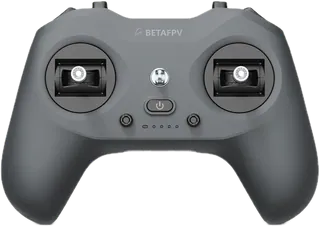
LiteRadio 4 · BetaFPV
The newest LiteRadio: 10 channels, ELRS 2.4 GHz, a 2000 mAh built-in battery, 15 W charging and Bluetooth plus USB simulator connection. A cheaper Neo version (1000 mAh, USB only) shares the page. Potentiometer gimbals and no screen or module bay.
-
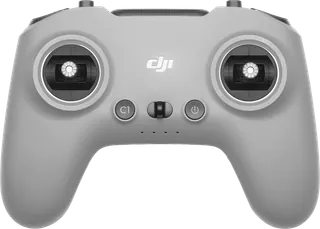
FPV Remote Controller 3 · DJI
The DJI-only radio for the O4 video link: a screenless, gamepad-style controller with a built-in battery and a manual flight mode. It cannot fly ExpressLRS or Crossfire aircraft and has no module bay; it only works with DJI aircraft and air units.
Suggest a change
Related comparisons
-
 Beginner FPV drone kits
A ready-to-fly FPV kit puts a drone, goggles and a radio in one box, so a first-time pilot can fly the same day. This grid compares beginner kits from BetaFPV, EMAX, GEPRC, HGLRC and DJI: analog whoops from about $120 to $360, an HDZero digital kit at $525, and three DJI digital combos at $599, $979 and $1,019. The real trade-offs are price against flight time, brushless power against forgiveness, open standards (ExpressLRS, Betaflight, analog goggles) against a polished closed system, and what the box leaves out, such as spare batteries, a charger or radio batteries.
-
 Digital FPV video systems
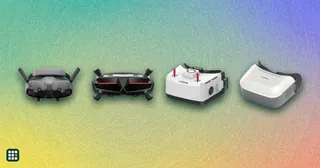
Digital FPV replaced the fuzzy analog picture with HD video, but each system is its own ecosystem: goggles and air units from one brand do not work with another's. This grid compares the main systems as a pilot buys them, goggles plus air unit, from the cheap analog baseline up to DJI's flagship, so you can weigh price, latency, picture quality, weight, range and openness before committing.
-
 3D-printable long-endurance quadcopters (18650 and 21700)
Printable quadcopter frames that run on single Li-ion cells fly far longer than the same size of drone on a LiPo, but the real decision is size, cell format and how many cells. This grid compares fourteen published designs and builds, from a 3 inch single 18650 to a 4S 21700 4 inch frame, with two non-printed benchmarks (a one-hour ArduPilot quad and a 34-minute single-cell quad), on flight time and how it was measured, weight, cells, print difficulty, GPS and phone-link support, and an estimated box footprint. It is honest about the gaps: almost no design documents a phone link, and most flight times are the designer's own claim.
-
FPV flight controller stacks
A flight controller stack pairs the brain of a quad (the flight controller) with a 4-in-1 ESC that drives its four motors. This grid compares current stacks for 3 to 7 inch FPV builds on processor, ESC current, battery voltage, mounting size and wireless setup, so you can match a stack to your frame, motors and battery.
-
 Sub-250g camera drones
Camera drones under 250 grams are the easiest way for a hobbyist to start flying. In the US, a drone under 250 g flown for fun needs no FAA registration, and most fold small enough for a jacket pocket. This grid compares 17 of them, from DJI Mini, Flip and Neo to Potensic ATOM, Holy Stone, HOVERAir self-flying cameras, the Antigravity A1 360 drone and the retired Autel EVO Nano+, on camera quality, flight time, obstacle sensing, range, how you control them and, since the FCC's December 2025 Covered List change, whether you can still buy them new in the US. The trade-off is simple: the lightest drones fly shorter and handle wind worse, and the best cameras are the hardest to buy.
-
 18650 and 21700 cells for long-endurance drones
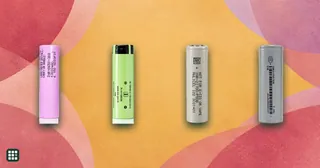
Individual 18650 and 21700 lithium-ion cells are the usual choice for a homebuilt, long-endurance quadcopter or fixed-wing pack: cheap, light and easy to hold in a 3D-printed frame. This grid compares twenty cells on what decides flight time (guaranteed capacity, energy per gram, weight) and on whether they can feed a hover (continuous current, internal resistance, cold limit). Figures come from the makers' own data sheets as quoted by the retailer or the maker, and we flag draft specs and cells you cannot actually buy.