



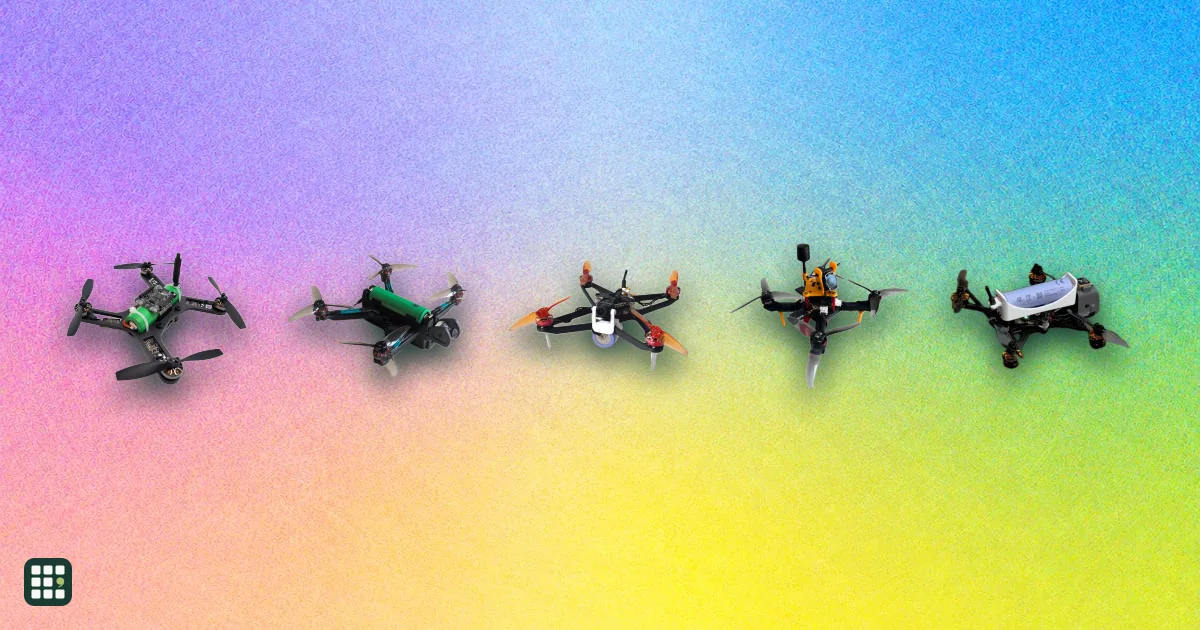
3D-printable long-endurance quadcopters (18650 and 21700)
Printable quadcopter frames that run on single Li-ion cells fly far longer than the same size of drone on a LiPo, but the real decision is size, cell format and how many cells. This grid compares fourteen published designs and builds, from a 3 inch single 18650 to a 4S 21700 4 inch frame, with two non-printed benchmarks (a one-hour ArduPilot quad and a 34-minute single-cell quad), on flight time and how it was measured, weight, cells, print difficulty, GPS and phone-link support, and an estimated box footprint. It is honest about the gaps: almost no design documents a phone link, and most flight times are the designer's own claim.
Last updated
How to choose
The short version (estimates from the sources below, not test results). Endurance comes from keeping the aircraft light and the hover current low, not from adding cells. Logged results on one cell: Bitcraze got a 19 minute hover on a 3000 mAh 18650 at 103 g, and the Swift's creator logged 20 minutes cruising on a 3000 mAh 18650, 27 minutes on a 5000 mAh 21700, and 30 to 34 minutes on a larger 21700. The longest claim, 55 to 65 minutes, is a 250 g quad with two 21700 cells in series (2S), 4.7 inch props and a carbon-tube frame (ArduPilot forum, builder's claim). No printed frame here has a logged test above 19 minutes, so expect printed versions to land below those carbon-frame figures.
Which size?
- 3 to 3.5 inch, one cell is the best documented printed class: NLR35, Nanolongrange V2, the Nano Long Range remixes, Shuriken. Light (about 95 to 125 g all-up) and small enough for a small box, but 1S builds use whoop-class boards, are the fussiest about voltage sag (Oscar Liang's first build would not lift off until he rewired the battery contact), and need very careful soldering.
- 3.5 to 4 inch, two cells in series (2S) such as the 2S35 and the 2S 18650 Mini is the sweet spot for a stable GPS platform: higher voltage and larger props than 1S, and boards that can run GPS. Published times are only over 15 minutes so far.
- 4.5 to 5 inch frames (Crab's 5 inch variant, the ArduPilot benchmark) have the most efficient props, but printed frames this big flex more, and the box has to be larger.
Which cells, and how many?
- A 3000 mAh 18650 weighs about 45 g and holds about 11 Wh; a 5000 mAh 21700 weighs 66 to 68 g and holds about 18 Wh (Bitcraze, Shuriken and the Swift report). Energy per gram is about the same, so choose by what your frame and motors can carry, not by format.
- One cell is lightest and proven in print, but fussiest. Two cells in series (2S) is what the one-hour ArduPilot builder uses and what the printed 2S designs target. Four cells (4S) push the aircraft toward 400 g (the cells alone are 180 to 270 g), where the gains flatten: the same builder reports that 10% extra weight can cost about 15% of flight time, and that doubling the battery adds only a small fraction more flight time.
- Use genuine high-current cells with a low-resistance connection. Several designers warn against cheap low-current cells. The Swift's creator tested connectors and found a copper strip holder gave the lowest resistance, though all four results were close; the ArduPilot builder says welding is better than soldering to cells.
Easy to print and stable to fly
- Material: plain PLA softens with heat and PETG is brittle (Crab's tests); designers of the lightest frames recommend ABS, PLA-CF, PETG-CF or PA12-CF for stiffness. A flexible frame can pass vibration to the flight controller and spoil the stability you want, so a stiffer material beats a lighter frame. Carbon-filled filaments need a hardened nozzle.
- One-piece frames (2S 18650 Mini, Mini 1S R1) print easiest; the foldable design is the one built to travel. Check each design's print profile for supports.
- A stable hover needs GPS position hold, which in practice means ArduPilot or INAV on a flight controller of at least F4 class. Most printed designs here are built around Betaflight whoop boards. Only the NLR35, Nanolongrange V2, 2S35 and the two benchmarks document GPS.
Flying from a phone
None of the printed designs documents flying from a phone. The ArduPilot benchmark shows the route: a Wi-Fi or Bluetooth module on the radio link gives MAVLink telemetry to a phone or laptop (the builder says so). Tiny phone-flown projects such as the open-source Flix run on small LiPo batteries, not Li-ion cells, so they are not in this grid. Expect to add and test the phone link yourself, and still carry a handheld radio as a failsafe.
Will it fit your box? (estimates)
Few designs publish their size; the sources suggest a motor-to-motor diagonal of roughly 40 to 45 mm per inch of prop (about 130 mm for 3 inch, about 185 mm for 4.5 inch, 210 to 220 mm for 5 inch, 230 to 240 mm for 6 inch). The box footprint is then roughly the diagonal divided by 1.41 plus one prop diameter, about 56 mm per inch of prop: a 3 inch quad needs about 170 mm square and a 5 inch quad about 280 mm square (estimate, props on; the grid's footprint row uses this). Removing props or choosing the folding frame saves space. Open the STL in your slicer and measure it before sizing the box.
Check before you commit
- Is the flight time a logged test, the designer flying it, or only a claim?
- Does the build use the same cell you will buy, with the same all-up weight?
- Does the design's license (several are non-commercial) suit what you will do with the prints?
- Note the NLR35 name: the Instructables, MakerWorld and early Thingiverse NLR35 is fully printed, while a later Thingiverse revision with a CNC carbon main frame and a 21700 reports a 23 minute test at 121 g. Check which one you are printing.
- Rules: stay in sight, and check the FAA's current rules (including Remote ID) for your aircraft. The ArduPilot builder says aircraft under 250 g face fewer restrictions in most countries.
Answer
Browse the table. Filter to what matters.
Use the filters below, then sign in if you want to shortlist and decide with friends.
Sign in to vote, hide products and features, and reorder.
Verified: hover a cell and click its green dot for the source Estimate: no cited source Not stated: the maker doesn't publish it
| Feature | ⠿ | ⠿ | ⠿ | ⠿ | ⠿ | ⠿ | ⠿ | ⠿ | ⠿ | ⠿ | ⠿ | ⠿ | ⠿ | ⠿ |
|---|---|---|---|---|---|---|---|---|---|---|---|---|---|---|
|
⠿
Reported flight time
|
20 min
|
|||||||||||||
|
⠿
Flight time evidence
|
No flight time published
|
Designer's cover image claim
|
No flight time published
|
|||||||||||
|
⠿
Cell format
|
||||||||||||||
|
⠿
Cells in pack
|
4 cells
|
|||||||||||||
|
⠿
All up weight with battery
|
154 g
|
under 250 g
|
420 g
|
|||||||||||
|
⠿
Weight without battery
|
58 g
|
|||||||||||||
|
⠿
Printed parts weight
|
||||||||||||||
|
⠿
Maximum propeller size
|
3 in
|
3 in
|
||||||||||||
|
⠿
Flight software
|
Betaflight
|
Betaflight
|
Betaflight
|
Betaflight
|
Betaflight
|
Betaflight
|
Betaflight
|
Betaflight
|
Betaflight
|
|||||
|
⠿
GPS support
|
|
|
|
|
|
|
|
|
|
|||||
|
⠿
Phone link documented
|
|
|
|
|
|
|
|
|
|
|
|
|
|
|
|
⠿
Radio link
|
||||||||||||||
|
⠿
Frame construction
|
Printed frame, battery held by rubber bands
|
|||||||||||||
|
⠿
Filament recommended
|
Doesn't apply
|
|||||||||||||
|
⠿
Soldering required
|
|
|
|
|||||||||||
|
⠿
Recommended cells
|
||||||||||||||
|
⠿
Estimated box footprint
|
170 mm
|
195 mm
|
170 mm
|
170 mm
|
170 mm
|
170 mm
|
170 mm
|
170 mm
|
165 mm
|
225 mm
|
170 mm
|
225 mm
|
265 mm
|
170 mm
|
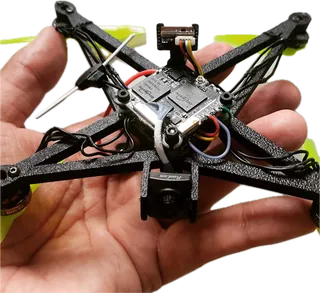
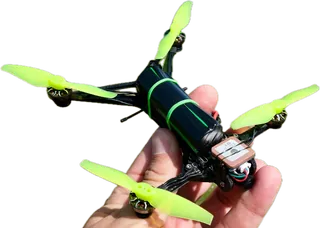
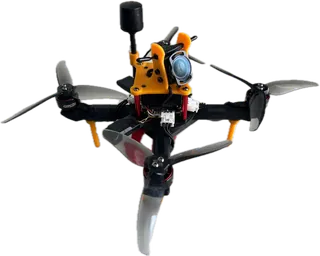
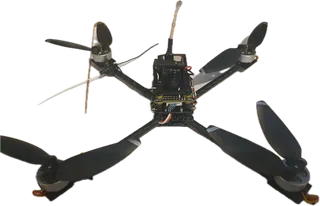
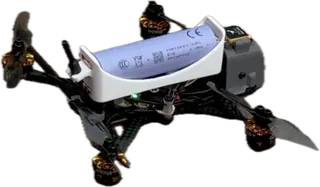
Why these features matter
-
Reported flight time (min)
Endurance is the point of these builds. Treat it together with Flight time evidence: a logged test is worth more than a designer claim.
-
Flight time evidence
Most figures are self-reported on a build page, not independently tested. Only one entry has a logged test, so read the numbers as ranges of what is plausible.
-
Cell format
A 21700 cell holds more energy (about 18 Wh versus 11 Wh) but weighs about 68 g versus 45 g, so it needs a frame and motors that can carry it.
-
Cells in pack (cells)
More cells means more energy but more weight and a higher pack voltage; endurance gains flatten quickly. It also decides how big the printed battery tray and box must be.
-
All up weight with battery (g)
Weight is the biggest lever on endurance: a builder in the sources reports that 10% more weight can cost 15% of flight time, so lighter often beats a bigger battery.
-
Weight without battery (g)
This is the part you control with the frame, motors and electronics. The cells then add about 45 g each (18650) or 68 g each (21700).
-
Printed parts weight (g)
A lighter printed frame saves weight and print time, but very light frames flex; the stiffer carbon-filled materials are what let thin frames stay stable.
-
Maximum propeller size (in)
Larger props are more efficient at hover, which is where endurance comes from, but they need a bigger and stiffer printed frame and a bigger box.
-
Flight software
Betaflight is built for acrobatics. A stable, GPS-holding platform you fly from a phone is what ArduPilot or INAV are for, so this row shows how far each design is from that.
-
GPS support
GPS position hold is what makes a quad hover on its own, which is the stable platform you want when flying from a phone.
-
Phone link documented
Flying from a smartphone needs a telemetry link such as a Wi-Fi or Bluetooth backpack. Almost no printed design documents one, so you add it yourself.
-
Radio link
Long-range links give range and failsafes. For phone flying you would add a Wi-Fi or Bluetooth bridge to that link.
-
Frame construction
One-piece frames print easily; folding frames fit a small box better; multi-part frames let you swap broken arms.
-
Filament recommended
Plain PLA is easy but softens in a hot car or sun; carbon-filled filaments are stiffer and tougher but need a hardened nozzle and a capable printer.
-
Soldering required
Tiny soldering on whoop boards is the hardest part of many builds; a no-solder build is a better first project.
-
Recommended cells
1S Li-ion builds are fussy about voltage sag, so the designer's tested cell is the safest starting point; avoid cheap low-current cells.
-
Estimated box footprint (mm)
You are printing a box for it. This is a starting size to plan the box; open the design STL in your slicer and measure the real frame before you print the box.
About the products
-
Bolt 1 cell Li-ion test drone · Bitcraze
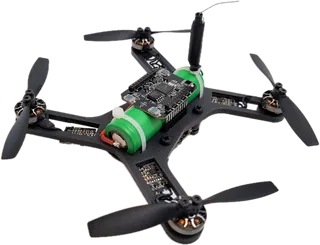
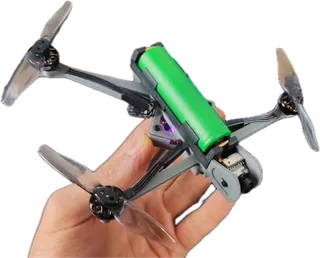
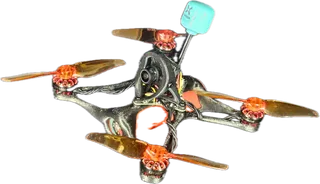
A 130 mm printed frame around a Crazyflie Bolt controller and one Sony VTC6 18650, built by Bitcraze to test Li-ion endurance. It is the only entry here with a logged hover test (19 minutes), so it is the best anchor for what a single 18650 really delivers. A research build, not a polished kit.
-
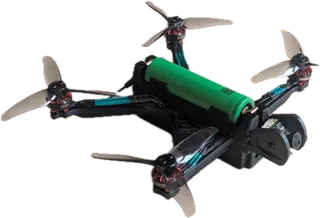
NLR35
Unboxingexperience7's third Nanolongrange frame: single 18650 or 21700, props up to 3.5 inches, GPS mount, analog or digital video. The most complete single-cell design, with a long record of builds, but it is a Betaflight and ELRS build, not a phone-flown one.
-
Nanolongrange V2
The lighter, GPS-ready predecessor of the NLR35: 18650 or 21700, under 95 g all-up, props up to 3 inches. Tight soldering on a whoop board makes the build harder; the V2b version fits standard whoop boards.
-
Nano Long Range 3 inch (Dave_C_FPV)
The original 1S 18650 printed long-range quad that started the category, later sold as the HGLRC Rekon 3. Oscar Liang's build log shows how fussy 1S Li-ion can be (voltage sag, flight controller resets), which is useful to know before choosing a single cell.
-
Improved Nano Long Range
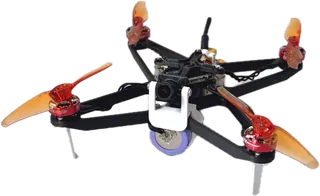
A fully printed remix of the Nano Long Range with a printed battery tray, the most downloaded design in this grid. Designer reports over ten minutes on one 18650; best for people who want the proven 1S route and are comfortable with fine soldering.
-
1S 18650 frame (2021)
A 10 g printed frame for a single 18650, by Unboxingexperience7. Notable for needing no soldering with stock connectors and for a 19+ minute flight claim from a 97 g build. Older parts list, but the simplest entry on the grid.
-
18650 Micro Foldable FPV Drone
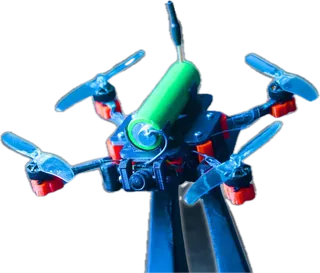
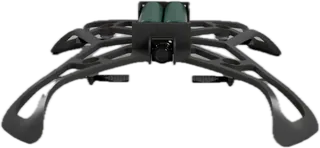
A fully printed foldable frame around a single 18650, with a magnetic battery connector. The folding arms matter if the drone has to live in a small printed box. Advanced build, flight time up to 18 minutes per the designer.
-
Mini 1S R1
An organic one-piece frame optimised for carbon-nylon (PA12-CF) and a single Ampace JP30 18650, with a 15 to 20 minute claim. Needs a printer and filament that handle nylon-carbon.
-
2S 18650 Mini FPV Drone
A one-piece printed frame for two 18650 cells in series, 75 mm props, and a published size of 125 x 115 x 40 mm without props. One of the only entries that states its footprint. No flight time is published.
-
2S35
A printed frame for 3.5 to 4 inch props and two 18650 cells in series (2S) in a standard battery tray, with GPS footprints supported. The designer reports over 15 minutes. The closest printed match to a stable, GPS-capable 2S platform.
-
Shuriken 3 inch (21700)
A 3 inch frame for one 21700 cell (or a 1S LiPo), 124 g all-up with a 5000 mAh cell. Designer estimates 20 to 35 minutes with the better cell and insists on high-current genuine cells. Frame needs a stiff filament such as PLA-CF.
-
Crab 4 inch and 5 inch
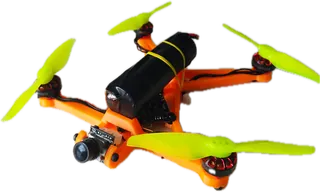
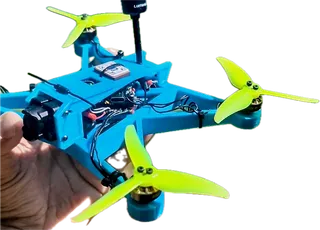
A fully printed 4 inch frame (5 inch variant added) built to run 4S Li-ion packs of 18650 or 21700 cells, with TPU skids and canopy. The designer's time estimates (25 to 40 minutes) are the highest for any printed frame here, but they are claims with no test shown.
-
ArduPilot 1 hour 250 g quad
A benchmark rather than a printable frame: a carbon-tube frame with printed camera and GPS mounts, 4.7 inch props, a 2S pack of two 21700 cells, and ArduPilot with MAVLink telemetry. Its builder claims about 55 to 65 minutes. Included because it shows what is possible and how phone telemetry is wired.
-
Swift 1S Li-ion quad
A benchmark, not a printable frame: a 3 inch CNC-cut carbon frame with a printed TPU canopy and printed battery holders, one 18650 or 21700 cell, GPS and a DJI O4 air unit. Its creator logged 20 minutes on a 3000 mAh 18650 and up to 34 minutes on a larger 21700, the best single-cell data in this grid. Reported by DroneXL from the creator's video.
Suggest a change
Related comparisons
-
 Beginner FPV drone kits
A ready-to-fly FPV kit puts a drone, goggles and a radio in one box, so a first-time pilot can fly the same day. This grid compares beginner kits from BetaFPV, EMAX, GEPRC, HGLRC and DJI: analog whoops from about $120 to $360, an HDZero digital kit at $525, and three DJI digital combos at $599, $979 and $1,019. The real trade-offs are price against flight time, brushless power against forgiveness, open standards (ExpressLRS, Betaflight, analog goggles) against a polished closed system, and what the box leaves out, such as spare batteries, a charger or radio batteries.
-
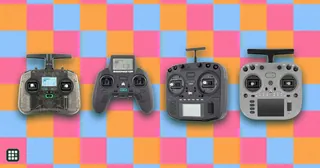 FPV radio transmitters
The transmitter is the one piece of FPV gear you keep through every drone you own. This grid compares the radios hobbyists actually buy, from the cheapest pocket radios to full-size touchscreen radios: link (ExpressLRS, Crossfire, Tracer), firmware (EdgeTX or fixed), size and weight, gimbals, screen, batteries, module bay and simulator support. The real trade-offs are size against comfort, open EdgeTX against simple fixed firmware, and how much range you need.
-
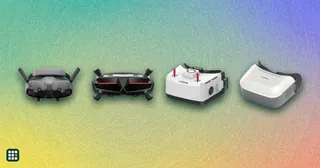 Digital FPV video systems
Digital FPV replaced the fuzzy analog picture with HD video, but each system is its own ecosystem: goggles and air units from one brand do not work with another's. This grid compares the main systems as a pilot buys them, goggles plus air unit, from the cheap analog baseline up to DJI's flagship, so you can weigh price, latency, picture quality, weight, range and openness before committing.
-
FPV flight controller stacks
A flight controller stack pairs the brain of a quad (the flight controller) with a 4-in-1 ESC that drives its four motors. This grid compares current stacks for 3 to 7 inch FPV builds on processor, ESC current, battery voltage, mounting size and wireless setup, so you can match a stack to your frame, motors and battery.
-
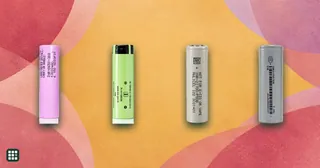 18650 and 21700 cells for long-endurance drones
Individual 18650 and 21700 lithium-ion cells are the usual choice for a homebuilt, long-endurance quadcopter or fixed-wing pack: cheap, light and easy to hold in a 3D-printed frame. This grid compares twenty cells on what decides flight time (guaranteed capacity, energy per gram, weight) and on whether they can feed a hover (continuous current, internal resistance, cold limit). Figures come from the makers' own data sheets as quoted by the retailer or the maker, and we flag draft specs and cells you cannot actually buy.
-
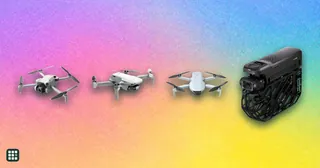 Sub-250g camera drones
Camera drones under 250 grams are the easiest way for a hobbyist to start flying. In the US, a drone under 250 g flown for fun needs no FAA registration, and most fold small enough for a jacket pocket. This grid compares 17 of them, from DJI Mini, Flip and Neo to Potensic ATOM, Holy Stone, HOVERAir self-flying cameras, the Antigravity A1 360 drone and the retired Autel EVO Nano+, on camera quality, flight time, obstacle sensing, range, how you control them and, since the FCC's December 2025 Covered List change, whether you can still buy them new in the US. The trade-off is simple: the lightest drones fly shorter and handle wind worse, and the best cameras are the hardest to buy.